PRESS-NEWS.org - Press Release Distribution
PRESS RELEASES DISTRIBUTION

NASA-NOAA satellite sees the end of Tropical Cyclone Ikola

NASA-NOAA satellite sees the end of Tropical Cyclone Ikola
2015-04-08
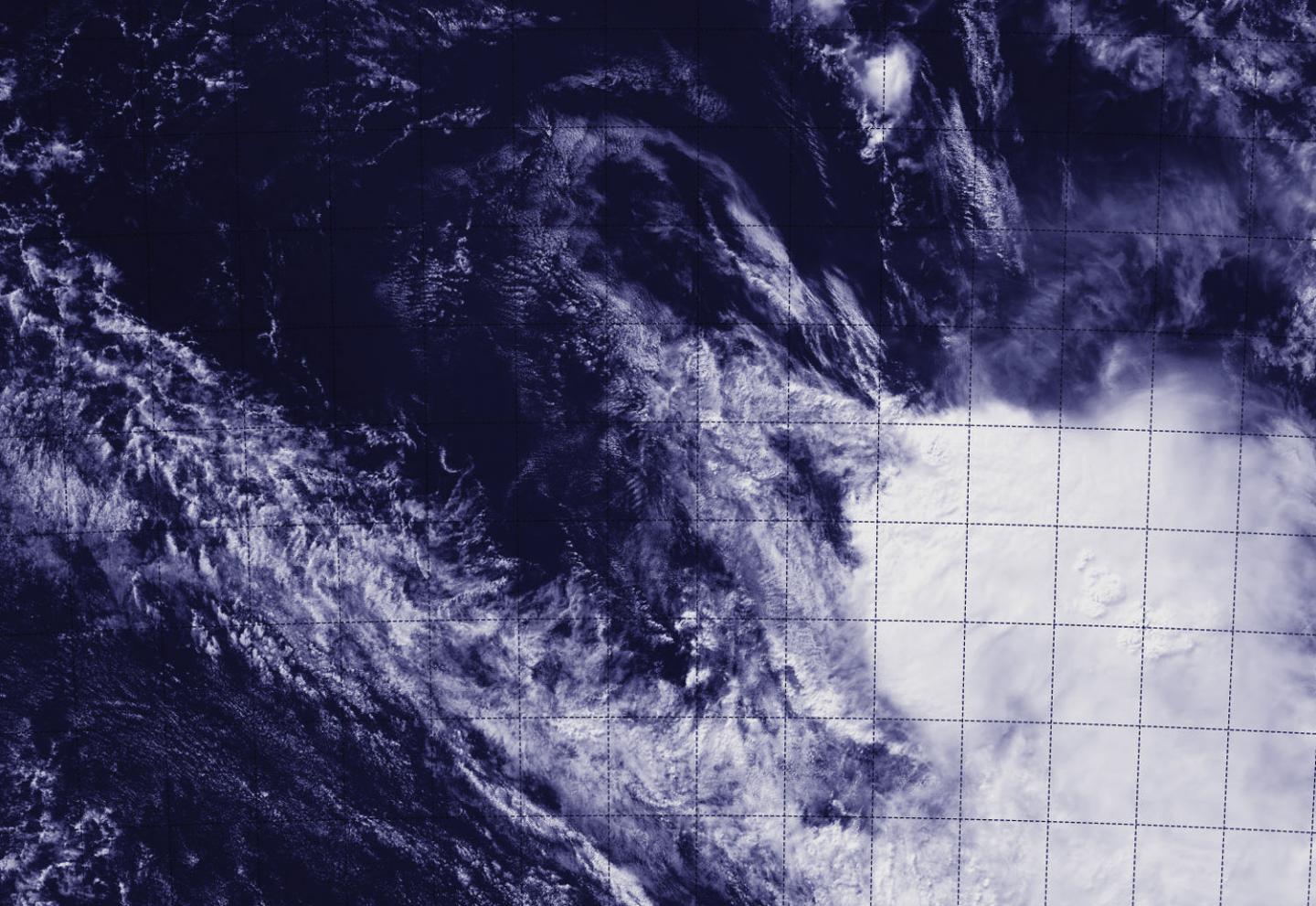
(Press-News.org) Strong vertical wind shear has taken a toll on Tropical Cyclone Ikola and that was pretty clear in a visible-light image from NASA-NOAA's Suomi NPP satellite today, April 8.

When Suomi NPP flew over Tropical Cyclone Ikola at 07:05 UTC (3:05 a.m. EDT), the Visible Infrared Imaging Radiometer Suite or VIIRS instrument aboard captured a visible image of the storm.

VIIRS is a scanning radiometer that collects visible and infrared imagery and "radiometric" measurements. Basically it means that VIIRS data is used to measure cloud and aerosol properties, ocean color, sea and land surface temperature, ice motion and temperature, fires, and Earth's albedo (reflected light).

The VIIRS image showed that the storm had basically unraveled and the bulk of clouds associated with it were pushed about 150 nautical miles (172.6 miles/277.8 km) southeast of the center. The thunderstorms were pushed by strong northwesterly vertical wind shear blowing between 40 and 50 knots. That wind shear also elongated the storm.

At 09:00 UTC (5 a.m. EDT), Tropical Cyclone Ikola's maximum sustained winds had dropped to 35 knots (40 mph/65 kph). It was centered near 21.2 south latitude and 98.6 east longitude, about 1,017 nautical miles (1,170 miles/1,883 km) west of Learmonth, Western Australia. Ikola was moving to the east at 12 knots (13.8 mph/22.2 kph), but fading fast.

The Joint Typhoon Warning Center forecast called for the strong northwesterly vertical wind shear to continue to deteriorate the system and lead to its dissipation later today.

INFORMATION:

The Suomi NPP mission is a bridge between NOAA and NASA legacy Earth observing missions and NOAA's next-generation Joint Polar Satellite System, or JPSS.


[Attachments] See images for this press release:
NASA-NOAA satellite sees the end of Tropical Cyclone Ikola

ELSE PRESS RELEASES FROM THIS DATE:

Study shows rats fed a dietary fiber supplement had better weight control

2015-04-08
A University of Calgary study has found that rats fed a fibre supplement while on a high fat and high sugar diet show a much lower weight gain than those who did not eat the fibre. A team of researchers from the university's Cumming School of Medicine and the Faculty of Kinesiology says the study helps scientists better understand the mechanisms of weight control and energy balance. "Our data shows that a simple dietary intervention, with a prebiotic oligofructose fibre, reduced weight gain, and this may also lead to the long-term maintenance of a lower body weight in ...

Improved understanding of protein complex offers insight into DNA replication initiation mechanism basics

2015-04-08
Argonne, Ill. - A clearer understanding of the origin recognition complex (ORC) - a protein complex that directs DNA replication - through its crystal structure offers new insight into fundamental mechanisms of DNA replication initiation. This will also provide insight into how ORC may be compromised in a subset of patients with Meier-Gorlin syndrome, a form of dwarfism in humans. ORC is a six-subunit protein complex that directly binds DNA to recruit other protein factors involved in DNA replication. Researchers collected data at the Advanced Photon Source (APS), a U.S. ...

NASA analyzes rainfall in Tropical Cyclone Joalane

NASA analyzes rainfall in Tropical Cyclone Joalane
2015-04-08
NASA and the Japan Aerospace Exploration Agency's GPM satellite provided scientists with a look "under the hood" of Tropical Cyclone Joalane's clouds at the rate in which rain was falling throughout the storm. The Global Precipitation Measurement or GPM core observatory satellite flew over intensifying cyclone Joalane in the South Indian Ocean on April 6, 2015 at 0406 UTC (12:06 a.m. EDT). GPM's Microwave Imager (GMI) found that intense convective thunderstorms within Joalane were dropping rain at a rate of over 63 mm (2.5 inches) per hour. Cyclone Joalane was located ...

Mysteries of the deep

2015-04-08
Scientists who have spent much of their careers peering out of deep-sea submersibles to learn about deep-sea coral and sponges recently turned their attention to the Web, watching each other share their experiences and expertise through an innovative series of online seminars. The seminars, sponsored by NOAA Fisheries, are now publicly available online. They cover the latest research into the fragile corals and sponges that bring color, habitat, and three-dimensional beauty to the deep ocean floor, far beyond the reach of snorkelers or scuba divers. The web-based seminars ...

Delay of surgery for melanoma common among Medicare patients

2015-04-08
In a study that included more than 32,000 cases of melanoma among Medicare patients, approximately 1 in 5 experienced a delay of surgery that was longer than 1.5 months, and about 8 percent of patients waited longer than 3 months for surgery, according to an article published online by JAMA Dermatology. Melanoma is a leading cause of new cancer diagnoses in the United States, accounting for most skin cancer¬related deaths. Surgical excision is the primary therapy for melanoma. Surgical delay may result in the potential for increased illness and death from other malignant ...

Rural African-American women had lower rates of depression, mood disorder

2015-04-08
African-American women who live in rural areas have lower rates of major depressive disorder (MDD) and mood disorder compared with their urban counterparts, while rural non-Hispanic white women have higher rates for both than their urban counterparts, according to an article published online by JAMA Psychiatry. MDD is a common and debilitating mental illness and the prevalence of depression among both African Americans and rural residents is understudied, according to background in the study. Addie Weaver, Ph.D., of the University of Michigan, Ann Arbor, and coauthors ...

MRI screening program for individuals at high risk of pancreatic cancer

2015-04-08
A magnetic resonance imaging (MRI)-based screening program for individuals at high risk of pancreatic cancer identified pancreatic lesions in 16 of 40 (40 percent) of patients, of whom 5 five underwent surgery, according to a report published online by JAMA Surgery. Pancreatic cancer is a leading cause of cancer death and can be considered a global lethal disease because incidence and mortality rates are nearly identical. Although treatment has improved, the surgery rate in patients with ductal adenocarcinoma is around 30 percent and the five-year survival rate is less ...

Melanoma surgery delays are common for Medicare patients

2015-04-08
New Haven, Conn. -- One in five Medicare patients with melanoma experience delays in getting surgery, a Yale study found. The research was published April 8 in JAMA Dermatology. Melanoma, a type of skin cancer, is a leading cause of new cancer diagnoses in the United States. A delay between diagnosis and surgery to remove melanomas may cause patients psychological harm and affect health-care quality. Using the national Surveillance, Epidemiology, and End Result-Medicare database, the Yale team conducted the first population-based analysis of delay of surgery among Medicare ...

No association between lung cancer risk in women and reproductive history or hormone use

2015-04-08
DENVER - The Women's Health Initiative Studies, a large prospective study of lung cancer, found no strong associations between lung cancer risk and a wide range of reproductive history variables and only revealed weak support for a role of hormone use in the incidence of lung cancer. In the United States 40% of the 160,000 deaths from lung cancer are women. In men 90% of lung cancer deaths are associated with tobacco usage; however in women this number is around 75-80%. Female never-smokers are more likely to develop lung cancer than male never-smokers and the histological ...

Turning to freshwater sources to fight drug-resistant tuberculosis, other infections

2015-04-08
The discovery of antibiotics produced by soil fungi and bacteria gave the world life-saving medicine. But new antimicrobials from this resource have become scarce as the threat of drug resistance grows. Now, scientists have started mining lakes and rivers for potential pathogen-fighters, and they've found one from Lake Michigan that is effective against drug-resistant tuberculosis. Their report on the new compound appears in the journal ACS Infectious Diseases. Brian T. Murphy and colleagues point out that the emergence of drug-resistant strains of Mycobacterium tuberculosis ...

LAST 30 PRESS RELEASES:

Injectable breast ‘implant’ offers alternative to traditional surgeries

Neuroscientists devise formulas to measure multilingualism

New prostate cancer trial seeks to reduce toxicity without sacrificing efficacy

Geometry shapes life

A CRISPR screen reveals many previously unrecognized genes required for brain development and a new neurodevelopmental disorder

Hot flush treatment has anti-breast cancer activity, study finds

Securing AI systems against growing cybersecurity threats

Longest observation of an active solar region

Why nail-biting, procrastination and other self-sabotaging behaviors are rooted in survival instincts

Regional variations in mechanical properties of porcine leptomeninges

Artificial empathy in therapy and healthcare: advancements in interpersonal interaction technologies

Why some brains switch gears more efficiently than others

UVA’s Jundong Li wins ICDM’S 2025 Tao Li Award for data mining, machine learning

UVA’s low-power, high-performance computer power player Mircea Stan earns National Academy of Inventors fellowship

Not playing by the rules: USU researcher explores filamentous algae dynamics in rivers

Do our body clocks influence our risk of dementia?

Anthropologists offer new evidence of bipedalism in long-debated fossil discovery

Safer receipt paper from wood

Dosage-sensitive genes suggest no whole-genome duplications in ancestral angiosperm

First ancient human herpesvirus genomes document their deep history with humans

Why Some Bacteria Survive Antibiotics and How to Stop Them - New study reveals that bacteria can survive antibiotic treatment through two fundamentally different “shutdown modes”

UCLA study links scar healing to dangerous placenta condition

CHANGE-seq-BE finds off-target changes in the genome from base editors

The Journal of Nuclear Medicine Ahead-of-Print Tip Sheet: January 2, 2026

Delayed or absent first dose of measles, mumps, and rubella vaccination

Trends in US preterm birth rates by household income and race and ethnicity

Study identifies potential biomarker linked to progression and brain inflammation in multiple sclerosis

Many mothers in Norway do not show up for postnatal check-ups

Researchers want to find out why quick clay is so unstable

Superradiant spins show teamwork at the quantum scale

[Press-News.org] NASA-NOAA satellite sees the end of Tropical Cyclone Ikola