New device provides chikungunya test results in an hour
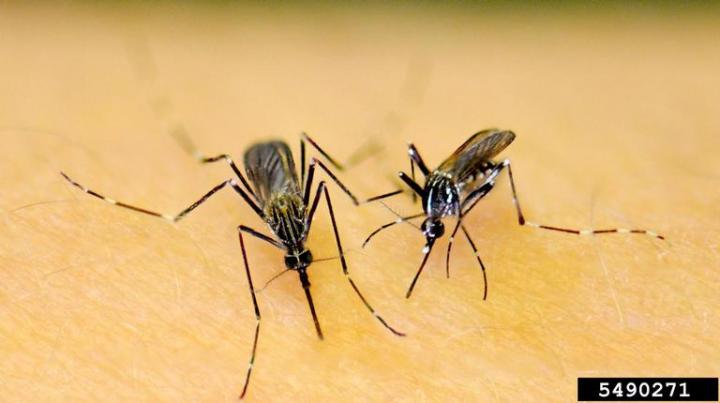
Health workers now have a quick way to detect the presence of the CHIKV virus within an hour, rather than waiting for results of laboratory tests that take days, or even weeks. It's done with a chemical dipstick, the same kind of simple tool used in a pregnancy test. If the test is positive, measures to control and contain the disease can be mobilized and started immediately, which is important because no vaccine or specific treatment for chikungunya exists.
"Chikungunya" is a term used by people of the Makonde Plateau, between Tanzania and Mozambique, where the disease was discovered in 1952. It means, "that which bends up," referring to the way arthritis caused by the disease crooks posture of the victim's body. Symptoms of chikungunya can be as brutal as its name is to pronounce, although it is seldom fatal. Victims experience fever and pain and swelling of muscles and joints. Headache and rash may occur. The disabling impact can last for months.
To date, tests for CHIKV require expensive equipment in a laboratory setting and technicians who have undergone extensive training. Not so the dipstick test. It can be done on site by a neophyte and, importantly, does not require electricity. The field worker simply has to dip the stick and look for a colored line.
If an outbreak of chikungunya occurs, the test "could enable public health workers to detect CHIKV in infected mosquitoes rapidly without the need for specialized equipment, expertise, or training, making virus surveillance more expedient," according to the authors of the Journal of Medical Entomology article. It would mean the difference between nipping an outbreak in the bud and a major public health crisis.
INFORMATION:
The full article, "Immuno-chromatographic Wicking Assay for the Rapid Detection of Chikungunya Viral Antigens in Mosquitoes (Diptera: Culicidae)," is available at http://dx.doi.org/10.1093/jme/tjv047.
The Journal of Medical Entomology published by the Entomological Society of America, the largest organization in the world serving the professional and scientific needs of entomologists and people in related disciplines. Founded in 1889, ESA today has nearly 7,000 members affiliated with educational institutions, health agencies, private industry, and government. Members are researchers, teachers, extension service personnel, administrators, marketing representatives, research technicians, consultants, students, and hobbyists. For more information, visit http://www.entsoc.org.