Cell structure discovery advances understanding of cancer development
Published 2015-07-10 · Original archive entry · Explore research explainers
University of Warwick researchers have discovered a cell structure which could help scientists understand why some cancers develop.
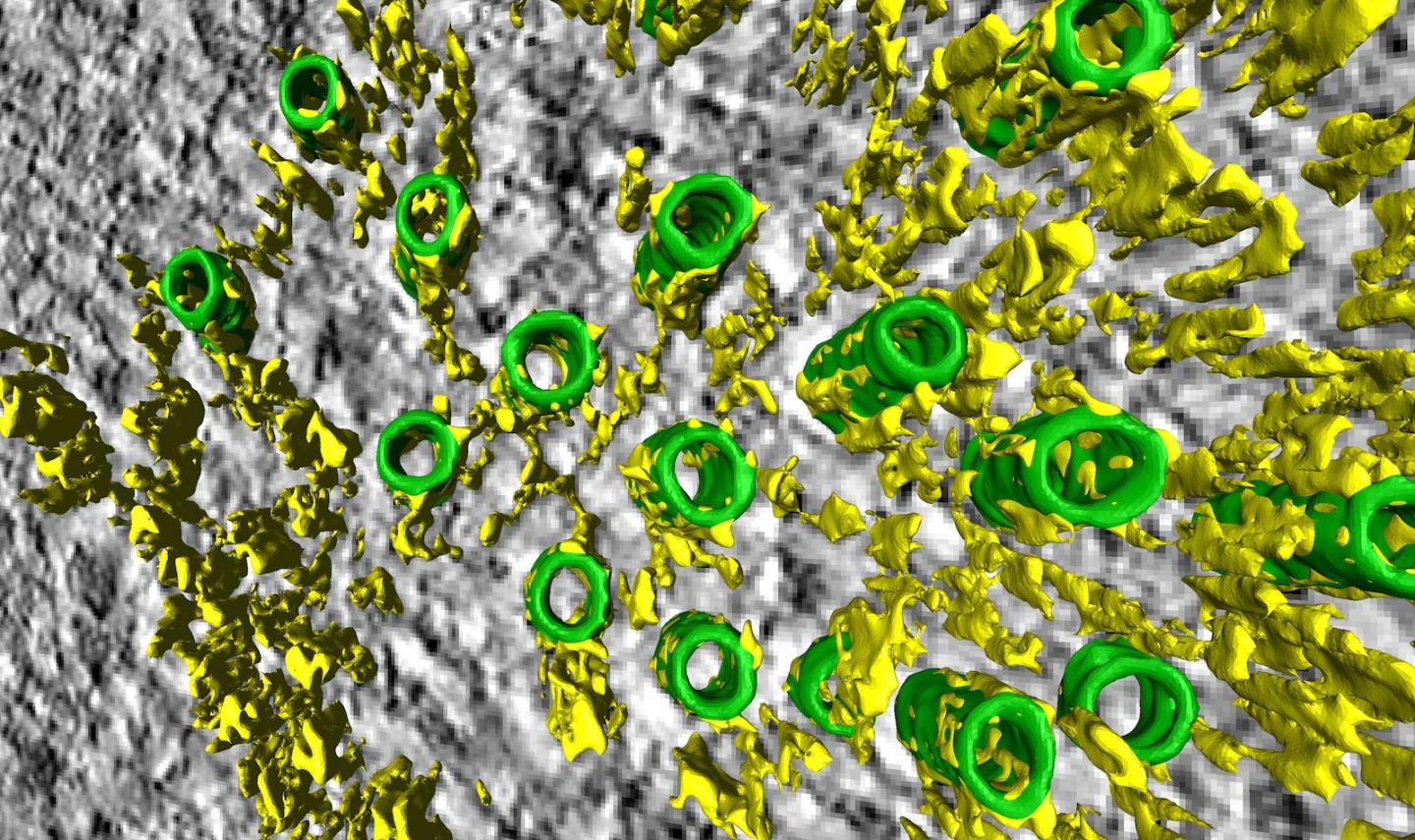
For the first time a structure called 'the mesh' has been identified which helps to hold together cells. This discovery, which has been published in the online journal eLife, changes our understanding of the cell's internal scaffolding.
This also has implications for researchers' understanding of cancer cells as the mesh is partly made of a protein which is found to change in certain cancers, such as those of the breast and bladder.
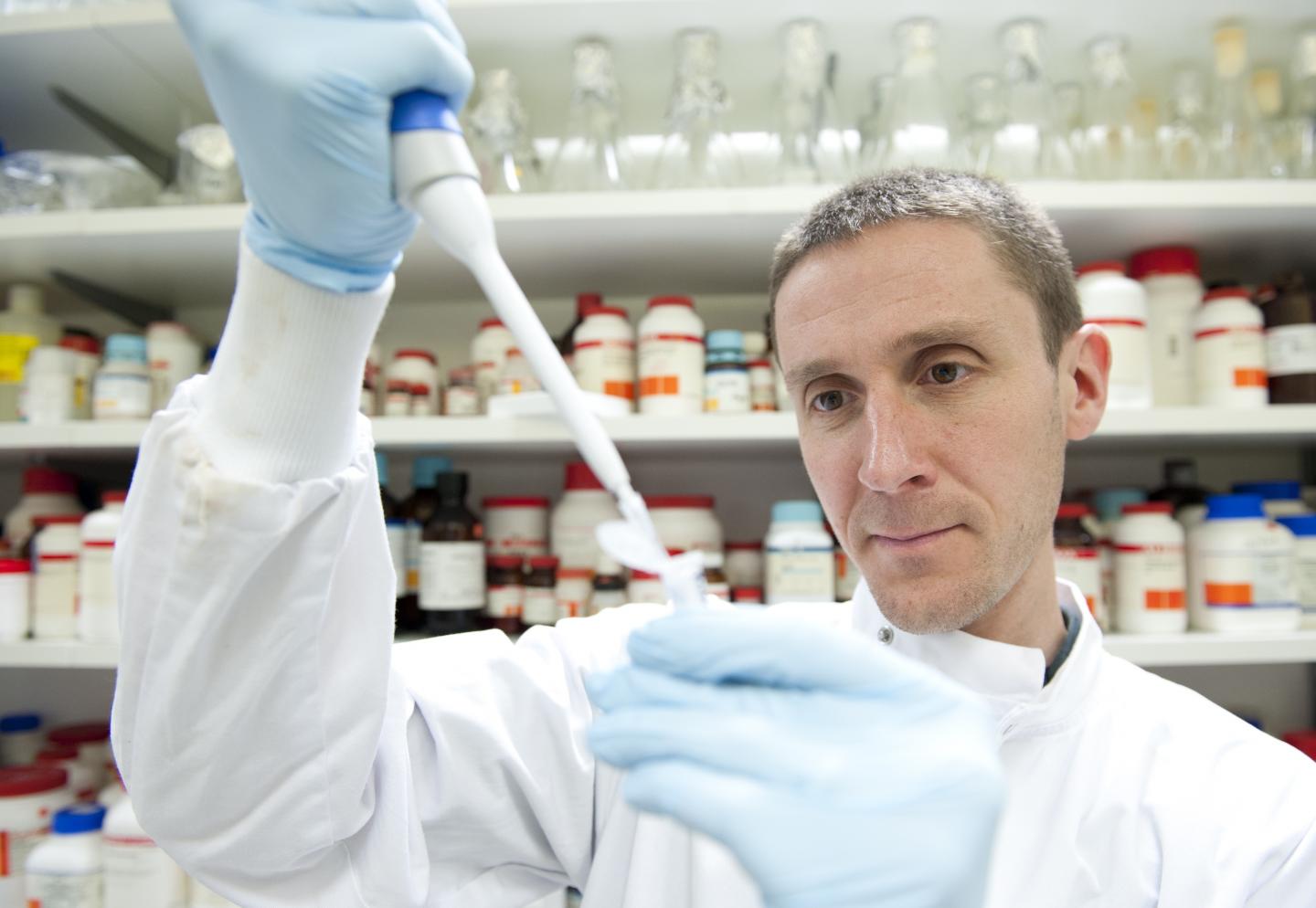
The finding was made by a team led by Dr Stephen Royle, associate professor and senior Cancer Research UK Fellow at the division of biomedical cell biology at Warwick Medical School. Dr Royle said: "As a cell biologist you dream of finding a new structure in cells but it's so unlikely. Scientists have been looking at cells since the 17th Century and so to find something that no-one has seen before is amazing."
Researchers at the University's Warwick Medical School made the discovery by accident while looking at gaps between microtubules which are part of the cells' 'internal skeleton'. In dividing cells, these gaps are incredibly small at just 25 nanometres wide - 3,000 times thinner than a human hair.
One of Dr Royle's PhD students was examining structures called mitotic spindles in dividing cells using a technique called tomography which is like a hospital CAT scan but on a much smaller scale. This meant that they could see the structure which they later named the mesh.
Mitotic spindles are the cell's way of making sure that when they divide each new cell has a complete genome. Mitotic spindles are made of microtubules and the mesh holds the microtubules together, providing support. While "inter-microtubule bridges" in the mitotic spindle had been seen before, the researchers were the first to view the mesh.
The study received funding and support from Cancer Research UK and North West Cancer Research.
Dr Royle said: "We had been looking in 2D and this gave the impression that 'bridges' linked microtubules together. This had been known since the 1970s. All of a sudden, tilting the fibre in 3D showed us that the bridges were not single struts at all but a web-like structure linking all the microtubules together."
The discovery impacts on the research into cancerous cells. A cell needs to share chromosomes accurately when it divides otherwise the two new cells can end up with the wrong number of chromosomes. This is called aneuploidy and this has been linked to a range of tumours in different body organs.
The mitotic spindle is responsible for sharing the chromosomes and the researchers at the University believe that the mesh is needed to give structural support. Too little support from the mesh and the spindle will be too weak to work properly, however too much support will result in it being unable to correct mistakes. It was found that one of the proteins that make up the mesh, TACC3, is over-produced in certain cancers. When this situation was mimicked in the lab, the mesh and microtubules were altered and cells had trouble sharing chromosomes during division.
Dr Emma Smith, senior science communications officer at Cancer Research UK, said: "Problems in cell division are common in cancer - cells frequently end up with the wrong number of chromosomes. This early research provides the first glimpse of a structure that helps share out a cell's chromosomes correctly when it divides, and it might be a crucial insight into why this process becomes faulty in cancer and whether drugs could be developed to stop it from happening."
North West Cancer Research (NWCR) has funded the research as part of a collaborative project between the University of Warwick and the University of Liverpool, where part of the research is being carried out.
Anne Jackson, CEO at NWCR, said: "Dr Royle and Professor Ian Prior at the University of Liverpool have made significant inroads into our understanding of the way in which cancer cells behave, which could potentially better inform future cancer therapies.
"As a charity we fund only the highest standard of research, as evidenced by Dr Royle's work.
"All our funded projects undergo a thorough peer review process, before they are considered by our scientific committee. Our specially selected scientific committee includes some of the UK's leading professors, award-winning scientists and pioneering professionals."
For the first time a structure called 'the mesh' has been identified which helps to hold together cells. This discovery, which has been published in the online journal eLife, changes our understanding of the cell's internal scaffolding.
This also has implications for researchers' understanding of cancer cells as the mesh is partly made of a protein which is found to change in certain cancers, such as those of the breast and bladder.
The finding was made by a team led by Dr Stephen Royle, associate professor and senior Cancer Research UK Fellow at the division of biomedical cell biology at Warwick Medical School. Dr Royle said: "As a cell biologist you dream of finding a new structure in cells but it's so unlikely. Scientists have been looking at cells since the 17th Century and so to find something that no-one has seen before is amazing."
Researchers at the University's Warwick Medical School made the discovery by accident while looking at gaps between microtubules which are part of the cells' 'internal skeleton'. In dividing cells, these gaps are incredibly small at just 25 nanometres wide - 3,000 times thinner than a human hair.
One of Dr Royle's PhD students was examining structures called mitotic spindles in dividing cells using a technique called tomography which is like a hospital CAT scan but on a much smaller scale. This meant that they could see the structure which they later named the mesh.
Mitotic spindles are the cell's way of making sure that when they divide each new cell has a complete genome. Mitotic spindles are made of microtubules and the mesh holds the microtubules together, providing support. While "inter-microtubule bridges" in the mitotic spindle had been seen before, the researchers were the first to view the mesh.
The study received funding and support from Cancer Research UK and North West Cancer Research.
Dr Royle said: "We had been looking in 2D and this gave the impression that 'bridges' linked microtubules together. This had been known since the 1970s. All of a sudden, tilting the fibre in 3D showed us that the bridges were not single struts at all but a web-like structure linking all the microtubules together."
The discovery impacts on the research into cancerous cells. A cell needs to share chromosomes accurately when it divides otherwise the two new cells can end up with the wrong number of chromosomes. This is called aneuploidy and this has been linked to a range of tumours in different body organs.
The mitotic spindle is responsible for sharing the chromosomes and the researchers at the University believe that the mesh is needed to give structural support. Too little support from the mesh and the spindle will be too weak to work properly, however too much support will result in it being unable to correct mistakes. It was found that one of the proteins that make up the mesh, TACC3, is over-produced in certain cancers. When this situation was mimicked in the lab, the mesh and microtubules were altered and cells had trouble sharing chromosomes during division.
Dr Emma Smith, senior science communications officer at Cancer Research UK, said: "Problems in cell division are common in cancer - cells frequently end up with the wrong number of chromosomes. This early research provides the first glimpse of a structure that helps share out a cell's chromosomes correctly when it divides, and it might be a crucial insight into why this process becomes faulty in cancer and whether drugs could be developed to stop it from happening."
North West Cancer Research (NWCR) has funded the research as part of a collaborative project between the University of Warwick and the University of Liverpool, where part of the research is being carried out.
Anne Jackson, CEO at NWCR, said: "Dr Royle and Professor Ian Prior at the University of Liverpool have made significant inroads into our understanding of the way in which cancer cells behave, which could potentially better inform future cancer therapies.
"As a charity we fund only the highest standard of research, as evidenced by Dr Royle's work.
"All our funded projects undergo a thorough peer review process, before they are considered by our scientific committee. Our specially selected scientific committee includes some of the UK's leading professors, award-winning scientists and pioneering professionals."
INFORMATION:
Warwick Medical School's division of biomedical cell biology carries out fundamental molecular and cellular research into biomedical problems. Major human diseases such as cancer, inflammation, neuro-degeneration and bacterial/viral infection are primarily diseases of cells. Without a molecular understanding of the underlying cell biology, intelligent directed therapeutic intervention is impossible. The division's research focuses on fundamental cell biology processes such as cell division and intracellular communication.
Attachments