INFORMATION:
This research was supported by the National Institutes of Health, the National Institute of Allergy and Infectious Disease, the National Heart, Lung and Blood Institute, and the Hartwell Foundation. (Grant Nos. T32-CA009111, T32-AI07647, R21AI139593, R21AI144844, R01AI37031, R01HL142985)
CITATION: "GPER1 is Required to Protect Fetal Health from Maternal Inflammation," Alfred Harding, Marisa Goff, Heather Froggatt, Jean Lim, Nicholas Heaton. Science, Jan. 15, 2021. DOI: 10.1126/science.aba9001
Estrogen receptors in mom's placenta critical during viral infection
Innate immune response would harm the fetus, so placenta tamps it down
2021-01-21
(Press-News.org) DURHAM, N.C. - Researchers at Duke and Mt. Sinai have identified a molecular mechanism that prevents a viral infection during a mother's pregnancy from harming her unborn baby.
When a person becomes infected by a virus, their immune system sends out a chemical signal called type I interferon, which tells surrounding cells to increase their anti-viral defenses, including making more inflammation.
This response helps to prevent the virus from copying itself and gives the adaptive immune system more time to learn about the new invader and begin to hunt it down.
A pregnant woman who encounters a virus generates these same signals to protect herself, but if those signaling molecules and the resulting inflammation were able to cross the placenta and reach the fetus, they would lead to serious developmental abnormalities and even fetal death.
But this generally doesn't happen, except for the Zika virus and a handful of other viruses known to replicate inside the fetus and harm it. (Despite almost 100 million reported cases of COVID-19 to date around the world, there is no strong evidence that the virus which causes the disease, SARS-CoV-2, poses a threat to fetuses.)
The research team found a mechanism that protects the fetus from the harm the mother's immune response to a virus could cause. In a paper appearing Jan. 15 in Science, they identify a key player in this pathway as a cell-surface estrogen receptor called GPER1 that is especially abundant in the placenta and fetal tissues.
"This likely explains why many maternal infections during pregnancy don't hurt the fetus," said study leader Nicholas Heaton, an assistant professor of Molecular Genetics and Microbiology in the Duke School of Medicine.
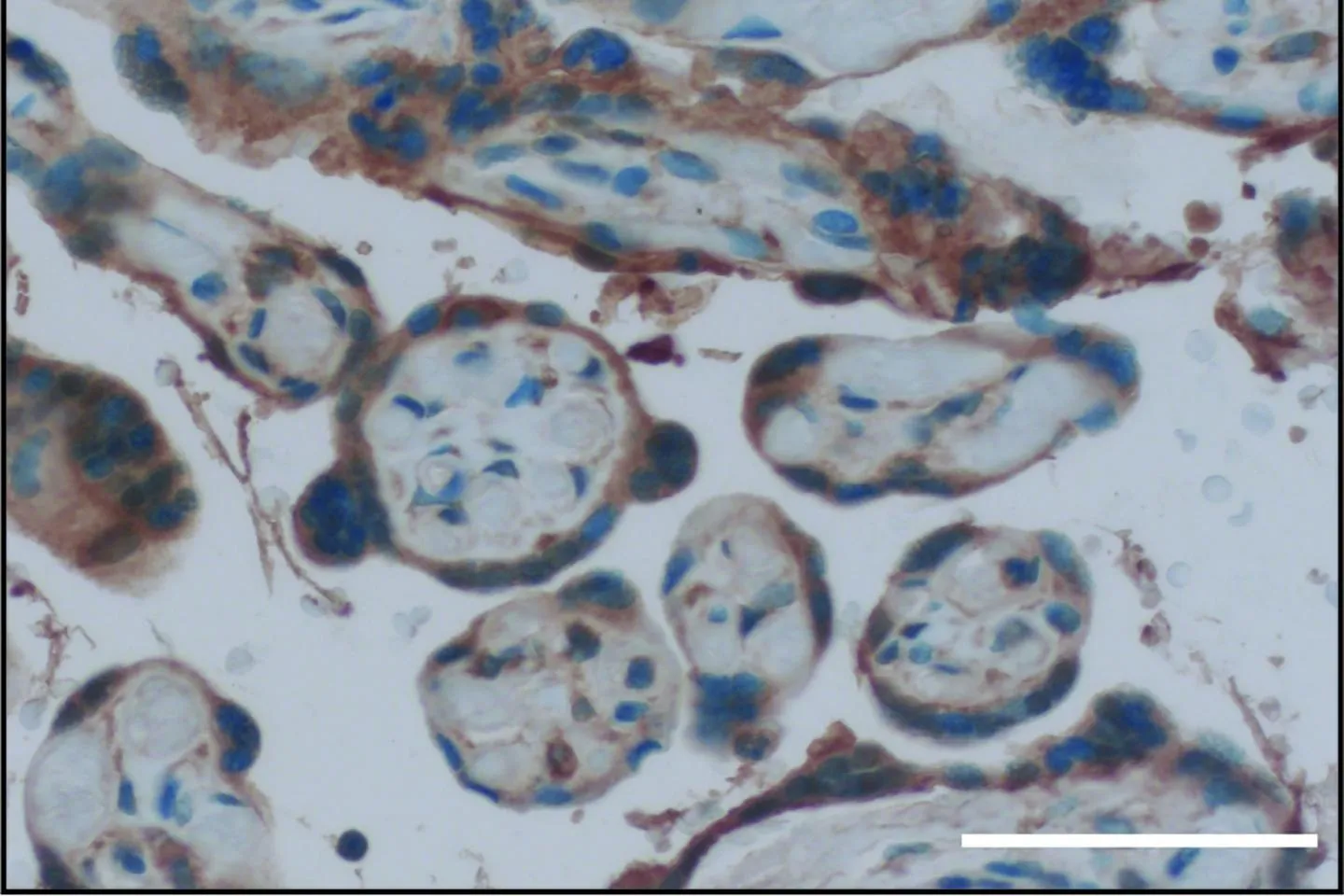
Having arrived at GPER1 as a possible candidate for this effect by a series of screens, the researchers found GPER1 receptors concentrated in the placenta, where the mother's blood supply passes oxygen and nutrients over to the fetus. Estrogen levels are much higher during pregnancy, making the GPER1 receptor even better able to suppress interferon signaling in the placenta and developing fetus.
The researchers tried blocking this particular estrogen receptor in pregnant mice with a compound called G15. They found changes in the placenta during influenza A virus infection or G15 treatment, which led to slightly smaller mouse pups. But with both G15 and influenza virus present, the pups were dramatically smaller and many were stillborn.
They also tested mouse pregnancies with Zika and influenza B virus infections and saw that the addition of the G15 treatment again led to many more fetal defects.
"If we disable the GPER1 pathway, even normally benign maternal infections (like flu) will now cause major fetal developmental issues," Heaton said.
Heaton calls it a pathway because his team doesn't yet understand how GPER1 provides this protection. They suspect the receptor triggers other downstream mechanisms that come into play.
Heaton said the beauty of this system being concentrated around the baby is that it protects the fetus from inflammation, while leaving the rest of the mother's tissues more able to use interferon to fight the virus.
The researchers are next going to pursue tests of whether "hyperactivating" the GPER1 pathway would be a way to protect fetal development when a mother becomes virally infected.
ELSE PRESS RELEASES FROM THIS DATE:
Smooth touchdown: novel camera-based system for automated landing of drone on a fixed spot
2021-01-21
Initially earmarked for covert military operations, unmanned aerial vehicles (UAVs) or drones have since gained tremendous popularity, which has broadened the scope of their use. In fact, "remote pilot" drones have been largely replaced by "autonomous" drones for applications in various fields. One such application is their usage in rescue missions following a natural or man-made disaster. However, this often requires the drones to be able to land safely on uneven terrain--which can be very difficult to execute.
"While it is desirable to automate the landing using a depth camera that can gauge terrain unevenness and find suitable landing spots, a framework serving as a useful base needs to be developed first," ...
RUDN University neurosurgeon created a method to collect mental activity data of software developers
2021-01-21
A neurosurgeon from RUDN University studied the mental activity of developers at work. In his novel method, he combined mobile EEG devices and software that analyzes neurophysiological data. The results of the study were published in the materials of the 23rd Euromicro Conference on Digital System Design (DSD).
To collect data about the activity of specific areas of the brain, one can use functional magnetic resonance imaging (fMRI). However, this method involves massive equipment and is only available at clinics or laboratories. Therefore, it is quite difficult to register human mental activity in a natural environment. Even if usual conditions are reproduced in a lab, the very fact that it is an experiment would still affect the behavior of the participants. ...
The Lancet Public Health: Modelling study estimates impact of 'test to release' strategy to reduce - or replace - quarantine for contacts of COVID-19 cases
2021-01-21
Peer-reviewed / Modelling / People
UK modelling study estimates 59% of SARS-CoV-2 transmission may be prevented by completing the WHO recommended 14-day quarantine period after exposure to a confirmed COVID-19 case
Model assumes that quarantine adherence levels are moderate, with 67% of people completing the recommended 14-day isolation period after testing positive for COVID-19 and 50% of contacts of confirmed cases completing 14 days of quarantine.
A similar proportion of transmission could be prevented with only 7 days of quarantine (assuming the same level of adherence) if a COVID-19 ...
Many junior doctors feel out of their depth with the end-of-life decisions faced during COVID-19 pandemic
2021-01-21
In normal times, end-of-life care discussions are most commonly led by senior doctors. However, new research from a busy London hospital shows that the high numbers of deaths taking place in hospitals during the COVID-19 pandemic, frequently out-of-hours, is leading to junior (foundation level) doctors having to lead on these difficult discussions with families, often with no formal experience or training.
The study is by Dr Edmund Lodwick, King's College Hospital NHS Trust, London, UK, and presented at this month's Winter Scientific Meeting of the Association of Anaesthetists, held online. He analysed the situation at Croydon University Hospital, London, where he spent his own foundation level training. This is a typically busy London hospital ...
Researchers improve data readout by using 'quantum entanglement'
2021-01-21
Researchers say they have been able to greatly improve the readout of data from digital memories - thanks to a phenomenon known as 'quantum entanglement'.
The research team, which included researchers from the Italian Institute of Metrological Research (INRIM) and the University of York, say the findings could have major applications for digital storage devices, including optical memories such as CD or BluRay disks.
This is the first experimental demonstration that quantum sources of light can enhance the readout of information from digital memories, an advance that could potentially lead to faster access of data in large databases and to construct memories with higher capacities in our next-generation computers.
In an ...
Spontaneous cell fusions amplify genetic diversity within tumors, Moffitt researchers say
2021-01-21
TAMPA, Fla. -- Evolution within groups of tumor cells follows the principles of natural selection, as evolution in pathogenic microbes. That is, the diversity of cellular characteristics within a group leads to differences in the ability of cells to survive and divide, which leads to selection for cells that bear characteristics that are most fit to the malignant environment. The ability to continuously create a diverse set of new cellular features enables cancers to develop the ability to grow in new tissue environments and to acquire resistance to anti-cancer drugs. The diversity of cell characteristics within ...
European eels - one gene pool fits all
2021-01-21
European eels spawn in the subtropical Sargasso Sea but spend most of their adult life in a range of fresh- and brackish waters, across Europe and Northern Africa. How eels adapt to such diverse environments has long puzzled biologists. Using whole-genome analysis, a team of scientists led from Uppsala University provides conclusive evidence that all European eels belong to a single panmictic population irrespective of where they spend their adult life, an extraordinary finding for a species living under such variable environmental conditions. The study is published in PNAS, the Proceedings of the National Academy of Sciences.
How species adapt to the environment is of fundamental importance in biology. Genetic changes that facilitate survival in individuals occupying new or variable environments ...
Bonobos, chimpanzees, and oxytocin
2021-01-21
Japan -- Despite being our two closest relatives -- separated by just two million years of evolution from one another and six million from us -- chimpanzees, bonobos, and humans have numerous important differences, such as in lethal aggression demonstrated by chimpanzee males and the high social status of bonobo females.
Now a research study suggests that the hormone oxytocin may have played a central role in this evolutionary divergence.
"Oxytocin is a hormone neuropeptide found in mammals," explains author James Brooks, "but despite its ancient origins, its role can vary even among closely-related species." Among these roles are a wide array of social behaviors, some of which have recently been associated with certain species-typical behaviors in great apes.
Based on these behavioral ...
Hope for a vaccination against Staphylococcus areus infections?
2021-01-21
Staphylococcus aureus (S. aureus) ranks among the globally most important causes of infections in humans and is considered a dreaded hospital pathogen. Active and passive immunisation against multi-resistant strains is seen as a potentially valuable alternative to antibiotic therapy. However, all vaccine candidates so far have been clinically unsuccessful. With an epitope-based immunisation, scientists at Cologne University Hospital and the German Center for Infection Research (DZIF) have now described a new vaccination strategy against S. aureus in the Nature Partner Journal NPJ VACCINES.
S. aureus causes life-threatening conditions such as deep wound infections, sepsis, endocarditis, ...
"Smiling eyes" may not signify true happiness after all
2021-01-21
PITTSBURGH--A smile that lifts the cheeks and crinkles the eyes is thought by many to be truly genuine. But new research at Carnegie Mellon University casts doubt on whether this joyful facial expression necessarily tells others how a person really feels inside.
In fact, these "smiling eye" smiles, called Duchenne smiles, seem to be related to smile intensity, rather than acting as an indicator of whether a person is happy or not, said Jeffrey Girard, a former post-doctoral researcher at CMU's Language Technologies Institute.
"I do think it's possible that we might ...
LAST 30 PRESS RELEASES:
Psilocybin shows context-dependent effects on social behavior and inflammation in female mice modeling anorexia
Mental health crisis: Global surveys expose who falls through the cracks and how to catch them
New boron compounds pave the way for easier drug development
Are cats ‘vegan’ meat eaters? Study finds why isotopic fingerprint of cat fur could trick us into thinking that way
Unexpected partial recovery of natural vision observed after intracortical microstimulation in a blind patient
From sea to soil: Molecular changes suggest how algae evolved into plants
Landmark study to explore whether noise levels in nurseries affect babies’ language development
Everyday diabetes medicine could treat common cause of blindness
Ultra-thin metasurface chip turns invisible infrared light into steerable visible beams
Cluster radioactivity in extreme laser fields: A theoretical exploration
Study finds banning energy disconnections shouldn’t destabilise markets
Researchers identify novel RNA linked to cancer patient survival
Poverty intervention program in Bangladesh may reinforce gender gaps, study shows
Novel approach to a key biofuel production step captures an elusive energy source
‘Ghost’ providers hinder access to health care for Medicaid patients
Study suggests far fewer cervical cancer screenings are needed for HPV‑vaccinated women
NUS CDE researchers develop new AI approach that keeps long-term climate simulations stable and accurate
UM School of Medicine launches clinical trial of investigative nasal spray medicine to prevent illnesses from respiratory viruses
Research spotlight: Use of glucose-lowering SGLT2i drugs may help patients with gout and diabetes take fewer medications
Genetic system makes worker cells more resilient producers of nanostructures for advanced sensing, therapeutics
New AI model can assist with early warning for coral bleaching risk
Highly selective asymmetric 1,6-addition of aliphatic Grignard reagents to α,β,γ,δ-unsaturated carbonyl compounds
Black and Latino teens show strong digital literacy
Aging brains pile up damaged proteins
Optimizing robotic joints
Banning lead in gas worked. The proof is in our hair
Air pollution causes social instability in ant colonies
Why we sleep poorly in new environments: A brain circuit that keeps animals awake
Some tropical land may experience stronger-than-expected warming under climate change
Detecting early-stage cancers with a new blood test measuring epigenetic instability
[Press-News.org] Estrogen receptors in mom's placenta critical during viral infectionInnate immune response would harm the fetus, so placenta tamps it down