PRESS-NEWS.org - Press Release Distribution
PRESS RELEASES DISTRIBUTION

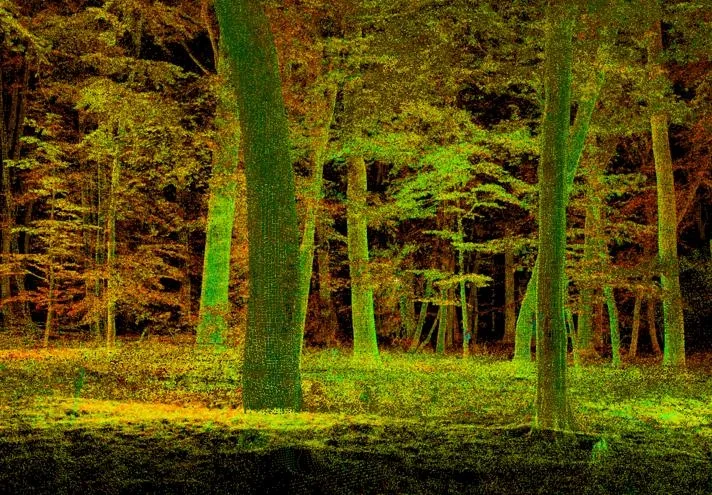
Forests of the world in 3D

Research team led by the University of Göttingen analyses complexity of forest structure

Forests of the world in 3D
2021-02-05
(Press-News.org) Primeval forests are of great importance for biodiversity and global carbon and water cycling. The three-dimensional structure of forests plays an important role here because it influences processes of gas and energy exchange with the atmosphere, whilst also providing habitats for numerous species. An international research team led by the University of Göttingen has investigated the variety of different complex structures that can be found in the world's forests, as well as the factors that explain this diversity. The results have been published in Nature Communications.

The researchers investigated the structure of primeval forests on several continents in different climate zones. To achieve this, they spent two years travelling to remote primeval forest areas around the world to record the structure of the forests with the help of 3D laser scanners. A laser scanner captures the environment with the help of a laser beam and thus builds a 3D representation of the forest. This allows important metrics to be calculated to describe the structure. They found that the global variability of forest structures can be explained to a large extent by the amount of precipitation and thus by the availability of water in the different ecosystems. Based on these findings and with the help of climate data, they were able to create maps of the world's forests showing the global variability of structural complexity.

The world maps describe the structures that forests can develop free from human influence. Only 30 percent of the world's forests are still primeval forests. "A long-term goal of our research is to better understand how human influence and climate change affect the forest, its structure and the processes linked to it. The structure of primeval forests is an important reference point for this," says first author Dr Martin Ehbrecht from the University of Göttingen. A particular focus here is the question of how changes in precipitation patterns due to climate change affect the structure of forests. "The importance of water for the formation of complex forest structures can be explained by various interacting mechanisms," says Ehbrecht. "The availability of water is an important driver of the diversity of tree species. The more tree species a forest holds, the more pronounced is the coexistence of different crown shapes and sizes of trees. This means that the space available for the crowns of trees can often be utilised more efficiently in species-rich forests, which makes the forest structure more complex."

Tropical rainforests have a more complex structure than the deciduous and coniferous forests found in temperate zones, which are in turn generally more complex in structure than boreal coniferous forests such as those in Scandinavia, or subtropical forest savannahs in Africa. "Nevertheless, forests with high structural complexity can also be found in temperate zones, such as in areas with a high rainfall like the Pacific Northwest of the USA or in coastal forests of Chile," says Professor Ammer, senior author of the study and head of Silviculture and Forest Ecology of Temperate Zones at Göttingen University.

The results of this study are an important starting point for further work. "With the help of satellite-based recording of 3-D forest structure, in the future it will be possible to precisely record the actual complexity of forests," says Ehbrecht. "This will make it possible to better understand the effects of forest management and climate change on the world's forests. Our world maps can serve as an important reference for this."

INFORMATION:

Original publication: Martin Ehbrecht et al. Global patterns and climatic controls of forest structural complexity. Nature Communications (2021). Doi: https://doi.org/10.1038/s41467-020-20767-z

Contact:
Dr Martin Ehbrecht
University of Göttingen
Silviculture and Forest Ecology of the Temperate Zones
Büsgenweg 1, 37077 Göttingen, Germany
martin.ehbrecht@forst.uni-goettingen.de


[Attachments] See images for this press release:
Forests of the world in 3D

ELSE PRESS RELEASES FROM THIS DATE:

Vegan diet better for weight loss and cholesterol control than Mediterranean diet

2021-02-05
A vegan diet is more effective for weight loss than a Mediterranean diet, according to a groundbreaking new study that compared the diets head to head. The randomized crossover trial, which was END ...

Healthy oceans need healthy soundscapes

2021-02-05
Rain falls lightly on the ocean's surface. Marine mammals chirp and squeal as they swim along. The pounding of surf along a distant shoreline heaves and thumps with metronomic regularity. These are the sounds that most of us associate with the marine environment. But the soundtrack of the healthy ocean no longer reflects the acoustic environment of today's ocean, plagued with human-created noise. A global team of researchers set out to understand how human-made noise affects wildlife, from invertebrates to whales, in the oceans, and found overwhelming evidence that marine fauna, and their ecosystems, are negatively ...

Scientists extract pigments from algae for food supplements

Scientists extract pigments from algae for food supplements
2021-02-05
In the framework of the Chlorella microalgae cultivation process, the researchers from Peter the Great St.Petersburg Polytechnic University (SPbPU) obtained microalgae biomass with a high content of carotenoid pigments, which is suitable for the food industry. The research results were published Nov. 2020 in the scientific journal "Agronomy Research". The deterioration of the ecological status of urban areas and the industrialization of the food industry requires the additional enrichment of the diet with biologically valuable food substances. Such pigments as carotenoids, from which vitamin A is synthesized in the body, are ...

Student astronomer finds galactic missing matter

Student astronomer finds galactic missing matter
2021-02-05
Astronomers have for the first time used distant galaxies as 'scintillating pins' to locate and identify a piece of the Milky Way's missing matter. For decades, scientists have been puzzled as to why they couldn't account for all the matter in the universe as predicted by theory. While most of the universe's mass is thought to be mysterious dark matter and dark energy, 5 percent is 'normal matter' that makes up stars, planets, asteroids, peanut butter and butterflies. This is known as baryonic matter. However, direct measurement has only accounted for about half ...

The Ramanujan Machine

2021-02-05
Using AI and computer automation, Technion researchers have developed a "conjecture generator" that creates mathematical conjectures, which are considered to be the starting point for developing mathematical theorems. They have already used it to generate a number of previously unknown formulas. The study, which was published in the journal Nature, was carried out by undergraduates from different faculties under the tutelage of Assistant Professor Ido Kaminer of the Andrew and Erna Viterbi Faculty of Electrical Engineering at the Technion. The project deals with one of the most fundamental elements of mathematics - mathematical constants. ...

Technion researchers discover new pathway for attacking cancer cells

2021-02-05
When treating cancer, researchers are always searching for ways to remove cancer cells while minimizing damage to the rest of the body. One possible approach is to find processes unique to cancer cells, and which would allow specific targeting. If such a process can be disrupted, only those cells would be affected. A process (or absence thereof) can be unique to some types of cancer, and not be present in others. In such a case, we would want a simple way to recognize whether a particular tumor possesses the unique trait or not. The implication of this question is whether the tumor would respond to ...

Researchers find a way to increase spatial resolution in brain activity visualization

2021-02-05
Researchers from the HSE Institute for Cognitive Neuroscience have proposed a new method to process magnetoencephalography (MEG) data, which helps find cortical activation areas with higher precision. The method can be used in both basic research and clinical practice to diagnose a wide range of neurological disorders and to prepare patients for brain surgery. The paper describing the algorithm was published in the journal NeuroImage. Magnetoencephalography (MEG) is a method based on measuring very weak magnetic fields (several orders of magnitude weaker than the Earth's magnetic field) induced by the brain's electrical activity. When using MEG, researchers face the complicated task ...

Audiovisual professionalisation affects how the brain perceives media content

Audiovisual professionalisation affects how the brain perceives media content
2021-02-05
Professionalisation in any field requires long-term experience and training. In the past decades, studies have demonstrated that the professionalisation of athletes and artists create differences in the behaviour of the brain while carrying out activities related to their area of expertise. To detect the effects of media professionalisation in the brain, a research team from the Universitat Autònoma de Barcelona, the Instituto Ràdio Televisió Espanyola and the Universidad Pablo de Olavide in Seville conducted a study published in Frontiers in Systems Neuroscience in which audiovisual contents were presented to a group of media ...

Machine learning generates realistic genomes for imaginary humans

Machine learning generates realistic genomes for imaginary humans
2021-02-05
Machines, thanks to novel algorithms and advances in computer technology, can now learn complex models and even generate high-quality synthetic data such as photo-realistic images or even resumes of imaginary humans. A study recently published in the international journal PLOS Genetics uses machine learning to mine existing biobanks and generate chunks of human genomes which do not belong to real humans but have the characteristics of real genomes. "Existing genomic databases are an invaluable resource for biomedical research, but they are either not publicly accessible or shielded behind long and exhausting application procedures due to valid ethical concerns. This creates a major scientific barrier for researchers. Machine-generated genomes, or artificial ...

Tiny sensor technique reveals cellular forces involved in tissue generation

Tiny sensor technique reveals cellular forces involved in tissue generation
2021-02-05
PROVIDENCE, R.I. [Brown University] -- A new technique developed by Brown University researchers reveals the forces involved at the cellular level during biological tissue formation and growth processes. The technique could be useful in better understanding how these processes work, and in studying how they may respond to environmental toxins or drug therapies. As described in the journal Biomaterials, the technique makes use of cell-sized spheres made from a highly compliant polymer material, which can be placed in laboratory cultures of tissue-forming cells. As the tissue-formation process unfolds, microscope imaging of the spheres, which are stained with fluorescent dye, reveals the extent to which they are deformed by the pressure of surrounding cells. A ...

LAST 30 PRESS RELEASES:

Fecal microbiome and bile acid profiles differ in preterm infants with parenteral nutrition-associated cholestasis

The Institute of Science and Technology Austria (ISTA) receives €5 million donation for AI research

Study finds link between colorblindness and death from bladder cancer

Tailored treatment approach shows promise for reducing suicide and self-harm risk in teens and young adults

Call for papers: AI in biochar research for sustainable land ecosystems

Methane eating microbes turn a powerful greenhouse gas into green plastics, feed, and fuel

Hidden nitrogen in China’s rice paddies could cut fertilizer use

Texas A&M researchers expose hidden risks of firefighter gear in an effort to improve safety and performance

Wood burning in homes drives dangerous air pollution in winter

The Journal of Nuclear Medicine Ahead-of-Print Tip Sheet: January 23, 2026

ISSCR statement in response to new NIH policy on research using human fetal tissue (Notice NOT-OD-26-028)

Biologists and engineers follow goopy clues to plant-wilting bacteria

What do rats remember? IU research pushes the boundaries on what animal models can tell us about human memory

Frontiers Science House: did you miss it? Fresh stories from Davos – end of week wrap

Watching forests grow from space

New grounded theory reveals why hybrid delivery systems work the way they do

CDI scientist joins NIH group to improve post-stem cell transplant patient evaluation

Uncovering cancer's hidden oncRNA signatures: From discovery to liquid biopsy

Multiple maternal chronic conditions and risk of severe neonatal morbidity and mortality

Interactive virtual assistant for health promotion among older adults with type 2 diabetes

Ion accumulation in liquid–liquid phase separation regulates biomolecule localization

Hemispheric asymmetry in the genetic overlap between schizophrenia and white matter microstructure

Research Article | Evaluation of ten satellite-based and reanalysis precipitation datasets on a daily basis for Czechia (2001–2021)

Nano-immunotherapy synergizing ferroptosis and STING activation in metastatic bladder cancer

Insilico Medicine receives IND approval from FDA for ISM8969, an AI-empowered potential best-in-class NLRP3 inhibitor

Combined aerobic-resistance exercise: Dual efficacy and efficiency for hepatic steatosis

Expert consensus outlines a standardized framework to evaluate clinical large language models

Bioengineered tissue as a revolutionary treatment for secondary lymphedema

Forty years of tracking trees reveals how global change is impacting Amazon and Andean Forest diversity

Breathing disruptions during sleep widespread in newborns with severe spina bifida

[Press-News.org] Forests of the world in 3D
Research team led by the University of Göttingen analyses complexity of forest structure