PRESS-NEWS.org - Press Release Distribution
PRESS RELEASES DISTRIBUTION

Fishes contribute roughly 1.65 billion tons of carbon in feces and other matter annually

Study estimates fishes contribute about 16 percent of the sinking carbon in upper ocean waters

Fishes contribute roughly 1.65 billion tons of carbon in feces and other matter annually
2021-02-17
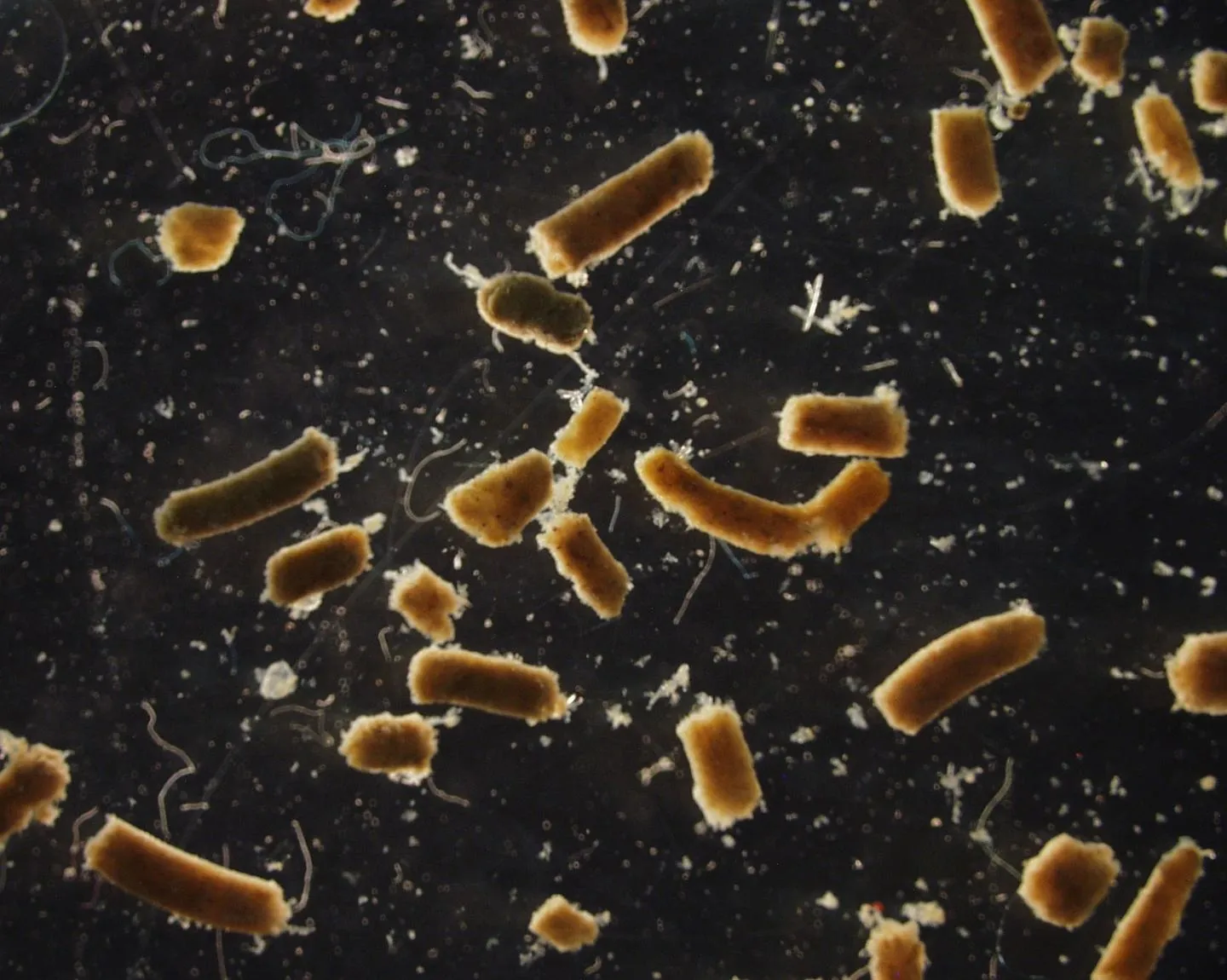
(Press-News.org) Scientists have little understanding of the role fishes play in the global carbon cycle linked to climate change, but a Rutgers-led study found that carbon in feces, respiration and other excretions from fishes - roughly 1.65 billion tons annually - make up about 16 percent of the total carbon that sinks below the ocean's upper layers.

Better data on this key part of the Earth's biological pump will help scientists understand the impact of climate change and seafood harvesting on the role of fishes in carbon flux, according to the study - the first of its kind - in the journal Limnology and Oceanography. Carbon flux means the movement of carbon in the ocean, including from the surface to the deep sea - the focus of this study.

"Our study is the first to review the impact that fishes have on carbon flux," said lead author Grace K. Saba, an assistant professor in the Center for Ocean Observing Leadership in the Department of Marine and Coastal Sciences in the School of Environmental and Biological Sciences at Rutgers University-New Brunswick. "Our estimate of the contribution by fish - about 16 percent - includes a large uncertainty, and scientists can improve it with future research. Forms of carbon from fish in ocean waters where sunlight penetrates - up to about 650 feet deep - include sinking fecal pellets, inorganic carbon particles (calcium carbonate minerals), dissolved organic carbon and respired carbon dioxide."

The ocean plays a vital role in the Earth's carbon cycle by exchanging carbon dioxide, a key greenhouse gas linked to global warming and climate change, with the atmosphere. Carbon dioxide absorbed by the ocean is taken up by phytoplankton (algae), small single-celled plants at the ocean's surface. Through an important process called the biological pump, this organic carbon can go from the surface to ocean depths when algal material or fecal pellets from fishes and other organisms sink. The daily migration of fishes to and from the depths also contributes organic carbon particles, along with excreted and respired material. Another factor is mixing of ocean waters.

"Carbon that makes its way below the sunlit layer becomes sequestered, or stored, in the ocean for hundreds of years or more, depending on the depth and location where organic carbon is exported," Saba said. "This natural process results in a sink that acts to balance the sources of carbon dioxide."

INFORMATION:

Scientists at many institutions contributed to the study, which is a product of the Fish Carbon Working Group led by Saba since 2018 and funded by the Ocean Carbon and Biogeochemistry program, which is supported by the National Science Foundation and National Aeronautics and Space Administration.


[Attachments] See images for this press release:
Fishes contribute roughly 1.65 billion tons of carbon in feces and other matter annually

ELSE PRESS RELEASES FROM THIS DATE:

Credit card-sized soft pumps power wearable artificial muscles

Credit card-sized soft pumps power wearable artificial muscles
2021-02-17
Robotic clothing that is entirely soft and could help people to move more easily is a step closer to reality thanks to the development of a new flexible and lightweight power system for soft robotics. The discovery by a team at the University of Bristol could pave the way for wearable assist devices for people with disabilities and people suffering from age-related muscle degeneration. The study is published today [17 February] in Science Robotics. Soft robots are made from compliant materials that can stretch and twist. These materials can be made into artificial muscles that contract when air is pumped into them. The softness of these muscles makes then suited to powering assistive clothing. Until now, however, these ...

Study links prolonged sedentary time to distractibility in adults with obesity, overweight

Study links prolonged sedentary time to distractibility in adults with obesity, overweight
2021-02-17
CHAMPAIGN, Ill. -- Scientists used accelerometers to track daily activity levels for a week in 89 adults with obesity or overweight and, in a series of tests, measured their ability to multitask and maintain their attention despite distractions. The study revealed that individuals who spent more sedentary time in bouts lasting 20 minutes or more were less able to overcome distractions. Reported in the International Journal of Obesity, the research adds to the evidence linking sedentary behaviors and cognition, said University of Illinois Urbana-Champaign kinesiology and ...

Genotoxic E. coli 'caught in the act'

Genotoxic E. coli caught in the act
2021-02-17
Escherichia coli bacteria are constitutive members of the human gut microbiota. However, some strains produce a genotoxin called colibactin, which is implicated in the development of colorectal cancer. While it has been shown that colibactin leaves very specific changes in the DNA of host cells that can be detected in colorectal cancer cells, such cancers take many years to develop, leaving the actual process by which a normal cell becomes cancerous obscure. The group of Thomas F. Meyer at the Max Planck Institute for Infection Biology in Berlin together with their collaborators have now been able to "catch colibactin in the act" of inducing genetic changes that are characteristic of colorectal cancer cells and cause a transformed ...

Scientists develop blood test to predict environmental harms to children

2021-02-17
Scientists at Columbia University Mailman School of Public Health developed a method using a DNA biomarker to easily screen pregnant women for harmful prenatal environmental contaminants like air pollution linked to childhood illness and developmental disorders. This approach has the potential to prevent childhood developmental disorders and chronic illness through the early identification of children at risk. While environmental factors--including air pollutants--have previously been associated with DNA markers, no studies to date have used DNA markers to flag environmental exposures in children. Study results are published ...

Physical therapy after c-section improves outcomes

2021-02-17
Women who received physical therapy after undergoing a cesarean section had significantly improved outcomes compared to those who did not according to a new study from University of Missouri Health Care. "C-section is one of the most commonly performed inpatient procedures, and women who require C-section instead of a spontaneous vaginal delivery are at least twice as likely to suffer low back and pelvic pain," said study author Jennifer Stone, DPT, of MU Health Care's Mizzou Therapy Services. "Our goal was to evaluate the impact of comprehensive physical therapy on recovery following a cesarean birth." Stone's study recruited 72 women who delivered by cesarean section ...

Self-healing concrete for regions with high moisture and seismic activity

Self-healing concrete for regions with high moisture and seismic activity
2021-02-17
Preparing regular concrete scientists replaced ordinary water with water concentrate of bacteria Bacillus cohnii, which survived in the pores of cement stone. The cured concrete was tested for compression until it cracked, then researchers observed how the bacteria fixed the gaps restoring the strength of the concrete. The engineers of the Polytechnic Institute of Far Eastern Federal University (FEFU), together with colleagues from Russia, India, and Saudi Arabia, reported the results in Sustainability journal. During the experiment, bacteria activated when gained access to oxygen and moisture, which occurred after the concrete cracked under the pressure of the setup. The "awakened" bacteria completely repaired fissures with a width ...

Vets' depression, social support & psychological resilience play role in later well being

2021-02-17
(Boston)--Veterans who experienced the combination of low depression, high social support and high psychological resilience as they left military service were most likely to report high well-being a year later. Neither demographic and military characteristics nor trauma history emerged as strong predictors of veterans' well-being when considered in the context of other factors. Although most predictors were similar for women and men, depression was a stronger predictor of women's well-being. Every year, more than 200,000 U.S. service members transition out of the military. Although most military veterans can be expected ...

Platelets may play key role in development of lupus

2021-02-17
Québec City, February 17, 2021 - Platelets may play a key role in the development of lupus, according to a study published today by researchers at Université Laval and CHU de Québec-Université Laval Research Centre. Extracellular DNA circulating in the blood of patients with lupus causes the inflammatory reaction associated with the disease. The researchers have shown that this DNA comes in part from the platelets, better known for their role in coagulating blood. The details of the breakthrough have been published today in Science ...

Helping Congress get the most from research

2021-02-17
UNIVERSITY PARK, Pa. -- In a new study, Penn State researchers demonstrated that facilitating researcher-policymaker interactions in rapid response processes can influence both how legislators think about policy issues and how they draft legislation. Penn State professors Max Crowley, associate professor of human development and family studies, and public policy, and Taylor Scott, assistant research professor in the Edna Bennett Pierce Prevention Research Center, co-direct the Research-to-Policy Collaboration, which connects members of Congress with researchers who synthesize evidence about family and child policy in a timely and digestible ...

New potential therapy for Crohn's disease in children

2021-02-17
Scientists from the Stanley Manne Children's Research Institute at Ann & Robert H. Lurie Children's Hospital of Chicago demonstrated that a nanotherapy reduces intestinal inflammation and shrinks lesions in a rodent model of severe Crohn's disease. This approach could become an alternative to biologic antibody therapies that carry many side effects, including increased risk of certain cancers. It might also prevent the need for surgery in the future. Findings were published in the journal Advanced Therapeutics. Crohn's disease is an inflammatory bowel disease characterized by chronic inflammation of the digestive tract, most often in the small intestine. ...

LAST 30 PRESS RELEASES:

Jeonbuk National University researchers develop DDINet for accurate and scalable drug-drug interaction prediction

IEEE researchers achieve 20x signal boost in cerebral blood flow monitoring with next-generation interferometric diffusing wave spectroscopy

IEEE researchers achieve low-power ultrashort mid-IR pulse compression

Deep-sea natural compound targets cancer cells through a dual mechanism

Antibiotics can affect the gut microbiome for several years 

Study: Electrical stimulation can restore ability to move limbs, receive sensory feedback after spinal cord injury

Rice scientists unveil new tool to watch quantum behavior in action

Gene-based therapies poised for major upgrade thanks to Oregon State University research

Extreme heat has extreme effects r—but some like it hot

Blood marker for Alzheimer’s may also be useful in heart and kidney diseases

Climate extremes hinder early development in young birds

Climate policies: The swing voters that determine their fate

Building protection against infectious diseases with nanostructured vaccines

Oval orbit casts new light on black hole - neutron star mergers

Does online sports gambling affect substance use behaviors?

How do rapid socio-environmental transitions reshape cancer risk?

Do abortion bans affect birth rates and food-assistance costs?

Can artificial intelligence help reduce the carbon footprint of weather forecasting models?

Mangrove forests are short of breath

Low testosterone, high fructose: A recipe for liver disaster

SKKU research team unravels the origin of stochasticity, a key to next-generation data security and computing

Flexible polymer‑based electronics for human health monitoring: A safety‑level‑oriented review of materials and applications

Could ultrasound help save hedgehogs?

attexis RCT shows clinically relevant reduction in adult ADHD symptoms and is published in Psychological Medicine

Cellular changes linked to depression related fatigue

First degree female relatives’ suicidal intentions may influence women’s suicide risk

Specific gut bacteria species (R inulinivorans) linked to muscle strength

Wegovy may have highest ‘eye stroke’ and sight loss risk of semaglutide GLP-1 agonists

New African species confirms evolutionary origin of magic mushrooms

Mining the dark transcriptome: University of Toronto Engineering researchers create the first potential drug molecules from long noncoding RNA

[Press-News.org] Fishes contribute roughly 1.65 billion tons of carbon in feces and other matter annually
Study estimates fishes contribute about 16 percent of the sinking carbon in upper ocean waters