PRESS-NEWS.org - Press Release Distribution
PRESS RELEASES DISTRIBUTION

A cat of all trades

A cat of all trades
2021-02-25
(Press-News.org) Large carnivores are generally sensitive to ecosystem changes because their specialized diet and position at the top of the trophic pyramid is associated with small population sizes. This in turn leads to lower genetic diversity in top predators compared to animals lower down the food chain. Genetic diversity is very important for a species' ability to survive and adapt to future changes.

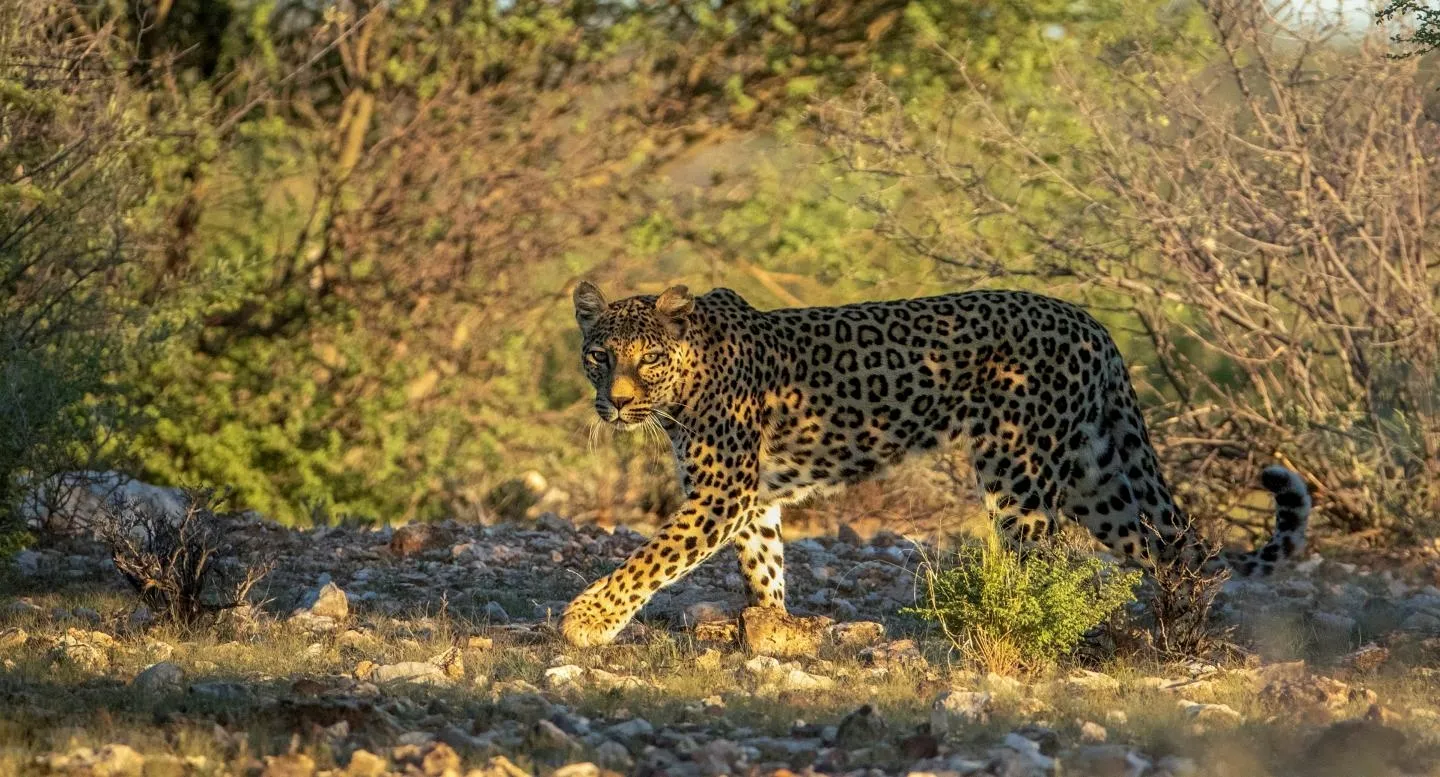
Extraordinary genetic diversity in an extraordinary cat In this study, the researchers sequenced the complete genome of 53 African leopards and compared them to the Amur leopards and other big cat species. To their surprise, the researchers found that the genetic diversity of African leopards is extremely high: Almost four times higher than the Amur leopard's, twice as high as the lion's and almost five times higher than the cheetah's.

Patrícia Pečnerová, postdoc at the Department of Biology and one of the shared first authors, explains: - "The exceptional genetic diversity is likely a result of the leopard's ability to avoid population crashes and reductions. We found that during hundreds of thousands of years, African leopard populations remained large. We think that this reflects the versatility of the species, feeding on a wider variety of prey than any of the other large predators."

Roaming every habitat in Africa - but for how long? The high genetic diversity of the African leopards is not the only surprise hidden in the leopard genomes. They also show fewer genetic barriers within the continent of Africa than other mammal species.

Kristian Hanghøj, one of the corresponding authors of the study explains: - "We believe that during evolutionary history the leopard roamed the African continent more freely than almost any other mammal species, exchanging genetic material throughout. It has a unique ability to succeed in almost any habitat and climate and neither rain forests, nor deserts seem to have blocked the movements of leopards over the millennia."

The surprising findings demonstrate how the ecology of a species - such as how 'picky' it is about habitat and prey, can influence its genomic variation. The exceptionally high genetic diversity could give the African leopard an advantage in coping with environmental challenges, including climate change and habitat destruction.

However, habitat fragmentation is a severe threat to all large animals, even those as adept at coping with human presence as the leopard. The human-made changes to natural habitats are occurring at a pace that is likely too fast for almost any wild animal species to adapt to, and previous studies have shown that African leopards have lost 48-67% of their natural habitat over the last 300 years.

- "To place our results into a greater context, we emphasize that the African leopard is also facing severe threats to its survival, despite being sort of an evolutionary success", finishes Patrícia Pečnerová.

INFORMATION:


[Attachments] See images for this press release:
A cat of all trades

ELSE PRESS RELEASES FROM THIS DATE:

Just published: Compilation of research on PFAS in the environment

2021-02-25
Per- and polyfluoroalkyl substances (PFAS) are a class of man-made chemical compounds and a current, emerging concern to environmental health. PFAS substances have unique characteristics-resistance to heat, water, oil and stains-that make them useful in a variety of industrial applications and popular in consumer goods. Many PFAS are stable and long-lasting in the environment, acquiring the name "forever chemicals." Industrial use of some of these compounds has been halted; however, many derivatives are still in commerce and more are under development. PFAS are now found in many compartments of the environment. In ...

Removing one barrier to opioid use disorder treatment

2021-02-25
On January 14, 2021, the Department of Health and Human Services (HHS) submitted notice to the Federal Register that it would issue practice guidelines that exempt physicians from the requirement to apply for a waiver to prescribe buprenorphine to treat opioid use disorder (OUD) in up to 30 patients at one time. This exemption has been placed on hold by the Biden administration and may require legislative change to implement. An exemption to the X-waiver has the potential to help reverse the morbidity and mortality associated with the opioid overdose epidemic, although without accompanying changes and attention it will not be enough. The combination of the COVID-19 pandemic and the opioid overdose epidemic fueled by high-potency synthetic ...

Risk genes in schizophrenia - their importance in choosing appropriate antipsychotic drug

Risk genes in schizophrenia - their importance in choosing appropriate antipsychotic drug
2021-02-25
Dr. Felix-Martin Werner, working at the Euro Academy Pößneck in Germany and Prof. Rafael Coveñas, working at the Institute of Neurosciences of Castilla and León, Salamanca in Spain, have been working on neurological and psychiatric disease for over ten years. In their most recent review, published in Current Pharmaceutical Design (Bentham Science Publishers) Werner and Coveñas cover information about the risk genes in schizophrenia and explain the importance of examining their single nucleotide polymorphisms (SNP's). In schizophrenia, 260 risk genes ...

Artificial 'brain' reveals why we can't always believe our eyes

2021-02-25
A computer network closely modelled on part of the human brain is enabling new insights into the way our brains process moving images - and explains some perplexing optical illusions. By using decades' worth of data from human motion perception studies, researchers have trained an artificial neural network to estimate the speed and direction of image sequences. The new system, called MotionNet, is designed to closely match the motion-processing structures inside a human brain. This has allowed the researchers to explore features of human visual processing that cannot be directly measured in the brain. Their study, published in the Journal of Vision, uses the artificial system ...

Harnessing the power of proteins in our cells to combat disease

Harnessing the power of proteins in our cells to combat disease
2021-02-25
Over many decades now, traditional drug discovery methods have steadily improved at keeping diseases at bay and cancer in remission. And for the most part, it's worked well. But it hasn't worked perfectly. A lab on UNLV's campus has been a hub of activity in recent years, playing a significant role in a new realm of drug discovery -- one that could potentially provide a solution for patients who have run out of options. "It's starting to get to the point where we've kind of taken traditional drug discovery as far as we can, and we really need something new," said UNLV biochemist Gary Kleiger. Traditional drug discovery involves what is called the small molecule approach. To attack a protein that's causing disease in a cancer cell, for instance, ...

Toronto's COVID-19 bike lane expansion boosted access to jobs, retail

Torontos COVID-19 bike lane expansion boosted access to jobs, retail
2021-02-25
With COVID-19 making it vital for people to keep their distance from one another, the city of Toronto undertook the largest one-year expansion of its cycling network in 2020, adding about 25 kilometres of temporary bikeways. Yet, the benefits of helping people get around on two wheels go far beyond facilitating physical distancing, according to a recent study by three University of Toronto researchers that was published in the journal Transport Findings. University of Toronto Engineering PhD candidate Bo Lin, as well as professors Shoshanna Saxe and Timothy Chan used ...

Male lyrebirds create an "acoustic illusion" to snare potential mates

Male lyrebirds create an acoustic illusion to snare potential mates
2021-02-25
Ithaca, NY--Famous for their uncanny ability to imitate other birds and even mechanical devices, researchers find that Australia's Superb Lyrebird also uses that skill in a totally unexpected way. Lyrebirds imitate the panicked alarm calls of a mixed-species flock of birds while males are courting and even while mating with a female. These findings are published in the journal Current Biology. "The male Superb Lyrebird creates a remarkable acoustic illusion," says Anastasia Dalziell, currently a Cornell Lab of Ornithology Associate and recent Cornell Lab Rose Postdoctoral Fellow, now at the ...

Smaller plates help reduce food waste in campus dining halls

Smaller plates help reduce food waste in campus dining halls
2021-02-25
URBANA, Ill. - Food waste is a major problem in the U.S., and young adults are among the worst culprits. Many of them attend college or university and live on campus, making dining halls a prime target for waste reduction efforts. And a simple intervention can make a big difference, a University of Illinois study shows. Shifting from round to oval plates with a smaller surface area can significantly reduce food waste in dining halls, says Brenna Ellison, associate professor in the Department of Agricultural and Consumer Economics (ACE) and co-author on the study. "Americans waste about 31% of the food that is available at the retail and consumer levels," Ellison says. "All-you-can-eat ...

New radiology research shows promising results for focused ultrasound treatment of Alzheimer's

New radiology research shows promising results for focused ultrasound treatment of Alzheimers
2021-02-25
West Virginia University scientists used MRI scans to show what happens when ultrasound waves target a specific area of Alzheimer's patient's brains. They concluded that this treatment may induce an immunological healing response, a potential breakthrough for a disease that accounts for up to 80% of all dementia cases. Rashi Mehta, a researcher with the WVU School of Medicine and Rockefeller Neuroscience Institute, led the study that appears in the journal Radiology. "Focused ultrasound is an innovative technique and new way of approaching brain diseases, including Alzheimer's disease," said Mehta, an associate professor ...

Study finds changes in gut microbiome connected to Alzheimer's-like behavior

2021-02-25
New research in mice published today in the journal Scientific Reports strengthens the growing scientific consensus regarding the role of the gut microbiome in neurodegenerative disorders including Alzheimer's disease. The study, led by researchers at Oregon Health & Science University, found a correlation between the composition of the gut microbiome and the behavioral and cognitive performance of mice carrying genes associated with Alzheimer's. The mice carried the human amyloid precursor protein gene with dominant Alzheimer's mutations generated by scientists in Japan. The study further suggests a relationship between microbes in the digestive tract ...

LAST 30 PRESS RELEASES:

Evidence behind intermittent fasting for weight loss fails to match hype

How AI tools like DeepSeek are transforming emotional and mental health care of Chinese youth

Study finds link between sugary drinks and anxiety in young people

Scientists show how to predict world’s deadly scorpion hotspots

ASU researchers to lead AAAS panel on water insecurity in the United States

ASU professor Anne Stone to present at AAAS Conference in Phoenix on ancient origins of modern disease

Proposals for exploring viruses and skin as the next experimental quantum frontiers share US$30,000 science award

ASU researchers showcase scalable tech solutions for older adults living alone with cognitive decline at AAAS 2026

Scientists identify smooth regional trends in fruit fly survival strategies

Antipathy toward snakes? Your parents likely talked you into that at an early age

Sylvester Cancer Tip Sheet for Feb. 2026

Online exposure to medical misinformation concentrated among older adults

Telehealth improves access to genetic services for adult survivors of childhood cancers

Outdated mortality benchmarks risk missing early signs of famine and delay recognizing mass starvation

Newly discovered bacterium converts carbon dioxide into chemicals using electricity

Flipping and reversing mini-proteins could improve disease treatment

Scientists reveal major hidden source of atmospheric nitrogen pollution in fragile lake basin

Biochar emerges as a powerful tool for soil carbon neutrality and climate mitigation

Tiny cell messengers show big promise for safer protein and gene delivery

AMS releases statement regarding the decision to rescind EPA’s 2009 Endangerment Finding

Parents’ alcohol and drug use influences their children’s consumption, research shows

Modular assembly of chiral nitrogen-bridged rings achieved by palladium-catalyzed diastereoselective and enantioselective cascade cyclization reactions

Promoting civic engagement

AMS Science Preview: Hurricane slowdown, school snow days

Deforestation in the Amazon raises the surface temperature by 3 °C during the dry season

Model more accurately maps the impact of frost on corn crops

How did humans develop sharp vision? Lab-grown retinas show likely answer

Sour grapes? Taste, experience of sour foods depends on individual consumer

At AAAS, professor Krystal Tsosie argues the future of science must be Indigenous-led

From the lab to the living room: Decoding Parkinson’s patients movements in the real world

[Press-News.org] A cat of all trades