36 dwarf galaxies had simultaneous 'baby boom' of new stars
Surprising finding challenges current theories on how galaxies grow
Published 2021-05-24 · Original archive entry · Explore research explainers
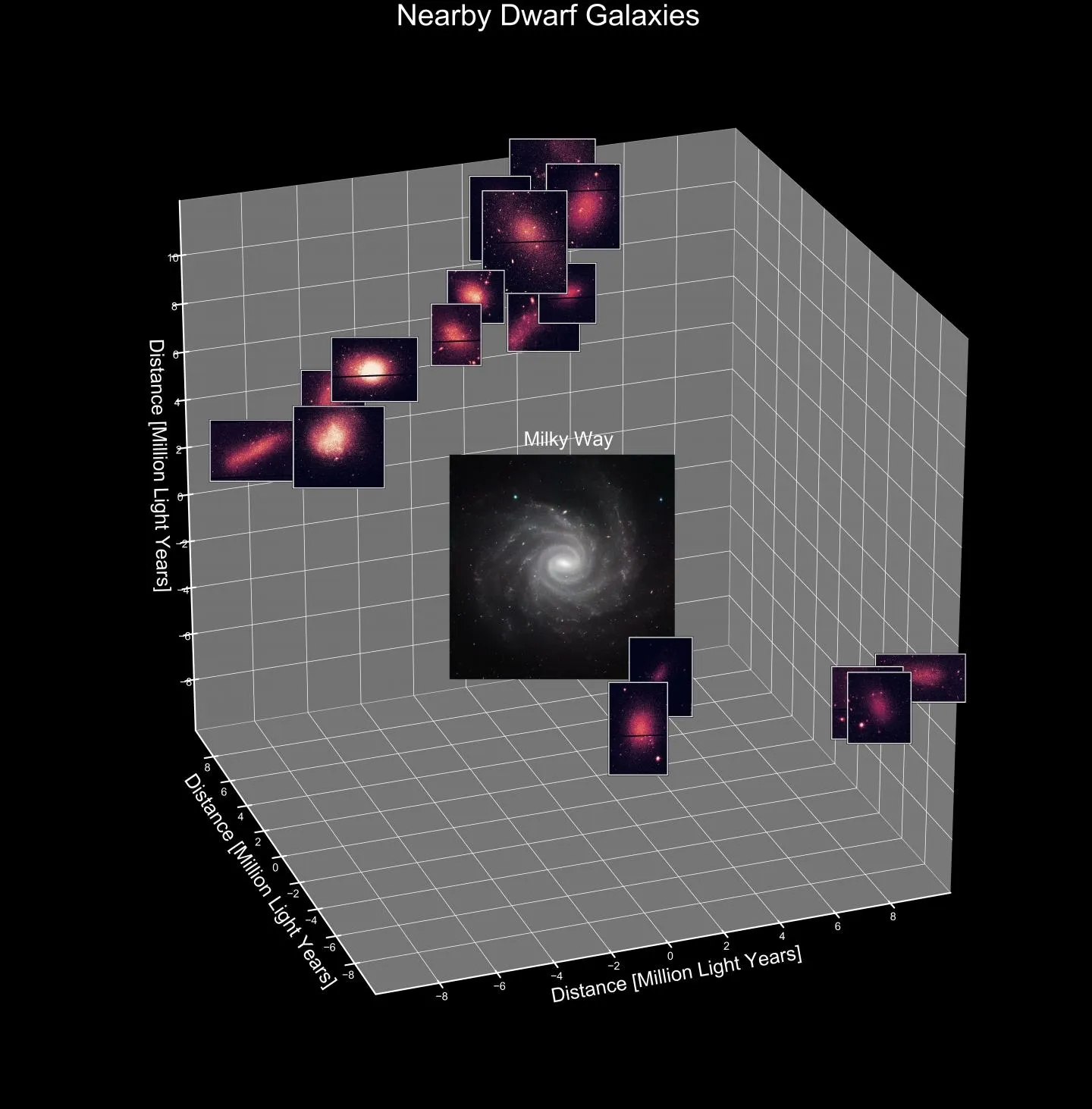
Three dozen dwarf galaxies far from each other had a simultaneous "baby boom" of new stars, an unexpected discovery that challenges current theories on how galaxies grow and may enhance our understanding of the universe.
Galaxies more than 1 million light-years apart should have completely independent lives in terms of when they give birth to new stars. But galaxies separated by up to 13 million light-years slowed down and then simultaneously accelerated their birth rate of stars, according to a Rutgers-led study published in the Astrophysical Journal.
"It appears that these galaxies are responding to a large-scale change in their environment in the same way a good economy can spur a baby boom," said lead author END
Galaxies more than 1 million light-years apart should have completely independent lives in terms of when they give birth to new stars. But galaxies separated by up to 13 million light-years slowed down and then simultaneously accelerated their birth rate of stars, according to a Rutgers-led study published in the Astrophysical Journal.
"It appears that these galaxies are responding to a large-scale change in their environment in the same way a good economy can spur a baby boom," said lead author END