PRESS-NEWS.org - Press Release Distribution
PRESS RELEASES DISTRIBUTION

The universe's most massive stars can form in near isolation, new study finds

The universe's most massive stars can form in near isolation, new study finds
2010-12-22
(Press-News.org) ANN ARBOR, Mich.---New observations by University of Michigan astronomers add weight to the theory that the most massive stars in the universe could form essentially anywhere, including in near isolation; they don't need a large stellar cluster nursery.

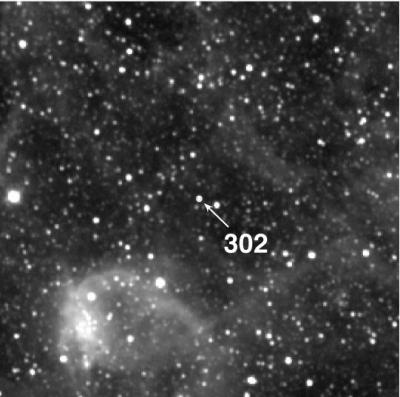
This is the most detailed observational study to date of massive stars that appear (from the ground) to be alone. The scientists used the Hubble Space Telescope to zoom in on eight of these giants, which range from 20 to 150 times as massive as the Sun. The stars they looked at are in the Small Magellanic Cloud, a dwarf galaxy that's one of the Milky Way's nearest neighbors.

Their results, published in the Dec. 20 edition of the Astrophysical Journal, show that five of the stars had no neighbors large enough for Hubble to discern. The remaining three appeared to be in tiny clusters of ten or fewer stars.

Doctoral student Joel Lamb and associate professor Sally Oey, both in the Department of Astronomy, explained the significance of their findings.

"My dad used to fish in a tiny pond on his grandma's farm," Lamb said. "One day he pulled out a giant largemouth bass. This was the biggest fish he's caught, and he's fished in a lot of big lakes. What we're looking at is analogous to this. We're asking: 'Can a small pond produce a giant fish? Does the size of the lake determine how big the fish is?' The lake in this case would be the cluster of stars.

"Our results show that you can, in fact, form big stars in small ponds."

The most massive stars direct the evolution of their galaxies. Their winds and radiation shape interstellar gas and promote the birth of new stars. Their violent supernovae explosions create all the heavy elements that are essential for life and the Earth. That's why astronomers want to understand how and where these giant stars form. There is currently a big debate about their origins, Oey said.

One theory is that the mass of a star depends on the size of the cluster in which it is born, and only a large star cluster could provide a dense enough source of gas and dust to bring about one of these massive stars. The opposing theory, and the one that this research supports, is that these monstrous stars can and do form more randomly across the universe---including in isolation and in very small clusters.

"Our findings don't support the scenario that the maximum mass of a star in a cluster has to correlate with the size of the cluster," Oey said.

The researchers acknowledge the possibility that all of the stars they studied might not still be located in the neighborhood they were born in. Two of the stars they examined are known to be runaways that have been kicked out of their birth clusters. But in several cases, the astronomers found wisps of leftover gas nearby, strengthening the possibility that the stars are still in the isolated places where they formed.


INFORMATION:

The title of the paper is "The Sparsest Clusters With O Stars." The research is funded by NASA and the National Science Foundation.

For more information:
Sally Oey: http://www.astro.lsa.umich.edu/~msoey/
Joel Lamb: http://www.astro.lsa.umich.edu/~joellamb/


[Attachments] See images for this press release:
The universe's most massive stars can form in near isolation, new study finds

ELSE PRESS RELEASES FROM THIS DATE:

Seminal papers on election law and election administration

Seminal papers on election law and election administration
2010-12-22
New Rochelle, NY, December 21, 2010—A festschrift honoring Daniel H. Lowenstein, a pioneering legal scholar, Professor at UCLA School of Law, and Founding Co-Editor of Election Law Journal, who devoted his career to advancing election law and campaign finance reform, highlights the current issue of Election Law Journal, a peer-reviewed publication of Mary Ann Liebert, Inc. The issue is available free online. "Dan quite literally founded the field of election law," says UCLA School of Law professor and colleague of Lowenstein's, Adam Winkler in his introduction. Winkler ...

Women war veterans face higher risk of mental health problems during pregnancy

2010-12-22
New Rochelle, NY, December 21, 2010—Pregnancy among women veterans who served in Iraq and Afghanistan appears to increase their risk for mental health problems such as depression, anxiety, and post-traumatic stress disorder (PTSD), according to a study published in Journal of Women's Health, a peer-reviewed journal published by Mary Ann Liebert, Inc. The paper is available free online. The stress associated with military service in a war zone may later contribute to an increased risk of mental health problems if a woman veteran becomes pregnant. Because the hormonal ...

Long-lasting chemicals threaten the environment and human health

Long-lasting chemicals threaten the environment and human health
2010-12-22
Every hour, an enormous quantity and variety of manmade chemicals, having reached the end of their useful lifespan, flood into wastewater treatment plants. These large-scale processing facilities, however, are designed only to remove nutrients, turbidity and oxygen-depleting human waste, and not the multitude of chemicals put to residential, institutional, commercial and industrial use. So what happens to these chemicals, some of which may be toxic to humans and the environment? Do they get destroyed during wastewater treatment or do they wind up in the environment with ...

CSHL scientists show in unprecedented detail how cortical nerve cells form synapses with neighbors

2010-12-22
Cold Spring Harbor, NY-- Newly published research led by Professor Z. Josh Huang, Ph.D., of Cold Spring Harbor Laboratory (CSHL) sheds important new light on how neurons in the developing brain make connections with one another. This activity, called synapse validation, is at the heart of the process by which neural circuits self-assemble, and is directly implicated in pathology that gives rise to devastating neurodevelopmental disorders including autism and schizophrenia. In the mammalian brain, even in its early stages of postnatal development, the cortex, the seat ...

Obesity increases risk of death in severe vehicle crashes, study shows

2010-12-22
BUFFALO, N.Y. -- Moderately and morbidly obese persons face many health issues -- heart disease, diabetes, hypertension, stroke, gallbladder disease and others. Now, increased chances of dying while driving during a severe auto accident can be added to the list. In a severe motor vehicle crash, a moderately obese driver faces a 21 percent increased risk of death, while the morbidly obese face a 56 percent increased risk of not surviving, according to a study posted online ahead of print in the American Journal of Emergency Medicine. Dietrich Jehle, MD, professor of ...

Polar bears no longer on 'thin ice': researchers say polar bears could face brighter future

Polar bears no longer on thin ice: researchers say polar bears could face brighter future
2010-12-22
VIDEO: Science team placing radio collars on polar bears. Click here for more information. PORTLAND, Ore. December 21, 2010. "When I first picked up the cub, she was biting my hand," explains wildlife biologist Bruce Marcot. He was trying to calm the squirming cub while its sedated mother slept nearby. In the snowy spring of 2009, Portland-based Marcot traveled with several colleagues onto the frozen Arctic Ocean north of Alaska to study and survey polar bear populations. ...

Psychologists find skill in recognizing faces peaks after age 30

2010-12-22
CAMBRIDGE, Mass., Dec. 21, 2010 -- Scientists have made the surprising discovery that our ability to recognize and remember faces peaks at age 30 to 34, about a decade later than most of our other mental abilities. Researchers Laura T. Germine and Ken Nakayama of Harvard University and Bradley Duchaine of Dartmouth College will present their work in a forthcoming issue of the journal Cognition. While prior evidence had suggested that face recognition might be slow to mature, Germine says few scientists had suspected that it might continue building for so many years ...

Shopping differences between sexes show evolution at work

2010-12-22
ANN ARBOR, Mich.---The last-minute holiday dash is on: Men tend to rush in for their prized item, pay, and leave. Women study the fabrics, color, texture and price. The hunting and gathering ritual of yesteryear continues today in malls around the world. Understanding the shopping behavior of your partner can help relieve stress at the stores, according to a researcher at the University of Michigan. Daniel Kruger of the U-M School of Public Health says that gathering edible plants and fungi is traditionally done by women. In modern terms, think of filling a basket by ...

UNH scientists help show potent GHG emissions are 3 times estimated levels

2010-12-22
DURHAM, N.H. – In a study published December 20 in the Proceedings of the National Academy Sciences (PNAS), a team of researchers including University of New Hampshire scientists Wilfred Wollheim, William McDowell, and Jody Potter details findings that show emissions of the potent greenhouse gas nitrous oxide from global rivers and streams are three times previous estimates used by the Intergovernmental Panel on Climate Change – the leading international body for the assessment of climate change. Waterways receiving nitrogen from human activities such as agriculture and ...

Jefferson Lab laser twinkles in rare color

2010-12-22
December is a time for twinkling lights, and scientists at the Department of Energy's Thomas Jefferson National Accelerator Facility are delivering. They've just produced a long-sought, rare color of laser light 100 times brighter than that generated anywhere else. The light was produced by Jefferson Lab's Free-Electron Laser facility. The laser delivered vacuum ultraviolet light in the form of 10 eV photons (a wavelength of 124 nanometers). This color of light is called vacuum ultraviolet because it is absorbed by molecules in the air, requiring its use in a vacuum. "We ...

LAST 30 PRESS RELEASES:

Scientists show how to predict world’s deadly scorpion hotspots

ASU researchers to lead AAAS panel on water insecurity in the United States

ASU professor Anne Stone to present at AAAS Conference in Phoenix on ancient origins of modern disease

Proposals for exploring viruses and skin as the next experimental quantum frontiers share US$30,000 science award

ASU researchers showcase scalable tech solutions for older adults living alone with cognitive decline at AAAS 2026

Scientists identify smooth regional trends in fruit fly survival strategies

Antipathy toward snakes? Your parents likely talked you into that at an early age

Sylvester Cancer Tip Sheet for Feb. 2026

Online exposure to medical misinformation concentrated among older adults

Telehealth improves access to genetic services for adult survivors of childhood cancers

Outdated mortality benchmarks risk missing early signs of famine and delay recognizing mass starvation

Newly discovered bacterium converts carbon dioxide into chemicals using electricity

Flipping and reversing mini-proteins could improve disease treatment

Scientists reveal major hidden source of atmospheric nitrogen pollution in fragile lake basin

Biochar emerges as a powerful tool for soil carbon neutrality and climate mitigation

Tiny cell messengers show big promise for safer protein and gene delivery

AMS releases statement regarding the decision to rescind EPA’s 2009 Endangerment Finding

Parents’ alcohol and drug use influences their children’s consumption, research shows

Modular assembly of chiral nitrogen-bridged rings achieved by palladium-catalyzed diastereoselective and enantioselective cascade cyclization reactions

Promoting civic engagement

AMS Science Preview: Hurricane slowdown, school snow days

Deforestation in the Amazon raises the surface temperature by 3 °C during the dry season

Model more accurately maps the impact of frost on corn crops

How did humans develop sharp vision? Lab-grown retinas show likely answer

Sour grapes? Taste, experience of sour foods depends on individual consumer

At AAAS, professor Krystal Tsosie argues the future of science must be Indigenous-led

From the lab to the living room: Decoding Parkinson’s patients movements in the real world

Research advances in porous materials, as highlighted in the 2025 Nobel Prize in Chemistry

Sally C. Morton, executive vice president of ASU Knowledge Enterprise, presents a bold and practical framework for moving research from discovery to real-world impact

Biochemical parameters in patients with diabetic nephropathy versus individuals with diabetes alone, non-diabetic nephropathy, and healthy controls

[Press-News.org] The universe's most massive stars can form in near isolation, new study finds