PRESS-NEWS.org - Press Release Distribution
PRESS RELEASES DISTRIBUTION

Males help keep populations genetically healthy

Males help keep populations genetically healthy
2021-06-27
(Press-News.org) A few males are enough to fertilise all the females. The number of males therefore has little bearing on a population's growth. However, they are important for purging bad mutations from the population. This is shown by a new Uppsala University study providing in-depth knowledge of the possible long-term genetic consequences of sexual selection. The results are published in the scientific journal Evolution Letters.

The study supports the theory that in many animal species selection acting on males can impose the fortuitous benefit to the population of causing offspring to inherit healthy genes. Stiff competition among males results in selective elimination of individuals with many deleterious mutations, preventing them from passing on said mutations. This may exert positive long-term effects on a sexually reproducing population's growth and persistence.

"When deleterious mutations are purged from a population through rigorous selection in males, resulting in fewer males reproducing, the process can take place with little or no effect on population growth. This is because relatively few males suffice to fertilise all the females in a population, hence, whether those females are fertilized by few males or many males makes little or no difference to the number of offspring those females can produce, especially in species where the male doesn't look after its own offspring. By contrast, such rigorous selection in females would result in fewer females reproducing, hence fewer offspring produced, which could lead to a massive population decline or even extinction," says Karl Grieshop, evolutionary biologist at Canada's University of Toronto and the study's lead author.

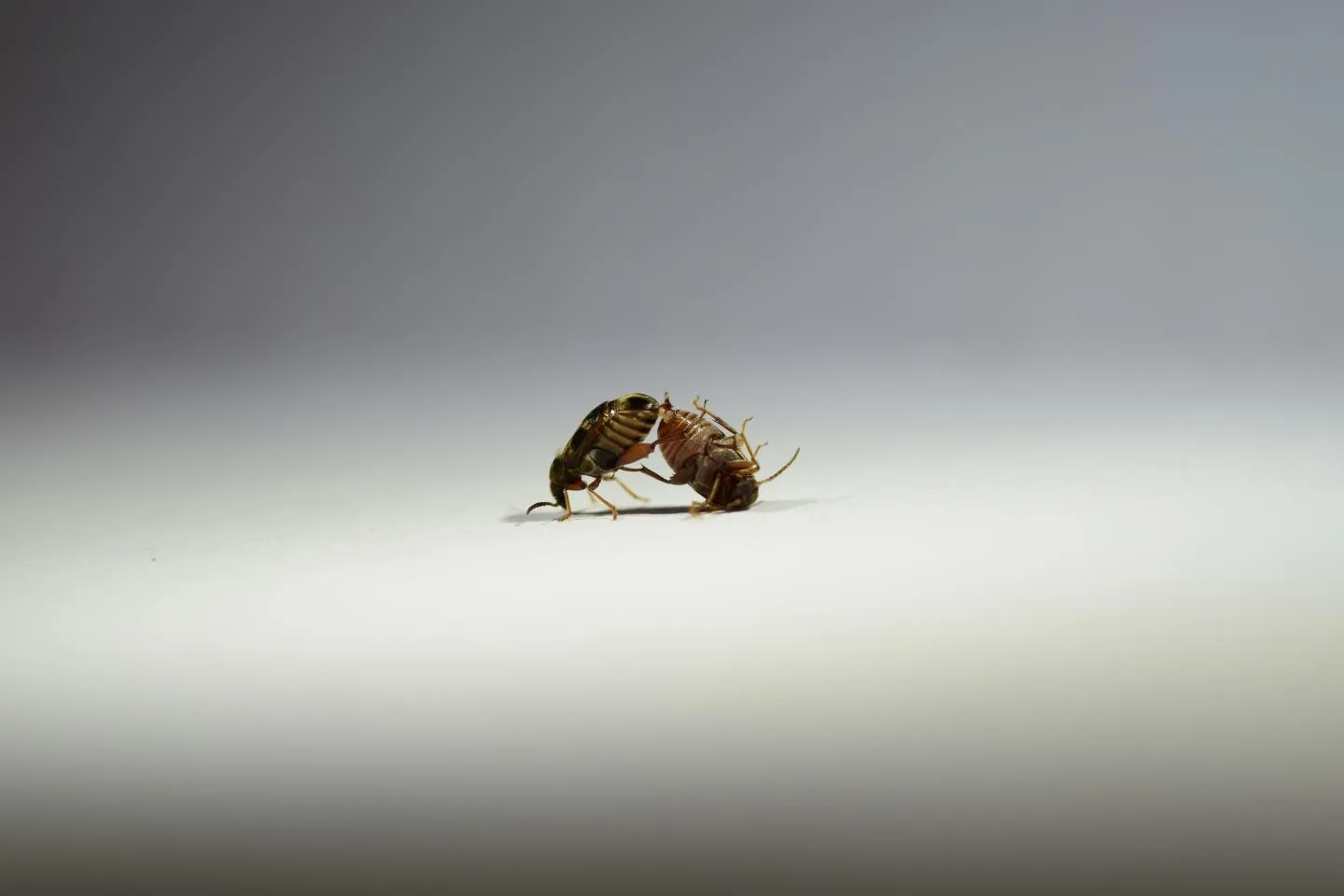
The researchers used 16 genetic strains of seed beetle (Callosobruchus maculatus) to investigate how the inferred number of deleterious mutations in each affected the reproductive ability (fitness) of females and males. Through intensive inbreeding of strains followed by crosses among them, it was possible to quantify the cumulative effects of each strain's unique set of mutations. By comparing the inbred strains to the crosses among them, the scientists were able to see that these mutations harmed both females and males nearly equally. However, when looking only at the crosses among strains, which is the more genetically variable setting that is more relevant to how selection would act in nature, these mutational effects were only manifest in male fitness. In the females, the deleterious effects of the mutations they carried were not detectable in this more genetically variable background, and would therefore not be purged effectively via female-specific selection in nature.

"This indicates that although these mutations do have a detrimental effect on females' reproduction, they are more effectively removed from the population by selection acting on male carriers than female carriers. Previous research from our group and others has succeeded in showing this effect by artificially inducing mutations, but this is the first direct evidence that it ensues for naturally occurring variants of genes," Grieshop says.

In the researchers' view, their study sheds new light on the old question of why so many multicellular organisms use sexual reproduction.

"Production of males causes a decrease in the reproductive capacity of a species, since males themselves contribute less than females to the production of offspring. The question, then, is why a species evolves to reproduce sexually, instead of just producing females through asexual reproduction. Our study shows that production of males, which may engage in intense competition for the chance to mate, enables faster purging of deleterious mutations from the population, which could thereby enable a healthier set of genes and higher reproductive capacity relative to asexual reproduction," says David Berger, researcher and team leader at Uppsala University's Department of Ecology and Genetics.

INFORMATION:

Grieshop, K. et al. (2021), Selection in males purges the mutation load on female fitness, Evolution Letters. DOI: 10.1002/evl3.239.


[Attachments] See images for this press release:
Males help keep populations genetically healthy

ELSE PRESS RELEASES FROM THIS DATE:

Toxicity of protein involved in Alzheimer's triggered by a chemical 'switch'

Toxicity of protein involved in Alzheimers triggered by a chemical switch
2021-06-26
Tokyo, Japan - Researchers from Tokyo Metropolitan University have discovered that a specific chemical feature of a key protein known as tau may cause it to accumulate in the brain and trigger illnesses like Alzheimer's. They found that disulfide bonds on certain amino acids act to stabilize tau and cause it to accumulate, an effect that got worse with increased oxidative stress. The identification of chemical targets triggering tau accumulation may lead to breakthrough treatments. The tau protein is key to the healthy function of biological cells. It helps form and stabilize microtubules, the thin filaments that crisscross cell interiors to help keep them structurally rigid and provide 'highways' to shuttle molecules between organelles. However, when they ...

Edible Cholera vaccine made of powdered rice proves safe in phase 1 human trials

Edible Cholera vaccine made of powdered rice proves safe in phase 1 human trials
2021-06-26
A new vaccine to protect against deadly cholera has been made by grinding up genetically modified grains of rice. The first human trial has shown no obvious side effects and a good immune response. Researchers based at the University of Tokyo and Chiba University have published the peer-reviewed results of the Phase 1 clinical trial of the vaccine, named MucoRice-CTB, in The Lancet Microbe. Vaccine manufacturing has made enormous strides in 2020, spurred on by COVID-19. However, the complexity of mRNA-based SARS-CoV-2 vaccines has highlighted the value of inoculations that can be made, transported and stored cheaply and without refrigeration. The MucoRice-CTB vaccine is stable at room temperature from start to finish. "I'm very optimistic for the future of our MucoRice-CTB vaccine, ...

Elephants solve problems with personality

Elephants solve problems with personality
2021-06-26
Just as humans have their own individual personalities, new research in the Journal of Comparative Psychology shows that elephants have personalities, too. Moreover, an elephant's personality may play an important role in how well that elephant can solve novel problems. The article was written by Lisa Barrett and Sarah Benson-Amram in the University of Wyoming's Animal Behavior and Cognition Lab, led by Benson-Amram. It may be viewed here. The authors of the paper tested 15 Asian elephants and three African savanna elephants in three zoos across the country -- the San Diego Zoo, the Smithsonian's National Zoological Park and the Oklahoma City Zoo -- with the help of elephant caretakers. Previous work from Barrett and Benson-Amram demonstrated ...

Differences in human, mouse brain cells have important implications for disease research

Differences in human, mouse brain cells have important implications for disease research
2021-06-26
FINDINGS A UCLA-led study comparing brain cells known as astrocytes in humans and mice found that mouse astrocytes are more resilient to oxidative stress, a damaging imbalance that is a mechanism behind many neurological disorders. A lack of oxygen triggers molecular repair mechanisms in these mouse astrocytes but not in human astrocytes. In contrast, inflammation activates immune-response genes in human astrocytes but not mouse astrocytes. BACKGROUND Although the mouse is a ubiquitous laboratory model used in research for neurological diseases, results from studies in mice are not always applicable to humans. In fact, more than 90% of drug candidates that show preclinical promise for neurological disorders ultimately fail when tested in humans, in part ...

Hydrofracking environmental problems not that different from conventional drilling

Hydrofracking environmental problems not that different from conventional drilling
2021-06-25
Crude oil production and natural gas withdrawals in the United States have lessened the country's dependence on foreign oil and provided financial relief to U.S. consumers, but have also raised longstanding concerns about environmental damage, such as groundwater contamination. A researcher in Syracuse University's College of Arts and Sciences, and a team of scientists from Penn State, have developed a new machine learning technique to holistically assess water quality data in order to detect groundwater samples likely impacted by recent methane leakage during oil and gas production. Using that model, the team concluded that unconventional drilling ...

Loss of circadian regulation allows for increase in glucose production during lung cancer

Loss of circadian regulation allows for increase in glucose production during lung cancer
2021-06-25
Irvine, CA - June 25, 2021 - New research from the University of California, Irvine reveals how the circadian regulation of glucose production in the liver is lost during lung cancer progression, and how the resulting increase in glucose production may fuel cancer cell growth. The new study titled, "Glucagon regulates the stability of REV-ERBα to modulate hepatic glucose production in a model of lung cancer-associated cachexia," published today in Science Advances, illustrates how the circadian clock is regulated under conditions of stress such as during lung cancer progression and cancer-associated tissue wasting ...

Muscle's smallest building blocks disappear after stroke

2021-06-25
After suffering a stroke, patients often are unable to use the arm on their affected side. Sometimes, they end up holding it close to their body, with the elbow flexed. In a new study, Northwestern University and Shirley Ryan AbilityLab researchers have discovered that, in an attempt to adapt to this impairment, muscles actually lose sarcomeres -- their smallest, most basic building blocks. Stacked end to end (in series) and side to side (in parallel), sarcomeres make up the length and width of muscle fibers. By imaging biceps muscles with three noninvasive methods, the researchers found that stroke patients had fewer sarcomeres along the length ...

Mayo Clinic researchers study potential new CAR-T cell therapy for multiple myeloma

2021-06-25
ROCHESTER, Minn. -- Researchers at Mayo Clinic Cancer Center are studying a potential new chimeric antigen receptor-T cell therapy (CAR-T cell therapy) treatment for multiple myeloma. Their findings were published on Friday, June 24, in The Lancet. "CAR-T cell therapy is a type of immunotherapy that involves harnessing the power of a person's own immune system by engineering their T cells to recognize and destroy cancer cells," says Yi Lin, M.D., a Mayo Clinic hematologist and lead author of the study. Dr. Lin says the Food and Drug Administration approved ...

Backscatter breakthrough runs near-zero-power IoT communicators at 5G speeds everywhere

Backscatter breakthrough runs near-zero-power IoT communicators at 5G speeds everywhere
2021-06-25
The promise of 5G Internet of Things (IoT) networks requires more scalable and robust communication systems -- ones that deliver drastically higher data rates and lower power consumption per device. Backscatter radios ? passive sensors that reflect rather than radiate energy ? are known for their low-cost, low-complexity, and battery-free operation, making them a potential key enabler of this future although they typically feature low data rates and their performance strongly depends on the surrounding environment. Researchers at the Georgia Institute of Technology, Nokia Bell Labs, and Heriot-Watt University have found a low-cost way for backscatter radios to support high-throughput communication and 5G-speed Gb/sec data transfer using only a single transistor when previously ...

Optical tweezer technology tweaked to overcome dangers of heat

Optical tweezer technology tweaked to overcome dangers of heat
2021-06-25
Three years ago, Arthur Ashkin won the Nobel Prize for inventing optical tweezers, which use light in the form of a high-powered laser beam to capture and manipulate particles. Despite being created decades ago, optical tweezers still lead to major breakthroughs and are widely used today to study biological systems. However, optical tweezers do have flaws. The prolonged interaction with the laser beam can alter molecules and particles or damage them with excessive heat. Researchers at The University of Texas at Austin have created a new version of optical tweezer technology that fixes this problem, a development ...

LAST 30 PRESS RELEASES:

Making lighter work of calculating fluid and heat flow

Normalizing blood sugar can halve heart attack risk

Lowering blood sugar cuts heart attack risk in people with prediabetes

Study links genetic variants to risk of blinding eye disease in premature infants

Non-opioid ‘pain sponge’ therapy halts cartilage degeneration and relieves chronic pain

AI can pick up cultural values by mimicking how kids learn

China’s ecological redlines offer fast track to 30 x 30 global conservation goal

Invisible indoor threats: emerging household contaminants and their growing risks to human health

Adding antibody treatment to chemo boosts outcomes for children with rare cancer

Germline pathogenic variants among women without a history of breast cancer

Tanning beds triple melanoma risk, potentially causing broad DNA damage

Unique bond identified as key to viral infection speed

Indoor tanning makes youthful skin much older on a genetic level

Mouse model sheds new light on the causes and potential solutions to human GI problems linked to muscular dystrophy

The Journal of Nuclear Medicine ahead-of-print tip sheet: December 12, 2025

Smarter tools for peering into the microscopic world

Applications open for funding to conduct research in the Kinsey Institute archives

Global measure underestimates the severity of food insecurity

Child survivors of critical illness are missing out on timely follow up care

Risk-based vs annual breast cancer screening / the WISDOM randomized clinical trial

University of Toronto launches Electric Vehicle Innovation Ontario to accelerate advanced EV technologies and build Canada’s innovation advantage

Early relapse predicts poor outcomes in aggressive blood cancer

American College of Lifestyle Medicine applauds two CMS models aligned with lifestyle medicine practice and reimbursement

Clinical trial finds cannabis use not a barrier to quitting nicotine vaping

Supplemental nutrition assistance program policies and food insecurity

Switching immune cells to “night mode” could limit damage after a heart attack, study suggests

URI-based Global RIghts Project report spotlights continued troubling trends in worldwide inhumane treatment

Neutrophils are less aggressive at night, explaining why nighttime heart attacks cause less damage than daytime events

Menopausal hormone therapy may not pose breast cancer risk for women with BRCA mutations

Mobile health tool may improve quality of life for adolescent and young adult breast cancer survivors

[Press-News.org] Males help keep populations genetically healthy