PRESS-NEWS.org - Press Release Distribution
PRESS RELEASES DISTRIBUTION

World first study into global daily air pollution shows almost nowhere on Earth is safe

Study of daily ambient fine particulate matter (PM2.5) has found that only 0.001% of the global population are exposed to WHO safe levels

World first study into global daily air pollution shows almost nowhere on Earth is safe
2023-03-07
(Press-News.org) In a world first study of daily ambient fine particulate matter (PM2.5) across the globe, a Monash University study has found that only 0.18% of the global land area and 0.001% of the global population are exposed to levels of PM2.5 - the world’s leading environmental health risk factor – below levels of safety recommended by Word Health Organization (WHO). Importantly while daily levels have reduced in Europe and North America in the two decades to 2019, levels have increased Southern Asia, Australia, New Zealand, Latin America and the Caribbean, with more than 70% of days globally seeing levels above what is safe.

A lack of pollution monitoring stations globally for air pollution, has meant a lack of data on local, national, regional and global PM2.5 exposure. Now this study, led by Professor Yuming Guo, from the Monash University School of Public Health and Preventive Medicine in Melbourne, Australia, and published in the prestigious journal, Lancet Planetary Health, has provided a map of how PM2.5 has changed across the globe in the past decades

The research team utilised traditional air quality monitoring observations, satellite-based meteorological and air pollution detectors, statistical and machine learning methods to more accurately assess PM2.5 concentrations globally, according to Professor Guo. “In this study, we used an innovative machine learning approach to integrate multiple meteorological and geological information to estimate the global surface-level daily PM2.5 concentrations at a high spatial resolution of approximately 10km ×10km for global grid cells in 2000-2019, focusing on areas above 15 μg/m³ which is considered the safe limit by WHO (The threshold is still arguable),” he said.

The study reveals that annual PM2.5 concentration and high PM2.5 exposed days in Europe and northern America decreased over the two decades of the study - whereas exposures increased in southern Asia, Australia and New Zealand, and Latin America and the Caribbean.

In addition, the study found that:

Despite a slight decrease in high PM2.5 exposed days globally, by 2019 more than 70% of days still had PM2.5 concentrations higher than 15 μg/m³. In southern Asia and eastern Asia, more than 90% of days had daily PM2.5 concentrations higher than 15 μg/m³. Australia and New Zealand had a marked increase in the number of days with high PM2.5 concentrations in 2019. Globally, the annual average PM2.5 from 2000 to 2019 was 32.8 µg/m3.  The highest PM2.5 concentrations were distributed in the regions of Eastern Asia (50.0 µg/m3) and Southern Asia (37.2 µg/m3), followed by northern Africa (30.1 µg/m3). Australia and New Zealand (8.5 μg/m³), other regions in Oceania (12.6 μg/m³), and southern America (15.6 μg/m³) had the lowest annual PM2.5 concentrations. Based on the new 2021 WHO guideline limit, only 0.18% of the global land area and 0.001% of the global population were exposed to an annual exposure lower than this guideline limit (annual average of 5 μg/m³) in 2019. According to Professor Guo, the unsafe PM2.5 concentrations also show different seasonal patterns “included Northeast China and North India during their winter months (December, January, and February), whereas eastern areas in northern America had high PM2.5 in its summer months (June, July, and August),” he said.

“We also recorded relatively high PM2.5 air pollution in August and September in South America and from June to September in sub-Saharan Africa.”

He added that the study is important because “It provides a deep understanding of the current state of outdoor air pollution and its impacts on human health. With this information, policymakers, public health officials, and researchers can better assess the short-term and long-term health effects of air pollution and develop air pollution mitigation strategies.”


END

[Attachments] See images for this press release:
World first study into global daily air pollution shows almost nowhere on Earth is safe World first study into global daily air pollution shows almost nowhere on Earth is safe 2 World first study into global daily air pollution shows almost nowhere on Earth is safe 3

ELSE PRESS RELEASES FROM THIS DATE:

Pioneering study shows flood risks can still be considerably reduced if all global promises to cut carbon emissions are kept

Pioneering study shows flood risks can still be considerably reduced if all global promises to cut carbon emissions are kept
2023-03-07
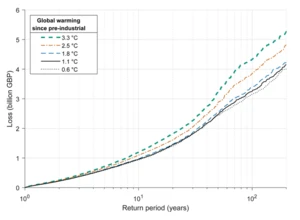
Annual damage caused by flooding in the UK could increase by more than a fifth over the next century due to climate change unless all international pledges to reduce carbon emissions are met, according to new research. The study, led by the University of Bristol and global water risk modelling leader Fathom, reveals the first-ever dataset to assess flood hazard using the most recent Met Office climate projections which factor in the likely impact of climate change. Its findings show the forecasted annual increase in national direct flood losses, defined as physical damage to property and businesses, due to climate change in the UK can be kept below 5% above recent historical levels. ...

Tracing 13 billion years of history by the light of ancient quasars

Tracing 13 billion years of history by the light of ancient quasars
2023-03-07
Astrophysicists in Australia have shed new light on the state of the universe 13 billion years ago by measuring the density of carbon in the gases surrounding ancient galaxies. The study adds another piece to the puzzle of the history of the universe. “We found that the fraction of carbon in warm gas increased rapidly about 13 billion years ago, which may be linked to large-scale heating of gas associated with the phenomenon known as the ‘Epoch of Reionisation’,” says Dr Rebecca Davies, ASTRO 3D Postdoctoral ...

Wings, not webs: Certain bugs are the winners of urbanization, impacting cities’ insect diversity

Wings, not webs: Certain bugs are the winners of urbanization, impacting cities’ insect diversity
2023-03-07
Cities are bursting with life, both human and animal. The smallest of them, insects, spiders, and ants are easily overseen, but their presence – or absence – in cities has wide-reaching effects. Scientists in Austria have published a study in Frontiers in Ecology and Evolution, which found a correlation between the presence of arthropods – invertebrate animals with an exoskeleton; among them are bees, insects, and spiders – and level of urbanization. “We show that richness and diversity of arthropods on trees and bushes decreases along the rural-urban gradient,” said first author Dr Marion Chatelain, a postdoctoral ...

Quantum crossover: How to distinguish single-particle and pair currents

Quantum crossover: How to distinguish single-particle and pair currents
2023-03-07
If you cool down low-density atomic gas to ultralow temperatures (−273°C), you get a new state of matter called the Bose-Einstein Condensate (BEC). A BEC has strongly coupled two-atom molecules behaving like a collective wave following quantum mechanics. Now if you reduce the pairing strength between them—for example, by increasing the magnetic field—the atoms form “Cooper-pairs” according to Bardeen-Cooper-Schrieffer (BCS) theory—a Nobel Prize winner. The process is called BCS-BEC crossover. And the theory forms the basis ...

Females of all ages, sexes have more salt- sensitive hypertension than males

Females of all ages, sexes have more salt- sensitive hypertension than males
2023-03-07
There is increasing evidence that females of all ethnicities and ages are more salt sensitive than males, and that this propensity to hold onto more salt, which drives blood pressure up, increases after menopause. Another important emerging bottom line is that healthy blood pressures might differ between the sexes, which means females might benefit from earlier and different intervention to avoid damage to their heart and vasculature. “The realities are that women and men regulate our blood pressure differently and our blood pressures are different at baseline,” says Dr. Eric Belin de Chantemele, physiologist in the Vascular Biology Center at the Medical College of Georgia at ...

Mass General Brigham study finds virtual care team strategy improved treatment for heart failure patients

2023-03-06
Recent studies have provided strong evidence that patients with heart failure can benefit from medical therapies that can reduce risk of worsening symptoms and extend patients’ lives. But, despite new guidelines, adoption of these therapies has been slow, incomplete and inequitable. A prospective clinical study by investigators from Mass General Brigham evaluated a new approach to improve use of these therapies by putting in place a virtual care team, consisting of physicians and pharmacists, to help guide treatment strategies for patients seeking care at three Mass General Brigham hospitals: Brigham and Women’s Hospital (BWH), Brigham and Women’s Faulkner Hospital ...

Deep-learning-based anatomical landmark identification in CT scans

Deep-learning-based anatomical landmark identification in CT scans
2023-03-06
Millions of people around the world undergo some type of orthodontic treatment each year due largely to developmental deformities in the jaw, skull, or face. Computed tomography (CT) imaging is the go-to technique for surgeons when planning such treatments, especially surgeries. This is because CT provides 3D images of the bones and teeth, which helps the surgeon analyze complex cases in detail and determine the best treatment procedure based on that. During the CT scan, surgeons typically try to pinpoint specific anatomical landmarks in the images. These are distinct points in the human body that can be used as a reference to make measurements and assess a condition ...

The challenges of mining for electric-vehicle batteries

2023-03-06
In August 2022, Congress passed the Inflation Reduction Act (IRA). Signed by President Joe Biden, the legislation attempted to curb inflation, lower the deficit, and invest heavily into domestic clean energy. One aspect of the bill was setting a market value-based target for battery-critical mineral content in electric vehicles (EVs). By 2027, for an EV to be tax-credit eligible, 80 percent of the market value of critical minerals in its battery must be extracted or processed domestically or by US free-trade partners (FTPs).  While this goal is well-intended, there are reasons to believe the mandate is unreachable and could create new problems. In a commentary published ...

AI chatbot ChatGPT mirrors its users to appear intelligent

AI chatbot ChatGPT mirrors its users to appear intelligent
2023-03-06
LA JOLLA (March 6, 2023)—The artificial intelligence (AI) language model ChatGPT has captured the world’s attention in recent months. This trained computer chatbot can generate text, answer questions, provide translations, and learn based on the user’s feedback. Large language models like ChatGPT may have many applications in science and business, but how much do these tools understand what we say to them and how do they decide what to say back?   In new paper published in Neural Computation on February 17, 2023, Salk Professor Terrence Sejnowski, ...

Advancing engineering

Advancing engineering
2023-03-06
(Santa Barbara, Calif.) — UC Santa Barbara professors Thuc-Quyen Nguyen and Carlos G. Levi are among 106 new members of the National Academy of Engineering. Academy membership honors those who have made outstanding contributions to “engineering research, practice or education, including, where appropriate, significant contributions to the engineering literature” and to “the pioneering of new and developing fields of technology, making major advancements in traditional fields of engineering, or developing/implementing innovative approaches to engineering education.” “Our campus ...

LAST 30 PRESS RELEASES:

Research from IOCB Prague reveals a previously unknown mechanism of genetic transcription

Stimulating the brain with electromagnetic therapy after stroke may help reduce disability

Women with stroke history twice as likely to have another during or soon after pregnancy

Older adults’ driving habits offer window into brain health, cognitive decline

Data analysis finds multiple antiplatelets linked to worse outcomes after a brain bleed

Tear in inner lining of neck artery may not raise stroke risk in first 6 months of diagnosis

New risk assessment tool may help predict dementia after a stroke

Stroke survivors may be less lonely, have better recovery if they can share their feelings

New app to detect social interactions after stroke may help improve treatment, recovery

Protein buildup in brain blood vessels linked with increased 5-year risk of dementia

Immunotherapy before surgery helps shrink tumors in patients with desmoplastic melanoma

Fossilized plankton study gives long-term hope for oxygen depleted oceans

Research clarifies record-late monsoon onset, aiding northern Australian communities

Early signs of Parkinson’s can be identified in the blood

Reducing drug deaths from novel psychoactive substances relies on foreign legislation, but here’s how it can be tackled closer to home

Conveying the concept of blue carbon in Japanese media: A new study provides insights

New Woods Hole Oceanographic Institution study cautions that deep-sea fishing could undermine valuable tuna fisheries

Embedding critical thinking from a young age

Study maps the climate-related evolution of modern kangaroos and wallabies

Researchers develop soft biodegradable implants for long-distance and wide-angle sensing

Early-life pollution leaves a multigenerational mark on fish skeletons

Unlocking the genetic switches behind efficient feeding in aquaculture fish

Fish liver self-defense: How autophagy helps pufferfish survive under the cold and copper stress

A lost world: Ancient cave reveals million-year-old wildlife

Living heritage: How ancient buildings on Hainan Island sustain hidden plant diversity

Just the smell of lynx can reduce deer browsing damage in recovering forests

Hidden struggles: Cambridge scientists share the truth behind their success

Cellular hazmat team cleans up tau. Could it prevent dementia?

Innovation Crossroads startup revolutionizes wildfire prevention through grid hardening

ICCUB astronomers lead the most ambitious study of runaway massive stars in the Milky Way

[Press-News.org] World first study into global daily air pollution shows almost nowhere on Earth is safe
Study of daily ambient fine particulate matter (PM2.5) has found that only 0.001% of the global population are exposed to WHO safe levels