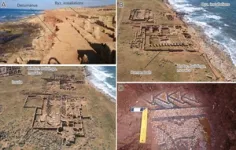
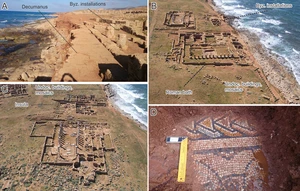
Archaeological sites at risk from coastal erosion on the Cyrenaican coast, Libya
Study identifies increasing rates of erosion, urges need for mitigation plans
Published 2023-04-12 · Original archive entry · Explore research explainers
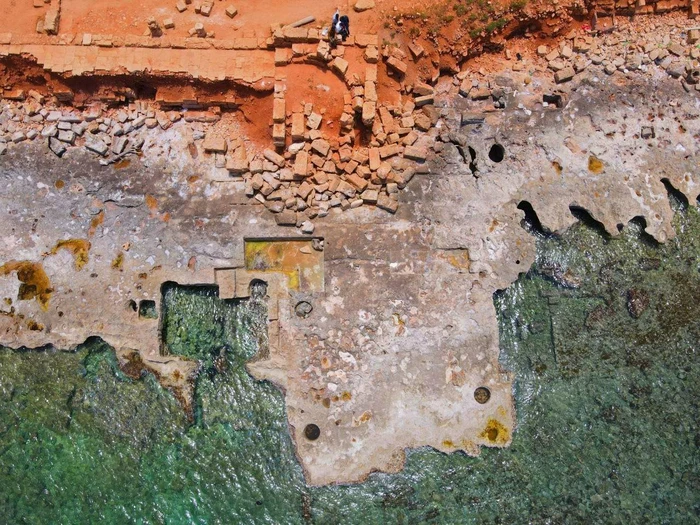
Archaeological sites along the Libyan shoreline are at risk of being damaged or lost due to increasing coastal erosion, according to a study published April 12, 2023 in the open-access journal PLOS ONE by Kieran Westley and Julia Nikolaus of Ulster University, UK and colleagues.
The Cyrenaican coast of Eastern Libya, stretching from the Gulf of Sirte to the current Egypt-Libya border, has a long history of human occupation back to the Palaeolithic era, and it therefore hosts numerous important and often understudied archaeological sites. However, the coastline also experiences high rates of erosion which threatens to damage or even erase many of these important sites. Detailed assessments of coastal erosion and vulnerability of archaeological sites are available for other important coastlines, but not yet for this one.
This study combined historical and modern records of the Cyrenaican shoreline using aerial and satellite imagery and field observation to assess patterns of coastal erosion near important archaeological sites. Near the sites of Apollonia, Ptolemais, and Tocra, they identified extensive shoreline erosion and increasing rates of erosion in recent years, likely linked to human activities such as sand mining and urbanization. Their results show that current rates of coastal erosion are already a major problem for these sites and are likely to increase in the future with further human activities and rising sea levels due to climate change, putting these sites at risk of progressive damage and loss of valuable historical information.
The authors stress the need for detailed management and mitigation plans to protect these sites, as well as the need for increased awareness of the factors that exacerbate coastal erosion. They also urge further research to investigate other sites along this and other Mediterranean coastlines to assess the full extent to which our understanding of human history is threatened by coastal erosion.
The authors add: “The impact of erosion here is considerable and could get worse in the future. Our research highlights the critical need to support our Libyan colleagues in mitigating the damage to these endangered and irreplaceable heritage sites.”
#####
In your coverage please use this URL to provide access to the freely available article in PLOS ONE: https://journals.plos.org/plosone/article?id=10.1371/journal.pone.0283703
Citation: Westley K, Nikolaus J, Emrage A, Flemming N, Cooper A (2023) The impact of coastal erosion on the archaeology of the Cyrenaican coast of Eastern Libya. PLoS ONE 18(4): e0283703. https://doi.org/10.1371/journal.pone.0283703
Author Countries: UK, Libya
Funding: This study is part of the Maritime Endangered Archaeology (MarEA) Project, funded by Arcadia - a charitable fund of Lisbet Rausing and Peter Baldwin (https://www.arcadiafund.org.uk/) (Award# 4067; authors KW, JN). VHR satellite image provision was supported by the European Space Agency (ESA) Third Party Missions Program (https://earth.esa.int/eogateway) (Proposal # 60657; authors KW, JN). Fieldwork was supported by the British Institute for Libyan and Northern African Studies (formerly Society for Libyan Studies: https://www.bilnas.org/) (authors JN, AE). The funders had no role in study design, data collection and analysis, decision to publish, or preparation of the manuscript.
END
The Cyrenaican coast of Eastern Libya, stretching from the Gulf of Sirte to the current Egypt-Libya border, has a long history of human occupation back to the Palaeolithic era, and it therefore hosts numerous important and often understudied archaeological sites. However, the coastline also experiences high rates of erosion which threatens to damage or even erase many of these important sites. Detailed assessments of coastal erosion and vulnerability of archaeological sites are available for other important coastlines, but not yet for this one.
This study combined historical and modern records of the Cyrenaican shoreline using aerial and satellite imagery and field observation to assess patterns of coastal erosion near important archaeological sites. Near the sites of Apollonia, Ptolemais, and Tocra, they identified extensive shoreline erosion and increasing rates of erosion in recent years, likely linked to human activities such as sand mining and urbanization. Their results show that current rates of coastal erosion are already a major problem for these sites and are likely to increase in the future with further human activities and rising sea levels due to climate change, putting these sites at risk of progressive damage and loss of valuable historical information.
The authors stress the need for detailed management and mitigation plans to protect these sites, as well as the need for increased awareness of the factors that exacerbate coastal erosion. They also urge further research to investigate other sites along this and other Mediterranean coastlines to assess the full extent to which our understanding of human history is threatened by coastal erosion.
The authors add: “The impact of erosion here is considerable and could get worse in the future. Our research highlights the critical need to support our Libyan colleagues in mitigating the damage to these endangered and irreplaceable heritage sites.”
#####
In your coverage please use this URL to provide access to the freely available article in PLOS ONE: https://journals.plos.org/plosone/article?id=10.1371/journal.pone.0283703
Citation: Westley K, Nikolaus J, Emrage A, Flemming N, Cooper A (2023) The impact of coastal erosion on the archaeology of the Cyrenaican coast of Eastern Libya. PLoS ONE 18(4): e0283703. https://doi.org/10.1371/journal.pone.0283703
Author Countries: UK, Libya
Funding: This study is part of the Maritime Endangered Archaeology (MarEA) Project, funded by Arcadia - a charitable fund of Lisbet Rausing and Peter Baldwin (https://www.arcadiafund.org.uk/) (Award# 4067; authors KW, JN). VHR satellite image provision was supported by the European Space Agency (ESA) Third Party Missions Program (https://earth.esa.int/eogateway) (Proposal # 60657; authors KW, JN). Fieldwork was supported by the British Institute for Libyan and Northern African Studies (formerly Society for Libyan Studies: https://www.bilnas.org/) (authors JN, AE). The funders had no role in study design, data collection and analysis, decision to publish, or preparation of the manuscript.
END
Attachments