Study: Women-led groups were key to food security during COVID-19 in India
New research shines a light on the way that women’s self-help groups in Odisha, India, were able to keep fresh produce flowing from farms to homes during Covid-19 lock-downs, avoiding a food security crisis.
Published 2023-12-11 · Original archive entry · Explore research explainers
In March of 2020, India’s government announced a strict lockdown with just four hours notice, including a ban on the informal and traditional food outlets that 80 to 90 percent of Indians rely on for their main source of food.
In a new paper, “Applying the six-dimensional food security framework to examine a fresh fruit and vegetable program implemented by self-help groups during the COVID-19 lockdown in India,” published in the journal World Development, researchers from the Alliance of Bioversity International and CIAT looked at the effects of a government-backed women’s self-help group program in the state of Odisha, India and how it impacted the six dimensions of food security: food availability, access, utilization, stability, agency and sustainability.
Jonathan Mockshell, an agricultural economist at the Alliance of Bioversity International and the International Center for Tropical Agriculture (CIAT) and the first author of the paper explains that these groups (women-only rotating savings and credit associations with a long history in India), procured fresh fruit and vegetables from farmers, hired transport, purchased more vegetables from wholesalers, and sold the food to people in local and urban markets via truck, cart, or motorbike.
“Our research has shown that these self-help groups (SHG) are crucial at mitigating fractures in the fresh fruit and vegetable value chains during the lockdown,”
Mockshell says, The SHG system provides a ‘third force’ and model for rethinking and re-engineering current development models by leveraging existing institutions and grass root networks to build resilience in food systems.”
Thea Ritter, an agricultural economist at the Alliance of Bioversity International and the International Center for Tropical Agriculture (CIAT), and second author of the study explains that these women were running these programs, called “Veg on Wheels” on top of their household responsibilities and the existing work of the self-help groups.
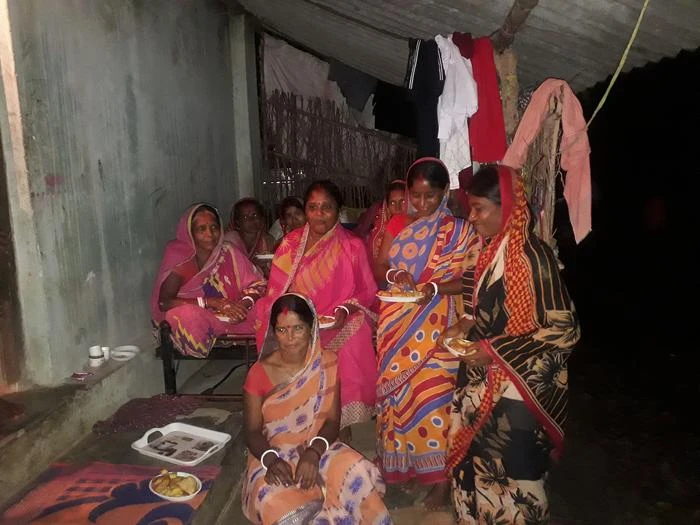
“They were meeting every night,” Ritter says, “There were women who were vegetable and fruit producers themselves or had close links with others outside the group; this helped because they were familiar with the supply chain.”
Ritter added that some groups received government funding for training in areas like accounting, which some members would later use to start their own businesses.
“Six Dimensional” Food Security The number of people in or at risk of acute food insecurity surged from 135 million in 53 countries before the Covid-19 pandemic, to 345 million in 79 countries in 2023, according to World Food Programme Statistics.
In 2009, the Food and Agricultural Organisation (FAO) defined food security as when “all people, at all times, have physical, social and economic access to sufficient, safe and nutritious food, which meets their dietary needs and food preferences for an active and healthy life.”
However, researchers from the Alliance of Bioversity International and the International Center for Tropical Agriculture (CIAT) emphasized two further critical dimensions of food security that came into play in the program they looked at: agency and sustainability/resilience.
“In terms of the value chain, agency means being able to sell your fruit and vegetables if you want to and having a say in policies and laws,” Ritter says, adding that the researchers focused on resilience (i.e. ability and capacity to deal with shocks in food systems) rather than the traditional view of sustainability, that is, being able to provide for future generations without depleting current resources.
“We didn’t have this six dimensional view of food security in mind when we did the data collection, but it came out of what the respondents in the study were talking about,” Ritter says.
: “Veg on Wheels” community initiative eases world’s strictest COVID-19 lockdown in India
Future Impact Mockshell and Ritter explain that there are over a billion members of rotating credit and saving associations, especially in Africa and South Asia.
Given how widespread these groups are, the researchers believe that this model has global applications: harnessing these pre-existing organizations to rebuild fractured supply chains can provide a model for other governments to replicate in times of crisis, such as extreme climate events and conflicts, when both rural and urban supply chains are disrupted.
“This solution is not specific to Covid-19 or India, because with climate change, disasters and conflicts are becoming increasingly common,” Ritter says, ”If there was a natural disaster in future, the government could tap into and leverage these groups.”
Mockshell explained that although the researchers looked at this from a food security point of view, pre-existing groups could be used to smooth other supply chains in situations where private and public sector presence are limited.
“For example, they could be used to distribute medical supplies,” he says.
END
In a new paper, “Applying the six-dimensional food security framework to examine a fresh fruit and vegetable program implemented by self-help groups during the COVID-19 lockdown in India,” published in the journal World Development, researchers from the Alliance of Bioversity International and CIAT looked at the effects of a government-backed women’s self-help group program in the state of Odisha, India and how it impacted the six dimensions of food security: food availability, access, utilization, stability, agency and sustainability.
Jonathan Mockshell, an agricultural economist at the Alliance of Bioversity International and the International Center for Tropical Agriculture (CIAT) and the first author of the paper explains that these groups (women-only rotating savings and credit associations with a long history in India), procured fresh fruit and vegetables from farmers, hired transport, purchased more vegetables from wholesalers, and sold the food to people in local and urban markets via truck, cart, or motorbike.
“Our research has shown that these self-help groups (SHG) are crucial at mitigating fractures in the fresh fruit and vegetable value chains during the lockdown,”
Mockshell says, The SHG system provides a ‘third force’ and model for rethinking and re-engineering current development models by leveraging existing institutions and grass root networks to build resilience in food systems.”
Thea Ritter, an agricultural economist at the Alliance of Bioversity International and the International Center for Tropical Agriculture (CIAT), and second author of the study explains that these women were running these programs, called “Veg on Wheels” on top of their household responsibilities and the existing work of the self-help groups.
“They were meeting every night,” Ritter says, “There were women who were vegetable and fruit producers themselves or had close links with others outside the group; this helped because they were familiar with the supply chain.”
Ritter added that some groups received government funding for training in areas like accounting, which some members would later use to start their own businesses.
“Six Dimensional” Food Security The number of people in or at risk of acute food insecurity surged from 135 million in 53 countries before the Covid-19 pandemic, to 345 million in 79 countries in 2023, according to World Food Programme Statistics.
In 2009, the Food and Agricultural Organisation (FAO) defined food security as when “all people, at all times, have physical, social and economic access to sufficient, safe and nutritious food, which meets their dietary needs and food preferences for an active and healthy life.”
However, researchers from the Alliance of Bioversity International and the International Center for Tropical Agriculture (CIAT) emphasized two further critical dimensions of food security that came into play in the program they looked at: agency and sustainability/resilience.
“In terms of the value chain, agency means being able to sell your fruit and vegetables if you want to and having a say in policies and laws,” Ritter says, adding that the researchers focused on resilience (i.e. ability and capacity to deal with shocks in food systems) rather than the traditional view of sustainability, that is, being able to provide for future generations without depleting current resources.
“We didn’t have this six dimensional view of food security in mind when we did the data collection, but it came out of what the respondents in the study were talking about,” Ritter says.
: “Veg on Wheels” community initiative eases world’s strictest COVID-19 lockdown in India
Future Impact Mockshell and Ritter explain that there are over a billion members of rotating credit and saving associations, especially in Africa and South Asia.
Given how widespread these groups are, the researchers believe that this model has global applications: harnessing these pre-existing organizations to rebuild fractured supply chains can provide a model for other governments to replicate in times of crisis, such as extreme climate events and conflicts, when both rural and urban supply chains are disrupted.
“This solution is not specific to Covid-19 or India, because with climate change, disasters and conflicts are becoming increasingly common,” Ritter says, ”If there was a natural disaster in future, the government could tap into and leverage these groups.”
Mockshell explained that although the researchers looked at this from a food security point of view, pre-existing groups could be used to smooth other supply chains in situations where private and public sector presence are limited.
“For example, they could be used to distribute medical supplies,” he says.
END
Attachments