PRESS-NEWS.org - Press Release Distribution
PRESS RELEASES DISTRIBUTION

Terasaki Institute CEO Dr. Ali Khademhosseini awarded the AIChE’s 2024 Andreas Acrivos Professional Progress

Terasaki Institute CEO Dr. Ali Khademhosseini awarded the AIChE’s 2024 Andreas Acrivos Professional Progress
2024-09-17
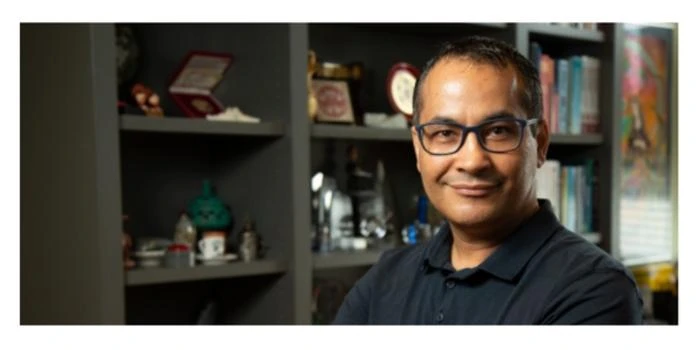
(Press-News.org) Dr. Ali Khademhosseini, Ph.D., CEO and Director of the Terasaki Institute for Biomedical Innovation (TIBI), is honored with the 2024 Andreas Acrivos Award for Professional Progress in Chemical Engineering by the American Institute of Chemical Engineers (AIChE). This distinguished honor recognizes outstanding progress in the field of chemical engineering.

Named after Dr. Andreas Acrivos, Albert Einstein Professor of Science and Engineering, emeritus at the City College of New York, whose pioneering work in fluid mechanics and transport phenomena revolutionized the field, the award has been presented annually since 1966. Past recipients include leading figures such as Nobel laureate Dr. Frances Arnold and MIT’s Dr. Robert Langer, both of whom have made transformative impacts in biotechnology and engineering.

The Andreas Acrivos Award acknowledges Dr. Khademhosseini’s contributions to the field, particularly his work in utilizing chemical engineering fundamentals in the development of micro- and nano engineering of biomaterials. His technologies have improved the control of cell and tissue behaviors, advancing regenerative medicine applications with new approaches in tissue engineering, organs-on-a-chip systems, and biomedical devices, impacting human health and treatment methods.

 “Receiving the Andreas Acrivos Award is a tremendous honor,” said Dr. Khademhosseini. “This recognition underscores the importance of innovation at the intersection of chemical engineering and biology, and it motivates our team at TIBI to continue pushing the boundaries of what is possible in biomedical research.”

 The 2024 Andreas Acrivos Award will be presented at the Institute’s Honors Ceremony during the 2024 AIChE Annual Meeting in San Diego, California, in late October.

###


For more information, please visit Terasaki.org or Contact:


Stewart Han

Email: shan@terasaki.org


About Terasaki Institute for Biomedical Innovation


The Terasaki Institute for Biomedical Innovation is a non-profit research organization dedicated to leveraging cutting-edge technology to address global health challenges. By fostering interdisciplinary collaborations and pushing the boundaries of innovation, TIBI aims to transform healthcare and improve lives worldwide.

END

[Attachments] See images for this press release:
Terasaki Institute CEO Dr. Ali Khademhosseini awarded the AIChE’s 2024 Andreas Acrivos Professional Progress

ELSE PRESS RELEASES FROM THIS DATE:

Slow-moving landslides a growing, but ignored, threat to mountain communities

Slow-moving landslides a growing, but ignored, threat to mountain communities
2024-09-17
American Geophysical Union  17 September 2024  AGU Release 24-33 For Immediate Release  This press release is available online at: https://news.agu.org/press-release/slow-landslides-growing-threat-mountain-communities/ Slow-moving landslides a growing, but ignored, threat to mountain communities Urban growth, climate change, and flood risk at lower elevations can push people to live on steeper, more dangerous terrain AGU press contact: Rebecca Dzombak, news@agu.org (UTC-4 hours) Potsdam press contact: Stefanie Mikulla, University of Potsdam, presse@uni-potsdam.de (UTC+2 hours) Researcher contact: Joaquin Vicente Ferrer, ...

Study finds thousands of browser extensions compromise user data

Study finds thousands of browser extensions compromise user data
2024-09-17
Browser extensions, the software add-ons that help users customize and enhance their web browsers, are wildly popular. Some of the most-used extensions find shopping deals, fix grammar and typos, manage passwords, or translate web pages. The types of extensions available are nearly endless, and many have become indispensable tools for businesses and everyday users.  While these extensions can make web browsing more accessible, productive, and rewarding, they are not without risk. New research from Georgia Tech reveals that thousands of browser extensions pose significant threats to privacy, and hundreds automatically ...

Building better DNA editors: Retrons raise the bar for gene research

Building better DNA editors: Retrons raise the bar for gene research
2024-09-17
SAN FRANCISCO—Within bacterial cells, specialized immune systems known as retrons fend off viral attacks. But that’s not all they can do. Scientists, including Seth Shipman, PhD, at Gladstone Institutes, have shown that retrons also serve an important purpose in the lab: precise DNA editing. In fact, retrons can be combined with CRISPR—the far more famous bacterial-defense-system-turned-gene-editor—to better edit human cells. Yet, for all their potential to help scientists better understand disease and develop new therapies, only a small number of retrons have been studied. In nature, many thousands of variations exist, some with greater gene-editing powers than ...

Study shows SIM models improve health data

2024-09-17
First-of-its-kind research by Tarang Parekh, assistant professor of epidemiology, reviewed the State Innovation Models (SIM), a payment system introduced by the Centers for Medicare and Medicaid Services in 2013, which provides financial incentives to states to develop innovative payment models to improve healthcare systems. In the study, recently published in the American Journal of Epidemiology, Parekh compared data from 2010 to 2015 from three SIM participating states, Arkansas, Massachusetts and Vermont, to Florida, Nebraska and New Mexico, which do not participate in ...

Study suggests humor could help people engage with colorectal cancer information

2024-09-17
BUFFALO, N.Y. – Colorectal cancer (CRC) is no laughing matter. It’s the second-leading cause of cancer deaths globally, according to the World Health Organization. But new research led by the University at Buffalo suggests that humor can be an effective mechanism for reaching people who otherwise avoid information about colorectal cancer screening or other health messaging. The research, published online ahead of print in the British Journal of Health Psychology, found that in people who demonstrated a ...

Q&A: Ethical decision-making around neurotechnology treatments

Q&A: Ethical decision-making around neurotechnology treatments
2024-09-17
UNIVERSITY PARK, Pa. — A novel neurotechnology treatment known as deep brain stimulation (DBS) can benefit patients with neurological disorders, but it involves surgical procedures with potential risks. Assessing the risk-benefit tradeoffs and the ethics in making decisions about whether to begin such treatments and when can be tricky for both patients and clinicians.   Laura Cabrera, associate professor of engineering science and mechanics, received a four-year, $1.5 million grant from the National Institutes of Health to research and develop ...

A smoother way to study ‘twistronics’

2024-09-17
A discovery six years ago took the condensed-matter physics world by storm: Ultra-thin carbon stacked in two slightly askew layers became a superconductor, and changing the twist angle between layers could toggle their electrical properties. The landmark 2018 paper describing “magic-angle graphene superlattices” launched a new field called “twistronics,” and the first author was then-MIT graduate student and recent Harvard Junior Fellow Yuan Cao.   Together with Harvard physicists Amir ...

UT Health San Antonio finds genetic risk-factor overlap between Alzheimer’s disease, and all-cause and vascular dementias

2024-09-17
SAN ANTONIO, Sept. 17, 2024 – In landmark research, scientists at The University of Texas Health Science Center at San Antonio (UT Health San Antonio) have reported the largest-ever genome-wide association study of dementia from all causes, revealing an overlap of genetic risks including neurodegeneration, vascular factors and cerebral small-vessel disease. Genome-wide association studies help scientists identify genes associated with a particular disease or trait by exploring the entire set of DNA, or genome, of a ...

UM School of Medicine aims to accelerate basic science research and advance drug therapies with newly-created department

UM School of Medicine aims to accelerate basic science research and advance drug therapies with newly-created department
2024-09-17
University of Maryland School of Medicine (UMSOM) Dean Mark T. Gladwin, MD, has announced the formation of a new Department of Pharmacology, Physiology and Drug Development, which merges the Department of Physiology and Department of Pharmacology. This new Department aligns the basic science research efforts of both entities with a strong emphasis on the development of new drug therapies. The Department will host three divisions spanning Cancer Therapeutics, Molecular Physiology, and Neuropharmacology, creating additional opportunities for research partnerships across current UMSOM Centers, ...

Can Google street view data improve public health?

2024-09-17
Big data and artificial intelligence are transforming how we think about health, from detecting diseases and spotting patterns to predicting outcomes and speeding up response times. In a new study analyzing two million Google Street View images from New York City streets, a team of New York University researchers evaluated the utility of this digital data in informing public health decision-making. Their findings, published in the Proceedings of the National Academy of Sciences (PNAS), show how relying on street view images alone may lead ...

LAST 30 PRESS RELEASES:

New Woods Hole Oceanographic Institution study cautions that deep-sea fishing could undermine valuable tuna fisheries

Embedding critical thinking from a young age

Study maps the climate-related evolution of modern kangaroos and wallabies

Researchers develop soft biodegradable implants for long-distance and wide-angle sensing

Early-life pollution leaves a multigenerational mark on fish skeletons

Unlocking the genetic switches behind efficient feeding in aquaculture fish

Fish liver self-defense: How autophagy helps pufferfish survive under the cold and copper stress

A lost world: Ancient cave reveals million-year-old wildlife

Living heritage: How ancient buildings on Hainan Island sustain hidden plant diversity

Just the smell of lynx can reduce deer browsing damage in recovering forests

Hidden struggles: Cambridge scientists share the truth behind their success

Cellular hazmat team cleans up tau. Could it prevent dementia?

Innovation Crossroads startup revolutionizes wildfire prevention through grid hardening

ICCUB astronomers lead the most ambitious study of runaway massive stars in the Milky Way

Artificial Intelligence can generate a feeling of intimacy

Antidepressants not associated with serious complications from TBI

Evasive butterfly mimicry reveals a supercharged biodiversity feedback loop

Hearing angry or happy human voices is linked to changes in dogs’ balance

Microplastics are found in a third of surveyed fish off the coasts of remote Pacific Islands

De-stigmatizing self-reported data in health care research

US individuals traveling from strongly blue or red US counties may favor everyday travel to like-minded destinations

Study reveals how superionic state enables long-term water storage in Earth's interior

AI machine learning can optimize patient risk assessments

Efficacy of immunosuppressive regimens for survival of stem cell-derived grafts

Glowing bacterial sensors detect gut illness in mice before symptoms emerge

GLP-1 RAs and prior major adverse limb events in patients with diabetes

Life-course psychosocial stress and risk of dementia and stroke in middle-aged and older adults

Cells have a built-in capacity limit for copying DNA, and it could impact cancer treatment

Study finds longer hospital stays and higher readmissions for young adults with complex childhood conditions

Study maps how varied genetic forms of autism lead to common features

[Press-News.org] Terasaki Institute CEO Dr. Ali Khademhosseini awarded the AIChE’s 2024 Andreas Acrivos Professional Progress