Extreme weather accelerates nitrate pollution in groundwater
Heavy rains can cause contamination in just 10 days
Published 2024-11-13 · Original archive entry · Explore research explainers
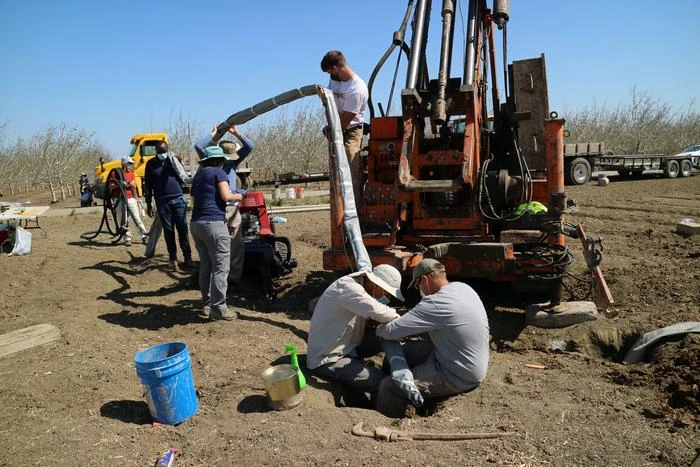
Extreme weather spurred by climate change, including droughts and heavy rains, may increase the risk of nitrates from fertilizers ending up in groundwater, according to a recent study from researchers at the University of California, Davis. The study found heavy rains after a drought caused nitrates to seep 33 feet under farm fields in as little as 10 days. The study was published in Water Resources Research.
“The conventional wisdom was that it could take several weeks to years for nitrates to move from the crop root zones to reach groundwater,” said corresponding author Isaya Kisekka, a professor in the Departments of Land, Air and Water Resources and Biological and Agricultural Engineering. “We found these extreme events, such as California’s atmospheric rivers, are going to move nitrate more quickly.”
In this study, different methods were used to measure how much nitrate, a component of nitrogen fertilizer, was seeping down through the soil in a tomato and cucumber crop near Esparto, California. Scientists conducted their research from 2021 until 2023 when California was experiencing periods of drought followed by atmospheric rivers. They measured nitrate during both the growing seasons and the rainy seasons.
Drought can leave more nitrogen in soil Previous studies have shown about 40% of nitrogen fertilizer used for vegetables isn’t absorbed by the plants but remains in the soil. During droughts, crops don’t use nitrogen efficiently, leading to excess nitrogen in the soil. This study found that if a drought is then followed by heavy rainfall, that sudden burst of water causes nitrate to seep in groundwater more quickly. The nitrate concentration in the shallow groundwater exceeded the U.S. Environmental Protection Agency maximum contaminant level of 10 milligrams per liter for drinking water.
“In California, we often say we swing between droughts and floods,” said Kisekka. “These extreme events that come with climate change are going to make the risk of these chemicals ending up in our drinking water much more severe.”
Groundwater is the primary source of drinking water for most of California’s Central Valley. In some regions, such as the Tulare Lake Basin, nearly one-third of drinking and irrigation wells exceed the EPA’s safe nitrate level. High nitrate levels in drinking water can increase health risks, especially for young children. It may also increase the risk of colorectal cancer.
Need for real-time soil nitrate monitoring Central Valley farmers are required to report to the Regional Water Board how much nitrogen they applied to their field and how much was removed as part of the crop’s yield. The study compared different ways of monitoring when nitrate from fertilizers seep into groundwater. Kisekka said the results highlight the need for affordable, real-time soil nitrate monitoring tools to help farmers manage fertilizer use efficiently.
By using conservation practices that limit leftover nitrates in the crop’s root zone after harvest, farmers can help reduce nitrate contamination in groundwater.
This study's data will also help improve a model called SWAT, which is used to track nitrate seepage into groundwater across California's Central Valley. This effort is part of the Central Valley Water Board’s program to regulate irrigated farmlands.
Other UC Davis authors include Iael Raij Hoffman, Thomas Harter and Helen Dahlke.
The study was supported by the USDA Natural Resource Conservation Service through its Conservation Effects Assessment Project. The national project is designed to assess the effectiveness of conservation practices across different watersheds. The study also had support from the USDA National Institute of Food and Agriculture.
END
“The conventional wisdom was that it could take several weeks to years for nitrates to move from the crop root zones to reach groundwater,” said corresponding author Isaya Kisekka, a professor in the Departments of Land, Air and Water Resources and Biological and Agricultural Engineering. “We found these extreme events, such as California’s atmospheric rivers, are going to move nitrate more quickly.”
In this study, different methods were used to measure how much nitrate, a component of nitrogen fertilizer, was seeping down through the soil in a tomato and cucumber crop near Esparto, California. Scientists conducted their research from 2021 until 2023 when California was experiencing periods of drought followed by atmospheric rivers. They measured nitrate during both the growing seasons and the rainy seasons.
Drought can leave more nitrogen in soil Previous studies have shown about 40% of nitrogen fertilizer used for vegetables isn’t absorbed by the plants but remains in the soil. During droughts, crops don’t use nitrogen efficiently, leading to excess nitrogen in the soil. This study found that if a drought is then followed by heavy rainfall, that sudden burst of water causes nitrate to seep in groundwater more quickly. The nitrate concentration in the shallow groundwater exceeded the U.S. Environmental Protection Agency maximum contaminant level of 10 milligrams per liter for drinking water.
“In California, we often say we swing between droughts and floods,” said Kisekka. “These extreme events that come with climate change are going to make the risk of these chemicals ending up in our drinking water much more severe.”
Groundwater is the primary source of drinking water for most of California’s Central Valley. In some regions, such as the Tulare Lake Basin, nearly one-third of drinking and irrigation wells exceed the EPA’s safe nitrate level. High nitrate levels in drinking water can increase health risks, especially for young children. It may also increase the risk of colorectal cancer.
Need for real-time soil nitrate monitoring Central Valley farmers are required to report to the Regional Water Board how much nitrogen they applied to their field and how much was removed as part of the crop’s yield. The study compared different ways of monitoring when nitrate from fertilizers seep into groundwater. Kisekka said the results highlight the need for affordable, real-time soil nitrate monitoring tools to help farmers manage fertilizer use efficiently.
By using conservation practices that limit leftover nitrates in the crop’s root zone after harvest, farmers can help reduce nitrate contamination in groundwater.
This study's data will also help improve a model called SWAT, which is used to track nitrate seepage into groundwater across California's Central Valley. This effort is part of the Central Valley Water Board’s program to regulate irrigated farmlands.
Other UC Davis authors include Iael Raij Hoffman, Thomas Harter and Helen Dahlke.
The study was supported by the USDA Natural Resource Conservation Service through its Conservation Effects Assessment Project. The national project is designed to assess the effectiveness of conservation practices across different watersheds. The study also had support from the USDA National Institute of Food and Agriculture.
END