PRESS-NEWS.org - Press Release Distribution
PRESS RELEASES DISTRIBUTION

Better digital memories with the help of noble gases

Better digital memories with the help of noble gases
2025-01-30
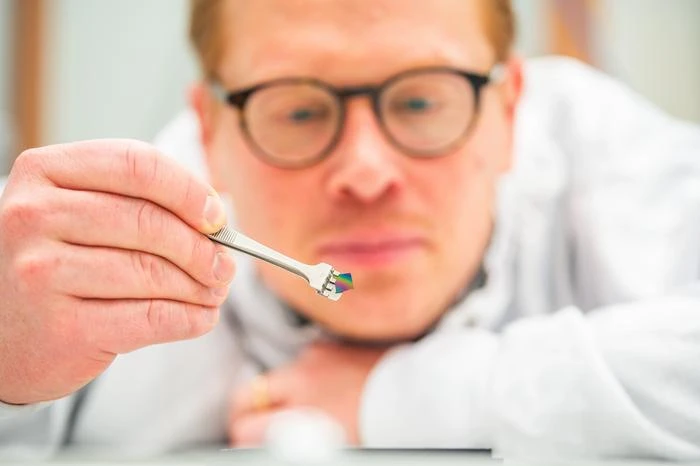
(Press-News.org) The electronics of the future can be made even smaller and more efficient by getting more memory cells to fit in less space. One way to achieve this is by adding the noble gas xenon when manufacturing digital memories. This has been demonstrated by researchers at Linköping University in a study published in Nature Communications. This technology enables a more even material coating even in small cavities. 

Twenty-five years ago, a camera memory card could hold 64 megabytes of information. Today, the same physical size memory card can hold 4 terabytes – over 60,000 times more information. 

An electronic storage space, such as a memory card, is created by alternating hundreds of thin layers of an electrically conductive and an insulating material. A multitude of very small holes are then etched through the layers. Finally, the holes are filled with a conductive material. This is done by using a technique in which vapours of various substances are used to create thin material layers.

At each point where the three different materials meet in the holes, memory cells are created. Together, the memory cells form a digital memory. The more meeting points, the more information can be stored in memory. This means that more layers with thinner and more holes lead to more memory cells. But this also makes it harder to fill the hole.

“The problem is getting the material into the holes and coating the surface inside the hole evenly. You don’t want more material at the opening of the hole – it clogs the opening, and you can’t fill the rest of the hole. The molecules that carry the atoms for the material must be able to get all the way to the bottom,” says Henrik Pedersen, professor of inorganic chemistry at Linköping University.

To understand the challenge, the holes to be filled can be compared with the world’s tallest building, Burj Khalifa in Dubai, at 828 metres. The holes to be filled are 100 nanometres in diameter and 10,000 nanometres deep, i.e. the ratio is 100 to 1. If this applied to Burj Khalifa, the building would be only eight metres wide at its base.

What the researchers at Linköping University have now done is to add a heavy noble gas, xenon, during the actual coating process, which meant that the thickness of the material at the bottom of a hole equalled that at the top.

The most common way to do this is to lower the temperature. This slows down the chemical reactions, but also often results in the material having poorer properties. By adding xenon, the researchers were able to use high enough temperatures to achieve really good material quality.  

“We don’t yet know exactly how this actually works. We believe that the xenon gas helps ‘push’ the molecules into the hole. This was a genius move by my doctoral student Arun Haridas Choolakkal. He had studied some basic formulas for how gases move and put forward the hypothesis that this should work. Together we set up a number of experiments to test it, and it worked,” says Henrik Pedersen.

The researchers have patented the technology and then sold the patent to a company in Finland that has now applied for patents in several countries. 

“This was a way to keep the patent alive and the company in question has the resources to develop it further. I think this technology has a good chance of becoming the industry standard,” says Henrik Pedersen.

END

[Attachments] See images for this press release:
Better digital memories with the help of noble gases Better digital memories with the help of noble gases 2

ELSE PRESS RELEASES FROM THIS DATE:

Smarter memory paves the way for EU independence in computer manufacturing

Smarter memory paves the way for EU independence in computer manufacturing
2025-01-30
New technology from Chalmers University of Technology and the University of Gothenburg, Sweden, is helping the EU establish its own competitive computer manufacturing industry. Researchers have developed components critical for optimising on-chip memory, a key factor in enhancing the performance of next-generation computers. The research leader, Professor Per Stenström, along with colleagues, has discovered new ways to make cache memory work smarter. A cache is a local memory that temporarily stores frequently accessed data, improving a computer’s ...

Future of UK peatlands under threat due to climate change

Future of UK peatlands under threat due to climate change
2025-01-30
The UK’s peatlands face an uncertain future amid the escalating impacts of climate change. Peatlands are critical ecosystems for carbon storage and biodiversity, containing more carbon than all the world's forests despite covering just 3% of the global land surface. But new research reveals that vast areas of the UK’s peatlands, including the Flow Country UNESCO World Heritage Site, are likely to be unsuitable for peat accumulation by 2061–80 due to climate change. The researchers urge for a shift in conservation strategies, with the ...

‘Sleep hygiene’: How FIFO workers can get a better night's sleep

2025-01-30
‘Sleep hygiene’: How FIFO workers can get a better night's sleep     Better sleep hygiene could see fly-in, fly-out (FIFO) mining shift workers get a better night’s sleep, new research from Edith Cowan University (ECU) has shown.   Sleep hygiene includes habits and sleep environment factors that can positively influence sleep, including a healthy diet, physical exercise and limited screen time. While these all seem  obvious, the remote location of mine sites across Australia and the ...

AI-based pregnancy analysis discovers previously unknown warning signs for stillbirth and newborn complications

AI-based pregnancy analysis discovers previously unknown warning signs for stillbirth and newborn complications
2025-01-30
###EMBARGOED BY BMC PREGNANCY AND CHILDBIRTH UNTIL 1AM GMT JAN 30 / 8PM ET JAN 29### A new AI-based analysis of almost 10,000 pregnancies has discovered previously unidentified combinations of risk factors linked to serious negative pregnancy outcomes, including stillbirth. The study also found that there may be up to a tenfold difference in risk for infants who are currently treated identically under clinical guidelines. Nathan Blue, MD, the senior author on the study, says that the AI model the researchers generated helped identify a “really unexpected” combination of factors associated with higher risk, and that the model is an important step ...

Antidepressants reduce anxiety, but long-term impact remains unclear

2025-01-30
A new Cochrane review confirms that antidepressants effectively reduce symptoms of generalized anxiety disorder (GAD) under trial conditions, although there is limited data on long-term usage. GAD affects millions of people worldwide and is characterized by excessive worry about everyday issues. Antidepressants, particularly selective serotonin reuptake inhibitors (SSRIs) and serotonin-norepinephrine reuptake inhibitors (SNRIs), are recognized treatments for GAD, recommended by many national bodies including the UK’s National Institute for Health and Care Excellence. However, misconceptions ...

Childhood trauma strongly linked to mental health problems in Brazilian adolescents, new study finds

2025-01-30
Childhood trauma can include witnessing death, experiencing severe injury, and physical or sexual violence. Over 81% of Brazilian youth had experienced trauma by age 18. Trauma was potentially responsible for a third of all mental health disorders by age 18. A new study by a team of researchers from the UK and Brazil has revealed a strong connection between childhood trauma and the development of psychiatric disorders in adolescents living in low-and middle-income countries. The research findings are based on the 2004 Pelotas Birth Cohort, Brazil, which has tracked more than 4,000 children born in Pelotas, a city in the southern ...

Researchers leverage large-scale data to uncover new insights into rare diseases and COVID-19

2025-01-30
An England-wide study of over 58 million people has identified eight rare diseases that carry significantly increased risks for COVID-19-related mortality in fully vaccinated individuals. This important research calls for better inclusion of rare diseases in public health strategies, including future pandemic planning, vaccination policies, and NHS service provision.  Historically rare diseases have been difficult to study and neglected in research, in part due to a lack of large-scale data. This means that people living with rare conditions often struggle to get the treatment and support they need. Additionally, rare disease patients were overlooked in public health ...

Fresh embryo transfer may be better for women with low chance of IVF success

2025-01-30
Fresh embryo transfer may be a better option than use of frozen embryos for women with a low chance of having a healthy baby by vitro fertilisation (IVF), suggests a trial from China published by The BMJ today. The researchers say their findings do not support the routine use of the freeze-all strategy in women with low prognosis of IVF treatment success, which can be due to older age, low quantity or quality of eggs, or certain underlying conditions. IVF has revolutionised infertility treatment and a strategy of freezing all suitable embryos before transfer (freeze-all strategy) is now a routine part of the treatment to help prevent ...

First-of-its-kind research identifies beneficial prenatal vitamins to reduce risk of infant death

2025-01-30
Dongqing Wang, an assistant professor of Global and Community Health at George Mason’s College of Public Health, is pioneering research in prenatal nutritional interventions. His latest report identifies prenatal supplements that reduce health risks to small and vulnerable babies. This research was published in the prestigious The Lancet Global Health journal and funded by the Bill and Melinda Gates Foundation.  Wang found that compared to folic acid and iron alone, a multiple micronutrient supplement ...

Durham University scientists unveil breakthrough in predicting and engineering protein metalation

2025-01-30
-With images-   Researchers at Durham University have achieved a major advancement in understanding how proteins bind metals inside cells, a process crucial to life.   The study, published in Nature Communications, introduces a pioneering approach that allows scientists to accurately predict and engineer the metalation of proteins, a discovery with far-reaching implications for biotechnology and sustainable biomanufacturing.   The research builds upon years of work by the research team, dating back to key discoveries published in 2008.   In ...

LAST 30 PRESS RELEASES:

ASU researchers to lead AAAS panel on water insecurity in the United States

ASU professor Anne Stone to present at AAAS Conference in Phoenix on ancient origins of modern disease

Proposals for exploring viruses and skin as the next experimental quantum frontiers share US$30,000 science award

ASU researchers showcase scalable tech solutions for older adults living alone with cognitive decline at AAAS 2026

Scientists identify smooth regional trends in fruit fly survival strategies

Antipathy toward snakes? Your parents likely talked you into that at an early age

Sylvester Cancer Tip Sheet for Feb. 2026

Online exposure to medical misinformation concentrated among older adults

Telehealth improves access to genetic services for adult survivors of childhood cancers

Outdated mortality benchmarks risk missing early signs of famine and delay recognizing mass starvation

Newly discovered bacterium converts carbon dioxide into chemicals using electricity

Flipping and reversing mini-proteins could improve disease treatment

Scientists reveal major hidden source of atmospheric nitrogen pollution in fragile lake basin

Biochar emerges as a powerful tool for soil carbon neutrality and climate mitigation

Tiny cell messengers show big promise for safer protein and gene delivery

AMS releases statement regarding the decision to rescind EPA’s 2009 Endangerment Finding

Parents’ alcohol and drug use influences their children’s consumption, research shows

Modular assembly of chiral nitrogen-bridged rings achieved by palladium-catalyzed diastereoselective and enantioselective cascade cyclization reactions

Promoting civic engagement

AMS Science Preview: Hurricane slowdown, school snow days

Deforestation in the Amazon raises the surface temperature by 3 °C during the dry season

Model more accurately maps the impact of frost on corn crops

How did humans develop sharp vision? Lab-grown retinas show likely answer

Sour grapes? Taste, experience of sour foods depends on individual consumer

At AAAS, professor Krystal Tsosie argues the future of science must be Indigenous-led

From the lab to the living room: Decoding Parkinson’s patients movements in the real world

Research advances in porous materials, as highlighted in the 2025 Nobel Prize in Chemistry

Sally C. Morton, executive vice president of ASU Knowledge Enterprise, presents a bold and practical framework for moving research from discovery to real-world impact

Biochemical parameters in patients with diabetic nephropathy versus individuals with diabetes alone, non-diabetic nephropathy, and healthy controls

Muscular strength and mortality in women ages 63 to 99

[Press-News.org] Better digital memories with the help of noble gases