PRESS-NEWS.org - Press Release Distribution
PRESS RELEASES DISTRIBUTION

Addressing 3D effects of clouds for significant improvements of climate models

New DFG research group on 3D radiation transport launched

Addressing 3D effects of clouds for significant improvements of climate models
2025-01-31
(Press-News.org)  

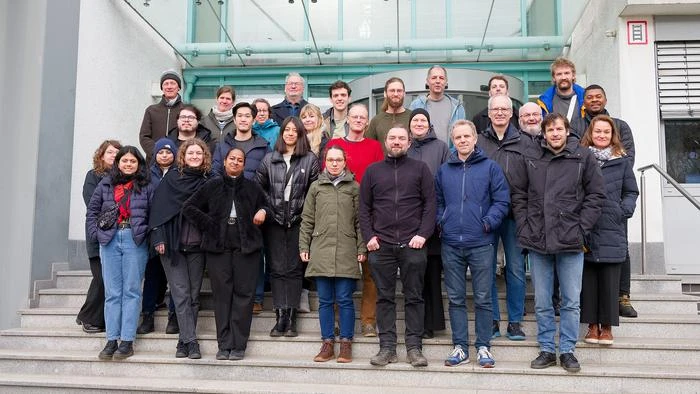
Leipzig. Over the next few years, climate researchers from Germany aim to achieve a breakthrough in the radiative properties of clouds by describing the corresponding processes not just one-dimensionally, as has been the case up to now, but three-dimensionally in future. Capturing clouds and radiation in 3D is seen as an important step towards undistorted remote sensing of the atmosphere and improved modelling of climate and weather. The new research group of the German Research Foundation (DFG) brings together experts in atmospheric radiation, high-resolution modelling and observation of clouds on various spatial and temporal scales. The kick-off meeting at the end of January in Leipzig at the Leibniz Institute for Tropospheric Research (TROPOS) marks the start of work on this important topic.


Clouds cover an average of two thirds of our planet's surface and are therefore the largest filter in our atmosphere, reflecting solar radiation from the sun and emitting thermal radiation back to the ground. Depending on their structure, height and time of day, clouds can therefore cool or warm. As clouds play a dominant role in the Earth's radiation budget and therefore shape the planet's climate, climate research has been making great efforts since the first weather satellites in the 1960s to record the global distribution of clouds and their radiation effects from satellite observations. However, these radiation effects and their regional and temporal distribution are still not well understood. This is mainly due to the complex spatio-temporal variability of cloud cover, cloud type and microphysical properties, which cannot yet be adequately captured by satellites or global models.


In satellite remote sensing and climate modelling, clouds are represented in a simplified form as homogeneous objects due to a lack of more precise information. However, it has been known for decades that this highly simplified cloud geometry is too imprecise and also neglects the natural spatio-temporal variability.

Although clouds are highly variable due to their complex dynamic and microphysical processes, there are now approaches to explain their radiative effects with a few averaged physical cloud properties such as liquid water path or cloud cover. A new research group now wants to bring these approaches together and develop them further in order to better understand the three-dimensional radiation effects and take them into account in remote sensing and climate modelling.


The C3SAR (Cloud 3D Structure And Radiation) research group brings together around 25 researchers from the University of Cologne (UzK), Ludwig-Maximilians-Universität München (LMU), Leibniz Universität Hannover (LUH), the German Weather Service (DWD) and the Leibniz Institute for Tropospheric Research (TROPOS), which is coordinating the work. The research group is funded by the German Research Foundation (DFG). DFG Research Units enable scientists to address current and pressing issues in their specialised fields and to establish innovative research directions. They are funded for up to eight years.


The involved researchers have high hopes for the latest generation of earth observation satellites. The third generation of Meteosat weather satellites (MTG, since 2024) and the new ESA climate satellite EarthCARE (also since 2024) enable cloud observations from space with a spatial resolution like never before. But it's not just the eyes in space that are now much "sharper", a lot has also happened on the ground in recent years: so-called atmospheric supersites such as the DWD's Richard Aßmann Observatory and other observatories in Germany and Europe are already providing valuable high-resolution cloud and radiation information as part of the EU research infrastructure ACTRIS.


As part of the C3SAR research group, a large field campaign is planned for summer 2026 at the Richard Aßmann Observatory of the DWD in Lindenberg, east of Berlin. The instruments of the observatory will be supplemented by additional devices for three months. Among other things, these will record the optical and microphysical properties of clouds, cloud-related fluctuations in solar radiation on the ground and the distribution of incoming solar radiation in terms of wavelength and direction of incidence

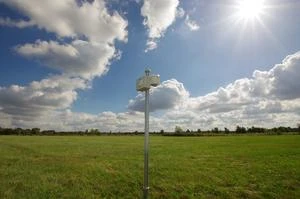
The DWD's routine measurement programme in Lindenberg with cloud radar, ceilometer, microwave radiometer, Raman lidar, radiosondes, infrared sky camera and radiometer is supplemented by a small-scale pyranometer measurement network (PyrNet) from TROPOS, which better captures the spatial variability of solar irradiance at the Earth's surface. This pyranometer measurement network last recorded the small-scale variability of sunlight in the USA in 2023. The researchers want to install dozens of these small radiation measuring devices on and around the observatory in Lindenberg in 2026 in order to record the solar irradiance on the ground every second and compare it with the satellite observations and model results. In addition, new in-situ measurement methods from Leibniz Universität Hannover will be used to measure the spectral and directional distribution of solar radiation (radiance) with high spectral and temporal resolution. The combination of high-resolution cloud modelling, reconstructed and observed radiation and cloud data and state-of-the-art satellite data will produce unique data sets of cloud properties, irradiance and radiance for the Earth's surface and the upper edge of the atmosphere.


By combining state-of-the-art ground- and satellite-based remote sensing with high-resolution radiation and atmospheric modelling, the researchers believe that there will be an opportunity in the coming years to integrate the spatial structure of clouds into global climate models and remote sensing from space, thereby closing a gap in cloud research that has been known for decades. Specifically, the project aims to make it possible for the first time to correct errors in climate modelling and cloud remote sensing based on observations, which can be traced back to an oversimplification of the complex geometric nature of clouds.


The investigations are funded by the German Research Foundation (DFG) as part of the DFG research group FOR 5626 (project number 513446258).

END

[Attachments] See images for this press release:
Addressing 3D effects of clouds for significant improvements of climate models Addressing 3D effects of clouds for significant improvements of climate models 2 Addressing 3D effects of clouds for significant improvements of climate models 3

ELSE PRESS RELEASES FROM THIS DATE:

Gut microbes may mediate the link between drinking sugary beverages and diabetes risk

Gut microbes may mediate the link between drinking sugary beverages and diabetes risk
2025-01-31
It is well known that consuming sugary drinks increases the risk of diabetes, but the mechanism behind this relationship is unclear. Now, in a paper publishing January 31 in the Cell Press journal Cell Metabolism, researchers show that metabolites produced by gut microbes might play a role. In a long-term cohort of US Hispanic/Latino adults, the researchers identified differences in the gut microbiota and blood metabolites of individuals with a high intake of sugar-sweetened beverages. The altered metabolite profile ...

Ribosomes team up in difficult situations, new technology shows

Ribosomes team up in difficult situations, new technology shows
2025-01-31
Researchers from the Tanenbaum group at the Hubrecht Institute have developed a new microscopy technique to observe how ribosomes function in cells. With this method, they can monitor individual ribosomes as they convert mRNA into proteins. The researchers discovered that ribosomes help each other when encountering difficulties, a process they refer to as ‘ribosome cooperativity’. This technique and the findings, published in Cell, provide insights into how proteins are made and offer other researchers a tool to better study mRNA translation. Our DNA contains genetic information essential for ...

Mortality trends among adults ages 25-44 in the US

2025-01-31
About The Study: This cross-sectional study found that compared with trends from the early 2000s, early adult (ages 25-44) mortality in the U.S. has risen substantially in 2 stages: 2011 to 2019 and 2020 to 2023. Although mortality rates decreased after the core pandemic years, excess mortality remained higher than expected based on pre-pandemic levels. The largest portion of 2023 excess mortality was driven by drug poisoning, but many other external and natural causes exceeded what prior trends would have projected. Corresponding Author: To contact the corresponding author, Elizabeth Wrigley-Field, PhD, email ewf@umn.edu. To access the embargoed study: Visit our ...

Discontinuation and reinitiation of dual-labeled GLP-1 receptor agonists among us adults with overweight or obesity

2025-01-31
About The Study: In this cohort study, most patients with overweight or obesity discontinued glucagon-like peptide-1 receptor agonist (GLP-1 RA) therapy within 1 year, but those without type 2 diabetes had higher discontinuation rates and lower reinitiation rates. Inequities in access and adherence to effective treatments have the potential to exacerbate disparities in obesity.  Corresponding Author: To contact the corresponding author, Ezekiel J. Emanuel, MD, PhD, email zemanuel@upenn.edu. To access the embargoed study: Visit our For The Media website at this link https://media.jamanetwork.com/ (doi:10.1001/jamanetworkopen.2024.57349) Editor’s ...

Ultraprocessed food consumption and obesity development in Canadian children

2025-01-31
About The Study: High ultraprocessed food consumption during early childhood was associated with obesity development, primarily in males in this cohort study of Canadian children. These findings can inform targeted public health initiatives for early childhood centers and caregiver education programs to reduce ultraprocessed food intake and prevent obesity.  Corresponding Author: To contact the corresponding author, Kozeta Miliku, MD, PhD, email kozeta.miliku@utoronto.ca. To access the embargoed study: Visit our For The Media website at this link https://media.jamanetwork.com/ (doi:10.1001/jamanetworkopen.2024.57341) Editor’s Note: Please see the ...

Experts publish framework for global adoption of digital health in medical education

2025-01-31
A group of 211 international experts from 79 countries has today published a new framework to facilitate the design, development and implementation of digital health curricula in medical education worldwide. Published in JAMA Network Open, the Digital Health Competencies in Medical Education (DECODE) framework is designed to help medical institutions better equip future physicians for the ongoing digital transformation in healthcare. The framework is already beginning to be adopted across the globe, including in the UK where it has influenced ...

Canadian preschoolers get nearly half of daily calories from ultra-processed foods: University of Toronto study

Canadian preschoolers get nearly half of daily calories from ultra-processed foods: University of Toronto study
2025-01-31
Researchers at the University of Toronto are sounding the alarm about the high consumption of ultra-processed foods among preschool-aged children in Canada and its association with obesity development. “We saw that ultra-processed foods contributed to almost half of a child’s total daily energy intake,” says Kozeta Miliku, assistant professor of nutritional sciences at U of T’s Temerty Faculty of Medicine. The findings, published today in JAMA Network Open, are the first to describe sex-driven differences in the effects of ultra-processed food on obesity risk among Canadian children, with stronger ...

City of Hope scientists identify mechanism for self-repair of the thymus, a crucial component of the immune system

City of Hope scientists identify mechanism for self-repair of the thymus, a crucial component of the immune system
2025-01-31
LOS ANGELES — A team of international researchers led by scientists at City of Hope, one of the largest and most advanced cancer research and treatment organizations in the United States, with its National Medical Center in Los Angeles ranked among the nation’s top 5 cancer centers by U.S. News & World Report, have demonstrated a way to boost thymic function after damage in preclinical studies. The team’s study results, published today in the journal Immunity, outline their discovery of a specific type ...

New study reveals how reduced rainfall threatens plant diversity

New study reveals how reduced rainfall threatens plant diversity
2025-01-31
Predicting and mitigating the effects of climate change while preserving biodiversity is a top priority for both scientists and policymakers. As climate change intensifies, leading to more frequent and severe droughts, understanding the impact on natural ecosystems has become increasingly important. One of the main challenges is forecasting changes in species richness due to shifts in precipitation patterns. While it’s established that, on a broad geographic scale, regions with more water generally support greater plant diversity, results vary at ...

New study reveals optimized in vitro fertilization techniques to boost coral restoration efforts in the Caribbean

New study reveals optimized in vitro fertilization techniques to boost coral restoration efforts in the Caribbean
2025-01-31
A recent study published in PeerJ Life and Environment unveils refined techniques for in vitro fertilization (IVF) in four key Caribbean coral species, offering a crucial advancement in coral reef restoration efforts. Researchers from SECORE International, the CARMABI Foundation, and the University of Amsterdam have developed new insights into the optimal conditions for coral breeding, which could significantly enhance larval production and bolster declining coral populations. Study Focus The study examined four broadcast-spawning ...

LAST 30 PRESS RELEASES:

Wood burning in homes drives dangerous air pollution in winter

The Journal of Nuclear Medicine Ahead-of-Print Tip Sheet: January 23, 2026

ISSCR statement in response to new NIH policy on research using human fetal tissue (Notice NOT-OD-26-028)

Biologists and engineers follow goopy clues to plant-wilting bacteria

What do rats remember? IU research pushes the boundaries on what animal models can tell us about human memory

Frontiers Science House: did you miss it? Fresh stories from Davos – end of week wrap

Watching forests grow from space

New grounded theory reveals why hybrid delivery systems work the way they do

CDI scientist joins NIH group to improve post-stem cell transplant patient evaluation

Uncovering cancer's hidden oncRNA signatures: From discovery to liquid biopsy

Multiple maternal chronic conditions and risk of severe neonatal morbidity and mortality

Interactive virtual assistant for health promotion among older adults with type 2 diabetes

Ion accumulation in liquid–liquid phase separation regulates biomolecule localization

Hemispheric asymmetry in the genetic overlap between schizophrenia and white matter microstructure

Research Article | Evaluation of ten satellite-based and reanalysis precipitation datasets on a daily basis for Czechia (2001–2021)

Nano-immunotherapy synergizing ferroptosis and STING activation in metastatic bladder cancer

Insilico Medicine receives IND approval from FDA for ISM8969, an AI-empowered potential best-in-class NLRP3 inhibitor

Combined aerobic-resistance exercise: Dual efficacy and efficiency for hepatic steatosis

Expert consensus outlines a standardized framework to evaluate clinical large language models

Bioengineered tissue as a revolutionary treatment for secondary lymphedema

Forty years of tracking trees reveals how global change is impacting Amazon and Andean Forest diversity

Breathing disruptions during sleep widespread in newborns with severe spina bifida

Whales may divide resources to co-exist under pressures from climate change

Why wetland restoration needs citizens on the ground

Sharktober: Study links October shark bite spike to tiger shark reproduction

PPPL launches STELLAR-AI platform to accelerate fusion energy research

Breakthrough in development of reliable satellite-based positioning for dense urban areas

DNA-templated method opens new frontiers in synthesizing amorphous silver nanostructures

Stress-testing AI vision systems: Rethinking how adversarial images are generated

Why a crowded office can be the loneliest place on earth

[Press-News.org] Addressing 3D effects of clouds for significant improvements of climate models
New DFG research group on 3D radiation transport launched