PRESS-NEWS.org - Press Release Distribution
PRESS RELEASES DISTRIBUTION

Improved treatment timing reduces honey bee losses to Varroa mites

Honey bee mortality can be significantly reduced by ensuring that treatments for the parasitic Varroa mite occur within specific timeframes, a new study reveals

Improved treatment timing reduces honey bee losses to Varroa mites
2025-02-03
(Press-News.org) Honey bee mortality can be significantly reduced by ensuring that treatments for the parasitic Varroa mite occur within specific timeframes, a new study reveals.

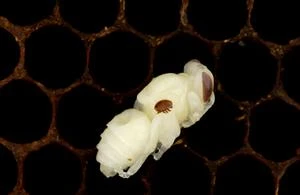
The mites—belonging to the species Varroa destructor—feed on the larvae of bees and can destroy colonies if not treated at key points to reduce or remove infestations.

But researchers have found that more than a third of beekeepers surveyed in England and Wales deviate from recommended treatment guidelines, including application windows.

Crucially, they found that beekeepers who mistimed Varroa mite treatments experienced exacerbated colony losses, with the effect occurring across a wide range of medications.

“The main finding here was that a major cause of honeybee mortality could, in theory, be quite easy to reduce,” said Dr Thomas O’Shea-Wheller, lead author of the study, from the University of Exeter.

“We talk a lot about honey bee colony losses in terms of novel diseases and emerging threats, but this is actually something that's been under our nose the whole time.”

The researchers used the National Bee Unit’s BeeBase—a register of beekeepers across England and Wales—to analyse data from 4,339 beekeepers across 37 counties, encompassing a total of 18,700 colonies from 2016 to 2020.

They looked at the range of Varroa treatments that beekeepers were using, how they were applying those treatments, and what influence this had on colony survival and honey yield.

They found that colony losses were predicted not just by the type of Varroa treatment that a beekeeper used, but also by their level of adherence to the recommended treatment regimen.

“Although beekeepers are frequently treating for Varroa, a considerable proportion are missing key time points and thus experiencing higher losses than expected,” said Dr O’Shea-Wheller.

Explaining why timing is so important in administering Varroa treatments, Dr O’Shea-Wheller said: “Mite numbers build up across the season in a kind of exponential curve. You have to target this at key junctures in order to achieve effective control.

“If you miss these, and apply a treatment too early or too late, then it will fail to properly supress the mite population and growth will continue unchecked. Missing the recommended treatment window is, I think, the largest cause of poor prognostic outcomes and associated colony mortality.”

Dr O’Shea-Wheller warned that deviating from recommended Varroa treatment guidelines could also lead to the mites developing increased resistance.

“Varroa has been the primary cause of honey bee mortality for some years, and it seems that we’re in a sort of arms race as the mites become increasingly resistant to acaricides. Like with antibiotics, it’s important to use Varroa treatments precisely as directed, because mistiming, overdosing, or underdosing can all increase the chances of the mites developing resistance.”

The paper, published in the journal Entomologia Generalis, is entitled: “A large-scale study of Varroa destructor treatment adherence in apiculture”.

Ends

END

[Attachments] See images for this press release:
Improved treatment timing reduces honey bee losses to Varroa mites Improved treatment timing reduces honey bee losses to Varroa mites 2 Improved treatment timing reduces honey bee losses to Varroa mites 3

ELSE PRESS RELEASES FROM THIS DATE:

CAR-T cells can arm bystander T cells with CAR molecules via trogocytosis

CAR-T cells can arm bystander T cells with CAR molecules via trogocytosis
2025-02-03
Engineered immune cells called CAR-T cells are used in the treatment of cancer. Researchers from Uppsala University have now discovered that CAR molecules can be transferred from the CAR-T cells to other T cells in the tumour microenvironment. The researchers also pinpoint how this transfer is regulated, which may be used to improve the efficacy of CAR-T cell therapy. The study has been published in the journal Science Immunology.  Immune cells have a capacity to exchange cell surface molecules between one another. This exchange is called trogocytosis and may potentially impact the immune response since it allows different proteins to be transferred between cells.  Chimeric antigen ...

Can ocean-floor mining oversights help us regulate space debris and mining on the Moon?

2025-02-03
by Nishith Mishra, Martina Elia Vitoloni, and Dr Joseph Pelton Mining ocean resources needed for electric cars and other devices is currently a hot issue of dispute. Final resolution of how or whether the seabed should be expl18oited is pending. Outcomes in this contentious area could create precedents that could impact decisions about mining the moon. These precedents might shape the how and why of mining the Moon and shape the future and the sustainability of space activities of human beings. But this is only one possible precedent that could reshape the future of space. Pending international discussions on space traffic management, space debris removal, and limiting ...

Observing ozonated water’s effectiveness against SARS-CoV-2 in saliva

Observing ozonated water’s effectiveness against SARS-CoV-2 in saliva
2025-02-03
Disinfecting surfaces is crucial in keeping bacteria and viruses at bay, but the cleaning solutions could be ineffective if met with neutralizing compounds. Ozonated water has a strong disinfection effect on mold and bacteria, and is also shown to work on SARS-CoV-2, which is responsible for COVID-19. The downside is that ozonated water breaks down quickly in the presence of organic matter, which reduces its effectiveness. SARS-CoV-2 is transmitted through droplets mixed with bodily fluids, such as saliva and nasal mucus which contain organic matters. For this reason, it is necessary to investigate how effective ozonated water is in the presence of ...

Alcohol-related deaths up 18% during pandemic

2025-02-03
Alcohol-related deaths increased 18% during the pandemic, as did hospitalizations related to alcohol use, according to new research in CMAJ (Canadian Medical Association Journal) https://www.cmaj.ca/lookup/doi/10.1503/cmaj.241146. In the early part of the pandemic, retail alcohol sales volume in Canada increased by 2% (2020/21 v. 2019), the highest increase in 10 years, despite few international visitors. More than 1 in 4 people (26%) reported drinking more, and 18% reported heavy drinking (defined as ...

Mothers of twins face a higher risk of heart disease in the year after birth

2025-02-03
The risk of being admitted to the hospital with heart disease is twice as high the year after birth for mothers of twins compared to singleton births, according to research published in the European Heart Journal [1] today (Monday). The risk is even higher in mothers of twins who had a high blood pressure condition during pregnancy.   The research was led by Professor Cande Ananth from the Department of obstetrics, gynecology, and reproductive sciences at Rutgers Robert Wood Johnson Medical School, New Jersey, USA.   He said: “The rate of twin pregnancies worldwide ...

A new approach to detecting Alzheimer’s disease

A new approach to detecting Alzheimer’s disease
2025-02-03
Research led by Lancaster University has revealed clear evidence that changes in the orchestration of brain oxygenation dynamics and neuronal function in Alzheimer’s disease contribute to the neurodegeneration. The study “Neurovascular phase coherence is altered in Alzheimer’s Disease” is published in Brain Communications. The lead author is Aneta Stefanovska with Juliane Bjerkan,  Gemma Lancaster, Peter McClintock and Trevor Crawford from Lancaster University and Bernard Meglič and Jan Kobal from the University of Ljubljana Medical Centre in Slovenia. Professor Stefanovska said: “Alzheimer's can be hypothesised as being a result ...

Could the contraceptive pill reduce risk of ovarian cancer?

2025-02-02
It’s a little pill with big responsibilities. But despite its primary role to prevent pregnancy, the contraceptive pill (or ‘the Pill’) could also help reduce the risk of ovarian cancer, according to new research from the University of South Australia.   Screening for risk factors of ovarian cancer using artificial intelligence, UniSA researchers found that the oral contraceptive pill reduced the risk of ovarian cancer by 26% among women who had ever used the Pill, and by 43% for women who had used the Pill after the age of 45.   The study also identified some biomarkers associated with ovarian cancer risk, including several characteristics of red blood ...

Launch of the most comprehensive, and up to date European Wetland Map

Launch of the most comprehensive, and up to date European Wetland Map
2025-02-02
2nd February 2025 Greifswald/Aarhus/Helsinki - On time for World Wetlands Day, the European Wetland Map (‘EWM’) significantly enhances knowledge of wetlands across Europe by locating, assessing and merging the latest geospatial data. It combines various geographic information system (GIS) data on wetland types and their distribution on mineral soil in coastal environments, floodplains, and a large variety of peatlands in one most comprehensive, easily accessible resource.   "Over a period of two years, we collected, checked and merged more than 200 geodata on wetlands and especially ...

Lurie Children’s campaign urges parents to follow up right away if newborn screening results are abnormal

2025-02-01
Ann & Robert H. Lurie Children’s Hospital of Chicago launched a newborn screening awareness campaign, with signage on public transit and billboards across Chicago urging parents to contact their child’s pediatrician immediately if results are out of normal range. For some conditions, such as cystic fibrosis, that are included in newborn screening, timely diagnosis and early treatment are key to optimal health, while delays can lead to more severe disease. All U.S. states screen for at least 33 metabolic and ...

Does drinking alcohol really take away the blues? It's not what you think

2025-02-01
A new study from the University of Chicago Medicine reveals that people with alcohol use disorder (AUD) and depression experience high levels of stimulation and pleasure when intoxicated, similar to drinkers who do not have depression. The findings counter the long-held belief that the pleasure people experience when drinking alcohol decreases with addiction and that drinking to intoxication is mainly to reduce negative feelings as a form of self-medication.  "We have this folklore that people drink excessively when they're feeling depressed ...

LAST 30 PRESS RELEASES:

Making lighter work of calculating fluid and heat flow

Normalizing blood sugar can halve heart attack risk

Lowering blood sugar cuts heart attack risk in people with prediabetes

Study links genetic variants to risk of blinding eye disease in premature infants

Non-opioid ‘pain sponge’ therapy halts cartilage degeneration and relieves chronic pain

AI can pick up cultural values by mimicking how kids learn

China’s ecological redlines offer fast track to 30 x 30 global conservation goal

Invisible indoor threats: emerging household contaminants and their growing risks to human health

Adding antibody treatment to chemo boosts outcomes for children with rare cancer

Germline pathogenic variants among women without a history of breast cancer

Tanning beds triple melanoma risk, potentially causing broad DNA damage

Unique bond identified as key to viral infection speed

Indoor tanning makes youthful skin much older on a genetic level

Mouse model sheds new light on the causes and potential solutions to human GI problems linked to muscular dystrophy

The Journal of Nuclear Medicine ahead-of-print tip sheet: December 12, 2025

Smarter tools for peering into the microscopic world

Applications open for funding to conduct research in the Kinsey Institute archives

Global measure underestimates the severity of food insecurity

Child survivors of critical illness are missing out on timely follow up care

Risk-based vs annual breast cancer screening / the WISDOM randomized clinical trial

University of Toronto launches Electric Vehicle Innovation Ontario to accelerate advanced EV technologies and build Canada’s innovation advantage

Early relapse predicts poor outcomes in aggressive blood cancer

American College of Lifestyle Medicine applauds two CMS models aligned with lifestyle medicine practice and reimbursement

Clinical trial finds cannabis use not a barrier to quitting nicotine vaping

Supplemental nutrition assistance program policies and food insecurity

Switching immune cells to “night mode” could limit damage after a heart attack, study suggests

URI-based Global RIghts Project report spotlights continued troubling trends in worldwide inhumane treatment

Neutrophils are less aggressive at night, explaining why nighttime heart attacks cause less damage than daytime events

Menopausal hormone therapy may not pose breast cancer risk for women with BRCA mutations

Mobile health tool may improve quality of life for adolescent and young adult breast cancer survivors

[Press-News.org] Improved treatment timing reduces honey bee losses to Varroa mites
Honey bee mortality can be significantly reduced by ensuring that treatments for the parasitic Varroa mite occur within specific timeframes, a new study reveals