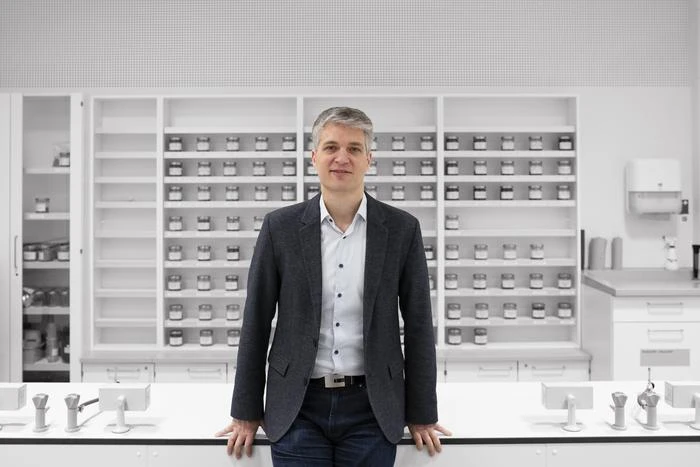
(Press-News.org) One particular challenge in the treatment of cancer is therapy resistance. An international research team has now discovered a mechanism that opens up new treatment strategies for tumours in which conventional chemotherapeutic agents have reached their limits. "Cytotoxic agents from nature lead to an increased incorporation of polyunsaturated fatty acids into the membrane of cancer cells. This makes them more susceptible to ferroptosis, a type of cell death, at a very early stage," reports Andreas Koeberle, a pharmacist at the University of Graz and lead author of the study, which has just been published in the scientific journal Nature Communications.
In the treatment of cancer with chemotherapy, natural substances, such as those from the Chinese “happy tree”, play an important role. They interfere with vital cell processes and thereby damage them. However, a few cancer cells are often able to adapt to these challenges and survive. This is called resistance.
While studying the effect of various cytotoxic natural products on different cancer cells, Andreas Koeberle from the Institute of Pharmaceutical Sciences at the University of Graz has discovered a previously unknown mechanism that could point to new therapeutic options in the event of such resistance. "When the cancer cells come into contact with the active substance, they show a stress reaction. Even at this very early stage, long before they might possibly die, reduced growth signals cause increased levels of polyunsaturated fatty acids to be incorporated into the membrane. This makes them more susceptible to a particular cell death pathway, ferroptosis," explains the researcher, adding: "The mechanism appears to be universal. This means that it can be observed in all the cancer cells examined and in most cytotoxic agents." During ferroptosis, polyunsaturated fatty acids in cell membranes are damaged by oxygen radicals. The membranes become porous and the cell dies.
These findings create a basis for the systematic research of innovative treatment strategies for therapy-resistant tumours. Even if conventional chemotherapeutic agents do not kill the cells, they at least trigger a membrane change that can be utilised. "By adding substances that induce ferroptosis, cancer cells could ultimately be eliminated completely," Koeberle suspects.
Researchers from Innsbruck, Hamburg, Jena, Salzburg, Tokyo and Valbonne, among other places, were also involved in the study.
Publication:
Attenuated growth factor signaling during cell death initiation sensitizes membranes towards peroxidation
Nature Communications
DOI: 10.1038/s41467-025-56711-2
END
What makes cancer cells weak
A new approach in the fight against therapy resistance
2025-02-25
ELSE PRESS RELEASES FROM THIS DATE:
Robots learn how to move by watching themselves
2025-02-25
New York, NY—Feb. 25, 2025— By watching their own motions with a camera, robots can teach themselves about the structure of their own bodies and how they move, a new study from researchers at Columbia Engineering now reveals. Equipped with this knowledge, the robots could not only plan their own actions, but also overcome damage to their bodies.
"Like humans learning to dance by watching their mirror reflection, robots now use raw video to build kinematic self-awareness," says study lead author Yuhang Hu, a doctoral student at the Creative Machines Lab at Columbia University, directed by Hod Lipson, James and Sally Scapa Professor of Innovation and chair of the Department ...
MD Anderson researchers develop novel antibody-toxin conjugate
2025-02-25
HOUSTON ― Researchers at The University of Texas MD Anderson Cancer Center have developed a novel antibody-toxin conjugate (ATC) designed to stimulate immune-mediated eradication of tumors. According to preclinical results published today in Nature Cancer, the new approach combined the benefits of more well-known antibody-drug conjugates (ADCs) with those of immunotherapies.
ADCs have emerged as a breakthrough in recent years due to their modular design, which enables precise delivery of therapies to tumors by targeting specific proteins expressed on cancer cells. These conjugates ...
One in ten older South Asian immigrants in Canada have hypothyroidism
2025-02-25
Toronto, ON – A new study published this week in Archives of Gerontology and Geriatrics Plus found that 10% of South Asian immigrants aged 45 and older in Canada had hypothyroidism. After adjustment for a wide range of sociodemographic characteristics and health behaviors, those who had immigrated from South Asia had 77% higher odds of hypothyroidism than those born in Canada.
“To the best of our knowledge, this is the first study to identify a significantly higher odds of hypothyroidism among immigrants of South Asian descent,” says senior author Esme Fuller-Thomson, a Professor at Factor-Inwentash Faculty of Social Work (FIFSW) and Director ...
Substantial portion of cancer patients in early trials access drugs that are later approved
2025-02-25
A new paper in the Journal of the National Cancer Institute, published by Oxford University Press, finds that almost 20% of patients in middle-stage cancer drug trials receive treatment that eventually prove effective enough to get FDA approval. This may have important implications for drug development and clinical trial recruitment.
The development of new medications typically has three stages. In phase 1 trials, researchers assess drugs for safety and dosing (“What is the best tolerated dose for the patient?”). Phase 2 clinical trials determine whether a new drug shows signs of efficacy (“How much does the ...
New study calls for ethical framework to protect Indigenous genetic privacy in wastewater monitoring
2025-02-25
GUELPH, Ontario, Canada, 25 February 2025 – In a comprehensive peer-reviewed Perspective (review) article, researchers from the University of Guelph have outlined an urgent call for new ethical frameworks to protect Indigenous communities' genetic privacy in the growing field of wastewater surveillance. The study, published today in Genomic Psychiatry (Genomic Press New York), examines how the analysis of community wastewater – while valuable for public health monitoring – raises significant privacy concerns for Indigenous populations.
"Wastewater-based ...
Common medications may affect brain development through unexpected cholesterol disruption
2025-02-25
OMAHA, Nebraska, USA, 25 February 2025 - In a peer-reviewed Perspective (review) article, researchers at the University of Nebraska Medical Center have uncovered concerning evidence that commonly prescribed medications may interfere with crucial brain development processes by disrupting sterol biosynthesis. Their findings, published today in Brain Medicine (Genomic Press, New York), suggest that this previously overlooked mechanism could have significant implications for medication safety during pregnancy and early development.
"What we've discovered is that many prescription medications, while designed for entirely different purposes, can inadvertently interfere with the brain's ...
Laser-powered device tested on Earth could help us detect microbial fossils on Mars
2025-02-25
The first life on Earth formed four billion years ago, as microbes living in pools and seas: what if the same thing happened on Mars? If it did, how would we prove it? Scientists hoping to identify fossil evidence of ancient Martian microbial life have now found a way to test their hypothesis, proving they can detect the fossils of microbes in gypsum samples that are a close analogy to sulfate rocks on Mars.
“Our findings provide a methodological framework for detecting biosignatures in Martian sulfate minerals, potentially guiding ...
Non-destructive image sensor goes beyond bulkiness
2025-02-25
While photo-thermoelectric (PTE) sensors are potentially suitable for testing applications, such as non-destructive material-identification in ultrabroad millimeter-wave (MMW)–infrared (IR) bands, their device designs have primarily employed a single material as the channel. In general, PTE sensors combine photo-induced heating with associated thermoelectric (TE) conversion, and the employment of a single material channel regulates the utilization of devices by missing the opportunity for fully utilizing their fundamental parameters. ...
1st Japanese version of US psychological scale for esophageal symptoms
2025-02-25
Psychological factors have a greater impact on the severity of symptoms in esophageal diseases than objective evaluations, such as acid reflux and esophageal motility function. Although there are questionnaires that assess general psychological states in Japan, there were none that were specific to esophageal symptoms. In the United States, meanwhile, the Esophageal Hypervigilance and Anxiety Scale (EHAS) questionnaire that evaluates symptom-specific hypervigilance and anxiety for esophageal symptoms was developed in 2018.
In an effort to expand the use of EHAS, Dr. Akinari Sawada’s research group at Osaka Metropolitan ...
HikingTTE: a deep learning approach for hiking travel time estimation based on personal walking ability
2025-02-25
At the University of Electro-Communications, a research team led by Mizuho Asako, Yasuyuki Tahara, Akihiko Ohsuga, and Yuichi Sei has developed a new deep learning model called "HikingTTE" that significantly improves hiking travel time estimation. Hiking is popular worldwide, but accidents still occur when hikers underestimate the time needed to reach their destination.
This model could help reduce mountain accidents and improve hiker safety by providing more accurate travel time predictions. Previous hiking travel time estimation methods often use the relationship between slope (uphill or downhill) and walking speed. However, these ...
LAST 30 PRESS RELEASES:
Making lighter work of calculating fluid and heat flow
Normalizing blood sugar can halve heart attack risk
Lowering blood sugar cuts heart attack risk in people with prediabetes
Study links genetic variants to risk of blinding eye disease in premature infants
Non-opioid ‘pain sponge’ therapy halts cartilage degeneration and relieves chronic pain
AI can pick up cultural values by mimicking how kids learn
China’s ecological redlines offer fast track to 30 x 30 global conservation goal
Invisible indoor threats: emerging household contaminants and their growing risks to human health
Adding antibody treatment to chemo boosts outcomes for children with rare cancer
Germline pathogenic variants among women without a history of breast cancer
Tanning beds triple melanoma risk, potentially causing broad DNA damage
Unique bond identified as key to viral infection speed
Indoor tanning makes youthful skin much older on a genetic level
Mouse model sheds new light on the causes and potential solutions to human GI problems linked to muscular dystrophy
The Journal of Nuclear Medicine ahead-of-print tip sheet: December 12, 2025
Smarter tools for peering into the microscopic world
Applications open for funding to conduct research in the Kinsey Institute archives
Global measure underestimates the severity of food insecurity
Child survivors of critical illness are missing out on timely follow up care
Risk-based vs annual breast cancer screening / the WISDOM randomized clinical trial
University of Toronto launches Electric Vehicle Innovation Ontario to accelerate advanced EV technologies and build Canada’s innovation advantage
Early relapse predicts poor outcomes in aggressive blood cancer
American College of Lifestyle Medicine applauds two CMS models aligned with lifestyle medicine practice and reimbursement
Clinical trial finds cannabis use not a barrier to quitting nicotine vaping
Supplemental nutrition assistance program policies and food insecurity
Switching immune cells to “night mode” could limit damage after a heart attack, study suggests
URI-based Global RIghts Project report spotlights continued troubling trends in worldwide inhumane treatment
Neutrophils are less aggressive at night, explaining why nighttime heart attacks cause less damage than daytime events
Menopausal hormone therapy may not pose breast cancer risk for women with BRCA mutations
Mobile health tool may improve quality of life for adolescent and young adult breast cancer survivors
[Press-News.org] What makes cancer cells weakA new approach in the fight against therapy resistance