Who gets the lion’s share? HKU ecologists highlight disparities in global biodiversity conservation funding
Published 2025-03-04 · Original archive entry · Explore research explainers

The extensive loss of biodiversity represents one of the major crises of our time, threatening not only entire ecosystems but also our current and future livelihoods. As scientists realise the magnitude and scale of ongoing extinctions, it is vital to ascertain the resources available for conservation and whether funds are being effectively distributed to protect species most in need.
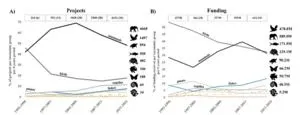
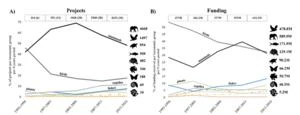
A team of researchers from the School of Biological Sciences, The University of Hong Kong (HKU), addressed these questions in a recent paper in the Proceedings of the National Academy of Sciences (PNAS), USA, by compiling information on nearly 15,000 funded projects focused on species conservation. Professor Benoit GUÉNARD, the lead author of the study, noted that, “Our first conclusion is that funding for species conservation research remains extremely limited with only US$ 1.93 billion allocated over 25 years in the projects we assessed.”
The international conservation funding from 37 governments and NGOs represented a mere 0.3% and 0.01% of the annual budget of the NASA or US military, respectively. This stark comparison underscores the urgent need to dramatically increase such funding to slow global biodiversity loss.
The authors also examined the allocation of this funding to specific species or groups of organisms based on their conservation needs as assessed by the International Union for Conservation of Nature (IUCN) Red List, often called the ‘barometer of life’. Professor Guénard explains, “Based on previous literature-based studies, we expected biases towards vertebrates and, whilst this was true, we found the situation much worse than previously estimated. Even within vertebrates, many of the most threatened groups, like amphibians, were largely underfunded with declining funding trends over time.”
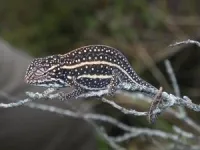
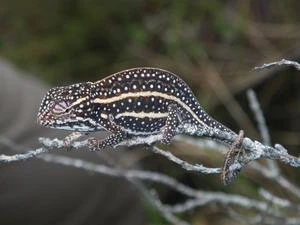
Another striking example can be found in reptiles, particularly lizards and snakes, where over a thousand species have been identified as threatened, yet 87% of the funding towards reptile conservation is directed towards the seven species of marine turtles. Professor Guénard states, “This highlights an important mismatch between scientific assessment of conservation and allocation of funding by conservation stakeholders, which appears to rely on the ‘charisma’ of species. This leads to nearly a third of the funding directed to non-threatened species while almost 94% of threatened species have not received any support.”
Some groups, like plants or insects, received a mere 6% each of the funding despite their vast diversity and the number of threatened species they include, while other major groups, such as fungi or algae, received virtually no funding.
Professor Alice HUGHES, a co-author of the study, echoed, “Our traditional view of what is threatened often does not align with species genuinely at threat, leaving many smaller, or ‘less charismatic’ species neglected. We urgently need to reframe this perspective and better allocate funding across taxa if we want any hope of redressing widespread population declines and the continued loss of biodiversity.”
Based on these findings, the researchers are calling for a new approach to conservation funding. Whilst species conservation is in dire need of additional funding, a more rigorous approach to selecting projects and species to receive those limited funds is urgently needed. Professor Guénard emphasises, “Conservation agencies and NGOs need to modify their philosophy towards conservation to protect all species, and not just a subset based on subjective criteria of charisma or beauty.”
In the future, the research team hopes their database can be expanded so information on funding allocation is more transparent and easily accessible. This would help evaluate existing gaps, plan effective future conservation efforts at a global scale, and reduce redundancy in funding for species that already receive the lion's share of support.
For media enquiries, please contact Ms Casey To, Assistant Manager (Communications) (tel: 852-3917 4948; email: caseyto@hku.hk / Ms Cindy Chan, Assistant Director of Communications of HKU Faculty of Science (tel:852-3917 5286; email: cindycst@hku.hk) or Professor Benoit Guénard from School of Biological Sciences at zeroben@gmail.com
The full paper can be accessed at https://www.pnas.org/doi/10.1073/pnas.2412479122
Images download and captions: https://www.scifac.hku.hk/press
END
A team of researchers from the School of Biological Sciences, The University of Hong Kong (HKU), addressed these questions in a recent paper in the Proceedings of the National Academy of Sciences (PNAS), USA, by compiling information on nearly 15,000 funded projects focused on species conservation. Professor Benoit GUÉNARD, the lead author of the study, noted that, “Our first conclusion is that funding for species conservation research remains extremely limited with only US$ 1.93 billion allocated over 25 years in the projects we assessed.”
The international conservation funding from 37 governments and NGOs represented a mere 0.3% and 0.01% of the annual budget of the NASA or US military, respectively. This stark comparison underscores the urgent need to dramatically increase such funding to slow global biodiversity loss.
The authors also examined the allocation of this funding to specific species or groups of organisms based on their conservation needs as assessed by the International Union for Conservation of Nature (IUCN) Red List, often called the ‘barometer of life’. Professor Guénard explains, “Based on previous literature-based studies, we expected biases towards vertebrates and, whilst this was true, we found the situation much worse than previously estimated. Even within vertebrates, many of the most threatened groups, like amphibians, were largely underfunded with declining funding trends over time.”
Another striking example can be found in reptiles, particularly lizards and snakes, where over a thousand species have been identified as threatened, yet 87% of the funding towards reptile conservation is directed towards the seven species of marine turtles. Professor Guénard states, “This highlights an important mismatch between scientific assessment of conservation and allocation of funding by conservation stakeholders, which appears to rely on the ‘charisma’ of species. This leads to nearly a third of the funding directed to non-threatened species while almost 94% of threatened species have not received any support.”
Some groups, like plants or insects, received a mere 6% each of the funding despite their vast diversity and the number of threatened species they include, while other major groups, such as fungi or algae, received virtually no funding.
Professor Alice HUGHES, a co-author of the study, echoed, “Our traditional view of what is threatened often does not align with species genuinely at threat, leaving many smaller, or ‘less charismatic’ species neglected. We urgently need to reframe this perspective and better allocate funding across taxa if we want any hope of redressing widespread population declines and the continued loss of biodiversity.”
Based on these findings, the researchers are calling for a new approach to conservation funding. Whilst species conservation is in dire need of additional funding, a more rigorous approach to selecting projects and species to receive those limited funds is urgently needed. Professor Guénard emphasises, “Conservation agencies and NGOs need to modify their philosophy towards conservation to protect all species, and not just a subset based on subjective criteria of charisma or beauty.”
In the future, the research team hopes their database can be expanded so information on funding allocation is more transparent and easily accessible. This would help evaluate existing gaps, plan effective future conservation efforts at a global scale, and reduce redundancy in funding for species that already receive the lion's share of support.
For media enquiries, please contact Ms Casey To, Assistant Manager (Communications) (tel: 852-3917 4948; email: caseyto@hku.hk / Ms Cindy Chan, Assistant Director of Communications of HKU Faculty of Science (tel:852-3917 5286; email: cindycst@hku.hk) or Professor Benoit Guénard from School of Biological Sciences at zeroben@gmail.com
The full paper can be accessed at https://www.pnas.org/doi/10.1073/pnas.2412479122
Images download and captions: https://www.scifac.hku.hk/press
END
Attachments