New ACS led study finds wildfires pose challenges to cancer care
Published 2025-03-11 · Original archive entry · Explore research explainers
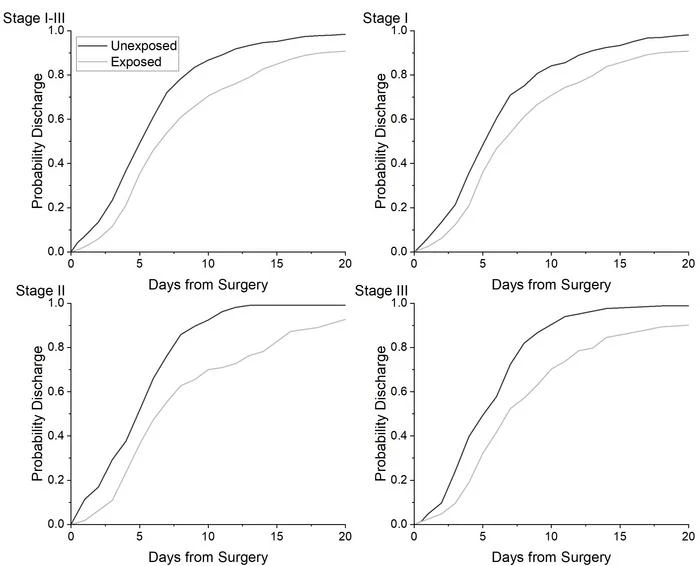
Due to the physical, psychological, and socioeconomic consequences of a cancer diagnosis and treatment, people with cancer are especially vulnerable during extreme weather events like hurricanes, tornadoes, and wildfires, which are becoming more common and damaging with climate change. A new national study led by American Cancer Society (ACS) and Harvard T.H. Chan School of Public Health researchers finds patients whose facility was impacted by a wildfire disaster during recovery from lung cancer surgery had longer length of stay (LOS) than similar patients treated at the same facility, but at times when no disaster occurred. The findings are out today in the Journal of the National Cancer Institute (JNCI).
“These data are critical as there are currently no guidelines for protecting the health and safety of patients recovering from lung cancer surgery during wildfires in the United States,” said Dr. Leticia Nogueira, scientific director, health services research at the American Cancer Society and lead author of the study. “In the absence of guidelines, clinicians might resort to improvisational strategies, such as extending post-operative length of stay to support surgical recovery and better protect the health and safety of patients during wildfires.”
Post-discharge recovery from lung cancer surgery is arduous and wildfire disasters pose several threats to patients’ well-being that extend far beyond exposure to smoke (e.g., exposure to contaminated water and soil, stress associated with following evacuation orders while coping with mobility and cognitive challenges, disruptions in grocery and pharmacy hours of operation and supply, changes in transportation routes).
For this study, researchers selected individuals aged 18 years or older who received curative-intent lobectomy or pneumonectomy for stage I-III non-small cell lung cancer between 2004 and 2021 from the National Cancer Database. Exposure was defined as a Federal Emergency Management Agency (FEMA) wildfire Presidential Disaster Declaration in the county of the treating facility between the date of surgery and the date of discharge from the hospital. Differences in the cumulative distribution function of LOS were evaluated between exposed and propensity score-matched unexposed patients treated at the same facility.
Study results showed patients exposed to a wildfire disaster declaration in the county of the treating facility had longer LOS than unexposed patients (9.4 days compared to 7.5 days, respectively) overall and for each stage (I-III) for which surgery is the recommended treatment modality.
The authors report the two-day difference in LOS may have important economic implications for healthcare systems because shorter LOS is an established quality metric tied to payment models in the U.S., and hospital stays cost approximately $1,500 per day.
“Future studies should evaluate whether extended hospital stay improves surgical care outcomes during disasters,” Nogueira added. “Also, these findings should be considered for disaster preparedness guidelines tailored to vulnerable patient populations and contextual adjustments to quality care metrics.”
“This study is just the tip of the iceberg showing how extreme weather may be impacting patients with chronic illnesses,” said Dr. Amruta Nori-Sarma, deputy director of the center for climate, health, and the global environment at Harvard T.H. Chan School of Public Health. “As the wildfire season gets longer and more intense, and wildfires start affecting broader swathes of the U.S. population, health care providers need to be ready with updated guidance that best protects their patients’ health.”
ACS researcher Dr. Robin Yabroff also contributed to the study.
Additional ACS Resources:
Study Shows Adults Treated for Non-Small Cell Lung Cancer Vulnerable to Hazards of Wildfires Coping with Cancer After a Natural Disaster: Frequently Asked Questions for People With Cancer and Their Caregivers Lung Cancer Information # # #
About the American Cancer Society
The American Cancer Society is a leading cancer-fighting organization with a vision to end cancer as we know it, for everyone. For more than 110 years, we have been improving the lives of people with cancer and their families as the only organization combating cancer through advocacy, research, and patient support. We are committed to ensuring everyone has an opportunity to prevent, detect, treat, and survive cancer. To learn more, visit cancer.org or call our 24/7 helpline at 1-800-227-2345. Connect with us on Facebook, X, and Instagram.
END
“These data are critical as there are currently no guidelines for protecting the health and safety of patients recovering from lung cancer surgery during wildfires in the United States,” said Dr. Leticia Nogueira, scientific director, health services research at the American Cancer Society and lead author of the study. “In the absence of guidelines, clinicians might resort to improvisational strategies, such as extending post-operative length of stay to support surgical recovery and better protect the health and safety of patients during wildfires.”
Post-discharge recovery from lung cancer surgery is arduous and wildfire disasters pose several threats to patients’ well-being that extend far beyond exposure to smoke (e.g., exposure to contaminated water and soil, stress associated with following evacuation orders while coping with mobility and cognitive challenges, disruptions in grocery and pharmacy hours of operation and supply, changes in transportation routes).
For this study, researchers selected individuals aged 18 years or older who received curative-intent lobectomy or pneumonectomy for stage I-III non-small cell lung cancer between 2004 and 2021 from the National Cancer Database. Exposure was defined as a Federal Emergency Management Agency (FEMA) wildfire Presidential Disaster Declaration in the county of the treating facility between the date of surgery and the date of discharge from the hospital. Differences in the cumulative distribution function of LOS were evaluated between exposed and propensity score-matched unexposed patients treated at the same facility.
Study results showed patients exposed to a wildfire disaster declaration in the county of the treating facility had longer LOS than unexposed patients (9.4 days compared to 7.5 days, respectively) overall and for each stage (I-III) for which surgery is the recommended treatment modality.
The authors report the two-day difference in LOS may have important economic implications for healthcare systems because shorter LOS is an established quality metric tied to payment models in the U.S., and hospital stays cost approximately $1,500 per day.
“Future studies should evaluate whether extended hospital stay improves surgical care outcomes during disasters,” Nogueira added. “Also, these findings should be considered for disaster preparedness guidelines tailored to vulnerable patient populations and contextual adjustments to quality care metrics.”
“This study is just the tip of the iceberg showing how extreme weather may be impacting patients with chronic illnesses,” said Dr. Amruta Nori-Sarma, deputy director of the center for climate, health, and the global environment at Harvard T.H. Chan School of Public Health. “As the wildfire season gets longer and more intense, and wildfires start affecting broader swathes of the U.S. population, health care providers need to be ready with updated guidance that best protects their patients’ health.”
ACS researcher Dr. Robin Yabroff also contributed to the study.
Additional ACS Resources:
Study Shows Adults Treated for Non-Small Cell Lung Cancer Vulnerable to Hazards of Wildfires Coping with Cancer After a Natural Disaster: Frequently Asked Questions for People With Cancer and Their Caregivers Lung Cancer Information # # #
About the American Cancer Society
The American Cancer Society is a leading cancer-fighting organization with a vision to end cancer as we know it, for everyone. For more than 110 years, we have been improving the lives of people with cancer and their families as the only organization combating cancer through advocacy, research, and patient support. We are committed to ensuring everyone has an opportunity to prevent, detect, treat, and survive cancer. To learn more, visit cancer.org or call our 24/7 helpline at 1-800-227-2345. Connect with us on Facebook, X, and Instagram.
END