Tourism does not harm all caves
Published 2011-04-12 · Original archive entry · Explore research explainers
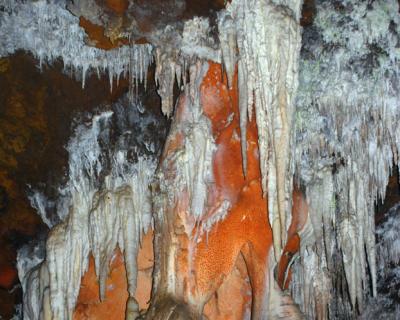
Unlike the situation in other caves, damage caused by tourists at the Águila cave in Ávila, Spain is "imperceptible", despite it receiving tens of thousands of visitors each year. This is the main conclusion of an international research study headed by the University of Alcalá (UAH), which measured heat variations in the cave.
"Despite the tens of thousands of visitors that the Águila Cave receives each year, the temperature variations in it are related to the weather outside, while the long-term impact of tourism is virtually non-existent", David Domínguez Villar, researcher at the Department of Geology of the UAH and lead author of the study published in the journal Acta Carsologica, tells SINC
The research was carried out using data gathered by temperature sensors, which have been fitted in the cave since 2008. These devices make it possible to observe heat variations in the cave, and are very sensitive to the impact of visitors.
"We took data from the cave every 10 minutes and used a filter. The impact of visitor arrivals on temperature increase could be observed immediately. For this reason, we chose the maximum and minimum levels, and we filtered certain periods with or without visitors so that we could differentiate between the natural dynamics of the cave and the impact of the visitors", says Domínguez.
Despite the high number of tourists, the large size of the cave means the thermal signal disperses very quickly and gently. "This is the opposite of what happens in other caves, such as Altamira, which have a gallery shape, meaning that just a few people have an immense impact", the expert explains.
The average temperature of the cave was 15.6ºC in 2009, and tourist visits caused thermal anomalies of less than 0.15ºC, with the temperature generally returning to normal overnight.
On days with higher numbers of visitors, the effects of the thermal anomalies lasted "from one day to the next", and caused temperature increases in the cave for longer periods of time. However, this manmade effect disappeared shortly after the number of tourists fell. In most cases the effect lasted for less than a week.
According to the scientists, the biggest problem in caves with wall paintings is corrosion caused by condensation. "The walls of the Águila cave are also corroded, although it does not have paintings. However, this degradation is due to natural effects. In addition, no condensation-related corrosion can be seen on the stalagmites that are currently growing", Domínguez adds.
Studying a region's climate on the basis of a cave
The researchers also intend to study the past climate by using the stalagmites in the cave. "We want to look at how the external and internal temperature is recorded, and see the temperature trends and changes inside the cave", the researcher adds.
Currently, a certain degree of seasonal change can be seen in the cave, but heat dispersion via rock is much slower than in the air. In fact, the experts say that the thermal signal from outside takes around seven years to reach the inside.
"The temperature records of the cave could be related to the climate of the region, and could be used to reconstruct the temperature of this area, aside from the impact of visitors", he concludes.
INFORMATION:
References:
David Dominguez-Villar, Ian J. Fairchild, Rosa M. Carrasco, Javier Pedraza, Andy Baker, "The effect of visitors in a touristic cave and the resulting constraints on natural thermal conditions for palaeoclimate studies (eagle cave, central Spain)". Acta Carsologica 39 (3): 491-502, 2010.
"Despite the tens of thousands of visitors that the Águila Cave receives each year, the temperature variations in it are related to the weather outside, while the long-term impact of tourism is virtually non-existent", David Domínguez Villar, researcher at the Department of Geology of the UAH and lead author of the study published in the journal Acta Carsologica, tells SINC
The research was carried out using data gathered by temperature sensors, which have been fitted in the cave since 2008. These devices make it possible to observe heat variations in the cave, and are very sensitive to the impact of visitors.
"We took data from the cave every 10 minutes and used a filter. The impact of visitor arrivals on temperature increase could be observed immediately. For this reason, we chose the maximum and minimum levels, and we filtered certain periods with or without visitors so that we could differentiate between the natural dynamics of the cave and the impact of the visitors", says Domínguez.
Despite the high number of tourists, the large size of the cave means the thermal signal disperses very quickly and gently. "This is the opposite of what happens in other caves, such as Altamira, which have a gallery shape, meaning that just a few people have an immense impact", the expert explains.
The average temperature of the cave was 15.6ºC in 2009, and tourist visits caused thermal anomalies of less than 0.15ºC, with the temperature generally returning to normal overnight.
On days with higher numbers of visitors, the effects of the thermal anomalies lasted "from one day to the next", and caused temperature increases in the cave for longer periods of time. However, this manmade effect disappeared shortly after the number of tourists fell. In most cases the effect lasted for less than a week.
According to the scientists, the biggest problem in caves with wall paintings is corrosion caused by condensation. "The walls of the Águila cave are also corroded, although it does not have paintings. However, this degradation is due to natural effects. In addition, no condensation-related corrosion can be seen on the stalagmites that are currently growing", Domínguez adds.
Studying a region's climate on the basis of a cave
The researchers also intend to study the past climate by using the stalagmites in the cave. "We want to look at how the external and internal temperature is recorded, and see the temperature trends and changes inside the cave", the researcher adds.
Currently, a certain degree of seasonal change can be seen in the cave, but heat dispersion via rock is much slower than in the air. In fact, the experts say that the thermal signal from outside takes around seven years to reach the inside.
"The temperature records of the cave could be related to the climate of the region, and could be used to reconstruct the temperature of this area, aside from the impact of visitors", he concludes.
INFORMATION:
References:
David Dominguez-Villar, Ian J. Fairchild, Rosa M. Carrasco, Javier Pedraza, Andy Baker, "The effect of visitors in a touristic cave and the resulting constraints on natural thermal conditions for palaeoclimate studies (eagle cave, central Spain)". Acta Carsologica 39 (3): 491-502, 2010.