PRESS-NEWS.org - Press Release Distribution
PRESS RELEASES DISTRIBUTION

Increased productivity, not less energy use, results from more efficient lighting

Increased productivity, not less energy use, results from more efficient lighting
2012-08-06
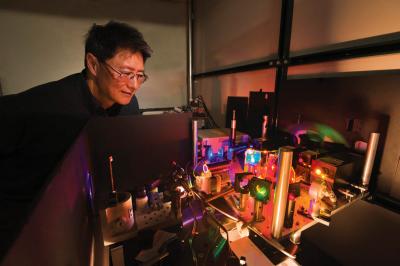
(Press-News.org) ALBUQUERQUE, N.M. — Two researchers have reprised in the journal Energy Policy their groundbreaking finding that improvements in lighting — from candles to gas lamps to electric bulbs — historically have led to increased light consumption rather than lower overall energy use by society.

In an article in the journal Energy Policy, Sandia researcher Jeff Tsao and Harry Saunders of The Breakthrough Institute in Oakland, Calif., predicted in 2010 that the same phenomenon might apply to light-emitting diodes (LEDs), poised to take over from the Edison light bulb as the next, more efficient light source of choice.

But their main point, as three centuries have shown, was that increased light availability leads to increased productivity. Workers are no longer forced to stop shortly after nightfall, as they had in primitive, candle-illuminated huts, but instead could continue producing through the night in homes, offices, factories, and even at outdoor locations not serviced by power lines.

The original paper, titled "Solid-state lighting: an energy-economics perspective," drew attention to the increased productivity made possible by better lighting, rather than societal energy-savings mistakenly cited as a feature of improved lighting technologies.

Misinterpretations of the original paper by two widely read international media outlets led to the confusion that Tsao and his co-authors had shown that lighting efficiency improvements were no improvements at all. This is because reductions in neither overall energy usage nor overall lighting costs would occur.

The researchers, in the upcoming article, titled "Rebound effects for lighting," said the 2010 article generated both interest and confusion in the popular press and in the blogosphere. "This communication seeks to clarify some of this confusion for the particular benefit of energy economists and energy policy specialists," they wrote.

The new article appears under "Articles in Press" on the Energy Policy website.

"We were motivated to publish something, even if short, in Energy Policy, because that journal serves a community very different from that served by the Journal of Physics, where our original article was published," Tsao says. "We thought that many in the energy economics community were still unaware of the work, and of the benefit — even when there is no direct energy-use savings — of energy efficiency and other welfare-enhancing technologies."

INFORMATION:

Other authors of the 2010 article included Sandia researchers Mike Coltrin, Jerry Simmons and Randy Creighton (retired). Harry Saunders is also associated with Decision Processes Inc. in Danville, Calif.

The work was supported by Sandia's Solid-State Lighting Science Energy Frontier Research Center, which is funded by DOE's Office of Basic Energy Sciences.

Sandia National Laboratories is a multi-program laboratory operated by Sandia Corporation, a wholly owned subsidiary of Lockheed Martin company, for the U.S. Department of Energy's National Nuclear Security Administration. With main facilities in Albuquerque, N.M., and Livermore, Calif., Sandia has major R&D responsibilities in national security, energy and environmental technologies and economic competitiveness

[Attachments] See images for this press release:
Increased productivity, not less energy use, results from more efficient lighting

ELSE PRESS RELEASES FROM THIS DATE:

White blood cells mediate insulin resistance

White blood cells mediate insulin resistance
2012-08-06
Researchers at the University of California, San Diego School of Medicine say neutrophils, an abundant type of white blood cell typically tasked with attacking bacteria and other foreign invaders, also plays an unexpected role in mediating insulin resistance – the central characteristic of type 2 diabetes, which afflicts an estimated 26 million Americans. The findings are published in the August 5, 2012 Advance Online Publication of Nature Medicine. Neutrophils are the first immune cells to respond to tissue inflammation, and can promote chronic inflammation by summoning ...

New study finds link between cell division and growth rate

2012-08-06
CAMBRIDGE, Mass. -- It's a longstanding question in biology: How do cells know when to progress through the cell cycle? In simple organisms such as yeast, cells divide once they reach a specific size. However, determining if this holds true for mammalian cells has been difficult, in part because there has been no good way to measure mammalian cell growth over time. Now, a team of MIT and Harvard Medical School (HMS) researchers has precisely measured the growth rates of single cells, allowing them to answer that fundamental question. In the Aug. 5 online edition of ...

Sequencing of malaria genomes reveals challenges, opportunities in battle against parasite

2012-08-06
Genetic variability revealed in malaria genomes newly sequenced by two multi-national research teams points to new challenges in efforts to eradicate the parasite, but also offers a clearer and more detailed picture of its genetic composition, providing an initial roadmap in the development of pharmaceuticals and vaccines to combat malaria. The research appears in two studies published in the latest issue of the journal Nature Genetics. They focus on Plasmodium vivax (P. vivax), a species of malaria that afflicts humans and the most prevalent human malaria parasite outside ...

Researchers discover new mechanism behind resistance to cancer treatment

2012-08-06
SEATTLE – Developing resistance to chemotherapy is a nearly universal, ultimately lethal consequence for cancer patients with solid tumors – such as those of the breast, prostate, lung and colon – that have metastasized, or spread, throughout the body. A team of scientists led by Fred Hutchinson Cancer Research Center has discovered a key factor that drives this drug resistance – information that ultimately may be used to improve the effectiveness of therapy and buy precious time for patients with advanced cancer. They describe their findings online Aug. 5 in advance of ...

Out of Europe

2012-08-06
Researchers have found that a bacterium that emerged centuries ago in Europe has now been spreading globally into countries undergoing rapid development and industrialization. Unlike other diarrheal diseases, this one is unlikely to be resolved by providing access to clean water. As developing countries become more industrialized the numbers of infections with dysentery-causing Shigella flexneri are known to decline, associated with improved health, lifestyle and perhaps most importantly access to clean water, but the incidence of another form of the dysentery-causing bacterium, ...

New study helps predict impact of ocean acidification on shellfish

2012-08-06
An international study to understand and predict the likely impact of ocean acidification on shellfish and other marine organisms living in seas from the tropics to the poles is published this week (date) in the journal Global Change Biology. Ocean acidification is occurring because some of the increased carbon dioxide humans are adding to the atmosphere dissolves in the ocean and reacts with water to produce an acid. The results suggest that increased acidity is affecting the size and weight of shells and skeletons, and the trend is widespread across marine species. ...

Heart muscle cell grafts suppress arrhythmias after heart attacks in animal study

Heart muscle cell grafts suppress arrhythmias  after heart attacks in animal study
2012-08-06
VIDEO: Stem-cell derived heart muscle cells were genetically labeled with fluorescent calcium to flash when they contract. By correlating this optical signal from the graft cells with an electrocardiogram --... Click here for more information. Researchers have made a major advance in efforts to regenerate damaged hearts. Grafts of human cardiac muscle cells, grown from embryonic stem cells, coupled electrically and contracted synchronously with host muscle following transplantation ...

New technology eliminates plant toxins

2012-08-06
Plants produce toxins to defend themselves against potential enemies, from herbivorous pests to diseases. Oilseed rape plants produce glucosinolates to serve this purpose. However, due to the content of glucosinolates, farmers can only use limited quantities of the protein-rich rapeseed for pig and chicken feed. Now, a team of researchers from the University of Copenhagen has developed a method to hinder unwanted toxins from entering the edible parts of the plant. The breakthrough was published today in the prominent scientific journal Nature. "We have developed an entirely ...

Leaky water pipes problem solved by Sheffield engineers

2012-08-06
Leaky pipes are a common problem for the water industry: according to UK regulator, Ofwat, between 20 and 40 per cent of the UK's total water supply can be lost through damaged pipes. Developing more accurate ways of finding leaks would enable water companies to save revenue and reduce their environmental impact. The system invented at Sheffield tests pipes by transmitting a pressure wave along them that sends back a signal if it passes any unexpected features, such as a leak or a crack in the pipe's surface. The pressure wave is generated by a valve fitted to an ordinary ...

New method provides fast, accurate, low cost analysis of BRCA gene mutations in breast cancer

2012-08-06
Philadelphia, PA, August 6, 2012 – Individuals with mutations in BRCA1 and BRCA2 genes have a significantly higher risk of developing breast and ovarian cancers. Families at risk have been seeking genetic testing and counseling based on their mutation carrier status, but the standard method of direct sequencing is labor-intensive, costly, and it only targets a part of the BRCA1 and BRCA2 genes. A group of Canadian scientists has developed a new sequencing approach to provide a more effective method of BRCA1/2 mutational analysis. Their work is published in the September ...

LAST 30 PRESS RELEASES:

Making lighter work of calculating fluid and heat flow

Normalizing blood sugar can halve heart attack risk

Lowering blood sugar cuts heart attack risk in people with prediabetes

Study links genetic variants to risk of blinding eye disease in premature infants

Non-opioid ‘pain sponge’ therapy halts cartilage degeneration and relieves chronic pain

AI can pick up cultural values by mimicking how kids learn

China’s ecological redlines offer fast track to 30 x 30 global conservation goal

Invisible indoor threats: emerging household contaminants and their growing risks to human health

Adding antibody treatment to chemo boosts outcomes for children with rare cancer

Germline pathogenic variants among women without a history of breast cancer

Tanning beds triple melanoma risk, potentially causing broad DNA damage

Unique bond identified as key to viral infection speed

Indoor tanning makes youthful skin much older on a genetic level

Mouse model sheds new light on the causes and potential solutions to human GI problems linked to muscular dystrophy

The Journal of Nuclear Medicine ahead-of-print tip sheet: December 12, 2025

Smarter tools for peering into the microscopic world

Applications open for funding to conduct research in the Kinsey Institute archives

Global measure underestimates the severity of food insecurity

Child survivors of critical illness are missing out on timely follow up care

Risk-based vs annual breast cancer screening / the WISDOM randomized clinical trial

University of Toronto launches Electric Vehicle Innovation Ontario to accelerate advanced EV technologies and build Canada’s innovation advantage

Early relapse predicts poor outcomes in aggressive blood cancer

American College of Lifestyle Medicine applauds two CMS models aligned with lifestyle medicine practice and reimbursement

Clinical trial finds cannabis use not a barrier to quitting nicotine vaping

Supplemental nutrition assistance program policies and food insecurity

Switching immune cells to “night mode” could limit damage after a heart attack, study suggests

URI-based Global RIghts Project report spotlights continued troubling trends in worldwide inhumane treatment

Neutrophils are less aggressive at night, explaining why nighttime heart attacks cause less damage than daytime events

Menopausal hormone therapy may not pose breast cancer risk for women with BRCA mutations

Mobile health tool may improve quality of life for adolescent and young adult breast cancer survivors

[Press-News.org] Increased productivity, not less energy use, results from more efficient lighting