PRESS-NEWS.org - Press Release Distribution
PRESS RELEASES DISTRIBUTION

Study sheds light on underlying causes of impaired brain function in muscular dystrophy

Study sheds light on underlying causes of impaired brain function in muscular dystrophy
2012-08-08
(Press-News.org) The molecular missteps that disrupt brain function in the most common form of adult-onset muscular dystrophy have been revealed in a new study published by Cell Press. Myotonic dystrophy is marked by progressive muscle wasting and weakness, as well as excessive daytime sleepiness, memory problems, and mental retardation. A new mouse model reported in the August 9 issue of the journal Neuron reproduces key cognitive and behavioral symptoms of this disease and could be used to develop drug treatments, which are currently lacking.

"The new animal model reproduces important aspects of myotonic dystrophy brain disease, so this model may be useful to develop biomarkers and test future drug therapies," says senior study author Maurice Swanson of the University of Florida.

Previous studies had shown that mutated genes underlying the disease produce toxic ribonucleic acids (RNAs) during transcription, and these RNAs cause the production of incorrect forms of proteins in muscle tissue by blocking the actions of a protein called MBNL1. As a result, proteins typically found in fetal muscles increase in abundance, while the normal suite of proteins found in adult muscles decrease in number. However, until now, it was not clear whether molecular abnormalities similar to those in muscle tissue of individuals with mytonic dystrophy also occur in the brain, resulting in the cognitive neurological problems.

In the new study, Swanson and his team focused on a related protein called MBNL2, which is found in the brain. They developed a new mouse model that lacked a functional Mbnl2 gene. These animals experienced an increase in the amount of rapid eye movement sleep as well as learning and memory deficits, similar to human patients.

The researchers also found extensive evidence of toxic RNAs in the hippocampus, as well as signs that fetal proteins were being produced in the brains of adult mutants. This pattern was also evident in the autopsied brain tissue of humans who had myotonic dystrophy. "This study should accelerate our understanding of how myotonic dystrophy mutations impact brain development and function," Swanson says.


INFORMATION:


Charizanis et al.: "Muscleblind-Like 2 Mediated Alternative Splicing in the Developing Brain and Dysregulation in Myotonic Dystrophy."


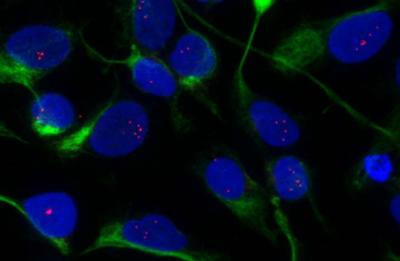
[Attachments] See images for this press release:
Study sheds light on underlying causes of impaired brain function in muscular dystrophy

ELSE PRESS RELEASES FROM THIS DATE:

The first public data release from BOSS, the Baryon Oscillation Spectroscopic Survey

The first public data release from BOSS, the Baryon Oscillation Spectroscopic Survey
2012-08-08
The Third Sloan Digital Sky Survey (SDSS-III) has issued Data Release 9 (DR9), the first public release of data from the Baryon Oscillation Spectroscopic Survey (BOSS). In this release BOSS, the largest of SDSS-III's four surveys, provides spectra for 535,995 newly observed galaxies, 102,100 quasars, and 116,474 stars, plus new information about objects in previous Sloan surveys (SDSS-I and II). "This is just the first of three data releases from BOSS," says David Schlegel of the U.S. Department of Energy's Lawrence Berkeley National Laboratory (Berkeley Lab), an astrophysicist ...

EARTH: Shake, rattle and roll

2012-08-08
Alexandria, VA – A team of researchers may have discovered a way to hear earthquakes. Not the noises of rattling windows and crumbling buildings, but the real sounds an earthquake makes deep underground as rock grinds and fails catastrophically. Typical seismic waves have frequencies below the audible range for humans, but the August issue of EARTH shows you where to find the voice of one seismic monster: the March 11, 2011, magnitude-9.0 Tohoku earthquake in Japan. Beyond the novelty of simply hearing an earthquake, the team found that the new technology could possibly ...

UK hotel industry alive with innovation

2012-08-08
Large hotel chains are quick to adopt and adapt innovations developed in other industries, while smaller hotels make almost continual incremental changes in response to customers' needs. The UK hotel industry is alive with innovation and new ways of improving service for customers, research funded by the Economic and Social Research Council (ESRC) has found. The findings of a project led by Professor Gareth Shaw of Exeter University and Professor Allan Williams of Surrey University run counter to the traditional image of the hotel sector as slow to change. Official measures ...

Unusual weather events identified during the Black Saturday bushfires

Unusual weather events identified during the Black Saturday bushfires
2012-08-08
Research has revealed that the extremely hot, dry and windy conditions on Black Saturday combined with structures in the atmosphere called 'horizontal convective rolls' -similar to streamers of wind flowing through the air - which likely affected fire behaviour. The study is the first of its kind to produce such detailed, high-resolution simulations of weather patterns on the day and provides insights for future fire management and warning systems. The work was led by Dr Todd Lane and Ms Chermelle Engel from The University of Melbourne with Prof Michael Reeder (Monash ...

Benefit of PET and PET/CT in ovarian cancer is not proven

2012-08-08
Due to the lack of studies, there is currently no proof that patients with ovarian cancer can benefit from positron emission tomography (PET) alone or in combination with computed tomography (CT). As regards diagnostic accuracy, in certain cases, recurrences can be detected earlier and more accurately with PET or PET/CT than with conventional imaging techniques. This is the conclusion of the final report by the German Institute for Quality and Efficiency in Health Care (IQWiG) in Cologne that was published on 23 May 2012. More reliable diagnosis is supposed to improve ...

Queen's University Belfast makes significant cancer breakthrough

2012-08-08
A major breakthrough by scientists at Queen's University Belfast could lead to more effective treatments for throat and cervical cancer. The discovery could see the development of new therapies, which would target the non-cancerous cells surrounding a tumour, as well as treating the tumour itself. Researchers at Queen's Centre for Cancer Research and Cell Biology have found that the non-cancerous tissue, or 'stroma', surrounding cancers of the throat and cervix, plays an important role in regulating the spread of cancer cells. The discovery opens the door for the development ...

Scientists discover the truth behind Colbert's 'truthiness'

2012-08-08
Trusting research over their guts, scientists in New Zealand and Canada examined the phenomenon Stephen Colbert, comedian and news satirist, calls "truthiness"—the feeling that something is true. In four different experiments they discovered that people believe claims are true, regardless of whether they actually are true, when a decorative photograph appears alongside the claim. The work is published online in the Springer journal, Psychonomic Bulletin & Review. "We wanted to examine how the kinds of photos people see every day—the ones that decorate newspaper or TV ...

Humanities mini-courses for doctors sharpen thinking and creativity

2012-08-08
Mini-courses designed to increase creative stimulation and variety in physicians' daily routines can sharpen critical thinking skills, improve job satisfaction and encourage innovative thinking, according to Penn State College of Medicine researchers who piloted a series of such courses. "For decades, career development theory has identified a stage that occurs at midlife, characterized by a desire to escape the status quo and pursue new ventures," said Kimberly Myers, Ph.D., associate professor of humanities. "It is increasingly clear that these mid-career professionals ...

Berlin beats London and Washington in league table of world's best democratic space

2012-08-08
New research from the University of Warwick suggests that Berlin has the best democratic space in the world, topping a list that includes London, Washington and Tokyo. The list appears in a new book, 'Democracy and Public Space: The Physical Sites of Democratic Performance' written by Dr John Parkinson, from the University of Warwick's Politics and International Studies department. Dr Parkinson carefully selected 11 capital cities and assessed how well they provide space for all kinds of democratic action. He visited Berlin, Washington, Ottawa, Canberra, Wellington, ...

Cichlid fish: How does the swim bladder affect hearing?

Cichlid fish: How does the swim bladder affect hearing?
2012-08-08
"Sound vibrations are transmitted to the inner ear via anterior extensions of the swim bladder or via bony ossicles", the biologist Tanja Schulz-Mirbach explains how swim bladders may serve for hearing. The hearing sensitivity improves considerably in this way. The anterior part of the swim bladder functions in specialized fish species similar to an ear drum. Up to now the effects of the different swim bladder morphologies have not been investigated in detail in cichlid fishes. The behavioural biologists of the University of Vienna Tanja Schulz-Mirbach and Friedrich Ladich ...

LAST 30 PRESS RELEASES:

UT San Antonio-led research team discovers compound in 500-million-year-old fossils, shedding new light on Earth’s carbon cycle

Maternal perinatal depression may increase the risk of autistic-related traits in girls

Study: Blocking a key protein may create novel form of stress in cancer cells and re-sensitize chemo-resistant tumors

HRT via skin is best treatment for low bone density in women whose periods have stopped due to anorexia or exercise, says study

Insilico Medicine showcases at WHX 2026: Connecting the Middle East with global partners to accelerate translational research

From rice fields to fresh air: Transforming agricultural waste into a shield against indoor pollution

University of Houston study offers potential new targets to identify, remediate dyslexia

Scientists uncover hidden role of microalgae in spreading antibiotic resistance in waterways

Turning orange waste into powerful water-cleaning material

Papadelis to lead new pediatric brain research center

Power of tiny molecular 'flycatcher' surprises through disorder

Before crisis strikes — smartwatch tracks triggers for opioid misuse

Statins do not cause the majority of side effects listed in package leaflets

UC Riverside doctoral student awarded prestigious DOE fellowship

UMD team finds E. coli, other pathogens in Potomac River after sewage spill

New vaccine platform promotes rare protective B cells

Apes share human ability to imagine

Major step toward a quantum-secure internet demonstrated over city-scale distance

Increasing toxicity trends impede progress in global pesticide reduction commitments

Methane jump wasn’t just emissions — the atmosphere (temporarily) stopped breaking it down

Flexible governance for biological data is needed to reduce AI’s biosecurity risks

Increasing pesticide toxicity threatens UN goal of global biodiversity protection by 2030

How “invisible” vaccine scaffolding boosts HIV immune response

Study reveals the extent of rare earthquakes in deep layer below Earth’s crust

Boston College scientists help explain why methane spiked in the early 2020s

Penn Nursing study identifies key predictors for chronic opioid use following surgery

KTU researcher’s study: Why Nobel Prize-level materials have yet to reach industry

Research spotlight: Interplay of hormonal contraceptive use, stress and cardiovascular risk in women

Pennington Biomedical’s Dr. Catherine Prater awarded postdoctoral fellowship from the American Heart Association

AI agents debate more effectively when given personalities and the ability to interrupt

[Press-News.org] Study sheds light on underlying causes of impaired brain function in muscular dystrophy