Medicine Technology 🌱 Environment Space Energy Physics Engineering Social Science Earth Science Science
Rutgers scientists identify structure of virus that could lead to hepatitis C vaccine
Medicine 2014-02-19

Rutgers scientists identify structure of virus that could lead to hepatitis C vaccine

Rutgers University scientists have determined the structure of a hepatitis C surface protein, a finding that could assist in the development of a vaccine to halt the spread of the the deadly disease that has infected 3.2 million Americans. Joseph Marcotrigiano, associate professor of chemistry and chemical biology, says this new research – published online today in Nature – describes an outer region of hepatitis C that enables the virus to evade the body's natural immune system response, causing persistent, chronic infection. Hepatitis C is constantly mutating, allowing ...
Read more →
The ups and downs of early atmospheric oxygen
Science 2014-02-19

The ups and downs of early atmospheric oxygen

RIVERSIDE, Calif. — A team of biogeochemists at the University of California, Riverside, give us a nontraditional way of thinking about the earliest accumulation of oxygen in the atmosphere, arguably the most important biological event in Earth history. A general consensus asserts that appreciable oxygen first accumulated in Earth's atmosphere around 2.3 billion years ago during the so-called Great Oxidation Event (GOE). However, a new picture is emerging: Oxygen production by photosynthetic cyanobacteria may have initiated as early as 3 billion years ago, with oxygen ...
Read more →
Space 2014-02-19

NuSTAR telescope takes first peek into core of supernova

Astronomers for the first time have peered into the heart of an exploding star in the final minutes of its existence. The feat is one of the primary goals of NASA's NuSTAR mission, launched in June 2012 to measure high-energy X-ray emissions from exploding stars, or supernovae, and black holes, including the massive black hole at the center of our Milky Way Galaxy. The NuSTAR team reported in this week's issue of the journal Nature the first map of titanium thrown out from the core of a star that exploded in 1671. That explosion produced the beautiful supernova remnant ...
Read more →
Managed honeybees linked to new diseases in wild bees
Medicine 2014-02-19

Managed honeybees linked to new diseases in wild bees

Diseases that are common in managed honeybee colonies are now widespread in the UK's wild bumblebees, according to research published in Nature. The study suggests that some diseases are being driven into wild bumblebee populations from managed honeybees. Dr Matthias Fürst and Professor Mark Brown from Royal Holloway University of London (who worked in collaboration with Dr Dino McMahon and Professor Robert Paxton at Queen's University Belfast, and Professor Juliet Osborne working at Rothamsted Research and the University of Exeter) say the research provides vital information ...
Read more →
Medicine 2014-02-19

Gene sequencing project discovers common driver of a childhood brain tumor

(MEMPHIS, Tenn. – February 19, 2014) The St. Jude Children's Research Hospital-Washington University Pediatric Cancer Genome Project has identified the most common genetic alteration ever reported in the brain tumor ependymoma and evidence that the alteration drives tumor development. The research appears February 19 as an advanced online publication in the scientific journal Nature. The results provide a foundation for new research to improve diagnosis and treatment of ependymoma, the third most common brain tumor in children. St. Jude has begun work to translate the ...
Read more →
Science 2014-02-19

Managing chronic bone and joint pain

ROSEMONT, Ill.—Musculoskeletal pain of the bone, joint and muscles is one of the most common reasons for primary care visits in the United States. According to a literature review appearing in a recent issue of the Journal of the American Academy of Orthopaedic Surgeons (JAAOS), chronic pain, or pain that persists beyond an expected period of healing, is estimated to affect 100 million Americans. The majority of chronic pain complaints concern the musculoskeletal system, but they also include headaches and abdominal pain. "As orthopaedic surgeons, we are experts in the ...
Read more →
Medicine 2014-02-19

Blood pressure medications given right after stroke not beneficial, study finds

MAYWOOD, IL – A major study has found that giving stroke patients medications to lower their blood pressure during the first 48 hours after a stroke does not reduce the likelihood of death or major disability. The study is published in the Journal of the American Medical Association. At least 25 percent of the population has high blood pressure, which greatly increases the risk of stroke. Lowering blood pressure has been shown to reduce the risk of stroke. The study investigated whether there also would be a benefit to lowering blood pressure immediately after a stroke. The ...
Read more →
Social Science 2014-02-19

Reasons for becoming self-employed in later life vary by gender, culture

COLUMBIA, Mo. – Self-employment can allow older workers to stay in the labor market longer and earn additional income, yet little research has addressed if reasons for self-employment vary across gender and culture. Now, University of Missouri researchers have studied factors that contribute to self-employment and found these factors differ for men and women in the United States and New Zealand. "Gender is one of the most enduring social factors in the U.S. and New Zealand, a fact that is particularly evident in differing economic opportunities for men and women and their ...
Read more →
Science 2014-02-19

Newly developed chemical restores light perception to blind mice

Progressive degeneration of photoreceptors—the rods and cones of the eyes—causes blinding diseases such as retinitis pigmentosa and age-related macular degeneration. While there are currently no available treatments to reverse this degeneration, a newly developed compound allows other cells in the eye to act like photoreceptors. As described in a study appearing in the February 19 issue of the Cell Press journal Neuron, the compound may be a potential drug candidate for treating patients suffering from degenerative retinal disorders. The retina has three layers of nerve ...
Read more →
Study reveals workings of working memory
Science 2014-02-19

Study reveals workings of working memory

PROVIDENCE, R.I. [Brown University] — Keep this in mind: Scientists say they've learned how your brain plucks information out of working memory when you decide to act. Say you're a busy mom trying to wrap up a work call now that you've arrived home. While you converse on your Bluetooth headset, one kid begs for an unspecified snack, another asks where his homework project has gone, and just then an urgent e-mail from your boss buzzes the phone in your purse. During the call's last few minutes these urgent requests — snack, homework, boss — wait in your working memory. ...
Read more →
Science 2014-02-19

New sitting risk: Disability after 60

CHICAGO --- If you're 60 and older, every additional hour a day you spend sitting is linked to doubling the risk of being disabled -- regardless of how much moderate exercise you get, reports a new Northwestern Medicine® study. The study is the first to show sedentary behavior is its own risk factor for disability, separate from lack of moderate vigorous physical activity. In fact, sedentary behavior is almost as strong a risk factor for disability as lack of moderate exercise. If there are two 65-year-old women, one sedentary for 12 hours a day and another sedentary ...
Read more →
Science 2014-02-19

Scientists identify the switch that says it's time to sleep

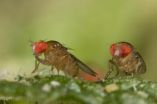
The switch in the brain that sends us off to sleep has been identified by researchers at Oxford University's Centre for Neural Circuits and Behaviour in a study in fruit flies. The switch works by regulating the activity of a handful of sleep-promoting nerve cells, or neurons, in the brain. The neurons fire when we're tired and need sleep, and dampen down when we're fully rested. 'When you're tired, these neurons in the brain shout loud and they send you to sleep,' says Professor Gero Miesenböck of Oxford University, in whose laboratory the new research was performed. Although ...
Read more →
Study finds potential solution for feeding, swallowing difficulties in children with autism
Science 2014-02-19

Study finds potential solution for feeding, swallowing difficulties in children with autism

WASHINGTON (Feb. 19, 2014) — Collaborative research out of the George Washington University (GW) reveals new information on the pathogenesis of feeding and swallowing difficulties often found in children with neurodevelopmental disorders, including autism and intellectual disability. Using an animal model of DiGeorge/22q11 Deletion Syndrome, a genetic disorder that causes autism and intellectual disability, the GW group found clear signs of early feeding and swallowing disruption, and underlying changes in brain development. The research, featured on the cover of Disease ...
Read more →
Science 2014-02-19

U of I study: Couples, pay attention to your relationship work ethic

URBANA, Ill. – Is a date with your partner as important to you as a meeting at work? A University of Illinois study recommends that couples develop a relationship work ethic that rivals—or at least equals—their professional work ethic. "When people enter the workplace, they make an effort to arrive on time, be productive throughout the day, listen attentively to co-workers and supervisors, try to get along with others, and dress and groom themselves to make a good impression," said Jill R. Bowers, a researcher in the U of I's Department of Human and Community Development. ...
Read more →
Science 2014-02-19

Self-employment growth does not bank on access to capital

An entrepreneurial climate is more important than access to financing and banks in encouraging self-employment growth, according to rural economists. "Because people who get laid off may end up working for themselves, self-employment can be a good news, bad news situation," said Stephan Goetz, professor of agricultural and regional economics, Penn State, and director of the Northeast Regional Center for Rural Development. "However, the self-employed do tend to support other nearby businesses and that can lead to employment growth and income growth across the county." The ...
Read more →
A step closer to a photonic future
Physics 2014-02-19

A step closer to a photonic future

WASHINGTON, Feb. 19–The future of computing may lie not in electrons, but in photons – that is, in microprocessors that use light instead of electrical signals. But these so-called photonic devices are typically built using customized methods that make them difficult and expensive to manufacture. Now, engineers have demonstrated that low power photonic devices can be fabricated using standard chip-making processes. They have achieved what the researchers dub a major milestone in photonic technology. The work will be presented at this year's OFC Conference and Exposition, ...
Read more →
Research prevents zoonotic feline tularemia by finding influential geospatial factors
Science 2014-02-19

Research prevents zoonotic feline tularemia by finding influential geospatial factors

MANHATTAN, KAN. -- A Kansas State University epidemiologist is helping cats, pet owners and soldiers stay healthy by studying feline tularemia and the factors that influence its prevalence. Ram Raghavan, assistant professor of diagnostic medicine and pathobiology, and collaborative researchers have found that a certain combination of climate, physical environment and socio-ecologic conditions are behind tularemia infections among cats in the region. More than 50 percent of all tularemia cases in the U.S. occur in Kansas, Missouri, Oklahoma and Arkansas, Raghavan said. Francisella ...
Read more →
Infants with leukemia inherit susceptibility
Science 2014-02-19

Infants with leukemia inherit susceptibility

Babies who develop leukemia during the first year of life appear to inherit an unfortunate combination of genetic variations that can make the infants highly susceptible to the disease, according to a new study at Washington University School of Medicine in St. Louis and the University of Minnesota. The research is available online in the journal Leukemia. Doctors have long puzzled over why it is that babies just a few months old sometimes develop cancer. As infants, they have not lived long enough to accumulate a critical number of cancer-causing mutations. "Parents ...
Read more →
NASA satellite sees a ragged eye develop in Tropical Cyclone Guito
Space 2014-02-19

NASA satellite sees a ragged eye develop in Tropical Cyclone Guito

NASA satellite data was an "eye opener" when it came to Tropical Cyclone 15S, now known as Guito in the Mozambique Channel today, Feb. 19, 2014. NASA's Aqua satellite passed over Guito and visible imagery revealed a ragged eye had developed as the tropical cyclone intensified. The Moderate Resolution Imaging Spectroradiometer or MODIS instrument aboard NASA's Aqua satellite captured a visible image of Tropical Cyclone Guito on Feb. 19 at 1140 UTC/6:40 a.m. EST as it continued moving south through the Mozambique Channel. The image revealed a ragged-looking eye with a band ...
Read more →
Surveys find that despite economic challenges Malagasy fishers support fishing regulations
Social Science 2014-02-19

Surveys find that despite economic challenges Malagasy fishers support fishing regulations

Scientists from the Wildlife Conservation Society, the ARC Centre of Excellence for Coral Reef Studies, and other groups have found that the fishing villages of Madagascar—a country with little history of natural resource regulation—are generally supportive of fishing regulations, an encouraging finding that bodes well for sustainable strategies needed to reduce poverty in the island nation. Specifically, Malagasy fishers perceive restrictions on certain kinds of fishing gear as being beneficial for their livelihoods, according to the results of a survey conducted with ...
Read more →
Kessler Foundation researchers study impact of head movement on fMRI data
Science 2014-02-19

Kessler Foundation researchers study impact of head movement on fMRI data

West Orange, NJ. February 19, 2014. Kessler Foundation researchers have shown that discarding data from subjects with multiple sclerosis (MS) who exhibit head movement during functional magnetic resonance imaging (fMRI) may bias sampling away from subjects with lower cognitive ability. The study was published in the January issue of Human Brain Mapping. (Wylie GR, Genova H, DeLuca J, Chiaravalloti N, Sumowski JF. Functional MRI movers and shakers: Does subject-movement cause sampling bias.) Glenn Wylie, DPhil, is associate director of Neuroscience in Neuropsychology & Neuroscience ...
Read more →
Space 2014-02-19

Clouds seen circling supermassive black holes

Astronomers see huge clouds of gas orbiting supermassive black holes at the centers of galaxies. Once thought to be a relatively uniform, fog-like ring, the accreting matter instead forms clumps dense enough to intermittently dim the intense radiation blazing forth as these enormous objects condense and consume matter, they report in a paper to be published in the Monthly Notices of the Royal Astronomical Society, available online now. Video depicting the swirling clouds is posted to YouTube http://youtu.be/QA8nzRkjOEw Evidence for the clouds comes from records collected ...
Read more →
Technology 2014-02-19

Better cache management could improve chip performance, cut energy use

Computer chips keep getting faster because transistors keep getting smaller. But the chips themselves are as big as ever, so data moving around the chip, and between chips and main memory, has to travel just as far. As transistors get faster, the cost of moving data becomes, proportionally, a more severe limitation. So far, chip designers have circumvented that limitation through the use of "caches" — small memory banks close to processors that store frequently used data. But the number of processors — or "cores" — per chip is also increasing, which makes cache management ...
Read more →
Science 2014-02-19

When faced with a hard decision, people tend to blame fate

Life is full of decisions. Some, like what to eat for breakfast, are relatively easy. Others, like whether to move cities for a new job, are quite a bit more difficult. Difficult decisions tend to make us feel stressed and uncomfortable – we don't want to feel responsible if the outcome is less than desirable. New research suggests that we deal with such difficult decisions by shifting responsibility for the decision to fate. The findings are published in Psychological Science, a journal of the Association for Psychological Science. "Fate is a ubiquitous supernatural ...
Read more →
Energy 2014-02-19

UK failing to harness its bioenergy potential

The UK could generate almost half its energy needs from biomass sources, including household waste, agricultural residues and home-grown biofuels by 2050, new research suggests. Scientists from the Tyndall Centre for Climate Change Research at The University of Manchester found that the UK could produce up to 44% of its energy by these means without the need to import. The study, published in Energy Policy journal, highlights the country's potential abundance of biomass resources that are currently underutilised and totally overlooked by the bioenergy sector. Instead, ...
Read more →