Medicine Technology 🌱 Environment Space Energy Physics Engineering Social Science Earth Science Science
Environment 2014-02-17

Deep ocean needs policy, stewardship where it never existed

BEAUFORT, N.C. -- Technological advances have made the extraction of deep sea mineral and precious metal deposits feasible, and the dwindling supply of land-based materials creates compelling economic incentives for deep sea industrialization. But at what cost? “We’re really in the dark when it comes to the ecology of the deep sea," said Linwood Pendleton, director of the Ocean and Coastal Policy Program at the Nicholas Institute for Environmental Policy Solutions at Duke University. "We know a lot about a few places, but nobody is dealing with the deep sea as a whole, ...
Read more →
Obesity in Samoa: A global harbinger?
Medicine 2014-02-17

Obesity in Samoa: A global harbinger?

PROVIDENCE, R.I. [Brown University] — The South Pacific archipelago of Samoa and American Samoa harbors a global health mystery that may seem both remote and extreme but could foretell trends in obesity and related conditions across much of the developing world. About three-quarters of the U.S. territory's adult population is obese, the highest rate in the world with independent Samoa quickly catching up. Rates of type 2 diabetes top one in five and a recent study found that the elevated obesity rates are present even in newborns. This pandemic began only a few decades ...
Read more →
Medicine 2014-02-17

Global perspectives on human biology and health

CHICAGO --- Three anthropology professors from the Weinberg College of Arts and Sciences at Northwestern University will highlight recent research in biological anthropology Sunday, Feb. 16 at the annual meeting of the American Association for the Advancement of Science (AAAS) in Chicago. The presentations, part of the symposium "Comparative Advantage: Global Perspectives on Human Biology and Health" will be held from 1:30 to 4:30 p.m. in Crystal Ballroom A at the Hyatt Regency Chicago. Christopher Kuzawa, professor of anthropology and faculty fellow at the Institute ...
Read more →
Environment 2014-02-17

Nanoelectronics key to advances in renewable energy

TEMPE, Ariz. – Nanoscale technology looks promising as a major contributor to advancements needed to fulfill the potential of emerging sources of clean, renewable energy. Progress in the comparatively new area of nanoelectronics in particular could be the basis for new manufacturing processes and devices to make renewable energy systems and technologies more efficient and cost-effective. Stephen Goodnick will focus on what nanoelectronics advances could do to help push the performance of solar energy systems to the next level in his talk at the 2014 annual meeting of ...
Read more →
Science 2014-02-17

Epigenetic regulation required to ensure correct number of chromosomes

Abnormal number of chromosomes is often associated with cancer development. In a new study published in the journal Nature Structural and Molecular Biology researchers at Karolinska Institutet in Sweden have shown that a subtle epigenetic change plays an important role in the correct segregation of chromosomes. Normally when a cell divides, the chromosomes are segregated equally to two daughter cells. However, tumour cells frequently have either too few or too many chromosomes, leading to the incorrect expression of a number of genes. When a cell is about to divide, the ...
Read more →
Science 2014-02-17

New eye layer has possible link to glaucoma

A new layer in the human cornea — discovered by researchers at The University of Nottingham last year — plays a vital role in the structure of the tissue that controls the flow of fluid from the eye, research has shown. The findings, published in a paper in the British Journal of Ophthalmology, could shed new light on glaucoma, a devastating disease caused by defective drainage of fluid from the eye and the world's second leading cause of blindness. The latest research shows that the new layer, dubbed Dua's Layer after the academic Professor Harminder Dua who ...
Read more →
Researchers hijack cancer migration mechanism to 'move' brain tumors
Medicine 2014-02-17

Researchers hijack cancer migration mechanism to 'move' brain tumors

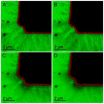
One factor that makes glioblastoma cancers so difficult to treat is that malignant cells from the tumors spread throughout the brain by following nerve fibers and blood vessels to invade new locations. Now, researchers have learned to hijack this migratory mechanism, turning it against the cancer by using a film of nanofibers thinner than human hair to lure tumor cells away. Instead of invading new areas, the migrating cells latch onto the specially-designed nanofibers and follow them to a location – potentially outside the brain – where they can be captured and killed. ...
Read more →
Environment 2014-02-17

U of M study finds fertilization destabilizes global grassland ecosystems

A new study led by University of Minnesota researchers demonstrates that fertilization of natural grasslands -- either intentionally or unintentionally as a side effect of global farming and industry -- is having a destabilizing effect on global grassland ecosystems. Using a network of natural grassland research sites around the world called the Nutrient Network, the study represents the first time such a large experiment has been conducted using naturally occurring sites. Led by Yann Hautier, a Marie Curie Fellow associated with both the Department of Ecology, Evolution, ...
Read more →
Science 2014-02-17

New study shows growing opposition to animal tests

Chicago — Americans' moral opposition to animal testing has grown significantly since 2001, according to a new study presented today at the annual meeting of the prestigious American Association for the Advancement of Science (AAAS) in Chicago. Researchers from PETA and Western Governors University examined data collected in independent surveys by the Gallup organization from 2001 to 2013, in which approximately 1,000 American adults each year were asked whether they found "medical testing on animals" to be "morally acceptable" or "morally wrong." The researchers ...
Read more →
Mount Hood study suggests volcano eruptibility is rare
Earth Science 2014-02-17

Mount Hood study suggests volcano eruptibility is rare

Forecasts of when a volcano is ready to erupt could be a little closer thanks to work by geologists at the University of California, Davis, and Oregon State University published online Feb. 16 in the journal Nature. For an eruption to occur, the magma, or molten rock under the volcano must be sufficiently mobile to erupt. "The question is, what percentage of time is the magma in an eruptible state?" said Kari Cooper, associate professor in the Department of Earth and Planetary Sciences at UC Davis and lead author on the paper. "People think about there being ...
Read more →
Volcanoes, including Mt. Hood, can go from dormant to active quickly
Earth Science 2014-02-17

Volcanoes, including Mt. Hood, can go from dormant to active quickly

CORVALLIS, Ore. – A new study suggests that the magma sitting 4-5 kilometers beneath the surface of Oregon's Mount Hood has been stored in near-solid conditions for thousands of years, but that the time it takes to liquefy and potentially erupt is surprisingly short – perhaps as little as a couple of months. The key, scientists say, is to elevate the temperature of the rock to more than 750 degrees Celsius, which can happen when hot magma from deep within the Earth's crust rises to the surface. It is the mixing of the two types of magma that triggered Mount Hood's last ...
Read more →
Science 2014-02-17

River samples shed light on the spread of potential 'superbugs'

The spread of antibiotic-resistance to one of the most pristine locations in Asia is linked to the annual human pilgrimages to the region, new research has shown. Experts from Newcastle University, UK, and the Indian Institute of Technology in Delhi (IIT-Delhi), sampled water and sediments at seven sites along the Upper Ganges River, in the foothills of the Himalayas. They found that in May and June, when hundreds of thousands of visitors travel to Rishikesh and Haridwar to visit sacred sites, levels of resistance genes that lead to "superbugs" were found to be about ...
Read more →
Medicine 2014-02-17

New blood cells fight brain inflammation

Hyperactivity of our immune system can cause a state of chronic inflammation. If chronic, the inflammation will affect our body and result in disease. In the devastating disease multiple sclerosis, hyperactivity of immune cells called T-cells induce chronic inflammation and degeneration of the brain. Researchers at BRIC, the University of Copenhagen, have identified a new type of regulatory blood cells that can combat such hyperactive T-cells in blood from patients with multiple sclerosis. By stimulating the regulatory blood cells, the researchers significantly decreased ...
Read more →
Social Science 2014-02-17

Iowa State University's Wintersteen talks partnerships at national science meeting

AMES, Iowa – Wendy Wintersteen, dean of Iowa State University's College of Agriculture and Life Sciences, spoke on Sunday of the importance of public-private partnerships in strengthening global food security during the annual meeting of the American Association for the Advancement of Science in Chicago. During her talk, part of a panel on research and development for sustainable agriculture and food security, Wintersteen stressed the importance of partnerships in providing the innovation necessary to meet global challenges. She said climate change, pests, plant ...
Read more →
Environment 2014-02-17

Scientists call for new stewardship of the deep ocean: Earth's last frontier

The deep ocean, the largest domain for life on earth, is also its least explored environment. Humans are now encroaching more vigorously than ever into the ocean's deep regions, exploiting the deep's resources and placing its wealth of vibrant habitats and natural services for the planet at risk. Lisa Levin, a biological oceanographer at Scripps Institution of Oceanography at UC San Diego, believes the vital functions provided by the deep sea—from carbon sequestration to nurturing fish stocks—are key to the health of the planet. As humans ramp up exploitation of deep-sea ...
Read more →
Medicine 2014-02-17

Researchers rejuvenate stem cell population from elderly mice, enabling muscle recovery

STANFORD, Calif. — Researchers at the Stanford University School of Medicine have pinpointed why normal aging is accompanied by a diminished ability to regain strength and mobility after muscle injury: Over time, stem cells within muscle tissues dedicated to repairing damage become less able to generate new muscle fibers and struggle to self-renew. "In the past, it's been thought that muscle stem cells themselves don't change with age, and that any loss of function is primarily due to external factors in the cells' environment," said Helen Blau, PhD, the Donald and Delia ...
Read more →
New 'pomegranate-inspired' design solves problems for lithium-ion batteries
Energy 2014-02-17

New 'pomegranate-inspired' design solves problems for lithium-ion batteries

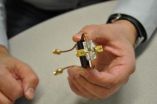
An electrode designed like a pomegranate – with silicon nanoparticles clustered like seeds in a tough carbon rind – overcomes several remaining obstacles to using silicon for a new generation of lithium-ion batteries, say its inventors at Stanford University and the Department of Energy's SLAC National Accelerator Laboratory. "While a couple of challenges remain, this design brings us closer to using silicon anodes in smaller, lighter and more powerful batteries for products like cell phones, tablets and electric cars," said Yi Cui, an associate professor at Stanford ...
Read more →
Worldwide study finds that fertilizer destabilizes grasslands
Science 2014-02-17

Worldwide study finds that fertilizer destabilizes grasslands

Lincoln, Neb., Feb. 17, 2014 -- Fertilizer could be too much of a good thing for the world's grasslands, according to study findings to be published online Feb. 16 by the journal Nature. The worldwide study shows that, on average, additional nitrogen will increase the amount of grass that can be grown. But a smaller number of species thrive, crowding out others that are better adapted to survive in harsher times. It results in wilder swings in the amount of available forage. "More nitrogen means more production, but it's less stable," said Johannes M.H. Knops, a University ...
Read more →
Study on flu evolution may change textbooks, history books
Science 2014-02-17

Study on flu evolution may change textbooks, history books

A new study reconstructing the evolutionary tree of flu viruses challenges conventional wisdom and solves some of the mysteries surrounding flu outbreaks of historical significance. The study, published in the journal Nature, provides the most comprehensive analysis to date of the evolutionary relationships of influenza virus across different host species over time. In addition to dissecting how the virus evolves at different rates in different host species, the study challenges several tenets of conventional wisdom, for example the notion that the virus moves largely ...
Read more →
Medicine 2014-02-17

CU-Boulder stem cell research may point to new ways of mitigating muscle loss

New findings on why skeletal muscle stem cells stop dividing and renewing muscle mass during aging points up a unique therapeutic opportunity for managing muscle-wasting conditions in humans, says a new University of Colorado Boulder study. According to CU-Boulder Professor Bradley Olwin, the loss of skeletal muscle mass and function as we age can lead to sarcopenia, a debilitating muscle-wasting condition that generally hits the elderly hardest. The new study indicates that altering two particular cell-signaling pathways independently in aged mice enhances muscle stem ...
Read more →
Medicine 2014-02-17

Years after bullying, negative impact on a child's health may remain

BOSTON (Feb. 17, 2014) —The longer the period of time a child is bullied, the more severe and lasting the impact on a child's health, according to a new study from Boston Children's Hospital published online Feb. 17 in Pediatrics. The study is the first to examine the compounding effects of bullying from elementary school to high school. "Our research shows that long-term bullying has a severe impact on a child's overall health, and that its negative effects can accumulate and get worse with time," says the study's first author Laura Bogart, PhD, from Boston Children's ...
Read more →
Medicine 2014-02-17

Why does the brain remember dreams?

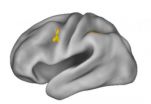
This news release is available in French. Some people recall a dream every morning, whereas others rarely recall one. A team led by Perrine Ruby, an Inserm Research Fellow at the Lyon Neuroscience Research Center (Inserm/CNRS/Université Claude Bernard Lyon 1), has studied the brain activity of these two types of dreamers in order to understand the differences between them. In a study published in the journal Neuropsychopharmacology, the researchers show that the temporo-parietal junction, an information-processing hub in the brain, is more active in high dream recallers. ...
Read more →
Social Science 2014-02-16

Transfer of knowledge learned seen as a key to improving science education

CHICAGO -- (Feb. 16, 2014) -- Attendees of a workshop at the annual meeting of the American Association for the Advancement of Science will be immersed into "active learning," an approach inspired by national reports targeting U.S. science education, in general, and, more specifically, the 60 percent dropout rate of students in science, technology, engineering and mathematics (STEM). "The goal of this session is to take many ideas around improving science education that are out there and make them applicable to the classroom," says Eleanor "Elly" V.H. Vandegrift, associate ...
Read more →
Science 2014-02-16

Using crowdsourcing to solve complex problems

If two minds are better than one, what could thousands of minds accomplish? The possibilities are endless -- if researchers can learn to effectively harness and utilize all that knowledge. Northwestern University professor Haoqi Zhang designs new forms of crowd-supported, mixed-initiative systems that tightly integrate crowd work, community process and intelligent user interfaces to solve complex problems that no machine nor person could solve alone. Zhang's systems can ease challenges in designing a custom trip or planning an academic conference, for example. Zhang ...
Read more →
Science 2014-02-16

What is known about the pathway to aging well?

CHICAGO --- Daniel K. Mroczek, professor of psychology and professor of medical social sciences in the Weinberg College of Arts and Sciences at Northwestern University, will discuss his research at a symposium on resilient aging during the American Association for the Advancement of Science (AAAS) annual meeting in Chicago. The interdisciplinary symposium "The Science of Resilient Aging" will be held from 1:30 to 4:30 p.m., Sunday, Feb. 16, in Grand Ballroom A in the Hyatt Regency Chicago. Through his research, Mroczek has found that personality traits have emerged ...
Read more →