PRESS-NEWS.org - Press Release Distribution
PRESS RELEASES DISTRIBUTION

Colonization of Brazil by the cattle egret

Colonization of Brazil by the cattle egret
2014-05-09
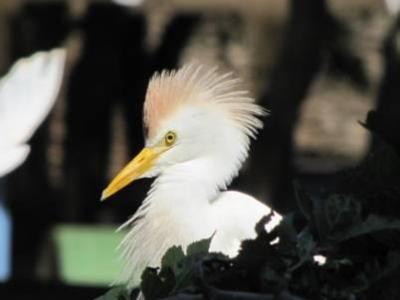
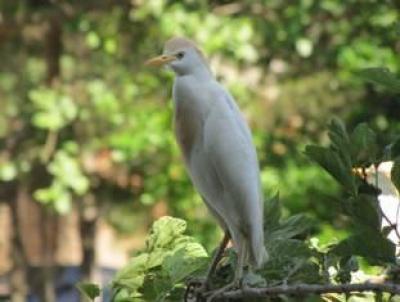
(Press-News.org) In recent years the cattle egret (Bubulcus ibis) has colonized American continent. Invasive species are a worldwide problem and studies are devoted to assess the damage they cause to local species populations. Thus, the process of colonization of a new territory that has continental dimensions such as Brazil offers an excellent opportunity to examine how non-native species disperse, adapt and survive. A new study of the colonization patterns of the cattle egret in Brazil, published in the open access journal NeoBiota, offers a new take on the study of alien species.

The cattle egret primarily inhabits grassland habitats and forages in close association with grazing animals, such as cattle and other livestock. This bird is native to tropical and subtropical Africa, southern Europe and western Asia. The populations of cattle egret in Brazil are alien to the region but unlike a number of bird species that have been introduced to non-native areas through human intervention, the cattle egret is known to have established and expanded to the Americas without such intervention.

The first sightings in the New World were reported for Suriname between 1877 and 1882 in the North of South America, followed by sightings in British Guiana and Colombia and subsequent expansion throughout the Americas. In Brazil, the cattle egret was first recorded in the northern region of the country in 1964, feeding along with buffalos on Marajo Island in the state of Para.

Novel colonizers can cause problems outside of their native range. While the cattle egret is not currently a threat to native fauna in Brazil throughout most of its geographic distribution, it has the potential to produce adverse effects, as evidenced by its occupation of island environments. For example, in the Fernando de Noronha archipelago, the cattle egret drives adult native seabirds away from their nests in breeding colonies and predates the Noronha skink, which is endemic to the archipelago.

Understanding how the cattle egret colonized Brazil is crucial for the better understanding of dispersal patterns of bird populations and their interaction with the local species. Explaining the colonization of the Americas by the cattle egret is a challenging task due to the lack of sufficient information and reports on entrance time, locality, and number of events. Comparisons between native and non-native populations can provide a 'natural' experimental approach to clarify the biological and environmental factors that may contribute to range expansion and adaptation to climate change, and to reveal mechanisms by which organisms respond to novel ecological and environmental pressures.

INFORMATION: Original Source:

Moralez-Silva E, Del Lama SN (2014) Colonization of Brazil by the cattle egret (Bubulcus ibis) revealed by mitochondrial DNA. In: Capdevila-Argüelles L, Zilletti B (Eds) Proceedings of 7th NEOBIOTA conference, Pontevedra, Spain. NeoBiota 21: 49–63. doi: 10.3897/neobiota.21.4966

[Attachments] See images for this press release:
Colonization of Brazil by the cattle egret Colonization of Brazil by the cattle egret 2 Colonization of Brazil by the cattle egret 3

ELSE PRESS RELEASES FROM THIS DATE:

Research indicates coyote predation on deer in East manageable

Research indicates coyote predation on deer in East manageable
2014-05-09
Coyotes are a major predator of white-tailed deer across the East, especially fawns born each spring, but wildlife managers nonetheless are able to stabilize and even grow deer herds, according to researchers in Penn State's College of Agricultural Sciences. Coyotes -- Canis latrans -- are a relatively recent arrival to eastern North America, appearing first in the region in noticeable numbers in the 1970s. They are a significant source of deer mortality and most often prey on whitetails in the earliest months of their lives. Coyotes have long inhabited the American West. With ...

Larger percentage of Texas Hispanics have enrolled in Health Insurance Marketplace plans

2014-05-09
HOUSTON – (May 9, 2014) – Texas Hispanics were more than twice as likely as whites to have enrolled in health insurance plans offered through the Affordable Care Act's Health Insurance Marketplace between September 2013 and March 2014, according to a report released today by Rice University's Baker Institute for Public Policy and the Episcopal Health Foundation. The report also found that Hispanic adults in Texas experience more difficulty in affording health services than white adults and are three times as likely to be uninsured. In addition, Hispanic respondents ...

Role of middle predators in reef systems

Role of middle predators in reef systems
2014-05-09
Northeastern University researchers at the Marine Science Center have shown that the behavior of the "middle child" in the predator-prey food chain plays a strong role in determining how the reef as a whole will fare. The new research from the team was published online on Tuesday in the journal Ecology Letters. Northeastern ecologist David Kimbro, who claims to have watched a lot of TV growing up, particularly The Brady Bunch, compares the "middle child" behavior of oyster reefs to the show: "You could kind of get a flavor for how an episode was going to turn out based ...

Honolulu-based study reveals shorter men live longer

Honolulu-based study reveals shorter men live longer
2014-05-09
Short height and long life have a direct connection in Japanese men, according to new research based on the Kuakini Honolulu Heart Program (HHP) and the Kuakini Honolulu-Asia Aging Study (HAAS). "We split people into two groups – those that were 5-foot-2 and shorter, and 5-4 and taller," said Dr. Bradley Willcox, one of the investigators for the study and a Professor in the University of Hawai`i (UH) John A. Burns School of Medicine's Department of Geriatric Medicine. "The folks that were 5-2 and shorter lived the longest. The range was seen all the way across from being ...

Study strengthens link between neonicotinoids and collapse of honey bee colonies

2014-05-09
Boston, MA — Two widely used neonicotinoids—a class of insecticide—appear to significantly harm honey bee colonies over the winter, particularly during colder winters, according to a new study from Harvard School of Public Health (HSPH). The study replicated a 2012 finding from the same research group that found a link between low doses of imidacloprid and Colony Collapse Disorder (CCD), in which bees abandon their hives over the winter and eventually die. The new study also found that low doses of a second neonicotinoid, clothianidin, had the same negative effect. Further, ...

How to increase the survival rate of motor neurons after spinal root avulsion

How to increase the survival rate of motor neurons after spinal root avulsion
2014-05-09
A previous study showed that, 1 week after avulsion of the spinal nerve root, small motor neurons (< 500 μm2) negative for 27 kDa heat shock protein (HSP27) immunoreactivity died and only large (> 500 μm2) HSP27-positive motor neurons survived in the spinal cord ventral horn. This was followed by the enhancement of HSP27 expression in motor neurons observed after mild crush of the spinal nerve root. Dr. Lin Li and co-workers from Nanjing Medical University in China investigated whether preconditioning crush can increase the survival rate of motor neurons, which ...

Overexpression of Notch1 in temporal lobe epilepsy

Overexpression of Notch1 in temporal lobe epilepsy
2014-05-09
Notch1 signaling can induce astrogliosis in glioma. However, it remains unknown whether Notch1 signaling is involved in the pathogenesis of epilepsy. A recent study by Xijin Liu and co-workers from Huazhong University of Science and Technology in China observed overexpression of Notch1 in the brain tissue of temporal lobe epilepsy rats. After Notch1 regulation, it was relatively effective in reducing seizure frequency and reducing brain discharges, thereby resulting in the ease of seizures to a certain extent. Increased presence of Notch 1 and hairy and enhancer of split-1 ...

Love makes you strong

Love makes you strong
2014-05-09
It is springtime and they are everywhere: Newly enamored couples walking through the city hand in hand, floating on cloud nine. Yet a few weeks later the initial rush of romance will have dissolved and the world will not appear as rosy anymore. Nevertheless, love and romance have long lasting effects. Psychologists of the German Universities of Jena and Kassel discovered that a romantic relationship can have a positive effect on personality development in young adults. Researchers report on this finding in the online edition of the renowned science magazine Journal of ...

Molecular high-speed origami

Molecular high-speed origami
2014-05-09
Proteins are the workhorses of the cell and thus responsible for almost all biological functions including metabolism, signal transmission or the determination of the cell's shape. However, before they can fulfill their various tasks, the chain-like molecules must first adopt an intricate three-dimensional conformation. This process is called protein folding and is one of the most important processes in biology. In fact, in the event of improper folding, proteins are often no more able to carry out their duties, or even tend to clump together in aggregates. This in turn ...

Back to the future to determine if sea level rise is accelerating

Back to the future to determine if sea level rise is accelerating
2014-05-09
Scientists have developed a new method for revealing how sea levels might rise around the world throughout the 21st century to address the controversial topic of whether the rate of sea level rise is currently increasing. The international team of researchers, led by the University of Southampton and including scientists from the National Oceanography Centre, the University of Western Australia, the University of South Florida, the Australian National University and the University of Seigen in Germany, analysed data from 10 long-term sea level monitoring stations located ...

LAST 30 PRESS RELEASES:

Making lighter work of calculating fluid and heat flow

Normalizing blood sugar can halve heart attack risk

Lowering blood sugar cuts heart attack risk in people with prediabetes

Study links genetic variants to risk of blinding eye disease in premature infants

Non-opioid ‘pain sponge’ therapy halts cartilage degeneration and relieves chronic pain

AI can pick up cultural values by mimicking how kids learn

China’s ecological redlines offer fast track to 30 x 30 global conservation goal

Invisible indoor threats: emerging household contaminants and their growing risks to human health

Adding antibody treatment to chemo boosts outcomes for children with rare cancer

Germline pathogenic variants among women without a history of breast cancer

Tanning beds triple melanoma risk, potentially causing broad DNA damage

Unique bond identified as key to viral infection speed

Indoor tanning makes youthful skin much older on a genetic level

Mouse model sheds new light on the causes and potential solutions to human GI problems linked to muscular dystrophy

The Journal of Nuclear Medicine ahead-of-print tip sheet: December 12, 2025

Smarter tools for peering into the microscopic world

Applications open for funding to conduct research in the Kinsey Institute archives

Global measure underestimates the severity of food insecurity

Child survivors of critical illness are missing out on timely follow up care

Risk-based vs annual breast cancer screening / the WISDOM randomized clinical trial

University of Toronto launches Electric Vehicle Innovation Ontario to accelerate advanced EV technologies and build Canada’s innovation advantage

Early relapse predicts poor outcomes in aggressive blood cancer

American College of Lifestyle Medicine applauds two CMS models aligned with lifestyle medicine practice and reimbursement

Clinical trial finds cannabis use not a barrier to quitting nicotine vaping

Supplemental nutrition assistance program policies and food insecurity

Switching immune cells to “night mode” could limit damage after a heart attack, study suggests

URI-based Global RIghts Project report spotlights continued troubling trends in worldwide inhumane treatment

Neutrophils are less aggressive at night, explaining why nighttime heart attacks cause less damage than daytime events

Menopausal hormone therapy may not pose breast cancer risk for women with BRCA mutations

Mobile health tool may improve quality of life for adolescent and young adult breast cancer survivors

[Press-News.org] Colonization of Brazil by the cattle egret