PRESS-NEWS.org - Press Release Distribution
PRESS RELEASES DISTRIBUTION

Better focus at the micro world: A low-budget focus stacking system for mass digitization

Better focus at the micro world: A low-budget focus stacking system for mass digitization
2014-12-17
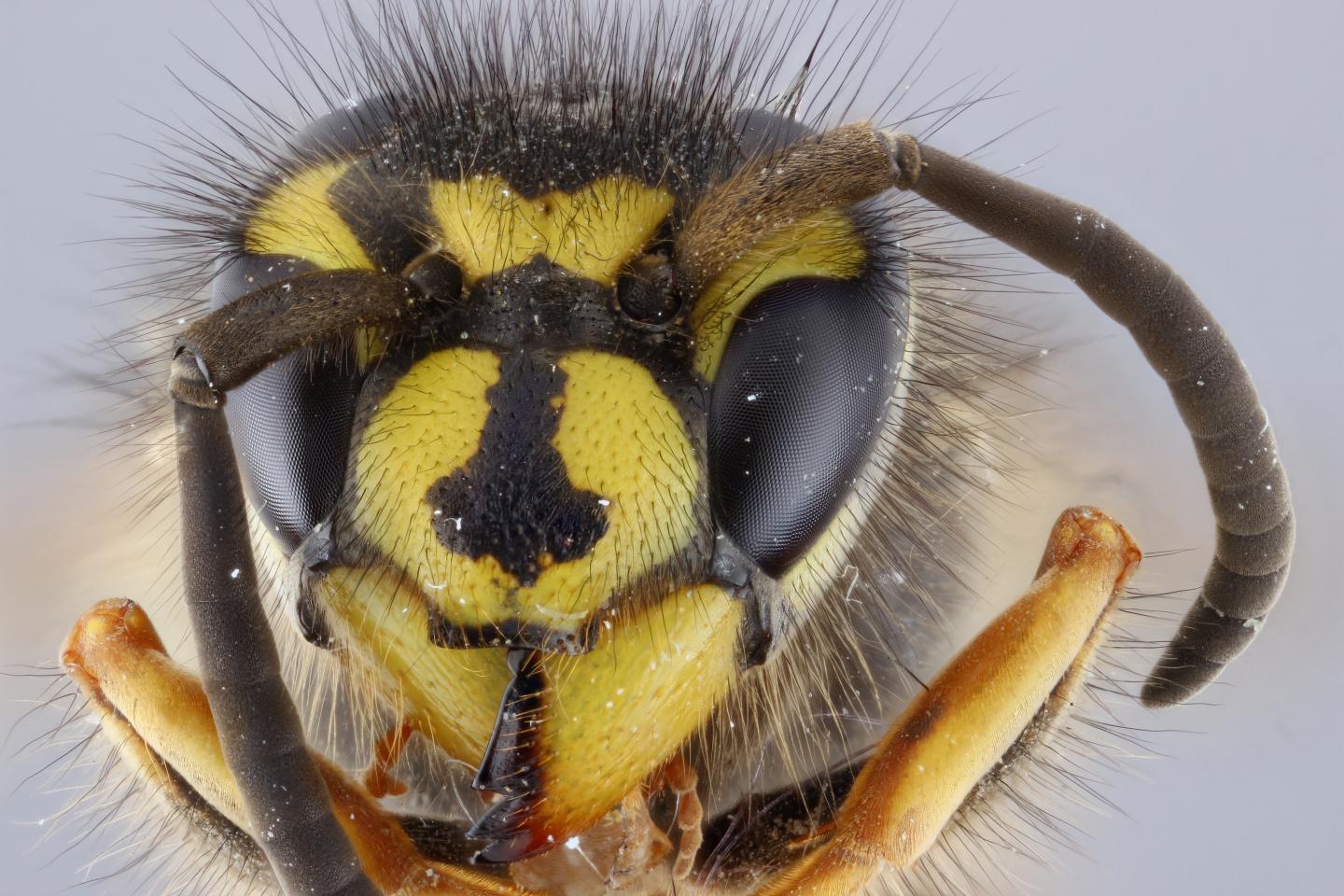
(Press-News.org) A team of Belgian researchers constructed a focus stacking set-up made of consumer grade products with better end results than high-end solutions and this at only a tenth of the prize of current existing systems. Because of the operational ease, speed and the low cost of the system, it is ideal for mass digitization programs involving type specimens. The study was published in the open-access journal ZooKeys.

Enthusiasts or scientists, many struggle to take high quality pictures of the tiny animals of the micro world. When they eventually succeed in their effort, it is clear that rarely the entire subject is in focus.

However, a solution exists to overcome the problem of small focussed area in macro photography: focus stacking. In this technique many pictures need to be shot with different focus ranges. The entire set of pictures will be glued together into one image with the entire subject in focus. This is nothing innovative, as the technique exists already for several years. Many microscope companies offer solutions to produce these sets of pictures of any subject at the other end of the lens. The downside is that these set-ups are only available at high prices.

The presented set-up by Jonathan Brecko working as a scientist for the Royal Institute of Natural Sciences (RBINS) and the Royal Museum of Central Africa (RMCA) (both Federal Belgian Institutes), produces the same or even better results than the high-end solutions tested in the manuscript. And this for only a fraction of the cost (8 to 10 times less).

The set-up is fairly easy to control and consists of consumer grade products, making it easy to replace when needed. The central idea of the set-up is to place both the subject and the light system within a simple kitchen closet.

Thanks to the low noise and high resolution of the 65 mm macro photo lens used for the project and the lighting system placed within the closet, it is fairly straightforward to produce high detailed quality pictures. Even specimens within alcohol pose no problems at all to be pictured.

This set-up can be an important tool to aid in digitization programs, because the highly detailed pictures can in some cases replace the need to ship or send very fragile specimens for study in all kinds of disciplines. At the moment the set-up is used in the digitization programs involving type specimens at RBINS and RMCA.

INFORMATION:

Original source:

Brecko J, Mathys A, Dekoninck W, Leponce M, VandenSpiegel D, Semal P (2014) Focus stacking: Comparing commercial top-end set-ups with a semi-automatic low budget approach. A possible solution for mass digitization of type specimens. ZooKeys 464: 1-23. doi: 10.3897/zookeys.464.8615

Additional Information:

This research has been conducted in the context of the Agora 3D Project (AG/LL/164) and DIGIT03 funded by the federal Belgian Science Policy (BELSPO) and the European FP7 SYNTHESYS 3 program.

Contact:

Jonathan Brecko
Email: jonathan.brecko@naturalsciences.be
+32 262 74 380
+32 276 96 412


[Attachments] See images for this press release:
Better focus at the micro world: A low-budget focus stacking system for mass digitization Better focus at the micro world: A low-budget focus stacking system for mass digitization 2

ELSE PRESS RELEASES FROM THIS DATE:

Hugs help protect against stress and infection, say Carnegie Mellon researchers

2014-12-17
PITTSBURGH--Instead of an apple, could a hug-a-day keep the doctor away? According to new research from Carnegie Mellon University, that may not be that far-fetched of an idea. Led by Sheldon Cohen, the Robert E. Doherty University Professor of Psychology in CMU's Dietrich College of Humanities and Social Sciences, the researchers tested whether hugs act as a form of social support, protecting stressed people from getting sick. Published in Psychological Science, they found that greater social support and more frequent hugs protected people from the increased susceptibility ...

Substance from broccoli can moderate defects

2014-12-17
This news release is available in German. Most Hutchinson-Gilford Progeria Syndrome (HGPS) patients carry a mutation that produces a defective form of the protein lamin A. This defective protein is referred to as progerin. Normal lamin A is a key component of the matrix surrounding the DNA in the cell nucleus and plays a role in gene expression. By contrast, the defective form, progerin, is not functional but is nevertheless continuously synthesized. The result is that progerin accumulates in the nucleus and causes the cell to "age". Consequently, HGPS patients develop ...

Fine tuning your campaign

2014-12-17
Platform ecosystems are a key focus of the research carried out in the Information Systems & E-Services Group headed by Professor Alexander Benlian in the Law and Economics Department at TU Darmstadt. Ferdinand Thies and Michael Wessel decided to dedicate themselves just over a year ago primarily to the study of crowdfunding - the collective financing of social, creative or commercial projects by a community of internet users. Crowdfunding campaigns generated around five million dollars of investment in 2013 and the market is set to grow further. These types of campaign ...

AAAS analysis shows widespread looting and damage to historical sites in Syria

AAAS analysis shows widespread looting and damage to historical sites in Syria
2014-12-17
Four of six major archaeological sites in Syria have been heavily looted and damaged, according to a AAAS analysis of high-resolution satellite images that documents the extent of the destruction. The report analyzes six of the 12 sites that Syria has nominated as World Heritage Sites: Dura Europos, Ebla, Hama's Waterwheels, Mari, Raqqa, and Ugarit. A forthcoming report will analyze the additional six sites. "As we continue to study the conditions at Syria's important cultural sites, we have observed significant destruction that is largely the result of conflict. However, ...

North Atlantic signalled Ice Age thaw 1,000 years before it happened, reveals new research

2014-12-17
The Atlantic Ocean at mid-depths may have given out early warning signals - 1,000 years in advance - that the last Ice Age was going to end, scientists report today in the journal Paleoceanography. Scientists had previously known that at the end of the last Ice Age, around 14,700 years ago, major changes occurred to the Atlantic Ocean in a period known as the Bolling-Allerod interval. During this period, as glaciers melted and the Earth warmed, the currents of the Atlantic Ocean at its deepest levels changed direction. The researchers have analysed the chemistry of ...

Global carbon dioxide emissions increase to new all-time record, but growth is slowing down

2014-12-17
2013 saw global CO2 emissions from fossil fuel use and cement production reach a new all-time high. This was mainly due to the continuing steady increase in energy use in emerging economies over the past ten years. However, emissions increased at a notably slower rate (2%) than on average in the last ten years (3.8% per year since 2003, excluding the credit crunch years). This slowdown, which began in 2012, signals a further decoupling of global emissions and economic growth, which reflects mainly the lower emissions growth rate of China. China, the USA and the EU remain ...

Not just for the holidays, mistletoe could fight obesity-related liver disease

2014-12-17
Mistletoe hanging in doorways announces that the holidays are just around the corner. For some people, however, the symbolic plant might one day represent more than a kiss at Christmas time: It may mean better liver health. Researchers have found that a compound produced by a particular variety of the plant can help fight obesity-related liver disease in mice. Their study appears in ACS' Journal of Agricultural and Food Chemistry. Jungkee Kwon and colleagues note that, according to recent research, Korean mistletoe produces a number of biologically active compounds. These ...

Combining social media and behavioral psychology could lead to more HIV testing

2014-12-17
Social media such as Twitter and Facebook can be valuable in the fight against HIV in the United States, where research has demonstrated they can prompt high-risk populations to request at-home testing kits for the virus that causes AIDS, suggesting a way to potentially boost testing rates. But does it lead to actual testing, and can it work outside the United States? A new study from the UCLA Center for Digital Behavior published online Dec. 15 by the peer-reviewed journal Lancet HIV suggests that it can. The study, conducted in Peru among men who have sex with men, ...

Growing shortage of stroke specialists seen

2014-12-17
MAYWOOD, Ill. - Although stroke is the No. 4 cause of death and a leading cause of disability in the United States, there's an increasing shortage of neurologists who specialize in stroke care. In the December issue of the journal Stroke, two prominent neurologists propose a bold program to increase the number of stroke specialists. Their proposals include encouraging more young physicians to specialize in stroke, increasing stroke specialists' pay and opening the subspecialty to physicians who are not neurologists. The authors are Harold P. Adams, Jr., MD of the University ...

Firearm violence trends in the 21st century

2014-12-17
(SACRAMENTO, Calif.) -- While the overall death rate from firearm violence has remained unchanged for more than a decade, the patterns for suicide and homicide have changed dramatically, a UC Davis study on the epidemiology of gun violence from 2003 to 2012 has found. The study posted online in the Annual Review of Public Health on Dec. 12 and will appear in the print edition in January. "Suicide by firearm is far more common than homicide," said Garen J. Wintemute, professor of emergency medicine and director of the Violence Prevention Research Program at UC Davis. ...

LAST 30 PRESS RELEASES:

Making lighter work of calculating fluid and heat flow

Normalizing blood sugar can halve heart attack risk

Lowering blood sugar cuts heart attack risk in people with prediabetes

Study links genetic variants to risk of blinding eye disease in premature infants

Non-opioid ‘pain sponge’ therapy halts cartilage degeneration and relieves chronic pain

AI can pick up cultural values by mimicking how kids learn

China’s ecological redlines offer fast track to 30 x 30 global conservation goal

Invisible indoor threats: emerging household contaminants and their growing risks to human health

Adding antibody treatment to chemo boosts outcomes for children with rare cancer

Germline pathogenic variants among women without a history of breast cancer

Tanning beds triple melanoma risk, potentially causing broad DNA damage

Unique bond identified as key to viral infection speed

Indoor tanning makes youthful skin much older on a genetic level

Mouse model sheds new light on the causes and potential solutions to human GI problems linked to muscular dystrophy

The Journal of Nuclear Medicine ahead-of-print tip sheet: December 12, 2025

Smarter tools for peering into the microscopic world

Applications open for funding to conduct research in the Kinsey Institute archives

Global measure underestimates the severity of food insecurity

Child survivors of critical illness are missing out on timely follow up care

Risk-based vs annual breast cancer screening / the WISDOM randomized clinical trial

University of Toronto launches Electric Vehicle Innovation Ontario to accelerate advanced EV technologies and build Canada’s innovation advantage

Early relapse predicts poor outcomes in aggressive blood cancer

American College of Lifestyle Medicine applauds two CMS models aligned with lifestyle medicine practice and reimbursement

Clinical trial finds cannabis use not a barrier to quitting nicotine vaping

Supplemental nutrition assistance program policies and food insecurity

Switching immune cells to “night mode” could limit damage after a heart attack, study suggests

URI-based Global RIghts Project report spotlights continued troubling trends in worldwide inhumane treatment

Neutrophils are less aggressive at night, explaining why nighttime heart attacks cause less damage than daytime events

Menopausal hormone therapy may not pose breast cancer risk for women with BRCA mutations

Mobile health tool may improve quality of life for adolescent and young adult breast cancer survivors

[Press-News.org] Better focus at the micro world: A low-budget focus stacking system for mass digitization