PRESS-NEWS.org - Press Release Distribution
PRESS RELEASES DISTRIBUTION

The brain region responsible for self-bias in memory
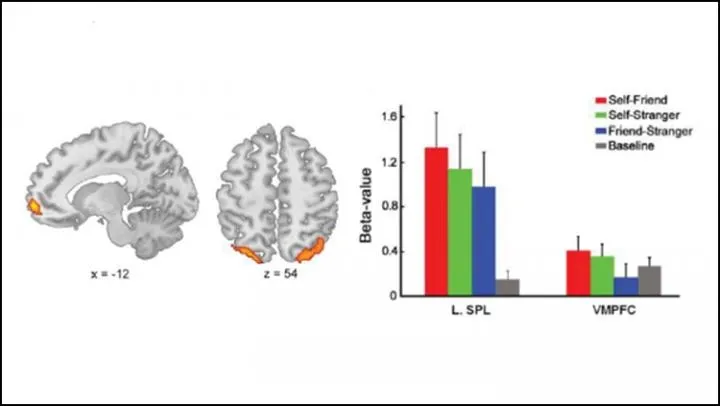
Region involved in processing information about the self skews working memory

The brain region responsible for self-bias in memory
2021-01-18
(Press-News.org) A brain region involved in processing information about ourselves biases our ability to remember, according to new research published in JNeurosci.

People are good at noticing information about themselves, like when your eye jumps to your name in a long list or you manage to hear someone address you in a noisy crowd. This self-bias extends to working memory, the ability to actively think about and manipulate bits of information: people are also better at remembering things about themselves.

To pinpoint the source of this bias, Yin et al. measured participants' brain activity in an fMRI scanner while they tried to remember the location of different colored dots representing themselves, a friend, or a stranger. The participants' fastest response time came when recalling the dot representing themselves, even though it was an arbitrary connection. When people held the self-representing dot in working memory, they had greater activity in the ventromedial prefrontal cortex (VMPFC) -- an area involved in processing self-relevant information. Greater synchrony between the VMPFC and working memory regions corresponded to faster response times. When the researchers interfered with VMPFC activity with transcranial direct current stimulation, the self-bias disappeared, indicating activity in the region drives the bias.

INFORMATION:

Manuscript title: Ventromedial Prefrontal Cortex Drives the Prioritization of Self-Associated Stimuli in Working Memory

About JNeurosci

JNeurosci, the Society for Neuroscience's first journal, was launched in 1981 as a means to communicate the findings of the highest quality neuroscience research to the growing field. Today, the journal remains committed to publishing cutting-edge neuroscience that will have an immediate and lasting scientific impact, while responding to authors' changing publishing needs, representing breadth of the field and diversity in authorship.

About The Society for Neuroscience

The Society for Neuroscience is the world's largest organization of scientists and physicians devoted to understanding the brain and nervous system. The nonprofit organization, founded in 1969, now has nearly 37,000 members in more than 90 countries and over 130 chapters worldwide.


[Attachments] See images for this press release:
The brain region responsible for self-bias in memory

ELSE PRESS RELEASES FROM THIS DATE:

A 'super-puff' planet like no other

A super-puff planet like no other
2021-01-18
The core mass of the giant exoplanet WASP-107b is much lower than what was thought necessary to build up the immense gas envelope surrounding giant planets like Jupiter and Saturn, astronomers at Université de Montréal have found. This intriguing discovery by Ph.D. student Caroline Piaulet of UdeM's Institute for Research on Exoplanets (iREx) suggests that gas-giant planets form a lot more easily than previously believed. Piaulet is part of the groundbreaking research team of UdeM astrophysics professor Björn Benneke that in 2019 announced the first detection of water on an exoplanet located in its star's habitable zone. Published today in the Astronomical Journal with colleagues ...

A new archaeology for the Anthropocene era

A new archaeology for the Anthropocene era
2021-01-18
Indiana Jones and Lara Croft have a lot to answer for. Public perceptions of archaeology are often thoroughly outdated, and these characterisations do little to help. Yet archaeology as practiced today bears virtually no resemblance to the tomb raiding portrayed in movies and video games. Indeed, it bears little resemblance to even more scholarly depictions of the discipline in the entertainment sphere. A paper published today in Nature Ecology and Evolution aims to give pause to an audience that has been largely prepared to take such out-of-touch depictions at face value. It reveals an archaeology practiced by scientists in white lab coats, using multi-million-euro instrumentation and state of the art computers. It also reveals an archaeology poised to ...

UCI researchers: Climate change will alter the position of the Earth's tropical rain belt

2021-01-18
Irvine, Calif. -- Future climate change will cause a regionally uneven shifting of the tropical rain belt - a narrow band of heavy precipitation near the equator - according to researchers at the University of California, Irvine and other institutions. This development may threaten food security for billions of people. In a study published today in Nature Climate Change, the interdisciplinary team of environmental engineers, Earth system scientists and data science experts stressed that not all parts of the tropics will be affected equally. For instance, the rain belt ...

Inexpensive battery charges rapidly for electric vehicles, reduces range anxiety

Inexpensive battery charges rapidly for electric vehicles, reduces range anxiety
2021-01-18
Range anxiety, the fear of running out of power before being able to recharge an electric vehicle, may be a thing of the past, according to a team of Penn State engineers who are looking at lithium iron phosphate batteries that have a range of 250 miles with the ability to charge in 10 minutes. "We developed a pretty clever battery for mass-market electric vehicles with cost parity with combustion engine vehicles," said Chao-Yang Wang, William E. Diefenderfer Chair of mechanical engineering, professor of chemical engineering and professor of materials science and engineering, and director of the Electrochemical Engine Center at Penn State. "There ...

Personalized brain stimulation alleviates severe depression symptoms

2021-01-18
Targeted neuromodulation tailored to individual patients' distinctive symptoms is an increasingly common way of correcting misfiring brain circuits in people with epilepsy or Parkinson's disease. Now, scientists at UC San Francisco's Dolby Family Center for Mood Disorders have demonstrated a novel personalized neuromodulation approach that -- at least in one patient -- was able to provide relief from symptoms of severe treatment-resistant depression within minutes. The approach is being developed specifically as a potential treatment for the significant fraction of people with debilitating depression ...

New management approach can help avoid species vulnerability or extinction

New management approach can help avoid  species vulnerability or extinction
2021-01-18
More than 3,000 animal species in the world today are considered endangered, with hundreds more categorized as vulnerable. Currently, ecologists don't have reliable tools to predict when a species may become at risk. A new paper published in Nature Ecology and Evolution, "Management implications of long transients in ecological systems," focuses on the transient nature of species' and ecosystem stability and illustrates how management practices can be adjusted to better prepare for possible system flips. Some helpful modeling approaches are also offered, including one tool that may help identify potentially ...

New discovery in breast cancer treatment

New discovery in breast cancer treatment
2021-01-18
Researchers at the University of Adelaide have found new evidence about the positive role of androgens in breast cancer treatment with immediate implications for women with estrogen receptor-driven metastatic disease. Published today in Nature Medicine, the international study conducted in collaboration with the Garvan Institute of Medical Research, looked at the role of androgens - commonly thought of as male sex hormones but also found at lower levels in women - as a potential treatment for estrogen receptor positive breast cancer. Watch a video explainer about the new ...

Low-carbon policies can be 'balanced' to benefit small firms and average households - study

2021-01-18
Some of the low-carbon policy options currently used by governments may be detrimental to the households and small businesses less able to manage added short-term costs from energy price hikes, according to a new study. However, it also suggests that this menu of decarbonising policies, from quotas to feed-in tariffs, can be designed and balanced to benefit local firms and lower-income families - vital for achieving 'Net Zero' carbon and a green recovery. University of Cambridge researchers combed through thousands of studies to create the most comprehensive analysis to date of widely used types of low-carbon policy, and compared how they perform in areas such as cost and competitiveness. ...

Low-carbon policies can be 'balanced' to benefit small firms and average households

2021-01-18
Some of the low-carbon policy options currently used by governments may be detrimental to the households and small businesses less able to manage added short-term costs from energy price hikes, according to a new study. However, it also suggests that this menu of decarbonising policies, from quotas to feed-in tariffs, can be designed and balanced to benefit local firms and lower-income families - vital for achieving 'Net Zero' carbon and a green recovery. University of Cambridge researchers combed through thousands of studies to create the most comprehensive analysis to date of widely used types of low-carbon policy, and compared how they perform in areas such ...

Timing is of the essence when treating brain swelling in mice

Timing is of the essence when treating brain swelling in mice
2021-01-18
Researchers from the National Institutes of Health have discovered Jekyll and Hyde immune cells in the brain that ultimately help with brain repair but early after injury can lead to fatal swelling, suggesting that timing may be critical when administering treatment. These dual-purpose cells, which are called myelomonocytic cells and which are carried to the brain by the blood, are just one type of brain immune cell that NIH researchers tracked, watching in real-time as the brain repaired itself after injury. The study, published in Nature Neuroscience, ...

LAST 30 PRESS RELEASES:

Making lighter work of calculating fluid and heat flow

Normalizing blood sugar can halve heart attack risk

Lowering blood sugar cuts heart attack risk in people with prediabetes

Study links genetic variants to risk of blinding eye disease in premature infants

Non-opioid ‘pain sponge’ therapy halts cartilage degeneration and relieves chronic pain

AI can pick up cultural values by mimicking how kids learn

China’s ecological redlines offer fast track to 30 x 30 global conservation goal

Invisible indoor threats: emerging household contaminants and their growing risks to human health

Adding antibody treatment to chemo boosts outcomes for children with rare cancer

Germline pathogenic variants among women without a history of breast cancer

Tanning beds triple melanoma risk, potentially causing broad DNA damage

Unique bond identified as key to viral infection speed

Indoor tanning makes youthful skin much older on a genetic level

Mouse model sheds new light on the causes and potential solutions to human GI problems linked to muscular dystrophy

The Journal of Nuclear Medicine ahead-of-print tip sheet: December 12, 2025

Smarter tools for peering into the microscopic world

Applications open for funding to conduct research in the Kinsey Institute archives

Global measure underestimates the severity of food insecurity

Child survivors of critical illness are missing out on timely follow up care

Risk-based vs annual breast cancer screening / the WISDOM randomized clinical trial

University of Toronto launches Electric Vehicle Innovation Ontario to accelerate advanced EV technologies and build Canada’s innovation advantage

Early relapse predicts poor outcomes in aggressive blood cancer

American College of Lifestyle Medicine applauds two CMS models aligned with lifestyle medicine practice and reimbursement

Clinical trial finds cannabis use not a barrier to quitting nicotine vaping

Supplemental nutrition assistance program policies and food insecurity

Switching immune cells to “night mode” could limit damage after a heart attack, study suggests

URI-based Global RIghts Project report spotlights continued troubling trends in worldwide inhumane treatment

Neutrophils are less aggressive at night, explaining why nighttime heart attacks cause less damage than daytime events

Menopausal hormone therapy may not pose breast cancer risk for women with BRCA mutations

Mobile health tool may improve quality of life for adolescent and young adult breast cancer survivors

[Press-News.org] The brain region responsible for self-bias in memory
Region involved in processing information about the self skews working memory