Major discovery helps explain coral bleaching
Published 2021-01-25 · Original archive entry · Explore research explainers
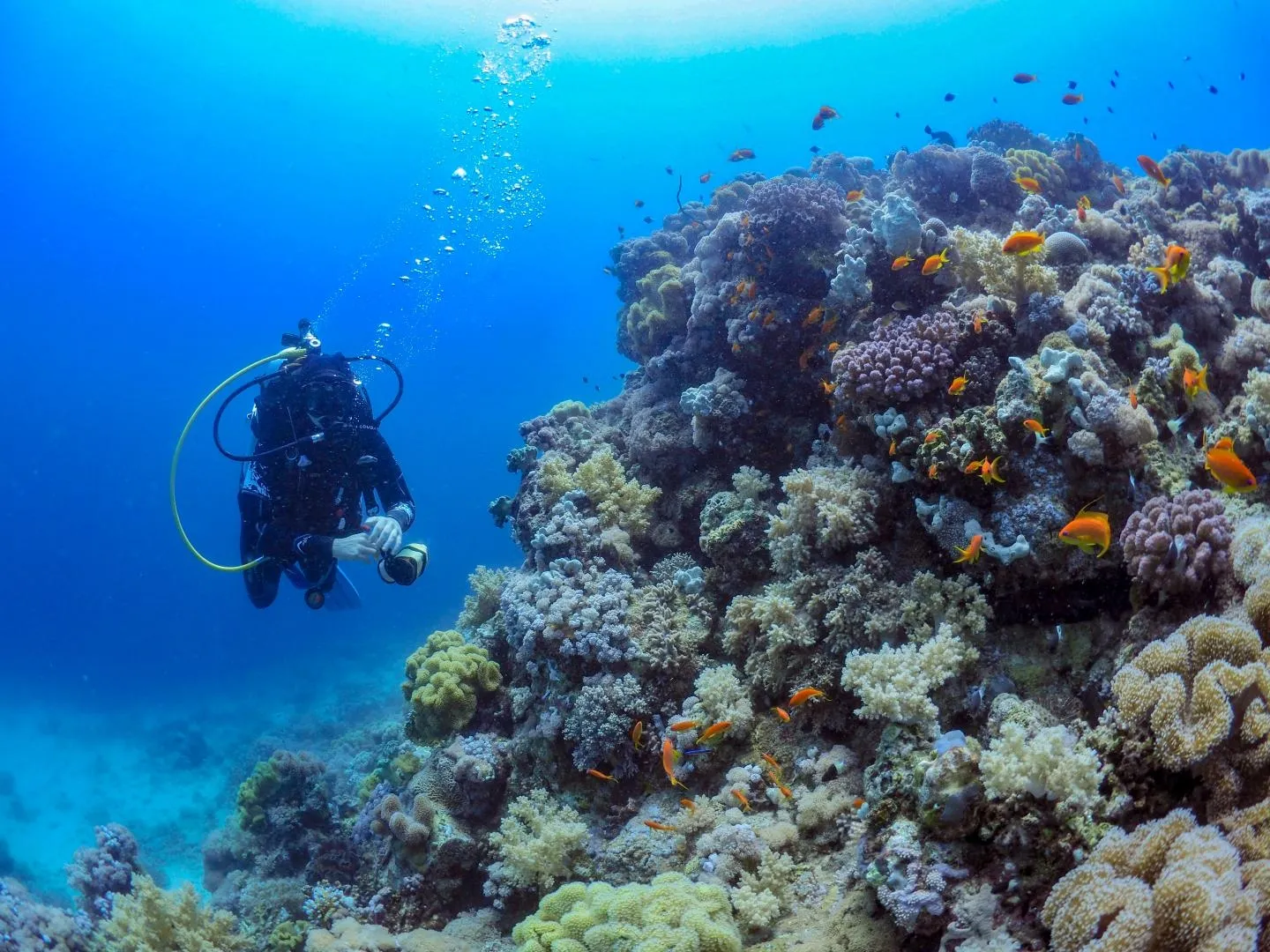
Corals, like all animals, must eat to live. The problem is that most corals grow in tropical waters that are poor in nutrients, sort of like ocean deserts; it's this lack of nutrients that makes the water around coral reefs so crystal clear. Because food is not readily available, corals have developed a remarkable feeding mechanism that involves a symbiotic relationship with single-celled algae. These algae grow inside the corals, using the coral tissue as shelter and absorbing the CO2 that the corals produce. In exchange, the algae provide corals with nutrients they produce through photosynthesis. These algae contain a variety of pigments, which give the coral reefs the colors they're known for.
Over the past 35 years, tropical oceans have experienced multiple major heat waves. Scientists have observed that during these episodes, the algae - stressed by the warmer temperatures - release compounds that are toxic to the coral, prompting the coral to expel the algae from their tissue. That means the corals lose their color and their primary food source, and then begin to starve. This is the process of coral bleaching. And it has been occurring more and more frequently, threatening the survival of many reefs, including Australia's Great Barrier Reef. Bleached corals do not necessarily die; their symbiotic algae population can be reestablished if the conditions around a reef return to normal. But if the heat persists, or is aggravated by other factors like pollution, the coral becomes too weak to survive.
In a paper published in the prestigious PNAS on 25 January, an international team of scientists that includes Nils Rädecker at EPFL's END
Over the past 35 years, tropical oceans have experienced multiple major heat waves. Scientists have observed that during these episodes, the algae - stressed by the warmer temperatures - release compounds that are toxic to the coral, prompting the coral to expel the algae from their tissue. That means the corals lose their color and their primary food source, and then begin to starve. This is the process of coral bleaching. And it has been occurring more and more frequently, threatening the survival of many reefs, including Australia's Great Barrier Reef. Bleached corals do not necessarily die; their symbiotic algae population can be reestablished if the conditions around a reef return to normal. But if the heat persists, or is aggravated by other factors like pollution, the coral becomes too weak to survive.
In a paper published in the prestigious PNAS on 25 January, an international team of scientists that includes Nils Rädecker at EPFL's END