PRESS-NEWS.org - Press Release Distribution
PRESS RELEASES DISTRIBUTION

Parkinson's gene may impair how new neurons are made throughout our lifetime
Parkinson's gene may impair how new neurons are made throughout our lifetime
2021-03-23
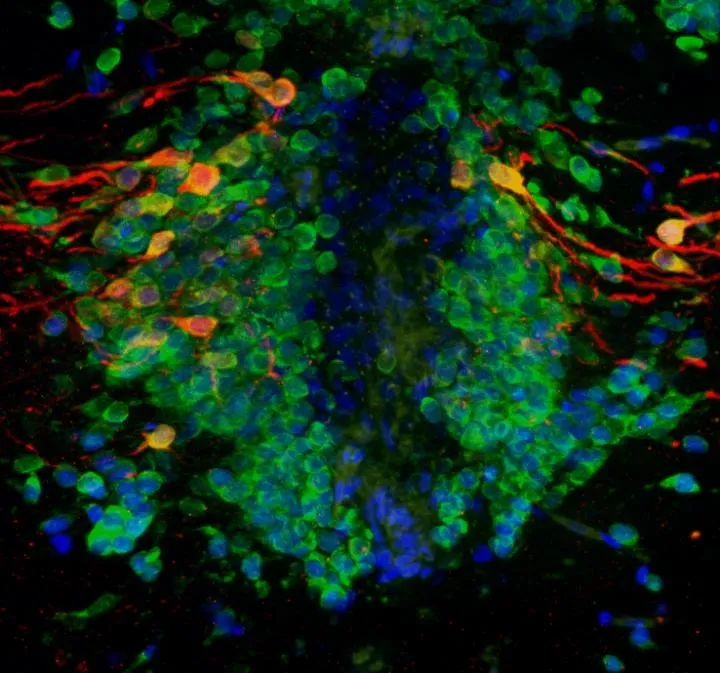
(Press-News.org) A pioneering study, published in Scientific Reports, found that the Parkinon's gene PINK1 is important for the generation of dopamine-producing neurons throughout life, and is not just responsible for the premature death of these neurons The international research, led by University of Sheffield's Neuroscience Institute, used two model systems to examine how neurons are produced throughout our lifetime Parkinson's disease is a relentlessly progressive neurodegenerative disorder that affects around 145,000 people in the UK A gene defect linked to Parkinson's disease may not only cause the early death of neurons, but also impair the process that generates neurons in the brain throughout our lifetime, a new study has revealed.

The international study, led by the University of Sheffield's Neuroscience Institute, may have a significant impact on the future treatment of Parkinson's patients who develop the illness due to PINK1 defect or similar gene defects.

The development of novel treatments and therapies to slow down disease progression, halt or reverse Parkinson's may now focus on enhancing the generation of new dopamine-producing neurons, rather than just trying to protect these neurons from dying later.

The findings, published today (23 March 2021) in Scientific Reports, used two model systems to measure how inactivation of the PINK1 gene affects dopamine-producing neurons in the adult brain.

Dopamine-producing neurons are the most severely affected brain cells in Parkinson's disease. It is typically thought that Parkinson's genes, such as PINK1, cause early death of these neurons, with symptoms developing when neuron numbers fall. However, here, researchers found that a deficiency in PINK1 resulted in fewer dopamine-producing neurons being made throughout life.

Professor Oliver Bandmann, Professor of Movement Disorders Neurology at the Sheffield Institute for Translational Neuroscience (SITraN), said: "Neurogenesis is the process by which new neurons are formed in the brain. Recent evidence suggests that this process is ongoing throughout life but the relevance of this is poorly understood in neurodegenerative disorders such as Parkinson's disease."

"We know that mutations in the PINK1 gene cause an early onset, inherited form of Parkinson's disease. If we can further our understanding about the impact of this genetic mutation on the dopamine-producing neurons we can develop new therapeutic approaches that aim to mitigate those effects."

In collaboration with the University of Luxembourg, researchers used two complementary model systems to examine how neurons are reproduced throughout our lifetime.

Professor Marysia Placzek, Professor of Developmental Neurobiology in the Department of Biomedical Science, said: "This study attests to the power of using simple model organisms for pre-clinical translational research. We used the zebrafish to demonstrate that dopamine-producing neurons are generated into adulthood at a rate that decreases with age and that PINK1-deficiency impairs neurogenesis of these neurons, significantly in early adult life. Our international collaborators then confirmed these results in a human organoid cell model."

The observation of impaired adult dopaminergic neurogenesis in PINK1 deficiency in two complementing model systems may have significant consequences for future therapeutic approaches in Parkinson's disease. Future research will aim to identify the precise mechanisms that link Parkinson's genes to neurogenesis. This will allow us to explore the development of gene therapy or small molecule approaches to enhance neurogenesis in the brain of patients with Parkinson's. The development of new therapies for brain diseases like Parkinson's is the main focus of the Sheffield Institute for Translational Neuroscience (SITraN).

The research was funded by the Medical Research Council (MRC), Parkinson's UK and the Wellcome Trust.

Parkinson's disease is the second most common neurodegenerative disease, with approximately 10 million people affected worldwide. Currently, only symptomatic treatment options are available to patients.

The University of Sheffield launched a sustained fundraising effort for Parkinson's disease research at the end of 2019. Since then, Sheffield staff, students, alumni and the general public have come together to raise more than £350,000 so far. The ongoing efforts of this campaign are set to continue as Sheffield dedicates itself to backing the next breakthrough.

INFORMATION:

To find out more and make a gift, please visit:

https://www.sheffield.ac.uk/giving/causes/research/fighting-parkinsons-together

The research forms part of the work of the University of Sheffield's Neuroscience Institute, which aims to bring academics and scientists together from across varied specialties to translate scientific discoveries from the lab into pioneering treatments that will benefit patients living with neurodegenerative disorders.

Media contact: Amy Huxtable, Media Relations Officer, University of Sheffield, a.l.huxtable@sheffield.ac.uk

Notes to editors:

The University of Sheffield

With almost 29,000 of the brightest students from over 140 countries, learning alongside over 1,200 of the best academics from across the globe, the University of Sheffield is one of the world's leading universities.

A member of the UK's prestigious Russell Group of leading research-led institutions, Sheffield offers world-class teaching and research excellence across a wide range of disciplines.

Unified by the power of discovery and understanding, staff and students at the university are committed to finding new ways to transform the world we live in.

Sheffield is the only university to feature in The Sunday Times 100 Best Not-For-Profit Organisations to Work For 2018 and for the last eight years has been ranked in the top five UK universities for Student Satisfaction by Times Higher Education.

Sheffield has six Nobel Prize winners among former staff and students and its alumni go on to hold positions of great responsibility and influence all over the world, making significant contributions in their chosen fields.

Global research partners and clients include Boeing, Rolls-Royce, Unilever, AstraZeneca, Glaxo SmithKline, Siemens and Airbus, as well as many UK and overseas government agencies and charitable foundations.


[Attachments] See images for this press release:
Parkinson's gene may impair how new neurons are made throughout our lifetime

ELSE PRESS RELEASES FROM THIS DATE:

New diagnostic tool for the management of patients with sepsis

2021-03-23
Hennigsdorf/Berlin, Germany, March 23, 2021 - Diagnostics company SphingoTec GmbH ("SphingoTec") announced today the first published data (1) on the biomarker DPP3 that can predict the evolution of organ function and survival in septic patients. Measured on top of routinely used standard parameters, such as Lactate and Procalcitonin, DPP3 is an early indicator of short-term outcomes and patient severity. Sepsis is a medical emergency caused by a dysregulated host response to an infection, with mortality rates increasing rapidly for each hour that appropriate treatment is delayed (2). The rapid evolution of sepsis into its severe form, septic shock, raises the need for more precise and faster testing to support better clinical decision-making. DPP3 is an ...

Nanobiomaterial boosts neuronal growth in mice with spinal cord injuries

Nanobiomaterial boosts neuronal growth in mice with spinal cord injuries
2021-03-23
Researchers from the Department of Orthopedics of Tongji Hospital at Tongji University in Shanghai have successfully used a nanobiomaterial called layered double hydroxide (LDH) to inhibit the inflammatory environment surrounding spinal cord injuries in mice, accelerating regeneration of neurons and reconstruction of the neural circuit in the spine. The researchers were also able to identify the underlying genetic mechanism by which LDH works. This understanding should allow further modification of the therapy which, in combination with other elements, could finally produce a comprehensive, clinically applicable system for spinal cord injury relief in humans. The ...

Food industry lobbying was intense on failed bill to limit marketing to Canadian children

Food industry lobbying was intense on failed bill to limit marketing to Canadian children
2021-03-23
Researchers at the University of Toronto have found that food industry interactions with government heavily outnumbered non-industry interactions on Bill S-228, also known as the Child Health Protection Act, which died in the Senate of Canada in 2019. The researchers looked at more than 3,800 interactions, which included meetings, correspondence and lobbying, in the three years before the bill failed. They found that over 80 per cent were by industry, compared to public health or not-for-profit organizations. They also found that industry accounted for over 80 per cent of interactions with the highest-ranking government offices, including elected parliamentarians and their staff and unelected ...

A leader's gender plays a role in local government sustainability policymaking

2021-03-23
BINGHAMTON, NY -- When it comes to local government, does the gender of a mayor or county executive matter in sustainability policymaking? Yes, but only in certain ways, according to new research from Binghamton University, State University of New York. Kristina Lambright, associate professor of public administration, and George Homsy, associate professor of public administration and director of the environmental studies program, explored the correlation between female leadership and local government adoption of sustainability policies in "Beyond community characteristics: a leader's gender and local government adoption of energy conservation practices and redistributive programmes," published recently ...

Novel thermometer can accelerate quantum computer development

Novel thermometer can accelerate quantum computer development
2021-03-23
Researchers at Chalmers University of Technology, Gothenburg, Sweden, have developed a novel type of thermometer that can simply and quickly measure temperatures during quantum calculations with extremely high accuracy. The breakthrough provides a benchmarking tool for quantum computing of great value - and opens up for experiments in the exciting field of quantum thermodynamics. A key component in quantum computers are coaxial cables and waveguides - structures which guide waveforms, and act as the vital connection between the quantum processor, and the classical electronics which control it. Microwave pulses travel along the waveguides to the quantum processor, and are cooled ...

Partnership with churches increases COVID-19 vaccine delivery among Black population

2021-03-23
Incorporating Black churches and clergy in COVID-19 vaccination education and distribution has been found to be an effective model in helping to increase vaccination delivery to historically at-risk populations in San Bernardino County, a study says. Focused education efforts and an on-site mobile clinic in Black church parking lots resulted in the vaccinations of 417 people, 84% of whom were Black. The study also found an increase in Black attendance of mass vaccination clinics to 3.6% of total patients, up from 3%, in the week post-initiative. Researchers at Loma Linda University School of Pharmacy published their findings on March 10 in The Lancet Global Health, ...

Study outlines testing strategies for safer air travel during the pandemic

2021-03-23
Almost 90 percent of infectious travelers could be detected with rapid SARS-CoV-2 tests at the airport, and most imported infections could be prevented with a combination of pre-travel testing and a five-day post-travel quarantine that would only lift with a negative test result, according to a computer simulation by UC San Francisco researchers. The study offers much-needed data to airlines and states that have struggled through a year of the pandemic with little guidance on how to enable safe travel. The issue is becoming more pressing as states ...

Phytol may be promising for eco-friendly agrochemicals to control root-knot nematodes

Phytol may be promising for eco-friendly agrochemicals to control root-knot nematodes
2021-03-22
Root-knot nematodes (RKNs, Meloidogyne spp.) infect a broad range of plants, including several agriculturally important species such as cotton, soybean and corn, as well as various vegetables and ornamentals. These parasites cause roots to develop galls that result in severe plant damage and, ultimately, important crop losses. Growers currently use synthetic nematicides to manage RKNs; however, these compounds are detrimental to the microbial diversity of soil and harmful for the environment. Thus, it is necessary to develop alternative sustainable control methods. "We have been seeking natural compounds that activate plant defense ...

UMass Amherst researchers develop ultra-sensitive flow microsensors

UMass Amherst researchers develop ultra-sensitive flow microsensors
2021-03-22
A team of scientists at the University of Massachusetts Amherst have developed the thinnest and most sensitive flow sensor, which could have significant implications for medical research and applications, according to new research published recently in Nature Communications. The research was led by Jinglei Ping, assistant professor of mechanical and industrial engineering, along with a trio of mechanical engineering Ph.D. students: Xiaoyu Zhang, who fabricated the sensor and made the measurement, Eric Chia and Xiao Fan. The findings pave the way for future research on all-electronic, in-vivo flow monitoring in investigating ...

Fruit fly egg takes an active hand in its own growth, highlighting parallels to mammals

Fruit fly egg takes an active hand in its own growth, highlighting parallels to mammals
2021-03-22
A cast of so-called 'nurse cells' surrounds and supports the growing fruit fly egg during development, supplying the egg -- or 'oocyte' -- with all the nutrients and molecules it needs to thrive. Long viewed as passive in this process, the Drosophila egg actually plays an active role not only in its own growth, but also in the growth of the surrounding nurse cells, Princeton University researchers report on March 21 in Developmental Cell. "Here we show an example of bidirectional communication -- a dialogue -- between different cells. The egg is taking an active hand in controlling its own feeding ...

LAST 30 PRESS RELEASES:

Making lighter work of calculating fluid and heat flow

Normalizing blood sugar can halve heart attack risk

Lowering blood sugar cuts heart attack risk in people with prediabetes

Study links genetic variants to risk of blinding eye disease in premature infants

Non-opioid ‘pain sponge’ therapy halts cartilage degeneration and relieves chronic pain

AI can pick up cultural values by mimicking how kids learn

China’s ecological redlines offer fast track to 30 x 30 global conservation goal

Invisible indoor threats: emerging household contaminants and their growing risks to human health

Adding antibody treatment to chemo boosts outcomes for children with rare cancer

Germline pathogenic variants among women without a history of breast cancer

Tanning beds triple melanoma risk, potentially causing broad DNA damage

Unique bond identified as key to viral infection speed

Indoor tanning makes youthful skin much older on a genetic level

Mouse model sheds new light on the causes and potential solutions to human GI problems linked to muscular dystrophy

The Journal of Nuclear Medicine ahead-of-print tip sheet: December 12, 2025

Smarter tools for peering into the microscopic world

Applications open for funding to conduct research in the Kinsey Institute archives

Global measure underestimates the severity of food insecurity

Child survivors of critical illness are missing out on timely follow up care

Risk-based vs annual breast cancer screening / the WISDOM randomized clinical trial

University of Toronto launches Electric Vehicle Innovation Ontario to accelerate advanced EV technologies and build Canada’s innovation advantage

Early relapse predicts poor outcomes in aggressive blood cancer

American College of Lifestyle Medicine applauds two CMS models aligned with lifestyle medicine practice and reimbursement

Clinical trial finds cannabis use not a barrier to quitting nicotine vaping

Supplemental nutrition assistance program policies and food insecurity

Switching immune cells to “night mode” could limit damage after a heart attack, study suggests

URI-based Global RIghts Project report spotlights continued troubling trends in worldwide inhumane treatment

Neutrophils are less aggressive at night, explaining why nighttime heart attacks cause less damage than daytime events

Menopausal hormone therapy may not pose breast cancer risk for women with BRCA mutations

Mobile health tool may improve quality of life for adolescent and young adult breast cancer survivors

[Press-News.org] Parkinson's gene may impair how new neurons are made throughout our lifetime