Fooling fusion fuel: How to discipline unruly plasma
Published 2021-04-26 · Original archive entry · Explore research explainers
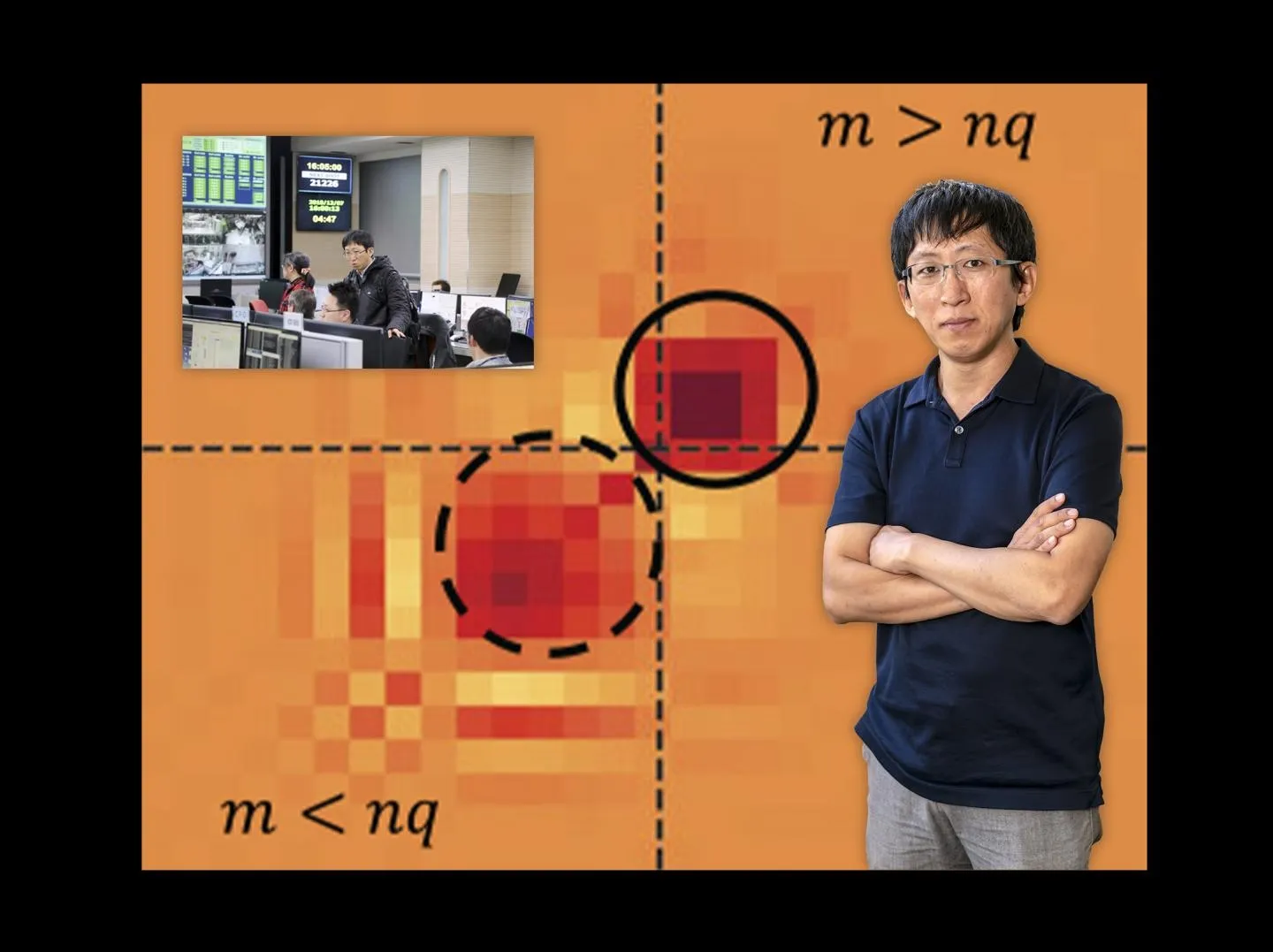
The process designed to harvest on Earth the fusion energy that powers the sun and stars can sometimes be tricked. Researchers at the U.S. Department of Energy's (DOE) Princeton Plasma Physics laboratory have derived and demonstrated a bit of slight-of-hand called "quasi-symmetry" that could accelerate the development of fusion energy as a safe, clean and virtually limitless source of power for generating electricity.
Fusion reactions combine light elements in the form of plasma -- the hot, charged state of matter composed of free electrons and atomic nuclei that makes up 99 percent of the visible universe -- to generate massive amounts of energy. Scientists around the world are seeking to reproduce the process in doughnut-shaped fusion facilities called tokamaks that heat the plasma to million-degree temperatures and confine it in symmetrical magnetic fields produced by coils to create fusion reactions.
Crucial issue
A crucial issue for these efforts is maintaining the fast rotation of the doughnut-shaped plasma that swirls within a tokamak. However, small magnetic field distortions, or ripples, caused by misalignment of the magnetic field coils can slow the plasma motion, making it more unstable. The coil misalignments and resulting field ripples are tiny, as small as 1 part in 10,000 parts of the field, but they can have a significant impact.
Maintaining stability in future tokamaks such as ITER, the international facility going up in France to demonstrate the feasibility of fusion energy, will be essential to harvesting the energy to generate electricity. One way to minimize the impact of the field ripples is to add additional magnets to cancel out, or heal, the effect of magnetic field errors. However, field ripples can never be completely cancelled and there has been no optimal method for mitigating their effects until now.
The newly discovered method calls for fooling the swirling plasma particles by canceling out the magnetic field errors along the path they travel. "A way to preserve rotation while providing stability is to change the shape of the magnetic field so that the particles are fooled into thinking that they are not moving in a rippled magnetic field," said PPPL physicist Jong-Kyu Park, lead author of a END
Fusion reactions combine light elements in the form of plasma -- the hot, charged state of matter composed of free electrons and atomic nuclei that makes up 99 percent of the visible universe -- to generate massive amounts of energy. Scientists around the world are seeking to reproduce the process in doughnut-shaped fusion facilities called tokamaks that heat the plasma to million-degree temperatures and confine it in symmetrical magnetic fields produced by coils to create fusion reactions.
Crucial issue
A crucial issue for these efforts is maintaining the fast rotation of the doughnut-shaped plasma that swirls within a tokamak. However, small magnetic field distortions, or ripples, caused by misalignment of the magnetic field coils can slow the plasma motion, making it more unstable. The coil misalignments and resulting field ripples are tiny, as small as 1 part in 10,000 parts of the field, but they can have a significant impact.
Maintaining stability in future tokamaks such as ITER, the international facility going up in France to demonstrate the feasibility of fusion energy, will be essential to harvesting the energy to generate electricity. One way to minimize the impact of the field ripples is to add additional magnets to cancel out, or heal, the effect of magnetic field errors. However, field ripples can never be completely cancelled and there has been no optimal method for mitigating their effects until now.
The newly discovered method calls for fooling the swirling plasma particles by canceling out the magnetic field errors along the path they travel. "A way to preserve rotation while providing stability is to change the shape of the magnetic field so that the particles are fooled into thinking that they are not moving in a rippled magnetic field," said PPPL physicist Jong-Kyu Park, lead author of a END