Toward a feasible alternative to liver organ transplant
New findings could lead to ways to keep transplanted adult liver cells functioning long term
Published 2021-04-27 · Original archive entry · Explore research explainers
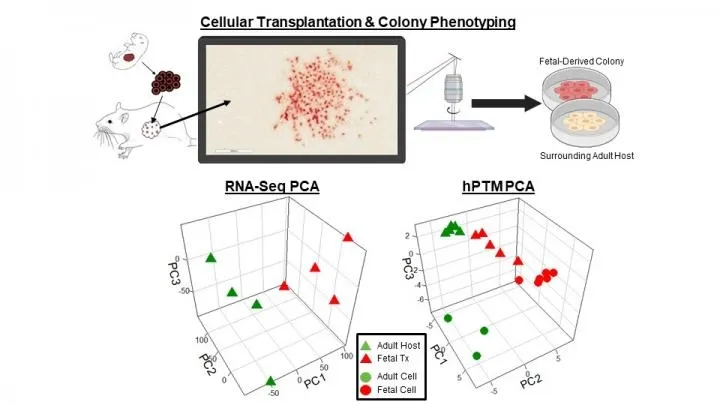
New insights into how fetal and adult liver cells differ could be used to help make liver cell transplants successful long term. Transplanting functioning liver cells into a patient's liver can help replace liver function that is impaired due to disease.
Today there are many more patients waiting for liver transplants than there are donor organs available. Because liver cell transplantation only requires a portion of cells isolated from a liver, it could allow multiple patients to be treated from one donated organ.
Although liver cell transplants offer a promising life-saving alternative to transplanting the whole organ, the effects aren't long-lasting when adult liver cells are used. Clinical trials and animal studies have shown that when fetal liver cells are used for liver cell transplants, they multiply and maintain function for long periods of time. However, fetal liver cells cannot be readily obtained for clinical use.
"Our work aims to characterize the mechanisms by which fetal liver cells -- or hepatocytes -- repopulate an injured adult liver," said Anders Ohman, a doctoral candidate in the laboratory of Jennifer Sanders, PhD, at Brown University. "We can then use this information to develop novel culture conditions and therapeutic strategies that can make liver cell transplantation feasible."
Ohman will present the research at the END
Today there are many more patients waiting for liver transplants than there are donor organs available. Because liver cell transplantation only requires a portion of cells isolated from a liver, it could allow multiple patients to be treated from one donated organ.
Although liver cell transplants offer a promising life-saving alternative to transplanting the whole organ, the effects aren't long-lasting when adult liver cells are used. Clinical trials and animal studies have shown that when fetal liver cells are used for liver cell transplants, they multiply and maintain function for long periods of time. However, fetal liver cells cannot be readily obtained for clinical use.
"Our work aims to characterize the mechanisms by which fetal liver cells -- or hepatocytes -- repopulate an injured adult liver," said Anders Ohman, a doctoral candidate in the laboratory of Jennifer Sanders, PhD, at Brown University. "We can then use this information to develop novel culture conditions and therapeutic strategies that can make liver cell transplantation feasible."
Ohman will present the research at the END