Wild chimpanzee orphans recover from the stress of losing their mother
Young chimpanzees who lose their mother are highly stressed
Researchers at the Max Planck Institute for Evolutionary Anthropology in Leipzig and the Institute of Cognitive Sciences, CNRS in Lyon investigated over 19 years the short- and long-term effects of maternal loss on the stress of orphan wild chimpanzees. Their study shows that immature orphan chimpanzees are highly stressed, especially when they were orphaned at a young age. However, orphans who lost their mother more than two years previously, or were now adult, were not more stressed than other individuals whose mother did not die.
"Our study provides an important test of how relevant theories are that try to explain the impact of early life adversity when they are drawn from human clinical studies. In particular we wanted to know how relevant they are for wild long-lived primates whose young, as in humans, are dependent on their mother for over a decade", says the first author Cédric Girard-Buttoz.
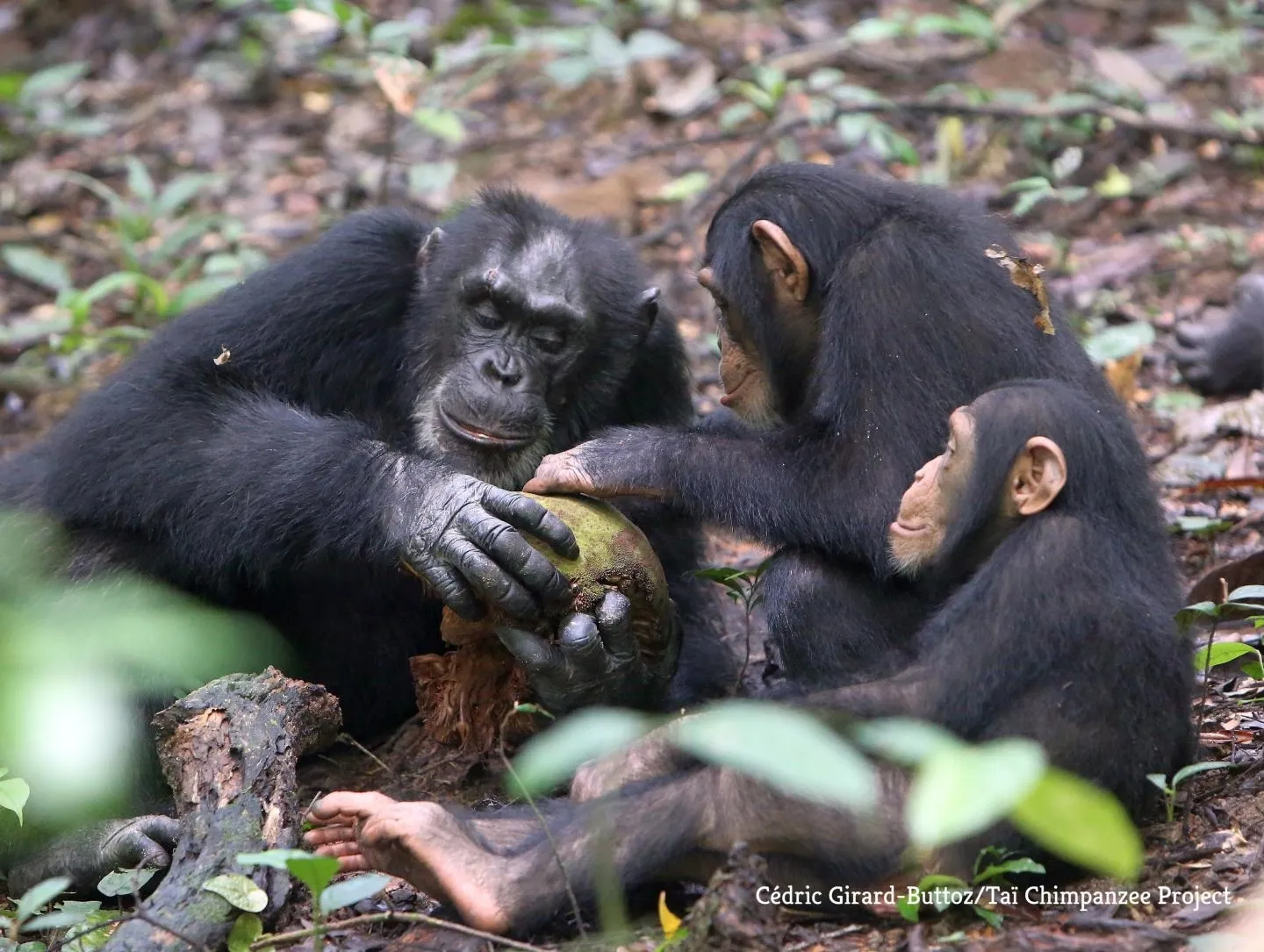
Adult chimpanzees often care for or even adopt orphans
"Our findings nicely contrast to human studies and show that young orphan chimpanzees recover over time from the initially stressful loss of their mother. Taï chimpanzees often care for or adopt orphans. They may carry orphans, share their food and their nest at night with them, or protect them from aggression. Whether orphan chimpanzees show stress recovery because of the support offered by other chimpanzees remains to be studied", Roman Wittig, a senior author and head of the Taï Chimpanzee Project points out.
"The stress experienced by orphan chimpanzees compared with non-orphans does not directly explain their shorter lives and fewer offspring, but may have an effect on other important factors such as growth during critical periods in development", says senior author Catherine Crockford. "In long-lived species where offspring stay with their mothers for many years, the next step is to unpick what mothers provide offspring that helps them get ahead of orphans. It might be that a mothers' presence results in nutritional gains or social advantages, such as providing buffering against aggression from others, or a mix of the two".
INFORMATION:
Contact:
Dr. Cédric Girard-Buttoz
Max Planck Institute for Evolutionary Anthropology, Leipzig &
Institute of Cognitive Sciences, CNRS, Lyon
+49 341 3550-228
cedric_girard@eva.mpg.de
Dr. Catherine Crockford
Max Planck Institute for Evolutionary Anthropology, Leipzig
Institute of Cognitive Sciences, CNRS, Lyon
+49 341 3550-220
crockfor@eva.mpg.de
Dr. Roman Wittig
Max Planck Institute for Evolutionary Anthropology, Leipzig
+49 341 3550-204
wittig@eva.mpg.de
Original publication:
Cédric Girard-Buttoz, Patrick J Tkaczynski, Liran Samuni, Pawel Fedurek, Cristina Gomes, Therese Löhrich, Virgile Manin, Anna Preis, Prince F Valé, Tobias Deschner, Roman M Wittig, Catherine Crockford
Early maternal loss leads to short- but not long-term effects on diurnal cortisol slopes in wild chimpanzees
eLife, 16 June 2021