Study examines the role of deep-sea microbial predators at hydrothermal vents
Researchers emphasize the need for baseline information of microbial food webs
Published 2021-07-16 · Original archive entry · Explore research explainers
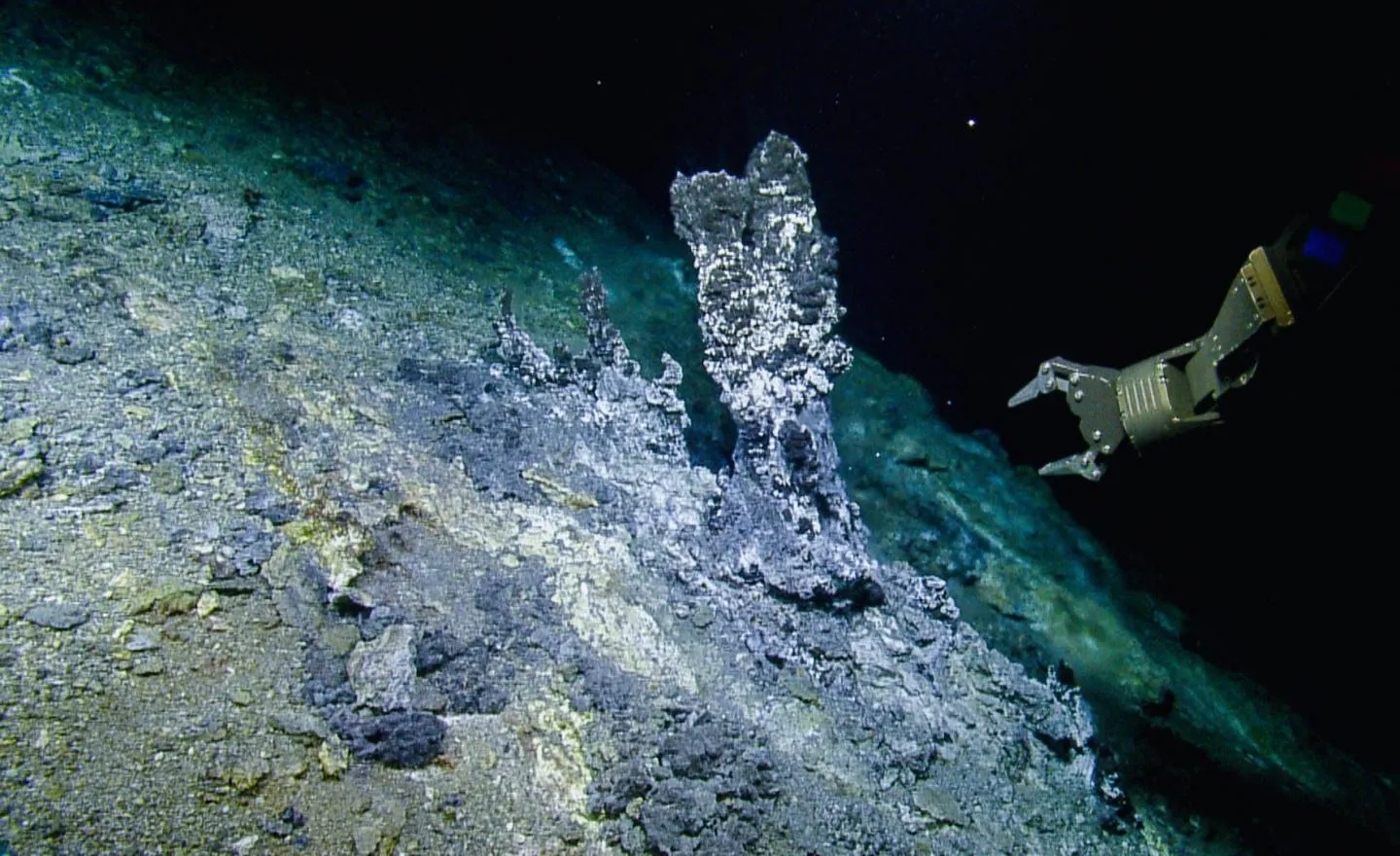
The hydrothermal vent fluids from the Gorda Ridge spreading center in the northeast Pacific Ocean create a biological hub of activity in the deep sea. There, in the dark ocean, a unique food web thrives not on photosynthesis but rather on chemical energy from the venting fluids. Among the creatures having a field day feasting at the Gorda Ridge vents is a diverse assortment of microbial eukaryotes, or protists, that graze on chemosynthetic bacteria and archaea.
This protistan grazing, which is a key mechanism for carbon transport and recycling in microbial food webs, exerts a higher predation pressure at hydrothermal vent sites than in the surrounding deep-sea environment, a new paper finds.
"Our findings provide a first estimate of protistan grazing pressure within hydrothermal vent food webs, highlighting the important role that diverse deep-sea protistan communities play in deep-sea carbon cycling," according to the paper, Protistan grazing impacts microbial communities and carbon cycling ad deep-sea hydrothermal vents published in the Proceedings of the National Academy of Sciences ( END