Long COVID and severe COVID-19 infections associated with Epstein-Barr virus reactivation
Published 2021-07-22 · Original archive entry · Explore research explainers
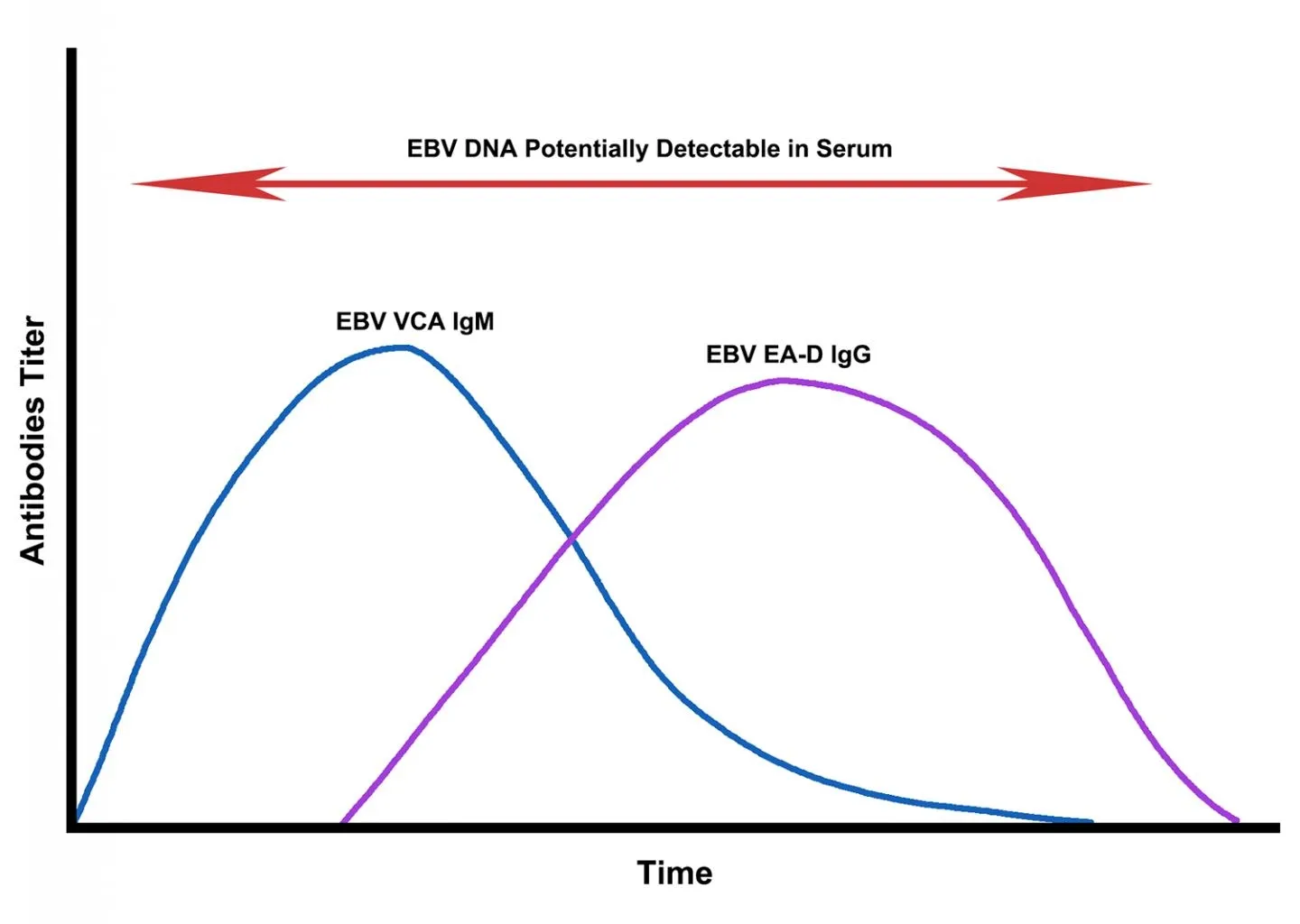
Two recently published studies available on the National Institutes of Health (NIH) website indicate Epstein-Barr virus (EBV) reactivation may play a role both in the development of long COVID symptoms, as well as severe COVID-19 cases.
The first evidence linking EBV reactivation to long COVID symptoms was discovered by Gold et al. (2021) and published in Pathogens. This study can be viewed on the NIH website here: https://www.ncbi.nlm.nih.gov/pmc/articles/PMC8233978/
"We ran Epstein-Barr virus serological tests on COVID-19 patients at least 90 days after testing positive for SARS-CoV-2 infection, comparing EBV reactivation rates of those with long COVID symptoms to those who never experienced long COVID symptoms," said lead study author Jeffrey E. Gold of END
The first evidence linking EBV reactivation to long COVID symptoms was discovered by Gold et al. (2021) and published in Pathogens. This study can be viewed on the NIH website here: https://www.ncbi.nlm.nih.gov/pmc/articles/PMC8233978/
"We ran Epstein-Barr virus serological tests on COVID-19 patients at least 90 days after testing positive for SARS-CoV-2 infection, comparing EBV reactivation rates of those with long COVID symptoms to those who never experienced long COVID symptoms," said lead study author Jeffrey E. Gold of END