Study reveals urban trees suffer more from heat waves and drought than their rural counterparts
The findings have implications for urban forestry and heat island management efforts.
Published 2024-08-13 · Original archive entry · Explore research explainers
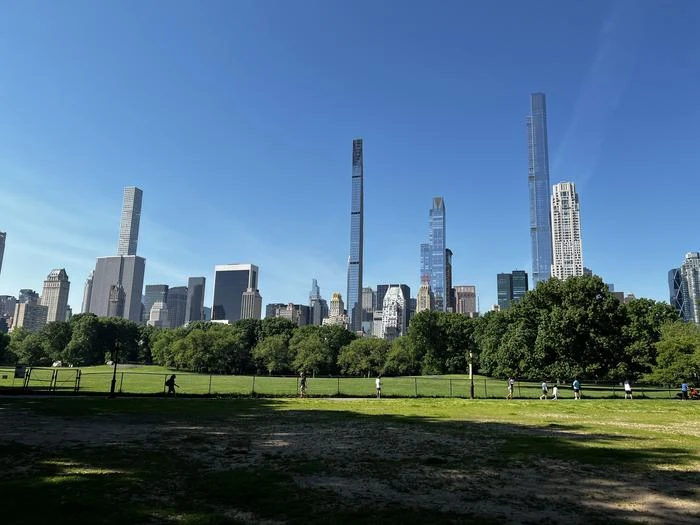
NEW YORK, August 13, 2024 — A recently published study in Ecological Applications details how trees in New York City and Boston are more negatively impacted by heat waves and drought than trees of the same species in nearby rural forests. The finding, made by researchers at the Advanced Science Research Center at the CUNY Graduate Center (CUNY ASRC), highlights the challenges urban trees face in the context of climate change and underscores the importance of tailored urban forestry management as a tool for protecting tree species and reducing urban heat islands.
The research is particularly timely, given the record-breaking increase in global mean temperatures and the ongoing hottest summer on record. As cities continue to grapple with the impacts of climate change, this study provides critical insights into how urban trees' health and the ecosystem services they offer might be jeopardized.
Key Findings:
Urban trees in NYC and Boston experience greater negative impacts from heat waves and drought compared to rural trees. Urban trees' growth rates and carbon storage capabilities are significantly reduced during extreme weather conditions. The authors suspect that the harsh urban environment, characterized by hotter, drier conditions and higher pollution levels, exacerbates the vulnerability of urban trees to climate stress. For their study, researchers used tree cores from urban and rural forests to reconstruct historical growth rates and then compared these with climate data. The aim was to determine if urban trees are more adversely affected by climate stress than their rural counterparts. The study found that urban trees suffer more during periods of heat waves and drought, raising concerns about their long-term health and ability to provide crucial ecosystem services.
“Trees are integral to urban sustainability and climate resiliency strategies, offering benefits such as temperature reduction, stormwater management, recreational spaces, biodiversity support, and improved human health,” said the study’s principal investigator Andrew Reinmann, a professor with the CUNY ASRC’s Environmental Science Initiative and Hunter College’s Department of Geography and Environmental Science. “Understanding why urban trees are more sensitive to climate stress is the next step so that urban planners, forest managers, community groups, and policymakers can develop effective urban forestry plans.”
Such plans might include designing new management protocols that maximize the size of tree planting pits and selecting tree species better suited to urban conditions.
This study received support from The City University of New York (CUNY), the United States Department of Agriculture Forest Services Northern Research Station, Barnard College Summer Research Institute, USDA National Institute of Food and Agriculture and the NSF Research Experience for Undergraduates program.
About the Advanced Science Research Center at the CUNY Graduate Center
The Advanced Science Research Center at the CUNY Graduate Center (CUNY ASRC) is a world-leading center of scientific excellence that elevates STEM inquiry and education at CUNY and beyond. The CUNY ASRC’s research initiatives span five distinctive, but broadly interconnected disciplines: nanoscience, photonics, neuroscience, structural biology, and environmental sciences. The center promotes a collaborative, interdisciplinary research culture where renowned and emerging scientists advance their discoveries using state-of-the-art equipment and cutting-edge core facilities.
END
The research is particularly timely, given the record-breaking increase in global mean temperatures and the ongoing hottest summer on record. As cities continue to grapple with the impacts of climate change, this study provides critical insights into how urban trees' health and the ecosystem services they offer might be jeopardized.
Key Findings:
Urban trees in NYC and Boston experience greater negative impacts from heat waves and drought compared to rural trees. Urban trees' growth rates and carbon storage capabilities are significantly reduced during extreme weather conditions. The authors suspect that the harsh urban environment, characterized by hotter, drier conditions and higher pollution levels, exacerbates the vulnerability of urban trees to climate stress. For their study, researchers used tree cores from urban and rural forests to reconstruct historical growth rates and then compared these with climate data. The aim was to determine if urban trees are more adversely affected by climate stress than their rural counterparts. The study found that urban trees suffer more during periods of heat waves and drought, raising concerns about their long-term health and ability to provide crucial ecosystem services.
“Trees are integral to urban sustainability and climate resiliency strategies, offering benefits such as temperature reduction, stormwater management, recreational spaces, biodiversity support, and improved human health,” said the study’s principal investigator Andrew Reinmann, a professor with the CUNY ASRC’s Environmental Science Initiative and Hunter College’s Department of Geography and Environmental Science. “Understanding why urban trees are more sensitive to climate stress is the next step so that urban planners, forest managers, community groups, and policymakers can develop effective urban forestry plans.”
Such plans might include designing new management protocols that maximize the size of tree planting pits and selecting tree species better suited to urban conditions.
This study received support from The City University of New York (CUNY), the United States Department of Agriculture Forest Services Northern Research Station, Barnard College Summer Research Institute, USDA National Institute of Food and Agriculture and the NSF Research Experience for Undergraduates program.
About the Advanced Science Research Center at the CUNY Graduate Center
The Advanced Science Research Center at the CUNY Graduate Center (CUNY ASRC) is a world-leading center of scientific excellence that elevates STEM inquiry and education at CUNY and beyond. The CUNY ASRC’s research initiatives span five distinctive, but broadly interconnected disciplines: nanoscience, photonics, neuroscience, structural biology, and environmental sciences. The center promotes a collaborative, interdisciplinary research culture where renowned and emerging scientists advance their discoveries using state-of-the-art equipment and cutting-edge core facilities.
END
Attachments