PRESS-NEWS.org - Press Release Distribution
PRESS RELEASES DISTRIBUTION

Single-cell elemental analysis using Inductively Coupled Plasma Mass Spectrometry (ICP-MS)
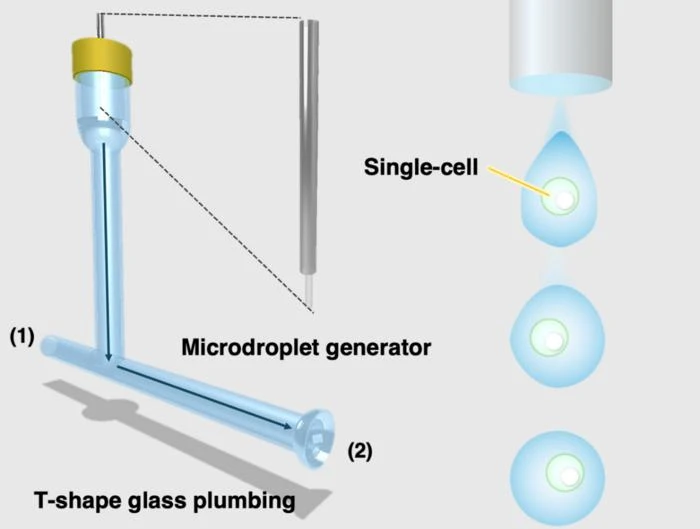
Scientists achieve efficient elemental analysis of human chronic myelogenous leukemia (K562) single cells using ICP-MS and piezo-electric microdroplet generator (µDG)

Single-cell elemental analysis using Inductively Coupled Plasma Mass Spectrometry (ICP-MS)
2025-01-22
(Press-News.org)

Trace metals are crucial for the growth of all living organisms. Understanding the role of these trace metals on the metabolism is essential for maintaining a stable state of the organism. Additionally, human beings are also facing constant exposure to various harmful heavy metals due to various types of pollution. Collectively, these aspects have led to research and development in the field of analytical techniques that can help in identifying the level of these trace metals in our cells.


Inductively coupled plasma mass spectrometry (ICP-MS) is an analytical technique used for the analysis of elemental compositions in various samples including biological samples. In recent times, the single-cell ICP-MS (scICP-MS) technique has been widely used in medical and biological fields for the analysis of single-living cells in bacteria, fungi, microorganisms, plants, and mammals. The sample introduction system of scICP-MS consists of a conventional pneumatic nebulizer and a total consumption spray chamber. A pneumatic nebulizer converts the sample (cell suspension) liquid into a mist.


Although the transport efficiency of traditional scICP-MS analysis using a nebulizer reaches 10% for yeast cells, it cannot be used for mammalian cells owing to their fragile nature.  Chemical fixation is known to enhance the strength of mammalian cells, but it greatly affects the elemental contents, leading to inaccuracy of the analysis. There is thus a need to develop a sample introduction system that does not cause any damage to the mammalian cells.


Toward this end, a group of researchers from Japan has now demonstrated the potential of a microdroplet generator (µDG) as the sample introduction system for the efficient and quantitative elemental analysis of mammalian cells. The team, comprising Assistant Professor Yu-ki Tanaka along with Ms. Hinano Katayama, Ms. Risako Iida, and Professor Yasumitsu Ogra from the Graduate School of Pharmaceutical Sciences, Chiba University, Japan introduced a µDG into the sample introduction system of an ICP-MS, revealing that the system was capable of accurately conducting the elemental analysis. Their study was published on December 2, 2024, in Volume 40 of the Journal of Analytical Atomic Spectrometry.  Elaborating further, Dr. Tanaka says, “Till now, scICP-MS has been applied to bacteria, fungi, plant cells, and red blood cells. We have expanded the potential of scICP-MS technology to mammalian cultured cells, developing a robust analytical technique for measuring elemental content in mammalian cultured cells.” 


In the study, the researchers used two sample introduction systems for particle and cell sample analysis. The first one was the conventional system comprising a concentric glass nebulizer and a total consumption spray chamber. The other system comprised a µDG inserted into the fabricated T-shape glass plumbing, with one end of the glass plumbing being fit to a total consumption spray chamber and the other end being fit to an ICP torch.


The researchers found that the cell transport efficiency increased drastically with the use of µDG. Moreover, they also estimated magnesium, iron, phosphorus, sulfur, and zinc in the K562 cells (also known as human chronic myelogenous leukemia K562 cells) and found that µDG maintained the cell’s original structure in contrast to the conventional system that usually alters the cell’s structure. It is thus highly suited for single-cell elemental analysis since it does not affect the cell’s structure, resulting in highly efficient detection of the cells. “Our findings demonstrate the potential of μDG as a universal sample introduction system in scICP-MS,” explains Asst. Prof. Tanaka.


These findings suggest that the size of cultured K562 cells influenced the shear stress-induced through nebulization, leading to cell damage. An increase in cell size intensifies the shear stress, causing significant damage. The µDG can preserve the structure of K562 cells, resulting in highly efficient detection and quantitative measurement of elemental signals from individual cells.


The ICP-MS technique is widely applicable in environmental monitoring, energy, pharmaceutical, food, and agriculture industries, and clinical research. “One promising social implementation of scICP-MS technology is for the prognosis and diagnosis of diseases. Health conditions can be evaluated by analyzing the elemental composition within the body and even at the level of individual cells. Blood cell samples, which can be easily collected from both patients and healthy individuals, serve as a primary target for diagnostics and prognostics using scICP-MS,” concludes Asst. Prof. Tanaka, optimistically.


About Assistant Professor Yu-ki Tanaka

Dr. Yu-ki Tanaka is an Assistant Professor at the Graduate School of Pharmaceutical Sciences at Chiba University, Japan. He received his Doctor of Science degree from Kyoto University in 2017. His research interests include heavy metals, toxicity, single-cell/particle analysis, and isotopic composition analysis. He is currently working on a method to accurately measure the trace of elements within a single nanoparticle or cell. He has over 30 publications, 1,900 reads and more than 300 citations. He is a member of notable academic societies like the Pharmaceutical Society of Japan, the Japanese Society of Toxicology, and the Japan Society for Plasma Spectrochemistry.

END


[Attachments] See images for this press release:
Single-cell elemental analysis using Inductively Coupled Plasma Mass Spectrometry (ICP-MS)

ELSE PRESS RELEASES FROM THIS DATE:

BioChatter: making large language models accessible for biomedical research

BioChatter: making large language models accessible for biomedical research
2025-01-22
Large language models (LLMs) have transformed how many of us work, from supporting content creation and coding to improving search engines. However, the lack of transparency, reproducibility, and customisation of LLMs remains a challenge that restricts their widespread use in biomedical research.  For biomedical researchers, optimising LLMs for a specific research question can be daunting, because it requires programming skills and machine learning expertise. Such barriers have reduced the adoption of LLMs for many research tasks, including data extraction and analysis. A new publication in Nature Biotechnology introduces BioChatter to help overcome ...

Grass surfaces drastically reduce drone noise making the way for soundless city skies

2025-01-22
The findings, published today in Scientific Reports, show, for the first time, how porous ground treatments can mitigate noise and optimise propellor performance. Lead author Dr Hasan Kamliya Jawahar from the University of Bristol’s aeroacoustic group managed by Professor Mahdi Azarpeyvand was able to demonstrate that porous ground treatments, can significantly reduce noise by up to 30 dB in low-mid frequencies and enhance thrust and power coefficients compared to solid ground surfaces. This suggests that treating roofs of building, ...

Extent of microfibre pollution from textiles to be explored at new research hub

Extent of microfibre pollution from textiles to be explored at new research hub
2025-01-22
A newly established research hub in North East England will explore the extent and environmental impact of microfibre loss from textiles. Microfibre shedding from clothing during machine washing and drying is well known, with the tiny fibres causing harm to wildlife and the environment when they enter soil, air and waterways. Located on Northumbria University’s campus in the centre of Newcastle, the Fibre-fragmentation and Environment Research Hub (FibER Hub) is the result of a collaboration between the University and The Microfibre Consortium (TMC) and will extensively test a wide variety ...

Many Roads Lead to… the embryo

Many Roads Lead to… the embryo
2025-01-22
Is there only one optimal configuration an organism can reach during evolution? Is there a single formula that describes the trajectory towards the optimum? And can we ‘derive’ it in a purely theoretical fashion? A team of researchers, including from the Institute of Science and Technology Austria (ISTA), has answers. Their mathematical model forecasts the ideal body plan of a fruit fly’s early embryo, suggesting that evolution might had many optimal options at its disposal. It is hypothesized that optimization is the secret sauce for many of nature’s fascinating ...

Dining out with San Francisco’s coyotes

Dining out with San Francisco’s coyotes
2025-01-22
As their traditional dining options dwindle and natural areas give way to restaurants, homes and sidewalks, the coyotes of San Francisco are shifting what they eat. Scientists from the University of California, Davis, wanted to understand what San Francisco’s coyotes are eating, and how their diet is changed and shaped by the city’s landscape, which can vary from block to block. Their study, published in the journal Ecosphere, found that the number of restaurants and amount of pavement or “impervious surfaces” within the city heavily influenced what the coyotes ...

What’s the mechanism behind behavioral side effects of popular weight loss drugs?

2025-01-22
Glucagon-like peptide 1 receptor agonists (GLP1RA)—medications for type 2 diabetes and obesity that have recently been making headlines due to a rise in popularity as weight loss agents—have been linked with behavioral side effects. A large population-based analysis in Diabetes, Obesity and Metabolism assessed whether certain genetic variants might help explain these effects. GLP1RA mimic the GLP-1 hormone in the body that helps control insulin and blood glucose levels and promotes feelings of satiety. GLP-1 ...

How employee trust in AI drives performance and adoption

2025-01-22
Many companies are making substantial investments in artificial intelligence (AI), which can enhance decision-making processes, foster innovation, increase productivity, and have other advantages. New research published in the Journal of Management Studies shows that company employees’ perceptions of how well AI performs (cognitive trust) and feelings towards AI (emotional trust) vary, and that these perceptions can affect AI performance and adoption in organizations. Interviews with employees of a medium-sized software development firm revealed four different ...

Does sleep apnea treatment influence patients’ risk of getting into car accidents?

2025-01-22
Sleepiness at the wheel is a significant contributing factor to motor vehicle accidents. A new analysis published in Otolaryngology–Head and Neck Surgery reveals that for people with sleep apnea, getting surgery for their condition may lessen their risk of such accidents compared with using a Continuous Positive Airway Pressure (CPAP) device at night or receiving no treatment. In the analysis of data on 2,832,437 patients with obstructive sleep apnea, 3.4% of patients who underwent surgery were in a car accident at any point following their diagnosis, compared with 6.1% of those using a CPAP and 4.7% of those not receiving any treatment. Patients ...

Do minimum wage hikes negatively impact students’ summer employment?

2025-01-22
New research in Contemporary Economic Policy indicates that rising minimum wages in a state are associated with reduced summer employment for college students, the time when students tend to work the most. The study, which involved data from a public university and quarterly work records from Washington State, found that college students’ employment and hours worked decrease as minimum wages rise in the summer quarter. Students experiencing the largest reductions are those with little or no work experience ...

Exposure to stress during early pregnancy affects offspring into adulthood

Exposure to stress during early pregnancy affects offspring into adulthood
2025-01-22
Maternal stress hormone levels during early pregnancy can have a lasting effect on the stress system of the offspring. The results of a long-term study on wild Assamese macaques in Thailand indicate that maternal stress in the first half of pregnancy is particularly relevant. Elevated stress hormones later during pregnancy or after birth did not have the same effects. The long-term study conducted by the University of Göttingen and the German Primate Center – Leibniz Institute for Primate Research provides important insights into the ...

LAST 30 PRESS RELEASES:

New knowledge on heritability paves the way for better treatment of people with chronic inflammatory bowel disease

Under the Lens: Microbiologists Nicola Holden and Gil Domingue weigh in on the raw milk debate

Science reveals why you can’t resist a snack – even when you’re full

Kidney cancer study finds belzutifan plus pembrolizumab post-surgery helps patients at high risk for relapse stay cancer-free longer

Alkali cation effects in electrochemical carbon dioxide reduction

Test platforms for charging wireless cars now fit on a bench

$3 million NIH grant funds national study of Medicare Advantage’s benefit expansion into social supports

Amplified Sciences achieves CAP accreditation for cutting-edge diagnostic lab

Fred Hutch announces 12 recipients of the annual Harold M. Weintraub Graduate Student Award

Native forest litter helps rebuild soil life in post-mining landscapes

Mountain soils in arid regions may emit more greenhouse gas as climate shifts, new study finds

Pairing biochar with other soil amendments could unlock stronger gains in soil health

Why do we get a skip in our step when we’re happy? Thank dopamine

UC Irvine scientists uncover cellular mechanism behind muscle repair

Platform to map living brain noninvasively takes next big step

Stress-testing the Cascadia Subduction Zone reveals variability that could impact how earthquakes spread

We may be underestimating the true carbon cost of northern wildfires

Blood test predicts which bladder cancer patients may safely skip surgery

Kennesaw State's Vijay Anand honored as National Academy of Inventors Senior Member

Recovery from whaling reveals the role of age in Humpback reproduction 

Can the canny tick help prevent disease like MS and cancer?

Newcomer children show lower rates of emergency department use for non‑urgent conditions, study finds

Cognitive and neuropsychiatric function in former American football players

From trash to climate tech: rubber gloves find new life as carbon capturers materials

A step towards needed treatments for hantaviruses in new molecular map

Boys are more motivated, while girls are more compassionate?

Study identifies opposing roles for IL6 and IL6R in long-term mortality

AI accurately spots medical disorder from privacy-conscious hand images

Transient Pauli blocking for broadband ultrafast optical switching

Political polarization can spur CO2 emissions, stymie climate action

[Press-News.org] Single-cell elemental analysis using Inductively Coupled Plasma Mass Spectrometry (ICP-MS)
Scientists achieve efficient elemental analysis of human chronic myelogenous leukemia (K562) single cells using ICP-MS and piezo-electric microdroplet generator (µDG)