The scientist who co-discovered a pain signal now joins the inventors' elite
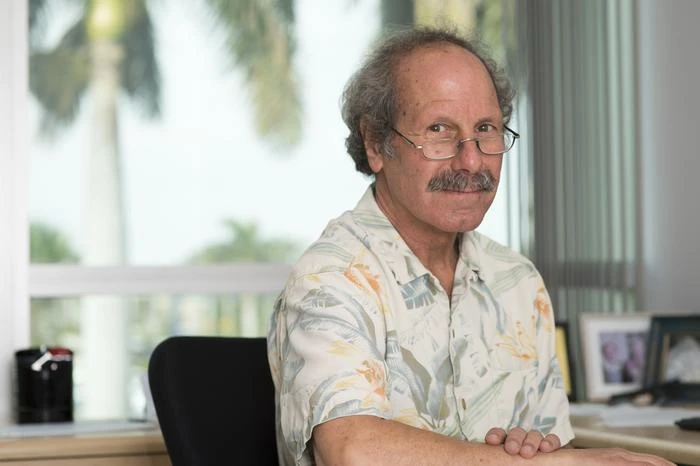
Florida Atlantic University, Charles E. Schmidt College of Medicine / National Academy of Inventors
In 1995, a researcher at SRI International in Menlo Park, California, helped identify something the field of pain science had been hunting for years: the natural molecule that activates the fourth and final member of the opioid receptor family. The molecule was called nociceptin, and its discovery opened a new corridor in the neurobiology of pain, reward, and addiction. The researcher was Lawrence Toll.
Three decades later, Toll — now a professor of biomedical science at Florida Atlantic University’s Charles E. Schmidt College of Medicine — has been named a senior member of the National Academy of Inventors (NAI), a distinction that recognizes active researchers whose patented work has produced tangible societal or economic impact. He is one of 230 inventors inducted in the 2026 class, drawn from 82 institutions worldwide and collectively holding more than 2,000 U.S. patents.
It’s a career arc worth tracing — not because the honor itself is unusual for someone of Toll’s stature, but because the path from a basic neuroscience discovery to a portfolio of nine issued or pending patents illustrates how fundamental research can slowly, stubbornly evolve into something with clinical reach.
The fourth receptor
By the early 1990s, scientists understood that opioid drugs worked by binding to three known receptor types in the brain: mu, delta, and kappa. Each played a distinct role in pain modulation, mood, and reward. But there were hints of a fourth receptor — one that didn’t quite fit the pharmacology of any known opioid ligand. In 1994, the receptor itself was cloned. The question became: what natural molecule does the body produce to activate it?
Toll, working alongside collaborators, answered that question in 1995. The molecule they identified — nociceptin, also called orphanin FQ — turned out to be the endogenous ligand for the nociceptin/orphanin FQ (NOP) receptor. Unlike classic opioid peptides, nociceptin didn’t behave in straightforwardly analgesic ways. Depending on where it acted in the nervous system, it could either dampen or amplify pain signaling. It also influenced stress, anxiety, and drug reward pathways.
That complexity made the NOP system both fascinating and difficult to exploit therapeutically. But it also meant that any drug targeting the receptor might sidestep some of the catastrophic problems associated with traditional opioids — respiratory depression, tolerance, abuse. Decades of research since Toll’s co-discovery have explored exactly that possibility, with NOP-targeted compounds now in various stages of preclinical and clinical investigation.
From receptor biology to patents
Toll’s work didn’t stop at nociceptin. Over the years, his laboratory has pursued a second major line of research: nicotinic acetylcholine receptors, the protein complexes through which nicotine exerts its addictive grip. These receptors come in multiple subtypes, and Toll’s group has developed selective ligands — molecules designed to bind specific subtypes implicated in nicotine addiction and other substance use disorders.
The approach is methodical and multi-layered. His lab integrates molecular biology, receptor pharmacology, imaging, behavioral animal studies, and medicinal chemistry. The goal is to identify compounds that can modulate pain or addiction pathways with precision, avoiding the blunt pharmacological effects that have made existing treatments problematic.
Over more than 30 years, that work has produced over 130 publications and nine patents (issued or pending), supported by continuous funding from the National Institute on Drug Abuse (NIDA). Continuous NIDA funding for three decades is itself a notable achievement — federal grant renewal is competitive, and sustained support reflects both productivity and the perceived importance of the research direction.
What NAI senior membership actually means
The NAI’s senior member program, launched in 2018, recognizes faculty, scientists, and administrators at member institutions who have produced patented and commercialized technologies. It sits below the NAI’s fellow designation but still represents a selective tier: currently, 945 senior members hold a combined total of more than 11,000 U.S. patents.
The program was established under the guidance of Sethuraman Panchanathan, former director of the National Science Foundation and an NAI board member. Its purpose is to highlight the translation pipeline — the often-overlooked process by which academic research becomes intellectual property, then licensed technology, then (sometimes) an actual product or clinical tool.
For Toll, the designation acknowledges not just a single patent but a sustained effort to convert basic discoveries into therapeutic leads. His nociceptin work helped launch an entire subfield. His nicotinic receptor work has produced tool compounds used by other researchers. The patents themselves represent waypoints in a longer journey from bench to bedside — one that, in pain and addiction research, remains stubbornly incomplete.
The problem that won’t go away
It’s worth pausing to consider why Toll’s particular area of expertise matters so urgently. The United States continues to face an opioid crisis that has killed more than half a million people since 1999. Current treatments for opioid use disorder — methadone, buprenorphine, naltrexone — work for many patients but carry their own limitations. Chronic pain, meanwhile, remains notoriously difficult to treat without invoking the very pathways that create addiction risk.
The NOP receptor system, which Toll helped reveal, represents one of the few genuinely novel pharmacological angles in this space. Compounds that target NOP receptors might offer pain relief without the respiratory depression that makes traditional opioid overdoses lethal. They might modulate reward circuitry without triggering the euphoria that drives compulsive use. These are not certainties — they are hypotheses being tested across multiple laboratories worldwide, building on foundational work that Toll and his collaborators laid down decades ago.
Similarly, the pursuit of subtype-selective nicotinic receptor ligands addresses a gap in addiction medicine. Nicotine addiction remains one of the leading preventable causes of death globally, and current pharmacotherapies — including varenicline (Chantix) — don’t work for everyone. More precise molecular tools could eventually yield more effective cessation aids.
A career in motion
Toll’s trajectory itself reads like a tour of American biomedical research infrastructure. He earned his Ph.D. in biological chemistry from UCLA in 1978, then completed postdoctoral fellowships at UCLA and Johns Hopkins University, where he trained under Solomon Snyder — the neuroscientist whose own work on opioid receptors and neurotransmitter systems shaped the field. From 1981 to 2011, Toll worked at SRI International, the nonprofit research institute in Silicon Valley. He also held extended research appointments in France, at the Centre National de la Recherche Scientifique in Toulouse and the University of Louis Pasteur in Strasbourg.
In 2011, he moved to Torrey Pines Institute for Molecular Studies as director of neuropharmacology before joining FAU in 2018. At FAU, he is a member of the Stiles-Nicholson Brain Institute, which focuses on neuroscience research spanning neurodegeneration, neurotrauma, and substance use disorders.
Toll and the rest of the 2026 NAI senior member class will be formally inducted at the academy’s 15th annual conference, scheduled for June 1–4 in Los Angeles.
When asked about the recognition, Toll pointed not to himself but to the cumulative effort. His work in pain management, addiction, and drug discovery, he noted, reflects decades of collaboration — and the long, iterative process of turning scientific observations into something that might eventually reach a patient.
That “might eventually” is the honest part. In pain and addiction research, the distance between a promising receptor target and an approved drug is measured in years, often decades. Toll has been walking that distance longer than most. The NAI designation is a milestone along the way — not a finish line.
Source: Florida Atlantic University, Charles E. Schmidt College of Medicine. Lawrence Toll is a member of the FAU Stiles-Nicholson Brain Institute. The 2026 NAI Senior Member Induction Ceremony will take place June 1–4 in Los Angeles at the NAI’s 15th annual conference.