Medicine Technology 🌱 Environment Space Energy Physics Engineering Social Science Earth Science Science
Science 2014-10-29

Planck 2013 results

Astronomy & Astrophysics is publishing a special feature of 31 articles describing the data gathered by Planck over 15 months of observations and released by ESA and the Planck Collaboration in March 2013. This series of papers presents the initial scientific results extracted from this first Planck dataset. The Planck satellite was launched in May 2009. With the highest accuracy to date, it measures the remnants of the radiation that filled the Universe immediately after the Big Bang. It is the oldest light in the Universe, emitted when it was 380000 years old. This ...
Read more →
Medicine 2014-10-29

BGI Tech and Hebei Agricultural University complete the genome sequencing of the Jujube tree

October 27, 2014 — Cambridge, MA and Hebei, China — BGI Tech and Hebei Agricultural University jointly announced the complete, high quality sequencing of the Jujube genome. Jujube is the most economically important member of the Rhamnaceae family, and the Jujube genome is particularly difficult to sequence due the high level of heterozygosity and other complicating factors. It is the first time that a genome in the Rhamnaceae (Buckthorn) family has been sequenced. This study has been recently published in Nature Communications. Jujube is a major commercial ...
Read more →
Gentle caffeine boost for premature babies
Science 2014-10-29

Gentle caffeine boost for premature babies

The development of minimally and even non-invasive technologies is increasing in the medical field. It is now possible, for instance, to carry out a range of operative procedures using keyhole surgery with minimal use of the scalpel, leaving only tiny scars as a result. Similar opportunities are now becoming available when providing doses of active agents to patients – instead of using injections or probes to deliver drugs, it will in future be possible to supply them via a plaster which continuously, gently and painlessly delivers the required dosage through the ...
Read more →
Science 2014-10-29

Evolution of competitiveness

Virtually all organisms in the living world compete with members of their own species. However, individuals differ strongly in how much they invest into their competitive ability. Some individuals are highly competitive and eager to get access to high-quality resources, while others seem to avoid competition, instead making prudent use of the lower-quality resources that are left over for them. Moreover, the degree of competitiveness in animal and human societies seems to fluctuate considerably over time. A theoretical study published in "Nature Communications" this week ...
Read more →
Science 2014-10-29

Ghrelin stimulates an appetite for drinking alcohol

Philadelphia, PA, October 29, 2014 – Ghrelin is a hormone released by the stomach and it stimulates appetite and food intake. Alcohol is commonly viewed as a psychoactive substance that primarily affects brain function, but it is also a highly caloric food. This knowledge, combined with findings from animal studies, led researchers to the hypothesis that ghrelin has the potential to stimulate alcohol craving. Dr. Lorenzo Leggio and his colleagues tested this in humans and found that, as they had anticipated, alcohol craving was increased in heavy drinkers following ...
Read more →
Medicine 2014-10-29

Where you live doesn't matter if you have heart disease, study finds

TORONTO, ON, Oct. 28, 2014 — People living in rural areas are at no greater risk of dying from heart disease than their urban counterparts, according to a new study by researchers at Women's College Hospital and the Institute for Clinical Evaluative Sciences (ICES). The study, the first to examine outpatient quality of care between urban and rural communities, counters existing research, which suggested gaps in care for those living in rural areas. "Research has long suggested people with heart disease in rural areas are at a disadvantage when it comes to access ...
Read more →
Medicine 2014-10-29

Genome sequenced of enterovirus D68 circulating in St. Louis

Researchers at Washington University School of Medicine in St. Louis have sequenced the genome of enterovirus D68 sampled from patients treated at St. Louis Children's Hospital. Nationwide, the virus has spread rapidly in recent months and caused severe respiratory illness in young children, with some patients requiring hospitalization. "Having the DNA sequence of this virus enables additional research," said senior author Gregory A. Storch, MD, the Ruth L. Siteman Professor of Pediatrics. "It can be used to create better diagnostic tests. It also may help us understand ...
Read more →
Environment 2014-10-29

CU Denver study says upgrading infrastructure could reduce flood damage

DENVER (Oct. 29, 2014) – The severe flooding that devastated a wide swath of Colorado last year might have been less destructive if the bridges, roads and other infrastructure had been upgraded or modernized, according to a new study from the University of Colorado Denver. "People need to understand the importance and seriousness of infrastructure," said Jimmy Kim, PhD, associate professor of structural engineering at the CU Denver College of Engineering and Applied Science and lead author the study. "There is an assumption that a bridge will stand forever and that's ...
Read more →
Medicine 2014-10-29

Blood test developed to diagnose early onset Alzheimer's disease

The research team previously identified that changes in the brain occur two decades before patients show signs of dementia. These changes can be detected through expensive brain imaging procedures. The new early detection blood-test could predict these changes and a person's risk of developing AD much earlier than is currently possible. The blood test has the potential to improve prediction for AD to 91 per cent accuracy. However, this needs to be further tested in a larger population across three to five years, due to AD being a progressive disease. In an initial ...
Read more →
New solar power material converts 90 percent of captured light into heat
Environment 2014-10-29

New solar power material converts 90 percent of captured light into heat

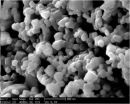
A multidisciplinary engineering team at the University of California, San Diego developed a new nanoparticle-based material for concentrating solar power plants designed to absorb and convert to heat more than 90 percent of the sunlight it captures. The new material can also withstand temperatures greater than 700 degrees Celsius and survive many years outdoors in spite of exposure to air and humidity. Their work, funded by the U.S. Department of Energy's SunShot program, was published recently in two separate articles in the journal Nano Energy. By contrast, current ...
Read more →
Why some butterflies sound like ants
Science 2014-10-29

Why some butterflies sound like ants

Washington D.C, October 29, 2014 -- Ant nests can offer a lot to organisms other than just ants. They are well-protected, environmentally-stable and resource-rich spaces -- in many ways everything a tiny creature could ask for in a home. So long as you can live with an army of ants of course. For the thousands of species of insects that squat inside ant nests, survival means finding ways to live with the ants -- by foiling the chemical cues ants use to distinguish friend from foe, for instance. Now a team of scientists from the University of Turin in Italy have been ...
Read more →
Medicine 2014-10-29

New scientific review reveals emerging and established health benefits of whole grain oats

CHICAGO, IL, OCTOBER, 29, 2014 – According to a new, wide-reaching collection of scientific reviews published in the October 2014 supplement issue of the British Journal of Nutrition, oats may play an important role in improving satiety, diet quality and digestive, cardiovascular and general metabolic health. In the supplement issue, entitled "Oats, More Than Just a Whole Grain," scientists from around the world explore the oat from agriculture and sustainability to nutrition policy and opportunity and new insights in nutritional science that go beyond cardiovascular ...
Read more →
Science 2014-10-29

Black Republicans put most faith in US government

Black Republicans trust the United States government more than other political groups, finds a new study from the University of British Columbia, ahead of the mid-term U.S. elections to be held on November 4. Using election data from 1958 – 2012, the study measures the role race plays in determining levels of government trust for black and white Americans. While both groups show similar levels of political trust, when party lines are factored in, black Republicans are revealed to be the most faithful. "Being both black and Republican is seen by some as going against ...
Read more →
Science 2014-10-29

Women who took part in VOICE speak up about why they didn't use HIV prevention products

CAPE TOWN, October 29, 2014 – Many of the women at first acted surprised. Some insisted the blood tests were wrong. But most conveyed to researchers why they had not used the study products assigned to them as participants in VOICE, a large HIV prevention trial that, as a likely consequence, did not find any of the three products that were tested to be effective. The women were among 127 former VOICE participants who, as part of a behavioral sub-study called VOICE D, agreed to take part in in-depth interviews and/or focus group discussions after learning the results ...
Read more →
Kidney cancer in Central Europe
Medicine 2014-10-29

Kidney cancer in Central Europe

New research by the international Cancer Genomics of the Kidney consortium (CAGEKID) reveals an important connection between kidney cancer and exposure to aristolochic acid, an ingredient in some herbal remedies. The findings, published in Nature Communications, have important implications for public health. Kidney cancer kills more than 140,000 people every year, and in Central Europe incidence rates have been increasing dramatically. CAGEKID, part of the International Cancer Genome Consortium (ICGC), has been studying the genetic causes of this disease in Europe. The ...
Read more →
Medicine 2014-10-29

Study sheds light on genetic architecture of kidney cancer

A new study on a large cohort of kidney cancer patients in Europe sheds light on the genetic architecture of the disease -- and reveals an apparent link between exposure to aristolochic acid and incidence of kidney cancer, particularly in Romania. The research, by an international team led by scientists from the McGill University and Genome Quebec Innovation Centre in Montreal, underscores the importance of investigating possible sources of exposure to aristolochic acid. The compound, found in plants of the Aristolochia genus, also has been suspected of causing a kidney ...
Read more →
Science 2014-10-29

ECG on the run: Continuous ECG surveillance of marathon athletes is feasible

Sophia Antipolis, 20 October 2014. The condition of an athlete's heart has for the first time been accurately monitored throughout the duration of a marathon race. The real-time monitoring was achieved by continuous electrocardiogram (ECG) surveillance and data transfer over the public mobile phone network to a telemedicine centre along the marathon route. This new development in cardiac testing in endurance athletes, said investigators, "would allow instantaneous diagnosis of potentially fatal rhythm disorders". Following trails in two marathon races, the investigators ...
Read more →
Medicine 2014-10-29

Diets high in fruit, vegetables, whole grains and nuts among factors to lower first-time stroke risk

Eating Mediterranean or DASH-style diets, regularly engaging in physical activity and keeping your blood pressure under control can lower your risk of a first-time stroke, according to updated AHA/ASA guideline published in the American Heart Association's journal Stroke. "We have a huge opportunity to improve how we prevent new strokes, because risk factors that can be changed or controlled — especially high blood pressure — account for 90 percent of strokes," said James Meschia, M.D., lead author of the study and professor and chairman of neurology at the ...
Read more →
MRI identifies brain abnormalities in chronic fatigue syndrome patients
Medicine 2014-10-29

MRI identifies brain abnormalities in chronic fatigue syndrome patients

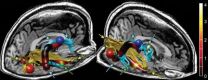
OAK BROOK, Ill. – Researchers using a combination of different imaging techniques have found structural abnormalities in the brains of people with chronic fatigue syndrome (CFS), according to a new study published online in the journal Radiology. The results suggest a potential role for imaging in diagnosing and treating the condition. CFS is characterized by profound fatigue and "brain fog" that do not improve with bed rest, lasting for at least six months. The condition affects more than 1 million adults and children in the United States, according to the Centers ...
Read more →
Medicine 2014-10-29

Stanford study finds brain abnormalities in chronic fatigue patients

An imaging study by Stanford University School of Medicine investigators has found distinct differences between the brains of patients with chronic fatigue syndrome and those of healthy people. The findings could lead to more definitive diagnoses of the syndrome and may also point to an underlying mechanism in the disease process. It's not uncommon for CFS patients to face several mischaracterizations of their condition, or even suspicions of hypochondria, before receiving a diagnosis of CFS. The abnormalities identified in the study, to be published Oct. 29 in Radiology, ...
Read more →
Medicine 2014-10-29

Prostate cancer medications linked with increased risk of heart-related deaths in men with cardiovascular problems

A new study has found that certain prostate cancer medications are linked with an increased risk of dying from heart-related causes in men with congestive heart failure or prior heart attacks. Published in BJU International, the findings will help doctors and patients weigh the benefits and risks of the drugs. Androgen deprivation therapy (ADT), which reduces levels of male hormones in the body to prevent them from stimulating cancer cells, is a mainstay of treatment for prostate cancer. Despite its anticancer effects, ADT has been associated with heart problems, including ...
Read more →
Medicine 2014-10-29

New frailty test predicts risk of poor outcomes in elderly patients

SAN FRANCISCO: A simplified frailty index created by surgeons at Wayne State University School of Medicine in Detroit, Mich., is a reliable tool for assessing risk of mortality and serious complications in older patients considering total hip and knee replacement procedures, according to new study findings presented today at the 2014 Clinical Congress of the American College of Surgeons. As more seniors stay healthier longer, elective operations such as hip and knee replace-ments are becoming more common. Traditionally, a person's eligibility for surgery has been based ...
Read more →
Science 2014-10-29

Poor access to general surgeons increases the risk of ruptured appendix for young children

SAN FRANCISCO: Delayed treatment for appendicitis can often lead to a ruptured appendix. That's exactly what is more likely to happen to many children in North Carolina if they have to delay getting treatment because of poor access to general surgeons, according to new study findings presented this week at the American College of Surgeons 2014 Clinical Congress. Appendicitis is a common condition, but previous research has shown that complications from the condition may be directly tied to living in an area without enough general surgeons. Findings from a May 2014 ...
Read more →
Global infection outbreaks, unique diseases rising since 1980
Medicine 2014-10-29

Global infection outbreaks, unique diseases rising since 1980

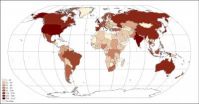
PROVIDENCE, R.I. [Brown University] — Enterovirus. Tuberculosis. Cholera. Measles. Various strains of the flu and hepatitis. The number of infectious disease outbreaks and the number of unique illnesses causing them appear to be increasing around the globe, according to a new Brown University analysis of more than 12,000 outbreaks affecting 44 million people worldwide over the last 33 years. Menacing as that may sound, these preliminary findings also reveal an encouraging trend. On a per capita basis, the impact of the outbreaks is declining. In other words, even ...
Read more →
Science 2014-10-29

The bee's knees for identifying genetic triggers of novel adult traits

Scientists have long sought to identify the specific DNA changes that can trigger new traits, allowing species to adapt. But when animals develop a new trait, are the mutations within the part of the DNA that makes proteins, or, in the master switches that control the gene, modulating its activity to turn on or off? For development of the embryo, it is usually the master control regions of a gene that dominate, but what about in an adult? Jasper et al. found that adults play by a different set of rules, relying on the contributions of novel genes---called taxonomically ...
Read more →