Medicine Technology 🌱 Environment Space Energy Physics Engineering Social Science Earth Science Science
Social Science 2014-05-03

DHA during pregnancy does not appear to improve cognitive outcomes for children

Although there are recommendations for pregnant women to increase their intake of the omega-3 fatty acid docosahexaenoic acid (DHA) to improve fetal brain development, a randomized trial finds that prenatal DHA supplementation did not result in improved cognitive, problem-solving or language abilities for children at four years of age, according to the study in the May 7 issue of JAMA, a theme issue on child health. This issue is being released early to coincide with the Pediatric Academic Societies Annual Meeting. Maria Makrides, B.Sc., B.N.D., Ph.D., of the South Australian ...
Read more →
Science 2014-05-03

Low rate of cholesterol testing for children and adolescents

Although some guidelines recommend lipid screening for children and adolescents of certain ages, data indicate that only about 3 percent are having their cholesterol tested during health visits, according to a study in the May 7 issue of JAMA, a theme issue on child health. This issue is being released early to coincide with the Pediatric Academic Societies Annual Meeting. Abnormal lipid values occur in 1 in 5 U.S. children and adolescents, and are associated with cardiovascular disease in adulthood. Universal pediatric lipid screening is advised by the National Heart, ...
Read more →
Medicine 2014-05-03

Study examines effect of receiving Tdap vaccine during pregnancy

A preliminary study finds that receipt of the tetanus toxoid, reduced diphtheria toxoid, and acellular pertussis (Tdap) vaccine in the third trimester of pregnancy did not increase the risk of adverse events for the mother or infant, according to a study in the May 7 issue of JAMA, a theme issue on child health. In addition, the authors found high concentrations of pertussis antibodies in infants during the first 2 months of life, a period during which infants are at the highest risk of pertussis-associated illness or death. This issue is being released early to coincide ...
Read more →
Medicine 2014-05-03

Medication does not lower risk of fungal infection, death among ELBW infants

Use of the antifungal medication fluconazole for six weeks for extremely low birth-weight infants did not significantly reduce the risk of death or invasive candidiasis, a serious infection that occurs when candida (a type of fungus) enters the bloodstream and spreads through the body, according to a study in the May 7 issue of JAMA, a theme issue on child health. This issue is being released early to coincide with the Pediatric Academic Societies Annual Meeting. Invasive candidiasis is an important cause of infection in premature infants; despite treatment with antifungal ...
Read more →
Medicine 2014-05-03

Outcomes of steroid therapy following surgery for infants with bile duct disorder

Among infants who underwent surgery to repair bile ducts that do not drain properly (biliary atresia), the administration of high-dose steroid therapy following surgery did not significantly improve bile drainage after 6 months, although a small clinical benefit could not be excluded, according to a study in the May 7 issue of JAMA, a theme issue on child health. This issue is being released early to coincide with the Pediatric Academic Societies Annual Meeting. Biliary atresia progresses to end-stage liver disease (cirrhosis) in more than 70 percent of affected children ...
Read more →
Medicine 2014-05-03

Environmental factors as important as genes in understanding autism

Environmental factors are more important than previously thought in understanding the causes of autism, and equally as important as genes, according to the largest study to date to look at how autism runs in families. The study also shows that children with a brother or sister with autism are 10 times more likely to develop autism; 3 times if they have a half-brother or sister; and 2 if they have a cousin with autism, providing much needed information for parents and clinicians for assessing individual risk. The study, which looked at over 2 million people, was led ...
Read more →
Medicine 2014-05-03

Steroids after surgery do not help infants with rare liver disease

Steroids after surgery do not help infants with rare liver disease Infants with biliary atresia – a rare liver disease – did not benefit from corticosteroid treatment after bile duct surgery and could face more harm, according to a study funded by the National Institutes of Health. Results were published online May 3 in the Journal of the American Medical Association to coincide with the Pediatric Academic Societies annual meeting. In biliary atresia, inflammation leads to blockage of the large bile ducts. Bile becomes trapped, causing damage to the liver and ...
Read more →
Science 2014-05-03

Despite recommendations for safer sleeping, infant deaths persist

About 4,000 babies die each year from sleep-related deaths involving suffocation and strangulation in beds, despite recommendations by the American Academy of Pediatrics that infants always be placed on their backs to sleep, and that they share a room with parents but not a bed. These findings will be presented at the Pediatric Academic Societies (PAS) Annual Meeting taking place May 3-6, 2014 in Vancouver, BC. According to the study, these deaths from SIDS or SUID (sudden unexpected infant death) are seen more often among black families. "We found that many infants ...
Read more →
Science 2014-05-03

Vibrating capsule shows promising results in treating chronic constipation

Chicago, IL (May 3, 2014) — An oral capsule that vibrates as it moves through the digestive tract has shown notable promise as a non-pharmacological treatment for constipation, according to new research presented today at Digestive Disease Week® (DDW). In the pilot study, the vibrating capsule was found to nearly double the weekly bowel movements of patients suffering from chronic idiopathic constipation (CIC) and constipation predominant irritable bowel syndrome (C-IBS). "Despite the widespread use of medication to treat constipation, nearly 50 percent of patients are ...
Read more →
Medicine 2014-05-03

Poverty threatens long-term health of children

VANCOUVER, BRITISH COLUMBIA – Pediatricians, social scientists, economists and policy experts will come together on Saturday, May 3, to discuss the critical problem that childhood poverty presents in the U.S. – and steps to end poverty. The group will take part in a state-of the-art plenary session titled 'Childhood Poverty and Its Consequences: Potential Solutions," at the Pediatric Academic Societies (PAS) annual meeting in Vancouver, British Columbia. National and international experts will discuss ways to address poverty using government economic policy, innovative ...
Read more →
Medicine 2014-05-03

Supermarket access key ingredient in obesity programs

VANCOUVER, BRITISH COLUMBIA – Living close to a supermarket appears to be a key factor in the success of interventions to help obese children eat better and improve their weight, according to a study to be presented Saturday, May 3, at the Pediatric Academic Societies (PAS) annual meeting in Vancouver, British Columbia, Canada. Urban neighborhoods and rural towns without access to fresh, healthy and affordable food are known as food deserts. Instead of supermarkets and grocery stores, food deserts sometimes have only fast-food restaurants and convenience stores. Few ...
Read more →
Social Science 2014-05-03

Using substances at school may be cry for help

VANCOUVER, BRITISH COLUMBIA – When teens are caught drinking or using marijuana at school, a trip to the dean's office may not suffice. These students also should be screened for exposure to trauma, mental health problems and other serious health risks, according to a study to be presented Saturday, May 3, at the Pediatric Academic Societies (PAS) annual meeting in Vancouver, British Columbia, Canada. Researchers found that using substances at school was associated with increased odds of serious problems such as depression, intimate partner violence and attempting suicide. "At-school ...
Read more →
Science 2014-05-03

Many parents don't follow safe infant sleep practices

VANCOUVER, BRITISH COLUMBIA – Each year, 4,000 babies die unexpectedly during sleep time from sudden infant death syndrome, accidental suffocation or unknown causes. To keep infants safe, the American Academy of Pediatrics advises caregivers to put babies to sleep on their backs and avoid sharing a bed, among other practices. Many families, however, are not following this advice, according to a study to be presented Saturday, May 3, at the Pediatric Academic Societies (PAS) annual meeting in Vancouver, British Columbia, Canada. Researchers surveyed a nationally representative ...
Read more →
Science 2014-05-03

Many infants still not placed on their backs to sleep

VANCOUVER, BRITISH COLUMBIA – Since 1994, parents have been urged to put their babies to sleep on their backs to reduce the risk of sudden infant death syndrome (SIDS). It appears many caregivers have not gotten the message, and health care providers have not done enough to educate families. Rates of supine sleeping (being placed on the back for sleep) are as low as 50 percent in some states, according to a study to be presented Saturday, May 3, at the Pediatric Academic Societies (PAS) annual meeting in Vancouver, British Columbia, Canada. In addition, only about two-thirds ...
Read more →
Science 2014-05-03

Nightmares may signal a child is being bullied

VANCOUVER, BRITISH COLUMBIA – Many children who are bullied suffer in silence. The trauma can lead to anxiety, depression, psychotic episodes and even suicide. There may be a way to identify victims of bullying before they experience serious mental health problems, according to a study to be presented Saturday, May 3, at the Pediatric Academic Societies (PAS) annual meeting in Vancouver, British Columbia, Canada. Researchers from the University of Warwick in the United Kingdom found that nightmares or night terrors were more common in 12-year-olds who had reported ...
Read more →
Medicine 2014-05-03

Discrimination associated with mental health woes in black teens

VANCOUVER, BRITISH COLUMBIA – The vast majority of African-American and Afro-Caribbean youth face racial discrimination, and these experiences are associated with an increased risk of mental health problems, according to a study to be presented Saturday, May 3, at the Pediatric Academic Societies (PAS) annual meeting in Vancouver, British Columbia, Canada. "Sixty years after Brown vs. Board of Education, racism remains a toxic stressor commonly experienced by youth of color," said lead author Lee M. Pachter, D.O., FAAP. "The fact that these experiences are encountered ...
Read more →
Science 2014-05-03

Study explores why gay, lesbian teens binge drink

VANCOUVER, BRITISH COLUMBIA – Higher rates of binge drinking by lesbian and gay adolescents compared to their heterosexual peers may be due to chronic stress caused by difficult social situations, according to a study to be presented Saturday, May 3, at the Pediatric Academic Societies (PAS) annual meeting in Vancouver, British Columbia, Canada. Research has shown that lesbian and gay people experience higher rates of physical and mental health problems. One explanation for these disparities is minority stress. According to this theory, chronic stress due to discrimination, ...
Read more →
Medicine 2014-05-03

Smoking during pregnancy may raise risk for heart defects in babies

VANCOUVER, BRITISH COLUMBIA – Women who smoke during pregnancy may be putting their newborns at risk for congenital heart defects, and the more they smoke, the higher the risk, according to a study to be presented Saturday, May 3, at the Pediatric Academic Societies (PAS) annual meeting in Vancouver, British Columbia, Canada. Cigarette smoking during pregnancy has been linked to many birth defects, such as cleft lips and palates, and missing and deformed limbs. Some studies also suggest maternal smoking may be associated with heart defects. The authors of this study ...
Read more →
Social Science 2014-05-03

Study shows lower verbal test score for toddlers who play non-educational games on touch screens

VANCOUVER, BC --A recent study by pediatricians from the Cohen Children's Medical Center of New York examined infants 0-3 years old that used touch-screen devices to determine if their use was of any educational benefit to infants and toddlers. The study showed that children who played non-educational games using touch-screen devices had lower verbal scores upon testing. The results also showed that although the majority of parents cited in the study believed their children received educational benefits by using smart phones, readers and tablets, there ...
Read more →
Medicine 2014-05-03

Nearly 50 percent of M.D.s believe diversion of ADHD stimulant medications among teens is a problem

VANCOUVER, BC – Two recent studies by investigators at the Cohen Children's Medical Center of New York examined physicians' perceptions and knowledge of diversion of stimulant medications for Attention Deficit Hyperactivity Disorder (ADHD) as well as practices physicians use to prevent diversion among their patients prescribed these medications. The results showed that while almost half of all physicians surveyed believe diversion is common among teens with ADHD, the majority never received training on the topic. Furthermore, about one-third of physicians rarely counsel ...
Read more →
Medicine 2014-05-03

UN targets on health risk factors can prevent 37 million deaths by 2025

Reaching globally-agreed targets for health risks such as smoking and alcohol can prevent more than 37 million deaths by 2025. A new international study led by Imperial College London has estimated how achieving globally-agreed targets for six important health risks between 2010 and 2025 will reduce deaths caused by the big-four chronic diseases: cancers, diabetes, lung disease and cardiovascular disease (mainly heart disease and stroke). Published in The Lancet the study finds that achieving the targets can prevent over 37 million deaths from these diseases by 2025. ...
Read more →
Medicine 2014-05-03

The Lancet: Reducing just 6 risk factors could prevent 37 million deaths from chronic diseases over 15 years

Reducing or curbing just six modifiable risk factors—tobacco use, harmful alcohol use, salt intake, high blood pressure and blood sugar, and obesity—to globally-agreed target levels could prevent more than 37 million premature deaths over 15 years, from the four main non-communicable diseases (NCDs; cardiovascular diseases, chronic respiratory disease, cancers, and diabetes) according to new research published in The Lancet. Worryingly, the findings indicate that not reaching these targets would result in 38.8 million deaths in 2025 from the four main NCDs, 10.5 million ...
Read more →
Leaf chewing links insect diversity in modern and ancient forests
Science 2014-05-03

Leaf chewing links insect diversity in modern and ancient forests

Observations of insects and their feeding marks on leaves in modern forests confirm indications from fossil leaf deposits that the diversity of chewing damage relates directly to diversity of the insect population that created it, according to an international team of researchers. "The direct link between richness of leaf-chewing insects and their feeding damage across host plants in two tropical forests validates the underlying assumptions of many paleobiological studies that rely on damage-type richness as a means to infer changes in relative herbivore richness through ...
Read more →
Salk scientists reveal circuitry of fundamental motor circuit
Medicine 2014-05-02

Salk scientists reveal circuitry of fundamental motor circuit

LA JOLLA—Scientists at the Salk Institute have discovered the developmental source for a key type of neuron that allows animals to walk, a finding that could help pave the way for new therapies for spinal cord injuries or other motor impairments related to disease. The spinal cord contains a network of neurons that are able to operate largely in an autonomous manner, thus allowing animals to carry out simple rhythmic walking movements with minimal attention—giving us the ability, for example, to walk while talking on the phone. These circuits control properties such as ...
Read more →
Which came first, bi- or tricellular pollen? New research updates a classic debate
Medicine 2014-05-02

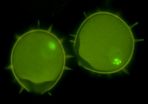
Which came first, bi- or tricellular pollen? New research updates a classic debate

With the bursting of spring, pollen is in the air. Most of the pollen that is likely tickling your nose and making your eyes water is being dispersed in a sexually immature state consisting of only two cells (a body cell and a reproductive cell) and is not yet fertile. While the majority of angiosperm species disperse their pollen in this early, bicellular, stage of sexual maturity, about 30% of flowering plants disperse their pollen in a more mature fertile stage, consisting of three cells (a body and two sperm cells). And then there are plants that do both. So which ...
Read more →