Medicine Technology 🌱 Environment Space Energy Physics Engineering Social Science Earth Science Science
Medicine 2014-05-05

UEA research identifies molecules that guide embryonic heart-forming cells

Scientists at the University of East Anglia have made an important step in understanding how hearts are formed in developing embryos. The heart is the first functioning organ to develop in humans, and correct formation is crucial for embryo survival and growth. New research published today reveals how cells that form the heart, known as 'cardiac progenitors', are guided to move into the right place for the heart to begin to form. It is hoped that the findings will help researchers better understand how congenital heart defects happen during the early stages of pregnancy. ...
Read more →
Medicine 2014-05-05

Immune cells outsmart bacterial infection by dying, Penn Vet study shows

A new study led by scientists at the University of Pennsylvania School of Veterinary Medicine has painted a clearer picture of the delicate arms race between the human immune system and a pathogen that seeks to infect and kill human cells. The research explores the strategies by which the bacterial pathogen Yersinia, responsible for causing plague and gastrointestinal infections, tries to outsmart immune cell responses and looks at the tactics used by the immune system to fight back. The senior author of the paper, which appears online this week in Proceedings of the ...
Read more →
Getting to the root of enamel evolution
Science 2014-05-05

Getting to the root of enamel evolution

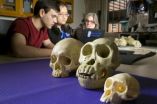
DURHAM, N.C. -- Along with our big brains and upright posture, thick tooth enamel is one of the features that distinguishes our genus, Homo, from our primate relatives and forebears. A new study, published May 5 in the Journal of Human Evolution, offers insight into how evolution shaped our teeth, one gene at a time. By comparing the human genome with those of five other primate species, a team of geneticists and evolutionary anthropologists at Duke University has identified two segments of DNA where natural selection may have acted to give modern humans their thick enamel. Teeth ...
Read more →
Medicine 2014-05-05

Where DNA's copy machine pauses, cancer could be next

DURHAM, N.C. -- Each time a human cell divides, it must first make a copy of its 46 chromosomes to serve as an instruction manual for the new cell. Normally, this process goes off without a hitch. But from time to time, the information isn't copied and collated properly, leaving gaps or breaks that the cell has to carefully combine back together. Researchers have long recognized that some regions of the chromosome,called "fragile sites," are more prone to breakage and can be a breeding ground for human cancers. But they have struggled to understand why these weak spots ...
Read more →
Medicine 2014-05-05

NeuroStar TMS Therapy shows promise as maintenance therapy for major depression

NEW YORK, May 5, 2014 – Neuronetics, Inc. announced today results from a new, dual-arm randomized pilot study that showed a trend toward symptomatic improvements with once-monthly TMS maintenance therapy in medication-free patients treated with NeuroStar TMS Therapy® for Major Depressive Disorder (MDD). Six weeks of acute NeuroStar TMS Therapy induced remission in 61.2 percent of all enrolled patients. At three months, 62.5 percent of medication-free patients randomized to once-monthly treatment with NeuroStar TMS Therapy maintained response as compared to 43.8 percent ...
Read more →
A symbiotic way of life
Technology 2014-05-05

A symbiotic way of life

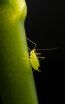
CORAL GABLES, Fla. (April 29, 2014) — Symbiosis is the process that occurs when two different organisms live together to form a mutually beneficial partnership. In many symbiotic relationships, host animals and their microbial symbionts are partners that make up a whole – neither one can function without the other but together they grow and reproduce. A study by University of Miami (UM) researchers reveals how, at the cellular level, an animal and its symbiotic bacteria work together to make up a single organismal system. The study titled "Aphid amino acid ...
Read more →
Medicine 2014-05-05

Test that measures 'everyday task' performance is a good predictor of hospital readmission

Patients freshly discharged from acute care hospitals with low scores on a standard test that measures how well they perform such everyday activities as moving from a bed to a chair are far more likely to need readmission to a hospital within 30 days than those who score better, according to new Johns Hopkins research. "The Functional Independence Measure score is a direct reflection of a patient's ability to heal," says Erik Hoyer, M.D., an assistant professor in the Department of Physical Medicine and Rehabilitation at the Johns Hopkins University School of Medicine ...
Read more →
Science 2014-05-05

'Severe escalation' of anti-Jewish atmosphere in 2013

Tel Aviv — Despite a 20% decline in the number of violent incidents against Jews, last year saw a sharp rise in abusive language and behavior, threats, and harassment of Jewish people on an individual basis around the world, according to the annual report presented on April 27, 2014, by Tel Aviv University's Kantor Center for the Study of Contemporary European Jewry and the Moshe Kantor Database for the Study of Contemporary Antisemitism and Racism, in cooperation with the European Jewish Congress. At a press conference accompanying the release of the report, Prof. Dina ...
Read more →
Technology 2014-05-05

Groovy turtles' genes to aid in their rescue

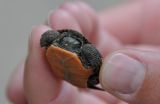
DAVIE, Fla.-- The diverse patterns on the diamondback terrapins' intricately grooved shell may be their claim to fame, but a newly published U.S. Geological Survey study of the genetic variation underneath their shell holds one key to rescuing these coastal turtles. Listed as an endangered species in Rhode Island and deemed threatened in Massachusetts, the terrapin is the only turtle in North America that spends its entire life in coastal marshes and mangroves. Seven different subspecies of terrapins are currently recognized by scientists based on external traits, such ...
Read more →
Medicine 2014-05-05

Focused ultrasound reduces cancer pain

(PHILADELPHIA)—When cancer progresses and spreads to the bone, patients often suffer debilitating pain. Now, a new phase III clinical trial shows that non-invasive magnetic resonance guided focused ultrasound treatment that heats the cancer within the bone, relieves pain and improves function for most patients when other treatment options are limited. The results were published in the Journal of the National Cancer Institute (JNCI). Magnetic resonance guided focused ultrasound surgery (MRgFUS) is a technique that's been safely used to treat thousands of women with uterine ...
Read more →
Science 2014-05-05

Science finds wines' fruity flavors fade first

PULLMAN, Wash. – Testing conventional wisdom with science, recently published research from Washington State University reveals how different flavors "finish," or linger, on the palate following a sip of wine. "A longer finish is associated with a higher quality wine, but what the finish is, of course, makes a huge difference," said sensory scientist Carolyn Ross. The study is one of the first to look at how different flavor components finish when standing alone or interacting with other compounds in white wines. The idea for the work began with a question from one of ...
Read more →
Medicine 2014-05-05

Mayo Clinic study finds nerve damage after hip surgery may be due to inflammation

ROCHESTER, Minn. — A recent Mayo Clinic Proceedings article links some nerve damage after hip surgery to inflammatory neuropathy. Historically, nerve damage from hip surgery has been attributed to mechanical factors caused by anesthesiologists or surgeons, such as positioning of the patient during surgery or direct surgical injury of the nerves. In this study, researchers examined patients who developed inflammatory neuropathies, where the immune system attacks the nerves, leading to weakness and pain. Inflammatory neuropathies may be treated with immunotherapy. "Neuropathy ...
Read more →
Science 2014-05-05

Strong institutions reduce in-group favoritism

Ineffective social and political institutions make people more likely to favour their family and own local social group, while good institutions make them more likely to follow impersonal rules that are fair to everyone, suggests a forthcoming study in the journal Human Nature. A series of experiments found that people in societies with supportive government services, food security and institutions that meet their basic needs were very likely to follow impartial rules about how to give out money. By contrast, those without effective, reliable institutions showed favouritism ...
Read more →
Science 2014-05-05

Study finds increased employee flexibility, supervisor support offer wide-ranging benefits

WASHINGTON, DC, May 5, 2014 — Work-family conflict is increasingly common among U.S. workers, with about 70 percent reporting struggles balancing work and non-work obligations. A new study by University of Minnesota sociologists Erin L. Kelly, Phyllis Moen, Wen Fan, and interdisciplinary collaborators from across the country, shows that workplaces can change to increase flexibility, provide more support from supervisors, and reduce work-family conflict. The study, titled, "Changing Work and Work-Family Conflict: Evidence from the Work, Family, and Health Network," was ...
Read more →
Is self-fumigation for the birds?
Science 2014-05-05

Is self-fumigation for the birds?

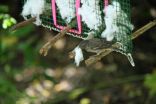
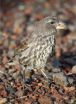
SALT LAKE CITY, May 5, 2014 – When University of Utah biologists set out cotton balls treated with a mild pesticide, wild finches in the Galapagos Islands used the cotton to help build their nests, killing parasitic fly maggots to protect baby birds. The researchers say the self-fumigation method may help endangered birds and even some mammals. "We are trying to help birds help themselves," says biology professor Dale Clayton, senior author of a study outlining the new technique. The findings were published online May 5, 2014, in the journal Current Biology. "Self-fumigation ...
Read more →
With 'self-fumigation,' Darwin's finches combat deadly parasitic flies
Science 2014-05-05

With 'self-fumigation,' Darwin's finches combat deadly parasitic flies

Researchers have found a way to protect threatened Darwin's finches on the Galápagos Islands from deadly parasitic nest flies in a manner that's as simple as it is ingenious: by offering the birds insecticide-treated cotton for incorporation into their nests. The study, reported in the Cell Press journal Current Biology on May 5, shows that the birds will readily weave the protective fibers in. What's more, the researchers find that just one gram of treated cotton is enough to keep a nest essentially parasite-free. The findings come as welcome news for the future of Darwin's ...
Read more →
Tracking turtles through time, Dartmouth-led study may resolve evolutionary debate
Science 2014-05-05

Tracking turtles through time, Dartmouth-led study may resolve evolutionary debate

Turtles are more closely related to birds and crocodilians than to lizards and snakes, according to a study from Dartmouth, Yale and other institutions that examines one of the most contentious questions in evolutionary biology. The findings appear in the journal Evolution & Development. A PDF of the study is available on request. The research team looked at how the major groups of living reptiles, which number more than 20,000 species, are interrelated. The relationships of some reptile groups are well understood -- birds are most closely related to crocodilians among ...
Read more →
Environment 2014-05-05

Climate change threatens to worsen US ozone pollution

BOULDER -- Ozone pollution across the continental United States will become far more difficult to keep in check as temperatures rise, according to new research led by the National Center for Atmospheric Research (NCAR). The detailed study shows that Americans face the risk of a 70 percent increase in unhealthy summertime ozone levels by 2050. This is because warmer temperatures and other changes in the atmosphere related to a changing climate, including higher atmospheric levels of methane, spur chemical reactions that lead to ozone. Unless emissions of specific pollutants ...
Read more →
Medicine 2014-05-05

Genetic, environmental influences equally important risk for autism spectrum disorder

In the largest family study on autism spectrum disorder (ASD) to date, researchers from the Icahn School of Medicine at Mount Sinai, along with a research team from the Karolinska Institutet in Stockholm Sweden and King's College in London found that individual risk of ASD and autistic disorder increased with greater genetic relatedness in families – that is, persons with a sibling, half-sibling or cousin diagnosed with autism have an increased likelihood of developing ASD themselves. Furthermore, the research findings showed that "environmental" factors unique to the ...
Read more →
Energy 2014-05-05

Energy-subsidy reform can be achieved with proper preparation, outside pressure

HOUSTON – (May 5, 2014) – Reform of energy subsidies in oil-exporting countries can reduce carbon emissions and add years to oil exports, according to a new paper from Rice University's Baker Institute for Public Policy. "Navigating the Perils of Energy-Subsidy Reform in Exporting Countries" was authored by Jim Krane, the Wallace S. Wilson Fellow for Energy Studies at the Baker Institute, who specializes in energy geopolitics. The paper reviews the record of energy-subsidy reforms and argues that big exporters should reduce energy demand by raising prices, and that this ...
Read more →
Liver cancer screening highly beneficial for people with cirrhosis
Medicine 2014-05-05

Liver cancer screening highly beneficial for people with cirrhosis

DALLAS – May 5, 2014 – Liver cancer survival rates could be improved if more people with cirrhosis are screened for tumors using inexpensive ultrasound scans and blood tests, according to a review by doctors at UT Southwestern Medical Center. The meta-analysis of 47 studies involving more than 15,000 patients found that the three-year survival rate was much higher among patients who received liver cancer screening— 51 percent for patients who were screened compared to 28 percent of unscreened patients. The review also found that cirrhosis patients who were screened for ...
Read more →
Medicine 2014-05-05

Study finds family-based exposure therapy effective treatment for young children with OCD

PROVIDENCE, R.I. – A new study from the Bradley Hasbro Children's Research Center has found that family-based cognitive behavioral therapy (CBT) is beneficial to young children between the ages of five and eight with Obsessive-Compulsive Disorder (OCD). The study, now published online in JAMA Psychiatry, found developmentally sensitive family-based CBT that included exposure/response prevention (EX/RP) was more effective in reducing OCD symptoms and functional impairment in this age group than a similarly structured relaxation program. Jennifer Freeman, Ph.D., a staff ...
Read more →
Science 2014-05-05

Tomato turf wars: Benign bug bests salmonella; tomato eaters win

Scientists from the U.S. Food and Drug Administration (FDA) have identified a benign bacterium that shows promise in blocking Salmonella from colonizing raw tomatoes. Their research is published ahead of print in the journal Applied and Environmental Microbiology. When applied to Salmonella-contaminated tomato plants in a field study, the bacterium, known as Paenibacillus alvei, significantly reduced the concentration of the pathogen compared to controls. Outbreaks of Salmonella traced to raw tomatoes have sickened nearly 2,000 people in the US from 2000-2010, killing ...
Read more →
Medicine 2014-05-05

Physician practice facilitation ensures key medical care reaches children

Leona Cuttler, MD, knew in her core that the simple act of adding an outside eye could dramatically improve pediatric care. Today, a study of more than 16,000 patient visits published online in the journal Pediatrics proves Cuttler's thesis correct. The lead investigator on the research project, Cuttler succumbed to cancer late last year. But her colleagues are committed to seeing its lessons disseminated across the country. "It was an honor to work on this project with Dr. Cuttler," said study first author Sharon B. Meropol, MD, PhD, Assistant Professor, Departments ...
Read more →
ORNL paper examines clues for superconductivity in an iron-based material
Physics 2014-05-05

ORNL paper examines clues for superconductivity in an iron-based material

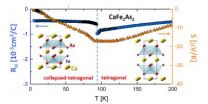
OAK RIDGE, Tenn., May 5, 2014 – For the first time, scientists have a clearer understanding of how to control the appearance of a superconducting phase in a material, adding crucial fundamental knowledge and perhaps setting the stage for advances in the field of superconductivity. The paper, published in Physical Review Letters, focuses on a calcium-iron-arsenide single crystal, which has structural, thermodynamic and transport properties that can be varied through carefully controlled synthesis, similar to the application of pressure. To make this discovery, researchers ...
Read more →