Medicine Technology 🌱 Environment Space Energy Physics Engineering Social Science Earth Science Science
Science 2014-05-01

Unlocking a mystery of thalidomide

In the 1950s and 1960s, pregnant women with morning sickness were often prescribed the new drug thalidomide. Shortly after the medicine was released on the market, a reported 10,000 infants were born with an extreme form of the rare congenital phocomelia syndrome, which caused death in 50 percent of cases and severe physical and mental disabilities in others. Although various factors are now known to cause phocomelia, the prominent roots of the disease can be found in the use of the drug thalidomide. Now, half a century later, new research by Dr. Noam Shomron, Prof ...
Read more →
Medicine 2014-05-01

New study suggests combination of statin and omega-3 fatty acid may provide cardioprotective effects

Boston, MA-- New findings from an in vitro study, led by researchers at Brigham and Women's Hospital (BWH), show that the combination of statins and eicosapentaenoic acid (EPA), an omega-3 fatty acid, may potentially reduce cardiovascular risk. This research is being presented May 1 at a peer-reviewed poster session at the National Lipid Association Scientific Sessions in Orlando, Florida. "We know that endothelial cell dysfunction is emerging as an early and important predictor of cardiovascular disease and plays an essential role in plaque development. Treatments that ...
Read more →
Medicine 2014-05-01

Risk of weight gain deters some smokers from seeking treatment to quit

Smokers may avoid treatment to quit smoking if they previously gained weight while trying to quit, according to researchers at Penn State College of Medicine. Weight gain is a predictable occurrence for smokers who have recently quit. Within the first year after quitting, they gain an average of eight to14 pounds, and some smokers report that they keep smoking simply because they do not want to gain weight from quitting. Susan Veldheer, project manager in the Department of Public Health Sciences, predicted that smokers would avoid treatment to quit if they are highly ...
Read more →
Medicine 2014-05-01

Experimental drug prolongs life span in mice

CHICAGO --- Northwestern Medicine® scientists have newly identified a protein's key role in cell and physiological aging and have developed – in collaboration with Tohoku University in Japan -- an experimental drug that inhibits the protein's effect and prolonged the lifespan in a mouse model of accelerated aging. The rapidly aging mice fed the experimental drug lived more than four times longer than a control group, and their lungs and vascular system were protected from accelerated aging, the new study reports. The experimental drug could potentially be used to treat ...
Read more →
Science 2014-05-01

Researchers reveal new cause of epilepsy

A team of researchers from SUNY Downstate Medical Center (SUNY Downstate) and Sanford-Burnham Medical Research Institute (Sanford-Burnham) has found that deficiencies in hyaluronan, also known as hyaluronic acid or HA, can lead to spontaneous epileptic seizures. HA is a polysaccharide molecule widely distributed throughout connective, epithelial, and neural tissues, including the brain's extracellular space (ECS). Their findings, published on April 30 in The Journal of Neuroscience, equip scientists with key information that may lead to new therapeutic approaches to epilepsy. ...
Read more →
Algae 'see' a wide range of light
Science 2014-05-01

Algae 'see' a wide range of light

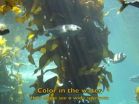
VIDEO: Land plants detect light with pigments called phytochromes, which are sensitive to red light. But red light is absorbed by water, so aquatic algae have evolved phytochromes with a much... Click here for more information. Aquatic algae can sense an unexpectedly wide range of color, allowing them to sense and adapt to changing light conditions in lakes and oceans. The study by researchers at UC Davis was published earlier this year in the journal Proceedings of the National ...
Read more →
Environment 2014-05-01

Climate change to intensify important African weather systems, Stanford scientists say

Weather systems that bring rainstorms to many drought-prone areas of northern Africa, carry Saharan dust across the ocean and seed Atlantic hurricanes could grow stronger as a result of human-caused climate change, a new analysis by Stanford scientists suggests. Known as African easterly waves, or AEWs, these weather systems form above northern Africa during the summer season and travel east to west, toward the Atlantic Ocean. "Not only are AEWs important for rainfall in West Africa, they also play a role in climate across the Atlantic, including here in the United ...
Read more →
Science 2014-05-01

When it comes to classes, small is better

Small classes, especially in the first four years of school, can have an important and lasting impact on student achievement, a new report shows. In a review of over 100 papers from 1979-2014, education expert Dr David Zyngier from Monash University's Faculty of Education looked at whether the conclusions reached on the effect of smaller class sizes still hold true today. "The question of class size continues to attract the attention of educational policymakers and researchers alike," Dr Zyngier said. "Many argue that much of Australia's increased expenditure on education ...
Read more →
Science 2014-05-01

Human rights report card released

Real freedom, gender-based violence, terrorism laws, and asylum seekers' rights are all considered in a report released today on vital human rights issues in Australia and around the world. The 2014 Castan Human Rights Report, by Monash University's Castan Centre for Human Rights Law, highlights the Centre's research and its relevance to some of the most important human rights issues facing society. A key finding of the report is that freedom in Australia is being undermined. Director of the Castan Centre Professor Sarah Joseph said the recent narrow debate on the ...
Read more →
Science 2014-05-01

Asthma sufferers may be prone to bone loss

ARLINGTON HEIGHTS, Ill. (May 1, 2014) – Some of the 26 million Americans with asthma may also be prone to bone loss. According to a study published today in the May issue of Annals of Allergy, Asthma & Immunology, the scientific journal of the American College of Allergy, Asthma and Immunology, there seems to be association between asthma and a decrease in bone mineral density. "We know prolonged use of corticosteroids in the treatment of asthma is a risk factor of osteoporosis, but we haven't had definite data showing the relationship between asthma itself and bone loss," ...
Read more →
Study: Low-fat diet helps fatigue in people with MS
Medicine 2014-05-01

Study: Low-fat diet helps fatigue in people with MS

PORTLAND, Ore. — People with multiple sclerosis who for one year followed a plant-based diet very low in saturated fat had much less MS-related fatigue at the end of that year — and significantly less fatigue than a control group of people with MS who didn't follow the diet, according to an Oregon Health & Science University study being presented today at the American Academy of Neurology's annual meeting in Philadelphia, Pa. The study was the first randomized-controlled trial to examine the potential benefits of the low fat diet on the management of MS. The study found ...
Read more →
Environment 2014-05-01

Tree rings reveal nightmare droughts in the West

If you think the 1930s drought that caused The Dust Bowl was rough, new research looking at tree rings in the Rocky Mountains has news for you: Things can get much worse in the West. In fact the worst drought of this century barely makes the top 10 of a study that extended Utah's climate record back to the year 1429. With sandpaper and microscopes, Brigham Young University professor Matthew Bekker analyzed rings from drought-sensitive tree species. He found several types of scenarios that could make life uncomfortable in what is now the nation's third-fastest-growing ...
Read more →
New rapid synthesis developed for bilayer graphene and high-performance transistors
Science 2014-05-01

New rapid synthesis developed for bilayer graphene and high-performance transistors

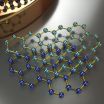
Researchers at University of California, Santa Barbara, in collaboration with Rice University, have recently demonstrated a rapid synthesis technique for large-area Bernal (or AB) stacked bilayer graphene films that can open up new pathways for digital electronics and transparent conductor applications. The invention also includes the first demonstration of a bilayer graphene double-gate field-effect transistor (FET), showing record ON/OFF transistor switching ratio and carrier mobility that could drive future ultra-low power and low-cost electronics. Graphene is ...
Read more →
Earth Science 2014-05-01

Australian tsunami database reveals threat to continent

Australia's coastline has been struck by up to 145 possible tsunamis since prehistoric times, causing deaths previously unreported in the scientific literature, a UNSW Australia study has revealed. The largest recorded inundation event in Australia was caused by an earthquake off Java in Indonesia on 17 July 2006, which led to a tsunami that reached up to 7.9 metres above sea level on land at Steep Point in Western Australia. The continent was also the site of the oldest known tsunami in the world - an asteroid impact that occurred 3.47 billion years ago in what is now ...
Read more →
Environment 2014-05-01

A 'wimpy' dwarf fossil galaxy reveals new facts about early universe

CAMBRIDGE, Mass. -- Out on the edge of the universe, 75,000 light years from us, a galaxy known as Segue 1 has some unusual properties: It is the faintest galaxy ever detected. It is very small, containing only about 1,000 stars. And it has a rare chemical composition, with vanishingly small amounts of metallic elements present. Now a team of scientists, including an MIT astronomer, has analyzed that chemical composition and come away with new insights into the evolution of galaxies in the early stages of our universe — or, in this case, into a striking lack of evolution ...
Read more →
Medicine 2014-05-01

China study improves understanding of disease spread

LIVERPOOL, UK – 30 April 2014: Scientists at the University of Liverpool have shown how the travel and socialisation patterns of people in Southern China can give greater insight into how new diseases such as bird flu may spread between populations. Southern China is one of the most important regions of the planet for the development and spread of new diseases in humans. In recent years a combination of high population density, frequent contact between humans and animals and the developed transport links in the region have given rise to diseases such as SARS and avian ...
Read more →
Playing outside could make kids more spiritual
Science 2014-05-01

Playing outside could make kids more spiritual

Children who spend significant time outdoors could have a stronger sense of self-fulfillment and purpose than those who don't, according to new Michigan State University research linking children's experiences in nature with how they define spirituality. In the study, published recently in the Journal of the Study of Religion, Nature and Culture, children who played outside five to 10 hours per week said they felt a spiritual connection with the earth, and felt their role is to protect it. "These values are incredibly important to human development and well-being," ...
Read more →
Science 2014-05-01

Study: Custom-made mouthguards reduce athletes' risk of concussion

CHICAGO (May 1, 2014)—When it comes to buying a mouthguard, parents who want to reduce their child's risk of a sports-related concussion should visit a dentist instead of a sporting goods store. High school football players wearing store-bought, over-the-counter (OTC) mouthguards were more than twice as likely to suffer mild traumatic brain injures (MTBI)/concussions than those wearing custom-made, properly fitted mouthguards, reports a new study in the May/June 2014 issue of General Dentistry, the peer-reviewed clinical journal of the Academy of General Dentistry (AGD). "Researchers ...
Read more →
Medicine 2014-05-01

Scientists discover endogenous dendritic cell-derived interleukin-27 promotes tumor growth

In a new report published in the Journal of Leukocyte Biology, scientists lay the groundwork for the development of novel tumor therapies that may help rid the body of cancer by inhibiting the recruitment of a specific suppressive immune cell type called "regulatory T-cells." The approach described in the report shows that an immune molecule, called interleukin-27, promotes the recruitment of regulatory T-cells. This suggests that by stopping IL-27's immunosuppressive function, cancer therapies can more effectively activate other T-cells to attack and destroy cancer tumors. "Our ...
Read more →
Environment 2014-05-01

Network for tracking earthquakes exposes glacier activity

SAN FRANCISCO, CALIF. -- Alaska's seismic network records thousands of quakes produced by glaciers, capturing valuable data that scientists could use to better understand their behavior, but instead their seismic signals are set aside as oddities. The current earthquake monitoring system could be "tweaked" to target the dynamic movement of the state's glaciers, suggests State Seismologist Michael West, who will present his research today at the annual meeting of the Seismological Society of America (SSA). "In Alaska, these glacial events have been largely treated as ...
Read more →
Science 2014-05-01

'Til sickness do us part: How illness affects the risk of divorce

ANN ARBOR—In the classic marriage vow, couples promise to stay together in sickness and in health. But a new study finds that the risk of divorce among older married couples rises when the wife—but not the husband—becomes seriously ill. "Married women diagnosed with a serious health condition may find themselves struggling with the impact of their disease while also experiencing the stress of divorce," said Amelia Karraker, a researcher at the University of Michigan Institute for Social Research, who presents her findings May 1 at the annual meeting of the Population ...
Read more →
Medicine 2014-05-01

New model can predict therapy outcomes in prostate cancer with bone metastasis

PHILADELPHIA — A new computational model that simulates bone metastasis of prostate cancer has the potential to rapidly assess experimental therapy outcomes and help develop personalized medicine for patients with this disease, according to data published in Cancer Research, a journal of the American Association for Cancer Research. "Bone remodeling is a balanced and extremely well regulated process that controls the health of our bones and the levels of circulating calcium," said Leah M. Cook, Ph.D., postdoctoral fellow in the Department of Tumor Biology at the Moffitt ...
Read more →
Medicine 2014-05-01

Vitamin D deficiency may be linked to aggressive prostate cancer

PHILADELPHIA — Vitamin D deficiency was an indicator of aggressive prostate cancer and spread of the disease in European-American and African-American men who underwent their first prostate biopsy because of abnormal prostate-specific antigen (PSA) and/or digital rectal examination (DRE) test results, according to a study published in Clinical Cancer Research, a journal of the American Association for Cancer Research. "Vitamin D is a steroid hormone that is known to affect the growth and differentiation of benign and malignant prostate cells in prostate cell lines and ...
Read more →
Medicine 2014-05-01

Human fat: A trojan horse to fight brain cancer?

Johns Hopkins researchers say they have successfully used stem cells derived from human body fat to deliver biological treatments directly to the brains of mice with the most common and aggressive form of brain tumor, significantly extending their lives. The experiments advance the possibility, the researchers say, that the technique could work in people after surgical removal of brain cancers called glioblastomas to find and destroy any remaining cancer cells in difficult-to-reach areas of the brain. Glioblastoma cells are particularly nimble; they are able to migrate ...
Read more →
Crocodile tears please thirsty butterflies and bees
Science 2014-05-01

Crocodile tears please thirsty butterflies and bees

The butterfly (Dryas iulia) and the bee (Centris sp.) were most likely seeking scarce minerals and an extra boost of protein. On a beautiful December day in 2013, they found the precious nutrients in the tears of a spectacled caiman (Caiman crocodilus), relaxing on the banks of the Río Puerto Viejo in northeastern Costa Rica. A boat carrying students, photographers, and aquatic ecologist Carlos de la Rosa was passing slowing and quietly by, and caught the moment on film. They watched [and photographed] in barely suppressed excitement for a quarter of an hour while the ...
Read more →