Medicine Technology 🌱 Environment Space Energy Physics Engineering Social Science Earth Science Science
Saving crops and people with bug sensors
Technology 2014-04-29

Saving crops and people with bug sensors

RIVERSIDE, Calif. (http://www.ucr.edu) — University of California, Riverside researchers have created a method that can classify different species of insects with up to 99 percent accuracy, a development that could help farmers protect their crops from insect damage and limit the spread of insect-borne diseases, such as malaria and Dengue fever. Over the past 60 years, insect classification research has been limited by factors including an overreliance on acoustic sensing devices, a heavy focus on wingbeat frequency and limited data. The UC Riverside researchers overcame ...
Read more →
The Strangler: The chemistry behind the Game of Thrones poison (video)
Science 2014-04-29

The Strangler: The chemistry behind the Game of Thrones poison (video)

WASHINGTON, April 28, 2014 — Game of Thrones gave us a shock with the Purple Wedding and now everyone is asking: "Who poisoned King Joffrey?" While the search for the killer continues, the American Chemical Society's latest Reactions video focuses on what killed the hated king. The video is available at http://youtu.be/6UNEpRXcxM4 Chemist Raychelle Burks, Ph.D., of Doane College helps us narrow down the suspects in her charismatic style, blending pop culture and chemistry. "Sometimes science gets a bad rap. People think it's dry or super serious," Burks says. "Pop culture ...
Read more →
Technology 2014-04-29

Information technology can simplify weight-loss efforts; social support still important for success

COLUMBIA, Mo. – According to the Centers for Disease Control and Prevention (CDC), 69 percent of adults in the United States are currently overweight or obese, which puts these individuals at increased risk for chronic health problems. Although weight loss decreases this risk, statistics show that dieters often fail multiple times before meeting their goals. Now, MU researchers have found that information technology, such as smartphone applications, can help dieters integrate healthy behavior changes into their daily lives. "Current weight loss recommendations are essentially ...
Read more →
Medicine 2014-04-29

Immunogenic mutations in tumor genomes correlate with increased patient survival

April 29, 2014 – Developing immunotherapies for cancer is challenging because of significant variability among tumors and diversity in human immune types. In a study published online today in Genome Research, researchers examined the largest collection of tumor samples to date to predict patient-specific tumor mutations that may activate the patient's immune system, paving the way for more successful, personalized cancer immunotherapy. Tumor cells accrue mutations in their DNA, and as these mutations accumulate, the cell looks less and less like part of the body and more ...
Read more →
Medicine 2014-04-29

Vitamin D may raise survival rates among cancer patients

Washington, DC—Cancer patients who have higher levels of vitamin D when they are diagnosed tend to have better survival rates and remain in remission longer than patients who are vitamin D-deficient, according to a new study published in the Endocrine Society's Journal of Clinical Endocrinology & Metabolism (JCEM). The body naturally produces vitamin D after exposure to sunlight and absorbs it from certain foods. In addition to helping the body absorb the calcium and phosphorus needed for healthy bones, vitamin D affects a variety of biological processes by binding to ...
Read more →
Medicine 2014-04-29

Study: WHO tool underestimates need for osteoporosis treatment

Washington, DC—The World Health Organization's tool for assessing bone fracture risk underestimates the true dangers for people who are younger than 65 or have been treated for a single broken bone, according to a new study published in the Endocrine Society's Journal of Clinical Endocrinology & Metabolism (JCEM). A WHO task force developed the Fracture Risk Assessment Tool (FRAX) to help predict the likelihood of adults between the ages of 40 and 90 breaking a bone. FRAX is designed to evaluate the chances that a person will break a bone in a minor fall, which is called ...
Read more →
Declines in large wildlife lead to increases in disease risk
Medicine 2014-04-29

Declines in large wildlife lead to increases in disease risk

In the Middle Ages, fleas carried by rats were responsible for spreading the Black Plague. Today in East Africa, they remain important vectors of plague and many other diseases, including Bartonellosis, a potentially dangerous human pathogen. Research by Hillary Young, assistant professor in UC Santa Barbara's Department of Ecology, Evolution and Marine Biology, directly links large wildlife decline to an increased risk of human disease via changes in rodent populations. The findings appear today in the Proceedings of the National Academy of Sciences Early Online Edition. With ...
Read more →
Medicine 2014-04-29

Chronic stress heightens vulnerability to diet-related metabolic risk

New research out of UC San Francisco is the first to demonstrate that highly stressed people who eat a lot of high-fat, high-sugar food are more prone to health risks than low-stress people who eat the same amount of unhealthy food. "Chronic stress can play an important role in influencing biology, and it's critical to understand the exact pathways through which it works." said Kirstin Aschbacher, PhD, an assistant professor in the UCSF Department of Psychiatry and lead author. "Many people think a calorie is a calorie, but this study suggests that two women who eat the ...
Read more →
Science 2014-04-29

GWAS study ties ABCC9 anomalies, sulfonylurea exposure to HS-Aging

LEXINGTON, Ky. (April 29, 2014) -- A genome-wide association study (GWAS) led by Peter Nelson, MD, PhD, of the Sanders-Brown Center on Aging at the University of Kentucky, and David Fardo, PhD, of UK's Department of Biostatistics, has provided new insight into Hippocampal Sclerosis of Aging (HS-A), a common disease affecting the elderly. Researchers from 16 different institutions compared 363 persons with autopsy-proven HS-A to a control group of 2,303 other individuals in an attempt to identify genetic predisposition to HS-Aging. Dr. Nelson and his team found that ...
Read more →
Carnegie Mellon-Disney researcher invents 3-D printing technique for making cuddly stuff
Science 2014-04-29

Carnegie Mellon-Disney researcher invents 3-D printing technique for making cuddly stuff

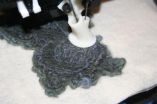
PITTSBURGH—Soft and cuddly aren't words used to describe the plastic or metal things typically produced by today's 3D printers. But a new type of printer developed by Carnegie Mellon University and Disney Research Pittsburgh can turn wool and wool blend yarns into fabric objects that people might actually enjoy touching. The device looks something like a cross between a 3D printer and a sewing machine and produces 3D objects made of a form of loose felt. Scott Hudson, a professor in CMU's Human-Computer Interaction Institute who developed the felting printer with Disney ...
Read more →
Engineering 2014-04-29

Beyond graphene: Controlling properties of 2-D materials

The isolation of graphene at the University in 2004 led to the discovery of many other 2D crystals. While graphene has an unrivalled set of superlatives, these crystals cover a large range of properties: from the most conductive to isolating, from transparent to optically active. The next step is to combine several of these crystals in a 3D stack. This way, one can create 'heterostructures' with novel functionalities – capable of delivering applications as yet beyond the imagination of scientists and commercial partners. The first examples of such heterostructures already ...
Read more →
Scripps Florida scientists reveal molecular secrets behind resveratrol's health benefits
Medicine 2014-04-29

Scripps Florida scientists reveal molecular secrets behind resveratrol's health benefits

JUPITER, FL, April 29, 2014 – Resveratrol has been much in the news as the component of grapes and red wine associated with reducing "bad cholesterol," heart disease and some types of cancer. Also found in blueberries, cranberries, mulberries, peanuts and pistachios, resveratrol is associated with beneficial health effects in aging, inflammation and metabolism. Scientists from the Florida campus of The Scripps Research Institute (TSRI) have now identified one of the molecular pathways that resveratrol uses to achieve its beneficial action. They found that resveratrol ...
Read more →
Tapah through infrared satellite eyes: Now a typhoon
Space 2014-04-29

Tapah through infrared satellite eyes: Now a typhoon

Tropical Storm Tapah strengthened since April 28 and early on April 29, the storm reached typhoon strength. From its orbit in space, NASA's Aqua satellite zoomed over Tapah and the AIRS instrument captured infrared data on the storm that showed the location of its strongest thunderstorms. The U.S. National Weather Service in Guam noted that a tropical storm warning and a typhoon watch continues for Alamagan and Pagan. For details on the advisory, visit: http://www.prh.noaa.gov/data/GUM/HLSPQ1 The Atmospheric Infrared Sounder (AIRS) instrument that flies aboard NASA's ...
Read more →
Graphene not all good
Science 2014-04-29

Graphene not all good

RIVERSIDE, Calif. — In a first-of-its-kind study of how a material some think could transform the electronics industry moves in water, researchers at the University of California, Riverside Bourns College of Engineering found graphene oxide nanoparticles are very mobile in lakes or streams and therefore likely to cause negative environmental impacts if released. Graphene oxide nanoparticles are an oxidized form of graphene, a single layer of carbon atoms prized for its strength, conductivity and flexibility. Applications for graphene include everything from cell phones ...
Read more →
Science 2014-04-29

Rice U. study: How state ownership hampered entrepreneurship in Chinese companies

HOUSTON – (April 29, 2014) – For state-owned companies in China, the significant detriment in employing innovation may be linked to the company's ownership structure, according to a new study on Chinese entrepreneurship by Chinese business experts at Rice University, the University of Hong Kong, Texas Christian University, Jilin University and Shantou University. The researchers found that the more equity the state owned of a company, the less likely the company was to engage in strategic entrepreneurship (investing in research and development and other innovations) to ...
Read more →
Science 2014-04-29

Anti-smoking TV ads should use anger, Dartmouth-Cornell study suggests

Anti-smoking television advertisements that appeal to viewers' emotions are more persuasive when they use anger rather than sadness, a Dartmouth-Cornell study suggests. The study appears in the Journal of Health Communication. A PDF is available on request. Previous studies have shown emotional expression is a crucial part of persuasion, and that audience members' perceptions of emotions affect their attitudes and behaviors. Previous research also has shown anti-smoking TV ads that convey negative emotions such as anger and sadness are more effective than non-emotional ...
Read more →
Science 2014-04-29

'Feel good' factor higher when you own, not just use, luxury items

It means more to people to own a luxury product or brand than to have the privilege of simply using one. Just using an affordable luxury item you don't own can, in fact, dampen the feel good factor that normally surrounds such products, say Liselot Hudders and Mario Pandelaere of Ghent University in Belgium. The research was published in Springer's journal Applied Research in Quality of Life. To test the link between luxury consumption and subjective well-being, the researchers presented 307 study participants with luxury and ordinary versions of either a durable pen, ...
Read more →
Energy 2014-04-29

Solving a mystery of thermoelectrics

CAMBRIDGE, Mass-- Materials that can be used for thermoelectric devices — those that turn a temperature difference into an electric voltage — have been known for decades. But until now there has been no good explanation for why just a few materials work well for these applications, while most others do not. Now researchers at MIT and elsewhere say they have finally found a theoretical explanation for the differences, which could lead to the discovery of new, improved thermoelectric materials. The findings — by MIT graduate student Sangyeop Lee; Gang Chen, the Carl Richard ...
Read more →
Medicine 2014-04-29

UNC researchers discover 'master regulator' role for little-known protein in cancer cells

CHAPEL HILL, N.C. – Researchers in the UNC School of Medicine found that the protein DAZAP1 plays a key role in the regulation of many genes through a process known as alternative splicing, and when highly expressed in cancer cell line experiments, DAZAP1 was shown to inhibit several types of cancer cells from dividing and moving. The discovery, published in the journal Nature Communications, marks the first time this little-known protein has been characterized in relation to cancer development and tumor growth. "If you knock down DAZAP1, then most of the genes involved ...
Read more →
Medicine 2014-04-29

Study yields potential drug targets for preeclampsia patients

Preeclampsia, the most common complication of pregnancy, is a major cause of premature delivery and both maternal and fetal death, yet what causes the syndrome remains unclear. A new study indicates that molecules that send detrimental signals are abundant in certain tissues in preeclampsia patients. The study also documented some of the complications experienced by babies born to mothers with preeclampsia. "Preeclampsia is a multifaceted complication found uniquely in the pregnant patient and one that has puzzled scientists for years," says the leader of the study, ...
Read more →
CNIO team presents a new strategy to personalise cancer therapies
Medicine 2014-04-29

CNIO team presents a new strategy to personalise cancer therapies

Tumour cells can accumulate hundreds or even thousands of DNA mutations which induce the growth and spread of cancer. The number and pattern of mutations differs according to the type of tumour, even among those that are classified as part of the same type of tumours. This complexity, which researchers were not aware of just a few years ago, calls for new tools to filter relevant genetic information for the implementation and development of personalised therapies targeted at specific characteristics within each individual tumour. Researchers led by Manuel Hidalgo, Vice-Director ...
Read more →
Science 2014-04-29

Mathematicians trace source of Rogers-Ramanujan identities, find algebraic gold

Mathematicians have found a framework for the celebrated Rogers-Ramanujan identities and their arithmetic properties, solving another long-standing mystery stemming from the work of Indian math genius Srinivasa Ramanujan. The findings, by mathematicians at Emory University and the University of Queensland, yield a treasure trove of algebraic numbers and formulas to access them. "Algebraic numbers are among the first numbers you encounter in mathematics," says Ken Ono, a number theorist at Emory "And yet, it's surprisingly difficult to find functions that return them ...
Read more →
Proving uncertainty: New insight into old problem
Science 2014-04-29

Proving uncertainty: New insight into old problem

WASHINGTON D.C., April 29, 2014 -- Nearly 90 years after Werner Heisenberg pioneered his uncertainty principle, a group of researchers from three countries has provided substantial new insight into this fundamental tenet of quantum physics with the first rigorous formulation supporting the uncertainty principle as Heisenberg envisioned it. In the Journal of Mathematical Physics, the researchers reports a new way of defining measurement errors that is applicable in the quantum domain and enables a precise characterization of the fundamental limits of the information accessible ...
Read more →
Medicine 2014-04-29

Poor QOL doesn't predict low survival in high-risk lung cancer patients undergoing surgery

Toronto, ON, Canada, April 29, 2014 – Quality of life (QOL) is rarely reported in surgical publications, yet it can be an important metric that can be of use to physicians and patients when making treatment decisions. Prior studies of average-risk patients undergoing lobectomy suggested that low baseline QOL scores predict worse survival in patients undergoing non-small cell lung cancer surgery. The results of a multi-center, longitudinal study of high-risk lung cancer patients who underwent sublobar resection counters this idea, finding that poor baseline global QOL scores ...
Read more →
Mother's diet affects the 'silencing' of her child's genes
Medicine 2014-04-29

Mother's diet affects the 'silencing' of her child's genes

A mother's diet before conception can permanently affect how her child's genes function, according to a study published in Nature Communications. The first such evidence of the effect in humans opens up the possibility that a mother's diet before pregnancy could permanently affect many aspects of her children's lifelong health. Researchers from the MRC International Nutrition Group, based at the London School of Hygiene & Tropical Medicine and MRC Unit, The Gambia, utilised a unique 'experiment of nature' in rural Gambia, where the population's dependence on own grown ...
Read more →