Medicine Technology 🌱 Environment Space Energy Physics Engineering Social Science Earth Science Science
Energy 2013-02-26

'Fat worms' inch scientists toward better biofuel production

EAST LANSING, Mich. — Fat worms confirm that researchers from Michigan State University have successfully engineered a plant with oily leaves -- a feat that could enhance biofuel production as well as lead to improved animal feeds. The results, published in the current issue of The Plant Cell, the journal of the American Society of Plant Biologists, show that researchers could use an algae gene involved in oil production to engineer a plant that stores lipids or vegetable oil in its leaves – an uncommon occurrence for most plants. Traditional biofuel research has focused ...
Read more →
Energy 2013-02-26

Clever battery completes stretchable electronics package

Northwestern University's Yonggang Huang and the University of Illinois' John A. Rogers are the first to demonstrate a stretchable lithium-ion battery -- a flexible device capable of powering their innovative stretchable electronics. No longer needing to be connected by a cord to an electrical outlet, the stretchable electronic devices now could be used anywhere, including inside the human body. The implantable electronics could monitor anything from brain waves to heart activity, succeeding where flat, rigid batteries would fail. Huang and Rogers have demonstrated ...
Read more →
Medicine 2013-02-26

Cleveland Clinic study shows bariatric surgery restores pancreatic function by targeting belly fat

In a substudy of the STAMPEDE trial (Surgical Therapy And Medications Potentially Eradicate Diabetes Efficiently), Cleveland Clinic researchers have found that gastric bypass surgery reverses diabetes by uniquely restoring pancreatic function in moderately obese patients with uncontrolled type 2 diabetes. The two-year substudy evaluated the effects of bariatric surgery and intensive medical therapy on blood sugar levels, body composition, and pancreatic beta-cell function. Striking metabolic changes were observed in patients who underwent bariatric surgery compared with ...
Read more →
Light particles illuminate the vacuum
Physics 2013-02-26

Light particles illuminate the vacuum

The researchers conducted a mirror experiment to show that by changing the position of the mirror in a vacuum, virtual particles can be transformed into real photons that can be experimentally observed. In a vacuum, there is energy and noise, the existence of which follows the uncertainty principle in quantum mechanics. If we act fast enough, we can prevent the particles from recombining – they will then be transformed into real particles that can be detected', says Dr. Sorin Paraoanu from Aalto University. For the experiment, the researchers used an array of superconducting ...
Read more →
Medicine 2013-02-26

Target: Cancer

For scientists to improve cancer treatments with targeted therapeutic drugs, they need to be able to see proteins prevalent in the cancer cells. This has been impossible, until now. Thanks to a new microscopy technique, University of Akron researcher Dr. Adam Smith, assistant professor of chemistry, has observed how clusters of epidermal growth factor receptor (EGFR) — a protein abundant in lung and colon cancers, glioblastoma and others — malfunctions in cancer cells. "We can directly observe protein clusters, in a living cell membrane, that are invisible to traditional ...
Read more →
Science 2013-02-26

Superbugs may have a soft spot, after all

The overuse of antibiotics has created strains of bacteria resistant to medication, making the diseases they cause difficult to treat, or even deadly. But now a research team at the University of Rochester has identified a weakness in at least one superbug that scientists may be able to medically exploit. Biologists Gloria Culver at Rochester and Keith Connolly, now at Harvard University, thought one key to stopping the bacteria may lie with proteins, so they studied the mechanism behind the development of bacterial ribosomes—the cell's protein-manufacturing machine. ...
Read more →
Technology 2013-02-26

Gut microbiota plays important role in functional bowel disorders

(24 February 2013) An estimated 50 per cent of patients consulting a gastroenterologist suffer from functional bowel disorders (FBD), such as dyspepsia or irritable bowel syndrome (IBS). It is characteristic for these conditions that underlying physiological mechanisms are hard to be found. "However, recent research shows that the gut microbiota is a likely candidate for filling some of the gaps in the causal chain leading to FBD," says Professor Fernando Azpiroz, Chairman of the Gut Microbiota & Health Section of the European Society of Neurogastroenterology & Motility ...
Read more →
Medicine 2013-02-26

Fecal microbiota transplantation cures gastrointestinal diseases

(26 February 2013) Clostridium difficile infections have developed into a virtual pandemic over the past two decades. The outcome of standard antibiotic treatment is unsatisfactory: the recurrence rates are high with every relapse increasing the risk of further follow-ups. Faecal microbiota transplantation offers a rapidly acting and highly effective alternative in treating recurrent Clostridium difficile infections (RCDI), as Professor Lawrence J. Brandt (Montefiore Medical Center, New York, USA) points out. According to him, more than 90 per cent of the patients are being ...
Read more →
Survey shows medical students have frequent interactions with pharmaceutical companies
Medicine 2013-02-26

Survey shows medical students have frequent interactions with pharmaceutical companies

Boston – A first-of-its kind national survey of medical students and residents finds that despite recent efforts by medical schools and academic medical centers to restrict access of pharmaceutical sales representatives to medical trainees, medical students and residents still commonly receive meals, gifts, and industry-sponsored educational materials. The study was completed by a team of researchers led by fourth-year Harvard Medical School student Kirsten Austad and Aaron Kesselheim, M.D., J.D., M.P.H., an internist and health policy researcher in the Division of Pharmacoepidemiology ...
Read more →
An atlas of the human heart is drawn using statistics
Medicine 2013-02-26

An atlas of the human heart is drawn using statistics

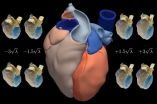
Researchers at Pompeu Fabra University (Spain) have created a high resolution atlas of the heart with 3D images taken from 138 people. The study demonstrates that an average image of an organ along with its variations can be obtained for the purposes of comparing individual cases and differentiating healthy forms from pathologies. "This atlas is a statistical description of how the heart and its components – such as the ventricles and the atrium – look," as explained to SINC by Corné Hoogendoorn, researcher at the CISTIB centre of the Pompeu Fabra University. Scientists ...
Read more →
Infrared digital holography allows firefighters to see through flames, image moving people
Technology 2013-02-26

Infrared digital holography allows firefighters to see through flames, image moving people

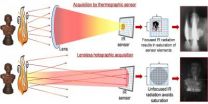
Firefighters put their lives on the line in some of the most dangerous conditions on Earth. One of their greatest challenges, however, is seeing through thick veils of smoke and walls of flame to find people in need of rescue. A team of Italian researchers has developed a new imaging technique that uses infrared (IR) digital holography to peer through chaotic conflagrations and capture potentially lifesaving and otherwise hidden details. The team describes its breakthrough results and their applications in a paper published today in the Optical Society's (OSA) open-access ...
Read more →
Medicine 2013-02-26

Sweet news for stem cell's 'Holy Grail'

Scientists have used sugar-coated scaffolding to move a step closer to the routine use of stem cells in the clinic and unlock their huge potential to cure diseases from Alzheimer's to diabetes. Stem cells have the unique ability to turn into any type of human cell, opening up all sorts of therapeutic possibilities for some of the world's incurable diseases and conditions. The problem facing scientists is how to encourage stem cells to turn into the particular type of cell required to treat a specific disease. But researchers at the University of Manchester's School ...
Read more →
Medicine 2013-02-26

A picture of health in schools

Feeling comfortable and confident in sport, health, or PE can be very difficult for some young people who can be seen as a 'risk' of becoming obese. Young people from ethnic minorities, especially girls, are more likely to be physically inactive and unhealthy. This perception needs to be addressed and challenged in school physical education (PE) according to research funded by the Economic and Social Research Council (ESRC), which shows how school provision could make use of visual approaches in developing young people's critical learning about the body. When Dr Laura ...
Read more →
Blueprint for an artificial brain
Medicine 2013-02-26

Blueprint for an artificial brain

This press release is available in German. Scientists have long been dreaming about building a computer that would work like a brain. This is because a brain is far more energy-saving than a computer, it can learn by itself, and it doesn't need any programming. Privatdozent [senior lecturer] Dr. Andy Thomas from Bielefeld University's Faculty of Physics is experimenting with memristors – electronic microcomponents that imitate natural nerves. Thomas and his colleagues proved that they could do this a year ago. They constructed a memristor that is capable of learning. ...
Read more →
2 new species of mushroom documented in the Iberian Peninsula
Environment 2013-02-26

2 new species of mushroom documented in the Iberian Peninsula

In collaboration with the Royal Botanic Gardens of Madrid and the Slovenian Forestry Institute, researchers in the Basque Country have documented two new species of Hydnum, commonly known as ox tongue mushrooms, as part of their study published in the 'Mycologia' journal. This genus is known because many of its fungi are edible. Spanish researchers have headed the discovery of two mushroom species belonging to the Hydnum genus, a type of fungus commonly used in cooking. "During our study we discovered two new species: Hydnum ovoideisporum and Hydnum vesterholtii, which ...
Read more →
Science 2013-02-26

EARTH: Setting sail on unknown seas

Alexandria, VA – On June 5, 2012, a massive dock made landfall on Oregon's Agate Beach, just north of Newport. The dock carried with it a host of castaways, including as many as a hundred species of mollusks, anemones, sponges, oysters, crabs, barnacles, worms, sea stars, mussels and sea urchins. A placard on the side written in Japanese revealed that the dock had been unmoored from the Japanese coastal city of Misawa during the catastrophic tsunami on March 11, 2011, bringing with it an essentially intact subtidal community of Asian species to the Pacific Northwest. Although ...
Read more →
Science 2013-02-26

Pain can be a relief

If you accidently kick your toe against a doorframe you are probably going to find it very painful. As a purely intellectual experiment, imagine purposefully kicking a doorframe hard enough to potentially break your toe. When it turns out your toe has been battered but not broken, the pain may be interpreted more as a relief. "It is not hard to understand that pain can be interpreted as less severe when an individual is aware that it could have been much more painful. Less expected, however, is the discovery that pain may be experienced as pleasant if something worse ...
Read more →
Science 2013-02-26

When morning sickness lasts all day

Almost all women experience some nausea or vomiting when pregnant. Approximately one out of every hundred suffers from acute nausea during pregnancy (hyperemesis gravidarum) and may need hospital treatment to restore hydration, electrolytes and vitamins intravenously. "At worst, women may die if they go untreated. Many women find that the condition has an adverse effect on their work and family lives," states Åse Vikanes, senior researcher at the Norwegian Institute of Public Health and specialist in gynaecology and obstetrics. Making up for insufficient research activity ...
Read more →
Blood vessels 'sniff' gut microbes to regulate blood pressure
Medicine 2013-02-26

Blood vessels 'sniff' gut microbes to regulate blood pressure

Researchers at The Johns Hopkins University and Yale University have discovered that a specialized receptor, normally found in the nose, is also in blood vessels throughout the body, sensing small molecules created by microbes that line mammalian intestines, and responding to these molecules by increasing blood pressure. The finding suggests that gut bacteria are an integral part of the body's complex system for maintaining a stable blood pressure. A description of the research, conducted in mice and test tubes, appeared online Feb. 11 in the journal Proceedings of the ...
Read more →
Medicine 2013-02-26

Cell discovery could hold key to causes of inherited diseases

Fresh insights into the protective seal that surrounds the DNA of our cells could help develop treatments for inherited muscle, brain, bone and skin disorders. Researchers have discovered that the proteins within this coating – known as the nuclear envelope – vary greatly between cells in different organs of the body. This variation means that certain disease causing proteins will interact with the proteins in the protective seal to cause illness in some organs, but not others. Until now scientists had thought that all proteins within the nuclear envelope were the ...
Read more →
Social Science 2013-02-26

Afterschool programs evaluated for community support, resources

UNIVERSITY PARK, Pa. -- Afterschool programs seem to be most effective when their organization and implementation is supported by both organizational and community resources, according to Penn State human development researchers. Using a tool to help bridge the gap between research and real life, the researchers evaluated an afterschool program called the Good Behavior Game. "The Interactive System Framework for Dissemination and Implementation is the tool that helps us to bridge research and practice by synthesizing the available research and figuring out what it ...
Read more →
Science 2013-02-26

In probing mysteries of glass, researchers find a key to toughness

New Haven, Conn. — In a paper published online Feb. 26 in the journal Nature Communications, a Yale University team and collaborators propose a way of predicting whether a given glass will be brittle or ductile — a desirable property typically associated with metals like steel or aluminum — and assert that any glass could have either quality. Ductility refers to a material's plasticity, or its ability to change shape without breaking. "Most of us think of glasses as brittle, but our finding shows that any glass can be made ductile or brittle," said Jan Schroers, a professor ...
Read more →
Technology 2013-02-26

Connecting the (quantum) dots

PITTSBURGH—Recent research offers a new spin on using nanoscale semiconductor structures to build faster computers and electronics. Literally. University of Pittsburgh and Delft University of Technology researchers reveal in the Feb. 17 online issue of Nature Nanotechnology a new method that better preserves the units necessary to power lightning-fast electronics, known as qubits (pronounced CUE-bits). Hole spins, rather than electron spins, can keep quantum bits in the same physical state up to 10 times longer than before, the report finds. "Previously, our group ...
Read more →
Science 2013-02-26

American Chemical Society podcast: New super-nutritious puffed rice for breakfast cereals, snacks

The latest episode in the American Chemical Society's (ACS') award-winning Global Challenges/Chemistry Solutions podcast series reports a new process for blowing up grains of rice to produce a super-nutritious form of puffed rice, with three times more protein and a rich endowment of other nutrients. That makes it ideal for breakfast cereals, snack foods and nutrient bars for school lunch programs. Based on a report by Syed S.H. Rizvi, Ph.D., and colleagues in ACS' Journal of Agricultural and Food Chemistry, the new podcast is available without charge at iTunes and from ...
Read more →
Medicine 2013-02-26

Persistent negative attitude can undo effectiveness of exposure therapy for phobias

COLUMBUS, Ohio – Because confronting fear won't always make it go away, researchers suggest that people with phobias must alter memory-driven negative attitudes about feared objects or events to achieve a more lasting recovery from what scares them the most. Ohio State University psychology researchers determined that people who retained negative attitudes about public speaking after exposure therapy were more likely to experience a return of their fear a month later than were people whose attitudes were less negative. The fear returned among those with unchanged attitudes ...
Read more →