Medicine Technology 🌱 Environment Space Energy Physics Engineering Social Science Earth Science Science
Climate events drive a high-arctic vertebrate community into synchrony
Environment 2013-01-18

Climate events drive a high-arctic vertebrate community into synchrony

Climate change is known to affect the population dynamics of single species, such as reindeer or caribou, but the effect of climate at the community level has been much more difficult to document. Now, a group of Norwegian scientists has found that extreme climate events cause synchronized population fluctuations among all vertebrate species in a relatively simple high arctic community. These findings may be a bellwether of the radical changes in ecosystem stability that could result from anticipated future increases in extreme events. The findings are published in the ...
Read more →
Science 2013-01-18

Scientists expose new vulnerabilities in the security of personal genetic information

CAMBRIDGE, Mass. (January 17, 2013) – Using only a computer, an Internet connection, and publicly accessible online resources, a team of Whitehead Institute researchers has been able to identify nearly 50 individuals who had submitted personal genetic material as participants in genomic studies. Intent on conducting an exercise in “vulnerability research”—a common practice in the field of information security—the team took a multi-step approach to prove that under certain circumstances, the full names and identities of genomic research participants can be determined, ...
Read more →
Medicine 2013-01-18

Mouse research links adolescent stress and severe adult mental illness

Working with mice, Johns Hopkins researchers have established a link between elevated levels of a stress hormone in adolescence — a critical time for brain development — and genetic changes that, in young adulthood, cause severe mental illness in those predisposed to it. The findings, reported in the journal Science, could have wide-reaching implications in both the prevention and treatment of schizophrenia, severe depression and other mental illnesses. "We have discovered a mechanism for how environmental factors, such as stress hormones, can affect the brain's physiology ...
Read more →
Science 2013-01-18

Feed a cold, starve a fever…. and your worms!

Contact:Gina Alvino (415) 568-3173 plospathogens@plos.org Disclaimer This press release refers to an upcoming article in PLOS Pathogens. The release is provided by the article authors. Any opinions expressed in these releases or articles are the personal views of the journal staff and/or article contributors, and do not necessarily represent the views or policies of PLOS. PLOS expressly disclaims any and all warranties and liability in connection with the information found in the releases and articles and your use of such information. Media Permissions PLOS Journals ...
Read more →
Medicine 2013-01-18

How the brain copes with multi tasking alters with age

The pattern of blood flow in the prefrontal cortex in the brains alters with age during multi-tasking, finds a new study in BioMed Central's open access journal BMC Neuroscience. Increased blood volume, measured using oxygenated haemoglobin (Oxy-Hb) increased at the start of multitasking in all age groups. But to perform the same tasks, healthy older people had a higher and more sustained increase in Oxy-Hb than younger people. Age related changes to the brain occur earliest in the prefrontal cortex, the area of the brain associated with memory, emotion, and higher decision ...
Read more →
Medicine 2013-01-18

It's a dog's life: Doggy database aims to define pet health

Using data collected about Labrador Retrievers, research published in BioMed Central's open access journal BMC Veterinary Research is beginning to quantify the health, illnesses, and veterinary care of dogs. The UK is a nation of pet lovers – but what do we know about the health of our pets? To date the long term (longitudinal) study of canine diseases has been patchy, relying on information from referral centers and details about pet illnesses which are not reported to a vet have never been studied before. The Dogslife internet-based project was organized in conjunction ...
Read more →
Science 2013-01-18

Savanna study highlights African fuelwood crisis

The dwindling reserves of fuelwood in Africa have been illuminated in a new study published today, which shows a bleak outlook for supplies across savannas in South Africa. Presenting their findings in IOP Publishing's journal Environmental Research Letters, researchers have found that at current consumption levels in the communal areas of Lowveld, South Africa, reserves of fuelwood could be totally exhausted within 13 years. The consequences are significant, with around half of the 2.4 million rural households in the country using wood as their primary fuel source, ...
Read more →
Molecular twist helps regulate the cellular message to make histone proteins
Medicine 2013-01-18

Molecular twist helps regulate the cellular message to make histone proteins

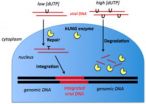
(Embargoed) CHAPEL HILL, N.C. – Histone proteins are the proteins that package DNA into chromosomes. Every time the cell replicates its DNA it must make large amounts of newly made histones to organize DNA within the nucleus. An imbalance in the production of DNA and histones is usually lethal for the cell, which is why the levels of the messenger RNA (mRNA) encoding the histone proteins must be tightly controlled to ensure the proper amounts of histones (not too many and not too few) are made. In a collaborative effort published online in the January 18, 2013 issue ...
Read more →
Science 2013-01-18

Inadequate food facilities in NC migrant camps could cause illness

WINSTON-SALEM, N.C. – Jan. 17, 2013 – Farmworkers are at potential risk from food and waterborne illnesses because of the condition of cooking and eating facilities available to them, according to a new study from Wake Forest Baptist Medical Center. Researchers from Wake Forest Baptist are the first to evaluate cooking and eating facilities in migrant farmworker camps to compare against established housing regulations. They found that the facilities fail to comply with regulations in a substantial number of camps. The study, which appears online today in the January issue ...
Read more →
Environment 2013-01-18

A global approach to monitoring biodiversity loss

In contrast to climate change, there is no coordinated global system in place for measuring and reporting on biodiversity change or loss. An international team of biologists is now addressing this gap. In Science today, 30 researchers led by Henrique Miguel Pereira, from the Centre for Environmental Biology of the University of Lisbon, proposed a global biodiversity monitoring system based on a set of essential variables. By determining the most essential measurements to accurately and usefully report on biodiversity loss, known as essential biodiversity variables (EBVs), ...
Read more →
Science 2013-01-18

Weight loss helps to oust worms

Scientists from The University of Manchester have discovered that weight loss plays an important role in the body's response to fighting off intestinal worms. The findings have been published in the journal PLOS Pathogens and show that the immune system hijacks the natural feeding pathways causing weight loss. This then drives the defense mechanisms down the correct pathway to expel the worms. Nearly one quarter of the world's population is infected with gastrointestinal parasites. These prevalent infections often result in a period of reduced appetite resulting in ...
Read more →
Sniffing immune cells
Medicine 2013-01-18

Sniffing immune cells

This press release is available in German. Immune cells constantly patrol our body to check for foreign invaders, such as bacteria or viruses. To do so they leave the blood stream, actively crawl through tissues and finally re-enter the circulation via lymphatic vessels. Research from the laboratory of Michael Sixt elucidates how the cells are guided through tissues like the skin. It is thought that cells either sense their environment by 'touching' or 'smelling': They adhere to structural molecules like connective tissue proteins using adhesion receptors. Or ...
Read more →
Engineering 2013-01-18

Separating gases using a rigid polymer sieve

Gas separation is crucial for many industrial processes including obtaining nitrogen or oxygen from air and purifying natural gas or hydrogen. Currently, the most energy efficient method for separating gases involves polymer membranes, however, most polymers either let gases pass through slowly (i.e. have low permeability) or are not selective towards one gas over another. Gas separation would be cheaper and use less energy if polymer membranes could be made both highly permeable and selective. A team from the University's School of Chemistry reports in the journal Science ...
Read more →
GI tract bacteria may protect against autoimmune disease
Medicine 2013-01-18

GI tract bacteria may protect against autoimmune disease

This press release is available in German. Toronto -- Early life exposure to normal bacteria of the GI tract (gut microbes) protects against autoimmune disease in mice, according to research published on-line in the January 17 edition of Science. The study may also have uncovered reasons why females are at greater risk of autoimmune diseases such as multiple sclerosis, rheumatoid arthritis, and lupus compared to males. Researchers from The Hospital for Sick Children (SickKids) found that when female mice at high risk of autoimmune (type 1) diabetes were exposed ...
Read more →
Science 2013-01-18

U Alberta researchers move Barkhausen Effect forward

(Edmonton) Almost 100 years after the initial discovery, a team of scientists at the University of Alberta and the National Institute for Nanotechnology in Edmonton have harnessed the Barkhausen Effect as a new kind of high-resolution microscopy for the insides of magnetic materials. The researchers say the technique has the potential to provide critical information as a rapid prototyper for magnetic computational devices that expand the role of magnetism within computers. In 1919, Barkhausen discovered the first evidence of magnetic domains (patterns in how the directions ...
Read more →
Doubling down on energy efficiency
Energy 2013-01-18

Doubling down on energy efficiency

Spending on energy efficiency programs funded by electric and natural gas utility customers will double by 2025 to about $9.5 billion per year, according to projections published today by researchers at Lawrence Berkeley National Laboratory (Berkeley Lab). These funds, which come from a charge on utility bills, historically constitute the nation's largest source of spending on programs to foster the adoption of more efficient products and buildings. According to the Berkeley Lab report, energy efficiency programs funded by utility customers are projected to continue ...
Read more →
Novel sensor provides bigger picture
Technology 2013-01-18

Novel sensor provides bigger picture

DURHAM, N.C. – Duke University engineers have developed a novel sensor that is more efficient, versatile and cheaper for potential use in such applications as airport security scanners and collision avoidance systems for aircraft, cars or maritime vessels. The researchers fabricated a unique material, known as a metamaterial, that acts as a lens to image scenes using fewer components than conventional detectors. Because of the properties of this man-made material, much of the additional equipment needed for conventional detector systems – like lenses, mechanical positioners ...
Read more →
Irregular heart beat elevates risk of kidney failure
Medicine 2013-01-18

Irregular heart beat elevates risk of kidney failure

Many people who suffer from chronic kidney disease progressively lose their kidney function over time and eventually develop a condition called end-stage renal disease – the complete failure of the kidneys – placing them in need of lifelong dialysis or a kidney transplant. Now researchers at the University of California, San Francisco (UCSF) and the Kaiser Permanente Northern California Division of Research have found that the risk of kidney failure is greater for people with chronic kidney disease who also have atrial fibrillation, one of the most common forms of irregular ...
Read more →
Science 2013-01-18

Power's punishing impact

Often, employees are shocked by what they think is a supervisor's severe reaction to a subordinate's seemingly minor transgression. The supervisors who punish them seem to be so absolutely sure that they are doing the right thing—they have a clear sense of purpose and there are no arguments to sway them. New research by Scott Wiltermuth, a USC Marshall School of Business assistant professor of management and organization, and co-author Francis Flynn of the Stanford Graduate School of Business, found that providing a sense of power to someone instills a black-and-white ...
Read more →
Medicine 2013-01-18

Mayo Clinic researchers identify enzyme involved in deadly brain tumors

ROCHESTER, Minn. -- One of the most common types of brain tumors in adults, glioblastoma multiforme, is one of the most devastating. Even with recent advances in surgery, radiation and chemotherapy, the aggressive and invasive tumors become resistant to treatment, and median survival of patients is only about 15 months. In a study published in Neuro-Oncology, researchers at Mayo Clinic identify an important association between the naturally occurring enzyme Kallikrein 6, also known as KLK6, and the malignant tumors. "Our study of Kallikrein 6 showed that higher levels ...
Read more →
Science 2013-01-18

Botox beats steroids for painful foot condition, plantar fasciitis

Los Angeles, CA (January 17, 2013) - Plantar fasciitis is the most frequent cause of chronic heel pain, leaving many sufferers unable to put their best foot forward for months at a time. Now a Mexican study suggests that physicians should turn to Botox rather than steroids to offer patients the fastest road to recovery. The research appears in the journal Foot & Ankle International, published by SAGE. Plantar fasciitis results when connective tissues on the sole of the foot, the plantar fascia, become painfully inflamed. Physicians may suggest various therapies for this ...
Read more →
Science 2013-01-18

Questions about biosafety? Ask a biosafety expert

WASHINGTON— The rapid decline in costs associated with many common laboratory techniques, such as DNA sequencing and synthesis, has led to their adoption by individuals outside of traditional university or industrial settings, giving rise to a rapidly growing Do-It-Yourself Biology (DIYbio) community. DIYbio.org and the Synthetic Biology Project at the Woodrow Wilson Center this week are launching the "Ask a Biosafety Expert" service in order to provide this emerging DIYbio community with free and timely access to professional biosafety advice. The project comes amidst ...
Read more →
Why wolves are forever wild, but dogs can be tamed
Science 2013-01-18

Why wolves are forever wild, but dogs can be tamed

AMHERST, Mass. – Dogs and wolves are genetically so similar, it's been difficult for biologists to understand why wolves remain fiercely wild, while dogs can gladly become "man's best friend." Now, doctoral research by evolutionary biologist Kathryn Lord at the University of Massachusetts Amherst suggests the different behaviors are related to the animals' earliest sensory experiences and the critical period of socialization. Details appear in the current issue of Ethology. Until now, little was known about sensory development in wolf pups, and assumptions were usually ...
Read more →
Health and law expert: NFL not alone in handling concussions as 'benign' problems
Medicine 2013-01-18

Health and law expert: NFL not alone in handling concussions as 'benign' problems

INDIANAPOLIS -- More than 2,000 former football players are suing the National Football League, saying the league should have taken action earlier to deal with injuries related to concussions more seriously. But if a lack of speed in tackling concussions warrants criticism, the NFL isn't the only player deserving a penalty, according to a study co-authored by health care and law expert David Orentlicher, who teaches at Indiana University Robert H. McKinney School of Law in Indianapolis. Neurologists were also slow in sounding the alarm, and for decades, concussions ...
Read more →
Social Science 2013-01-18

New study challenges links between day care and behavioral issues

CHESTNUT HILL, MA (Jan. 17, 2013) – A new study that looked at more than 75,000 children in day care in Norway found little evidence that the amount of time a child spends in child care leads to an increase in behavioral problems, according to researchers from the United States and Norway. Several prior studies in the U.S. made connections between the time a child spends in day care and behavioral problems, but the results from Norway contradict those earlier findings, the researchers report in the online version of the journal Child Development. "In Norway, we do not ...
Read more →