Medicine Technology 🌱 Environment Space Energy Physics Engineering Social Science Earth Science Science
Science 2012-04-30

Radiologists tackle legal challenges and policies for evaluating outside studies

As more patients are referred to tertiary care center with previous images, a new study from researchers at the Westchester Medical Center shows how radiologists are tackling the challenges of interpreting outside studies and reviewing discordance opinions. "Outside studies were becoming a problem in our institution," said Dr. Zvi Lefkovitz, co-lead for this study. "We were receiving a lot of disjointed, fly-by-night examinations, and we had no formalized policy for reviewing these exams." Lefkovitz and his team began a comprehensive process of overhauling their procedures, ...
Read more →
Medicine 2012-04-30

New standards for treating traumatic shoulder injuries improve patient care

Shoulder injuries are among the most frequently encountered musculoskeletal injuries treated in emergency departments. One new study shows how radiologists can more effectively identify these injuries and improve patient outcomes. "The severity of shoulder injuries are often underestimated," said Dr. Scott Sheehan, lead author for the study. "Subtle injuries can have significant consequences if not recognized and treated promptly." Sheehan and his co-authors began studying the effects of traumatic shoulder injuries after one of his radiology mentors suffered a shoulder ...
Read more →
Science 2012-04-30

New imaging protocols help improve systemic functioning for living renal donors

A new study from UCLA shows how magnetic resonance angiography (MRA) and computed tomography angiography (CTA) are equivalent in delineating anatomy in living renal donors. In a study that examined 30 patients and 60 kidneys, both modalities were "excellent" in detecting the number of renal arteries and veins. Dr. Mittul Gulati, lead author for the study noted, "either MRA or CTA are great tools for helping surgeons remove kidneys safely, identifying donor and recipient veins and vessels, and identifying incidental findings." The results could potentially reduce radiation ...
Read more →
Science 2012-04-30

Radiologists play key role in successful bariatric procedures

With the increase of obesity in the last 50 years, bariatric surgeries are becoming a common solution for tackling this epidemic. A new exhibit shows how radiologists play a key role in ensuring the success of these procedures. "Although complications are generally rare with Roux-en-Y gastric bypass and gastric banding procedures, it's critical for radiologists to be familiar with both the normal presentations and possible complications for these surgeries," said Dr. Mariam Moshiri, lead author for this presentation. Dr. Moshiri and her co-authors at the University ...
Read more →
Technology 2012-04-30

Computers aid in collecting sensitive information from teens

VIDEO: This is Fahd A. Ahmad, M.D. of Washington University School of Medicine in St. Louis. Click here for more information. BOSTON – More than 1 million youths ages 15-24 have sexually transmitted infections (STIs) caused by Chlamydia trachomatis and Neisseria gonorrhea. Many others, however, are unaware they are infected because they have not been tested. Technology can change that, according to preliminary data from a study to be presented Saturday, April 28, at the Pediatric ...
Read more →
Medicine 2012-04-30

Children neglected in clinical drug trials

BOSTON – Although children are more likely than adults to suffer from many diseases, few clinical trials are being conducted to test drugs in pediatric patients, according to a study to be presented Saturday, April 28, at the Pediatric Academic Societies (PAS) annual meeting in Boston. Drug studies in children are important because children often respond differently to medications than adults. However, there is widespread concern about the lack of clinical evidence available to guide physicians in prescribing pharmaceuticals to children. Florence Bourgeois, MD, MPH, ...
Read more →
Science 2012-04-30

Study supports allowing family members in ED during critical care

BOSTON – Contrary to what many trauma teams believe, the presence of family members does not impede the care of injured children in the emergency department, according to a study to be presented Saturday, April 28, at the Pediatric Academic Societies (PAS) annual meeting in Boston. Professional medical societies, including the American Academy of Pediatrics and the American College of Emergency Physicians, support family presence during resuscitations and invasive procedures. The degree of family member involvement ranges from observation to participation, depending ...
Read more →
Science 2012-04-30

Racial differences found in care of children in ED

BOSTON – Black children are less likely than white children to receive medication for abdominal pain in the emergency department (ED) even when they report severe pain, according to a study to be presented Saturday, April 28, at the Pediatric Academic Societies (PAS) annual meeting in Boston. "The emergency department serves as our nation's health care safety net, where all children can receive care regardless of their insurance status, ability to pay or race," said lead author Tiffani J. Johnson, MD, pediatric emergency medicine fellow at Children's Hospital of Pittsburgh ...
Read more →
Medicine 2012-04-30

Fear of not having enough food may lead to obesity

BOSTON – While eating too much food can cause obesity, the fear of not having enough food may lead to the same result, according to a study to be presented Saturday, April 28, at the Pediatric Academic Societies (PAS) annual meeting in Boston. Being worried about not having enough food to feed one's family, a situation called food insecurity, is common in low-income families. These families often are overweight, too. "Understanding the reasons why poverty puts families at greater risk of obesity is essential to addressing the epidemic," said study lead author Rachel ...
Read more →
Medicine 2012-04-30

Parents' poor math skills may lead to medication errors

BOSTON – Many parents cringe when their child asks for help with math homework. New research shows that poor math skills can cause another difficulty for caregivers — measuring the right amount of medicine. In fact, parents with math skills at the third grade level or below were five times more likely to measure the wrong dose of medication for their child than those with skills at the sixth grade level or higher, according to a study to be presented Saturday, April 28, at the Pediatric Academic Societies (PAS) annual meeting in Boston. "Parents face many challenges ...
Read more →
Science 2012-04-30

Low-income moms under stress may overfeed infants

BOSTON – Efforts to prevent obesity among low-income infants should focus not only on what babies are being fed but also the reasons behind unhealthy feeding practices, according to a study to be presented Saturday, April 28, at the Pediatric Academic Societies (PAS) annual meeting in Boston. Adding cereal to bottles is one unhealthy practice that is discouraged by the American Academy of Pediatrics because it may lead to overfeeding and excess weight gain in infants. Researchers sought to determine factors associated with putting cereal in bottles among low-income, ...
Read more →
Medicine 2012-04-30

Better health in adulthood starts with early prevention in childhood

BOSTON -- Preventing chronic diseases and disorders that begin in infancy will improve the health of children and adults, according to research being presented on Saturday, April 28, 2012, at 10:30 a.m. ET in a topic symposium at the Pediatric Academic Societies (PAS) annual meeting in Room 302 at the Hynes Convention Center in Boston. The session, "Life-course Research: State of the Art and Science," will cover how proper nutrition and healthy habits in infancy, along with diminishing cumulative risks over time, will help prevent disease burden later in life. Speakers ...
Read more →
Medicine 2012-04-30

New standards for treating traumatic shoulder injuries to improve patient care

Traumatic shoulder injuries that result in a patient visit to the ER often contain a secondary injury that can cause pain and discomfort in that part of the body after the primary injury has healed. By focusing on the primary injury, radiologists sometimes miss the secondary injury, which can compromise treatment effectiveness. Trainees in the Brigham and Women's Hospital Radiology Residency Program developed new protocols aimed at drawing ER radiologists' attention to the potential presence of secondary should injuries. Better identification of these injuries could lead ...
Read more →
Record-breaking radio waves discovered from ultra-cool star
Science 2012-04-30

Record-breaking radio waves discovered from ultra-cool star

Penn State University astronomers using the world's largest radio telescope, at Arecibo, Puerto Rico, have discovered flaring radio emission from an ultra-cool star, not much warmer than the planet Jupiter, shattering the previous record for the lowest stellar temperature at which radio waves were detected. The team from Penn State's Department of Astronomy and Astrophysics and the Center for Exoplanets and Habitable Worlds, led by Alex Wolszczan, the discoverer of the first planets ever found outside our solar system, has been using the giant 305-m (1000-ft) telescope ...
Read more →
Science 2012-04-30

Fight or flight: Violent teens may be following parents' lead

BOSTON – While it may be cute when a 3-year-old imitates his parent's bad behavior, when adolescents do so, it's no longer a laughing matter. Teens who fight may be modeling what they see adult relatives do or have parents with pro-fighting attitudes, according to a study to be presented Sunday, April 29, at the Pediatric Academic Societies (PAS) annual meeting in Boston. "Parents and other adults in the family have a substantial influence on adolescents' engagement in fighting," said Rashmi Shetgiri, MD, FAAP, lead author of the study. "Interventions to prevent fighting, ...
Read more →
Science 2012-04-30

Apartment dwellers often subjected to neighbors' tobacco smoke

BOSTON – Noisy neighbors and broken-down elevators are common downsides of apartment living. You also can add unwanted tobacco smoke to the list of hazards, according to research to be presented Sunday, April 29, at the Pediatric Academic Societies (PAS) annual meeting in Boston. Studies have shown that tobacco smoke can seep from one apartment into another. The extent to which this happens, however, is unclear. Researchers from the American Academy of Pediatrics Julius B. Richmond Center of Excellence surveyed a nationally representative sample of adults living in ...
Read more →
Science 2012-04-30

Being left out puts youths with special needs at risk for depression

BOSTON – The challenges that come with battling a chronic medical condition or developmental disability are enough to get a young person down. But being left out, ignored or bullied by their peers is the main reason youths with special health care needs report symptoms of anxiety or depression, according to a study to be presented Sunday, April 29, at the Pediatric Academic Societies (PAS) annual meeting in Boston. Being bullied has been shown to increase students' risk for academic and emotional problems. Little research has been done specifically on how being a victim ...
Read more →
Science 2012-04-30

Mom's stress during pregnancy can affect baby's iron status

BOSTON – Newborns whose mothers are under stress during the first trimester of pregnancy may be at risk for low iron status, which could lead to physical and mental delays down the road, according to a study to be presented Sunday, April 29, at the Pediatric Academic Societies (PAS) annual meeting in Boston. Iron plays an important role in the development of organ systems, especially the brain. Well-known risk factors for poor iron status in infants are maternal iron deficiency, maternal diabetes, smoking during pregnancy, preterm birth, low birthweight and multiple ...
Read more →
Science 2012-04-30

Driven to distraction

BOSTON – It's well-known that using a cell phone while driving can lead to motor vehicle crashes. New research — to be presented Sunday, April 29, at the Pediatric Academic Societies (PAS) annual meeting in Boston — shows that even anticipating calls or messages may distract drivers, increasing the risk of a crash. Jennifer M. Whitehill, PhD, postdoctoral fellow at Harborview Injury Prevention and Research Center at the University of Washington, and her colleagues sought to determine whether compulsive cell phone use is associated with motor vehicle crashes. They enlisted ...
Read more →
Science 2012-04-30

Teen-led study highlights dangers of texting and driving

BOSTON – Some people have questioned whether a ban on texting while driving will actually lead to more crashes because drivers will conceal their cell phones, making it more dangerous to read and type messages. Research led by high school students, however, shows that texting while driving is unsafe regardless of where the phone is positioned. The study, part of a project called Generation tXt, will be presented by one of the high school authors on Sunday, April 29, at the Pediatric Academic Societies (PAS) annual meeting in Boston. Generation tXt was designed by ...
Read more →
Medicine 2012-04-30

Unruly kids may have a mental disorder

BOSTON – When children behave badly, it's easy to blame their parents. Sometimes, however, such behavior may be due to a mental disorder. Mental illnesses are the No. 1 cause of medical disability in youths ages 15 and older in the United States and Canada, according to the World Health Organization. "One reason we haven't made greater progress helping people recover from mental disorders is that we get on the scene too late," said Thomas R. Insel, MD, director of the National Institute of Mental Health (NIMH) and the featured speaker at the American Academy of Pediatrics' ...
Read more →
Medicine 2012-04-30

Familiarity with television fast-food ads linked to obesity

BOSTON – There is a long-held concern that youths who eat a lot of fast food are at risk for becoming overweight. New research to be presented Sunday, April 29, at the Pediatric Academic Societies (PAS) annual meeting in Boston shows that greater familiarity with fast-food restaurant advertising on television is associated with obesity in young people. "We know that children and adolescents are highly exposed to fast-food restaurant advertising, particularly on television. This study links obesity in young people to familiarity with this advertising, suggesting that youth ...
Read more →
Science 2012-04-30

TV alcohol advertising may play role in underage drinking

BOSTON – Minors who were familiar with television alcohol advertisements were more likely to have tried alcoholic beverages and binge drink than those who could not recall seeing such ads, according to a study to be presented Sunday, April 29, at the Pediatric Academic Societies (PAS) annual meeting in Boston. "Underage drinking remains an important health risk in the U.S.," said lead author Susanne E. Tanski, MD, MPH, FAAP, assistant professor in the Department of Pediatrics at Children's Hospital at Dartmouth, Dartmouth-Hitchcock Medical Center. "In this study, we ...
Read more →
Environment 2012-04-30

Pacific islands may become refuge for corals in a warming climate, study finds

Scientists have predicted that ocean temperatures will rise in the equatorial Pacific by the end of the century, wreaking havoc on coral reef ecosystems. But a new study shows that climate change could cause ocean currents to operate in a surprising way and mitigate the warming near a handful of islands right on the equator. As a result these Pacific islands may become isolated refuges for corals and fish. Here's how it would happen, according to the study by Woods Hole Oceanographic Institution scientists Kristopher Karnauskas and Anne Cohen, published April 29 in the ...
Read more →
Huge study finds brain networks connected to teen drug abuse
Medicine 2012-04-30

Huge study finds brain networks connected to teen drug abuse

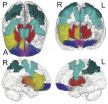
Why do some teenagers start smoking or experimenting with drugs—while others don't? In the largest imaging study of the human brain ever conducted—involving 1,896 14-year-olds—scientists have discovered a number of previously unknown networks that go a long way toward an answer. Robert Whelan and Hugh Garavan of the University of Vermont, along with a large group of international colleagues, report that differences in these networks provide strong evidence that some teenagers are at higher risk for drug and alcohol experimentation—simply because their brains work differently, ...
Read more →