PRESS-NEWS.org - Press Release Distribution
PRESS RELEASES DISTRIBUTION

Asbestos: An ongoing challenge to global health

What we need to learn from history, according to a new study in the Annals of Global Health

Asbestos: An ongoing challenge to global health
2014-12-08
(Press-News.org) New York, NY, December 8, 2014 - Challenges to global health can evolve from policies and decisions that take years or decades to unfold. An article in the current issue of the Annals of Global Health describes the current state of asbestos use worldwide, a story that began over 100 years ago, and the real and contrived controversies regarding asbestos.

At the peak of asbestos use in 1972 in the United States, more than 775,000 tons of asbestos were used, much of it by the construction trades and shipbuilding industry, in addition to the manufacturing of many consumer products. As the health risks associated with asbestos have become evident, more than 50 countries have banned asbestos, although India and the United States have not.

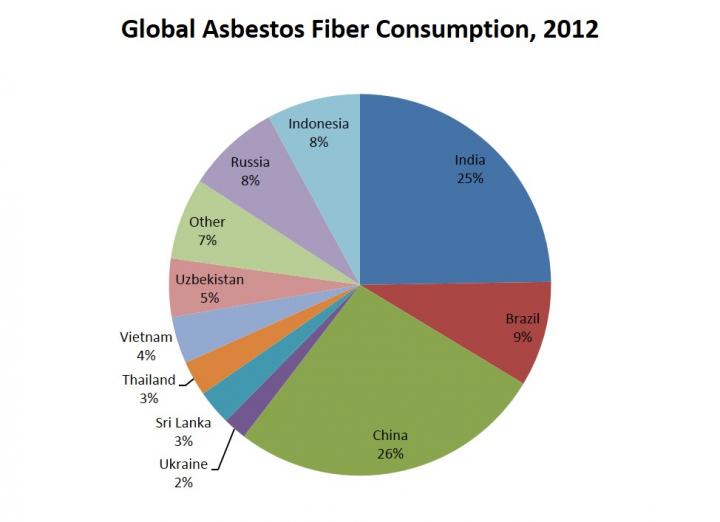
As investigators Arthur L. Frank, MD, PhD, Drexel University School of Public Health, Philadelphia, Pennsylvania, USA, and T.K. Joshi, MBBS, MS (Surgery), Centre for Occupational and Environmental Health, Maulana Azad Medical College, New Delhi, India, relate, "Unfortunately, as the developed world was banning or constricting the use of asbestos, the developing world was greatly increasing its use of this toxic material. Major producers such as Russia, Kazakhstan, China, and Brazil continue to produce and export asbestos to countries around the world, especially to low- and middle-income countries that too often have weak or nonexistent occupational and environmental regulations." They note that India produces little asbestos, but has become a major importer with exponential growth in manufacture of asbestos cement and pipes.

Asbestos minerals are divided into two groups, amphibole and serpentine, based on their chemistry and fiber morphology. The amphibole group includes crocidolite, amosite, tremolite, actinolite, and anthophyllite asbestos. The serpentine group is comprised solely of chrysotile asbestos, and it accounts for some 90% to 95% of all the asbestos used worldwide.

Two groups of diseases are associated with exposures to asbestos: nonmalignant diseases, which can be fatal, and cancer. The nonmalignant diseases associated with exposure to asbestos include asbestos warts, benign asbestotic pleural effusion, and asbestosis.

The now disproven belief that chrysotile asbestos is safe and the actions of the governments of Canada and India to support asbestos production in the face of strong epidemiological data show that this is not a strictly science-driven issue. Canada has recently had a turnabout and will likely exit the asbestos business, but India remains recalcitrant.

Dr. Frank and Dr. Joshi report on how the global spread of asbestos is changing but that there are still examples of flawed science being used to justify continued use. They suggest that, because of economic issues for asbestos producers, there "are far more insidious actions that follow a pattern first established by the tobacco industry in hiring public relations firms to obfuscate the scientific issues so that tobacco could still be sold...Similarly, the asbestos industry adopted the view that a public relations campaign was needed to quash the rising concerns about its health hazards."

The authors caution that eventually the truths regarding asbestos exposure and its true hazards will be recognized and acted upon, but only after economic forces are overcome.

INFORMATION:


[Attachments] See images for this press release:
Asbestos: An ongoing challenge to global health

ELSE PRESS RELEASES FROM THIS DATE:

Each dollar spent on kids' nutrition can yield more than $100 later

2014-12-08
There are strong economic incentives for governments to invest in early childhood nutrition, reports a new paper from the University of Waterloo and Cornell University. Published for the Copenhagen Consensus Centre, the paper reveals that every dollar spent on nutrition during the first 1,000 days of a child's life can provide a country up to $166 in future earnings. "The returns on investments in nutrition have high benefit-cost ratios, especially in countries with higher income levels and a growing economy," said Professor Susan Horton, of the School of Public Health ...

Low-crime, walkable neighborhoods promote mental health in older Latinos

2014-12-08
Older Latinos living in the U.S. who perceive their neighborhoods as safer and more walkable are less likely to develop severe depressive symptoms, and the effect may be long term, a new study suggests. Researchers examined links between the onset of depressive symptoms in 570 older Latino adults and various characteristics of the Greater Los Angeles neighborhoods they lived in, including crime, the availability and quality of sidewalks, traffic safety and aesthetics. Participants ranged in age from 60 to 90, and 351 of them screened positive for low levels of depression ...

Tramadol associated with increased risk of hospitalization for hypoglycemia

2014-12-08
The opioid pain-reliever tramadol appears to be associated with an increased risk of hospitalization for hypoglycemia, a potentially fatal condition caused by low blood sugar, according to a report published online by JAMA Internal Medicine. Tramadol hydrochloride is a weak opioid whose use has increased steadily worldwide. However, concerns have been raised about the drug and an increased risk for hypoglycemia. Because of increasing use of the doctor-prescribed pain reliever, researchers at McGill University and the Lady Davis Institute at the Jewish General Hospital ...

Vaccine holds hope of preventing antibiotic resistant skin infections

Vaccine holds hope of preventing antibiotic resistant skin infections
2014-12-08
LOS ANGELES - (Dec. 8, 2014) - In the U.S. and around the globe, skin and soft tissue infections caused by methicillin-resistant Staphylococcus aureus (MRSA) continue to endanger the health and lives of patients and otherwise healthy individuals. Treatment is difficult because MRSA is resistant to many antibiotics, and the infections can recur, placing family members and other close contacts at risk of infection. A study reported online today in the Proceedings of the National Academy of Sciences USA holds new hope for preventing or reducing the severity of infections ...

Shedding new light on the formation of emotional fear memories

2014-12-08
Everyday events are easy to forget, but unpleasant ones can remain engraved in the brain. A new study published in the Proceedings of the National Academy of Sciences identifies a neural mechanism through which unpleasant experiences are translated into signals that trigger fear memories by changing neural connections in a part of the brain called the amygdala. The findings show that a long-standing theory on how the brain forms memories, called Hebbian plasticity, is partially correct, but not as simple as was originally proposed. The effort led by Joshua Johansen from ...

New therapy holds promise for restoring vision

New therapy holds promise for restoring vision
2014-12-08
A new genetic therapy not only helped blind mice regain enough light sensitivity to distinguish flashing from non-flashing lights, but also restored light response to the retinas of dogs, setting the stage for future clinical trials of the therapy in humans. The therapy employs a virus to insert a gene for a common ion channel into normally blind cells of the retina that survive after the light-responsive rod and cone photoreceptor cells die as a result of diseases such as retinitis pigmentosa. Photoswitches - chemicals that change shape when hit with light -are then ...

Heat-shock protein enables tumor evolution and drug resistance in breast cancer

2014-12-08
CAMBRIDGE, Mass. (December 8, 2014) - Long known for its ability to help organisms successfully adapt to environmentally stressful conditions, the highly conserved molecular chaperone heat-shock protein 90 (HSP90) also enables estrogen receptor-positive (ER+) breast cancers to develop resistance to hormonal therapy. This HSP90-mediated evolutionary mechanism of drug resistance, reported by Whitehead Institute scientists in this week's online edition of the Proceedings of the National Academy of Sciences (PNAS), provides a strong therapeutic rationale for combining HSP90 ...

High photosensitivity 2-D-few-layered molybdenum diselenide phototransistors

High photosensitivity 2-D-few-layered molybdenum diselenide phototransistors
2014-12-08
Two-dimensional (2D) layered materials are now attracting a lot of interest due to their unique optoelectronic properties at atomic thicknesses. Among them, graphene has been mostly investigated, but the zero-gap nature of graphene limits its practical applications. Therefore, 2D layered materials with intrinsic band gaps such as MoS2, MoSe2, and MoTe2 are of interest as promising candidates for ultrathin and high-performance optoelectronic devices. Here, Pil Ju Ko and colleagues at Toyohashi University of Technology, Japan have fabricated back-gated field-effect phototransistors ...

Hummingbird's hover surprisingly easy to hack

Hummingbirds hover surprisingly easy to hack
2014-12-08
Hummingbirds' remarkable ability to hover in place is highly contingent on the tiny bird having a completely stationary visual field, according to University of British Columbia research published in the Proceedings of the National Academy of Sciences. UBC zoologists Benjamin Goller and Douglas Altshuler projected moving spiral and striped patterns in front of free-flying hummingbirds attempting to feed from a stationary feeder. Even minimal background pattern motion caused the hummingbirds to lose positional stability and drift. Giving the birds time to get used ...

Study offers future hope for tackling signs of aging

Study offers future hope for tackling signs of aging
2014-12-08
A new advance in biomedical research at the University of Leicester could have potential in the future to assist with tackling diseases and conditions associated with ageing - as well as in treating cancer. The research, which has shown promise in clinical samples, has been published in the prestigious scientific journal, Cell Death and Disease. The group of scientists coordinated by Dr Salvador Macip from the Mechanisms of Cancer and Ageing Lab and the Department of Biochemistry of the University of Leicester carried out the study to find new ways of identifying old ...

LAST 30 PRESS RELEASES:

Understanding the role of linear ubiquitination in T-tubule biogenesis

Researchers identify urban atmosphere as primary reservoir of microplastics

World’s oldest arrow poison – 60,000-year-old traces reveal early advanced hunting techniques

Bristol scientists discover early sponges were soft

New study uncovers how rice viruses manipulate plant defenses to protect insect vectors

NSF–DOE Vera C. Rubin Observatory spots record-breaking asteroid in pre-survey observations

Ribosomal engineering creates “super-probiotic” bacteria

This self-powered eye tracker harnesses energy from blinking and is as comfortable as everyday glasses

Adverse prenatal exposures linked to higher rates of mental health issues, brain changes in adolescents

Restoring mitochondria shows promise for treating chronic nerve pain   

Nature study identifies a molecular switch that controls transitions between single-celled and multicellular forms

USU chemists' CRISPR discovery could lead to single diagnostic test for COVID, flu, RSV

Early hominins from Morocco reveal an African lineage near the root of Homo sapiens

Small chimps, big risks: What chimps show us about our own behavior

We finally know how the most common types of planets are created

Thirty-year risk of cardiovascular disease among healthy women according to clinical thresholds of lipoprotein(a)

Yoga for opioid withdrawal and autonomic regulation

Gene therapy ‘switch’ may offer non-addictive pain relief

Study shows your genes determine how fast your DNA mutates with age

Common brain parasite can infect your immune cells. Here's why that's probably OK

International experts connect infections and aging through cellular senescence

An AI–DFT integrated framework accelerates materials discovery and design

Twist to reshape, shift to transform: Bilayer structure enables multifunctional imaging

CUNY Graduate Center and its academic partners awarded more than $1M by Google.org to advance statewide AI education through the Empire AI consortium

Mount Sinai Health system receives $8.5 million NIH grant renewal to advance research on long-term outcomes in children with congenital heart disease

Researchers develop treatment for advanced prostate cancer that could eliminate severe side effects

Keck Medicine of USC names Christian Pass chief financial officer

Inflatable fabric robotic arm picks apples

MD Anderson and SOPHiA GENETICS announce strategic collaboration to accelerate AI-driven precision oncology

Oil residues can travel over 5,000 miles on ocean debris, study finds

[Press-News.org] Asbestos: An ongoing challenge to global health
What we need to learn from history, according to a new study in the Annals of Global Health