Growth in home health care failing to keep up with surging demand, study finds
Published 2021-04-20 · Original archive entry · Explore research explainers
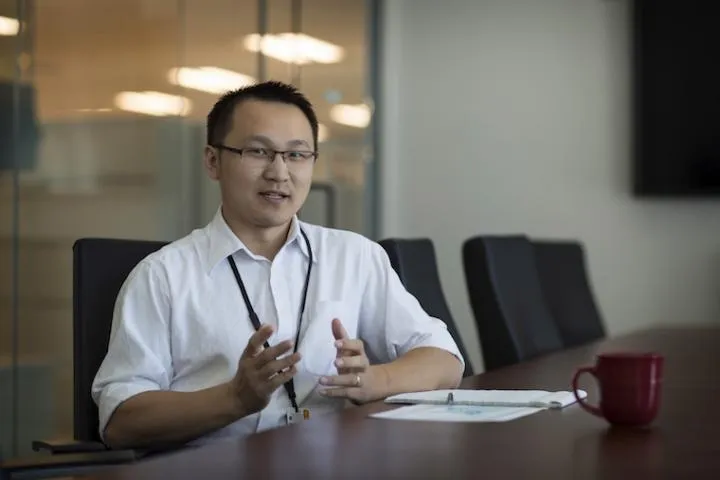
Recent growth in the number of healthcare workers providing home care for Medicare patients is "small and inadequate" compared with the increasing demand in an aging America, a new study suggests.
To have hope of keeping up, Medicare likely will need to reconsider how it compensates providers for home care, the researchers say.
"Only 0.7 percent of physicians in Medicare provided home care regularly," said Nengliang "Aaron" Yao, PhD, a researcher with the University of Virginia School of Medicine's Section of Geriatric Medicine. "Targeted policies are needed to support home-based medical care."
Trends in Home Care
Growth in the field of home care was "modest but steady" between 2012 and 2016, with most of the growth coming from increasing numbers of nurse practitioners providing home visits, the study found.
The total number of providers offering in-home care for Medicare patients grew from about 14,100 to approximately 16,600 between 2012 and 2016, the researchers report. But there was also strong churn in the field - approximately 4,000 providers began offering home visits each year, while roughly 3,000 stopped.
Demand for home care already exceeds supply in much of the country. Only about 15% of frail older adults receive medical care at home. America's aging population, growing numbers of patients with dementia and increasing preference for aging in place all will continue to drive demand, the researchers say.
"More and more older adults are homebound and have a hard time getting to their medical providers," said researcher Justin B. Mutter, MD, the section head of Geriatric Medicine at UVA Health, who provides home visits through UVA's Virginia at Home (VaH) program. "House calls bring the best of person-centered medical care to where many need it most: their home environment."
UVA Health launched the VaH program last summer, in collaboration with the Department of Neurology's Memory and Aging Care Clinic and the UVA Center for Health Humanities and Ethics. VaH's interprofessional team consists of Mutter, nurse practitioner Karen Duffy, clinical pharmacist Bethany Delk and care coordinator Tuula Ranta. The team helps patients age in place, provides caregiver support and offers house calls as well as telemedicine visits, in partnership with UVA's Center for Telehealth. VaH aims to bridge the gap between high demand for, and low supply of, home-based medical care for older adults in Central Virginia.
Obstacles to Home Care
The researchers note that there are many obstacles that hinder the delivery of home care across the country, including Medicare reimbursement rates, travel time and the complexity of many homebound patients' needs. A family doctor may see 20 patients a day in an office-based setting, while many home-care providers are unable to see half as many patients in that same time, the researchers say.
To overcome those challenges, Medicare likely would need to revisit how it compensates providers for home visits. "Home-based medical care ... has been described as a low-volume, high-value service that is not easily rewarded by fee-for-service payment," the researchers write in a new paper outlining their findings. For this reason, they say, integrating value-based payment options within traditional Medicare for homebound older adults will be essential.
The Virginia at Home program has benefited from the generous support of philanthropic gifts for its launch, but philanthropy must be complemented by sustained payment reform for all home-care providers, Mutter and Yao say.
Without such steps, America will continue to struggle to keep pace with the growing demand for home-based medical care in the years to come, the researchers say.
"Home-based medical care is care built around the patients and caregivers with goals tailored to their needs in their environment," Mutter said. "Now more than ever, we need health-care professionals trained and ready to provide this holistic service to our aging population."
To have hope of keeping up, Medicare likely will need to reconsider how it compensates providers for home care, the researchers say.
"Only 0.7 percent of physicians in Medicare provided home care regularly," said Nengliang "Aaron" Yao, PhD, a researcher with the University of Virginia School of Medicine's Section of Geriatric Medicine. "Targeted policies are needed to support home-based medical care."
Trends in Home Care
Growth in the field of home care was "modest but steady" between 2012 and 2016, with most of the growth coming from increasing numbers of nurse practitioners providing home visits, the study found.
The total number of providers offering in-home care for Medicare patients grew from about 14,100 to approximately 16,600 between 2012 and 2016, the researchers report. But there was also strong churn in the field - approximately 4,000 providers began offering home visits each year, while roughly 3,000 stopped.
Demand for home care already exceeds supply in much of the country. Only about 15% of frail older adults receive medical care at home. America's aging population, growing numbers of patients with dementia and increasing preference for aging in place all will continue to drive demand, the researchers say.
"More and more older adults are homebound and have a hard time getting to their medical providers," said researcher Justin B. Mutter, MD, the section head of Geriatric Medicine at UVA Health, who provides home visits through UVA's Virginia at Home (VaH) program. "House calls bring the best of person-centered medical care to where many need it most: their home environment."
UVA Health launched the VaH program last summer, in collaboration with the Department of Neurology's Memory and Aging Care Clinic and the UVA Center for Health Humanities and Ethics. VaH's interprofessional team consists of Mutter, nurse practitioner Karen Duffy, clinical pharmacist Bethany Delk and care coordinator Tuula Ranta. The team helps patients age in place, provides caregiver support and offers house calls as well as telemedicine visits, in partnership with UVA's Center for Telehealth. VaH aims to bridge the gap between high demand for, and low supply of, home-based medical care for older adults in Central Virginia.
Obstacles to Home Care
The researchers note that there are many obstacles that hinder the delivery of home care across the country, including Medicare reimbursement rates, travel time and the complexity of many homebound patients' needs. A family doctor may see 20 patients a day in an office-based setting, while many home-care providers are unable to see half as many patients in that same time, the researchers say.
To overcome those challenges, Medicare likely would need to revisit how it compensates providers for home visits. "Home-based medical care ... has been described as a low-volume, high-value service that is not easily rewarded by fee-for-service payment," the researchers write in a new paper outlining their findings. For this reason, they say, integrating value-based payment options within traditional Medicare for homebound older adults will be essential.
The Virginia at Home program has benefited from the generous support of philanthropic gifts for its launch, but philanthropy must be complemented by sustained payment reform for all home-care providers, Mutter and Yao say.
Without such steps, America will continue to struggle to keep pace with the growing demand for home-based medical care in the years to come, the researchers say.
"Home-based medical care is care built around the patients and caregivers with goals tailored to their needs in their environment," Mutter said. "Now more than ever, we need health-care professionals trained and ready to provide this holistic service to our aging population."
INFORMATION:
Findings Published
The researchers have published their findings in the scientific journal Health Affairs. The research team consisted of Yao, Mutter, James D. Berry, Takashi Yamanaka, Denise T. Mohess and Thomas Cornwell. Yao disclosed he has holdings in Heal Inc.; a full list of the authors' disclosures is included in the paper.
Mutter was supported by grant K01HP33445 from the Health Resources and Services Administration, a division of the Department of Health and Human Services.
To keep up with the latest medical research news from UVA, subscribe to the Making of Medicine blog at http://makingofmedicine.virginia.edu.