Cancer neuroscientists identify a key culprit behind pediatric brain cancer's spread
ABAT enzyme helps medulloblastoma cells feed, according to study led by USC Brain Tumor Center and Norris Comprehensive Cancer Center
Published 2021-06-29 · Original archive entry · Explore research explainers
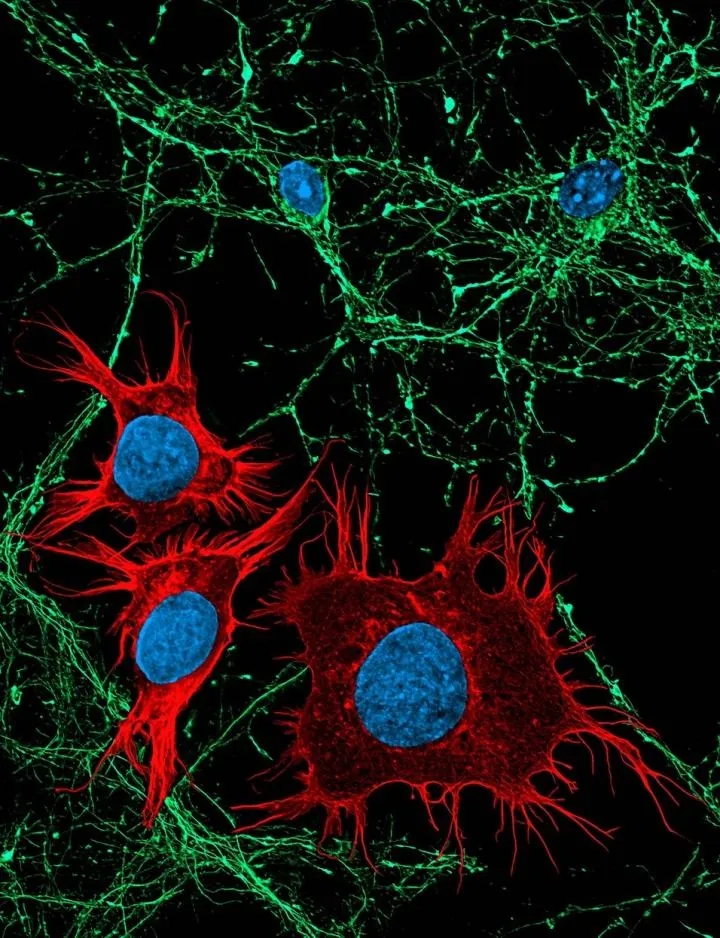
With advances in medical science driving progress against childhood brain tumors, today three out of four young patients survive at least five years beyond diagnosis. However, the outcomes look grim when malignant cells spread, or metastasize.
Such is the case with medulloblastoma, a type of brain cancer that arises in the cerebellum, at the back of the head. Although rare in absolute terms -- about 350 cases emerge each year, 60 percent of them in children -- medulloblastoma is the most common and deadliest form of pediatric brain cancer. Metastasis to the lining of the brain or spinal cord is responsible for virtually all deaths from the disease.
Now, research led by USC investigators has shined new light on how medulloblastoma travels to other sites within the central nervous system. The study, which appeared in the journal END
Such is the case with medulloblastoma, a type of brain cancer that arises in the cerebellum, at the back of the head. Although rare in absolute terms -- about 350 cases emerge each year, 60 percent of them in children -- medulloblastoma is the most common and deadliest form of pediatric brain cancer. Metastasis to the lining of the brain or spinal cord is responsible for virtually all deaths from the disease.
Now, research led by USC investigators has shined new light on how medulloblastoma travels to other sites within the central nervous system. The study, which appeared in the journal END